Custom "No Worries" Chinese & Japanese Calligraphy Wall Scroll
Pick from many options to create artwork with No Worries characters on a wall scroll or portrait...
1. No Worries
2. Preparation Yields No Fear or Worries
3. One Who Does Not Do Bad Things, Worries Not of Knocks at His Door
4. No man knows what he owes to his parents until he comes to have children of his own
6. Without a big net, how can you catch fish?
9. No Trouble / Freedom from Problems
10. Confidence / Faithful Heart
11. The Confident Helmsman Inspires Confidence in the Passengers
13. The Great Path has No Gate
14. Honorable Death - No Surrender
16. Benevolent and Skilled Doctor
17. Fear No Evil
18. Fear No Man / Fear Nothing
20. Fire and Water Have No Mercy
24. No Surrender
25. Ichigo No Hana / Strawberry Flower
26. Indomitable Spirit / Indomitable Attitude
27. Jiko no Kansei / Self-Completion
29. Kemo no Shin
30. Kokoro no Heiwa
31. Kokoro no Michi
32. Kunshi no Ken
33. The Way of Learning Has No End
35. Makoto no Kokoro
36. Mind Like Water
37. Mono no Aware
38. Never Give Up
39. Freedom from Anger and Worry Yields Longevity
40. No arrogance in victory, No despair in defeat
41. Fear not long roads; Fear only short ambition
42. Do not fear poverty; Fear low ambitions
43. Do not fear being slow, fear standing still
44. No Fear
45. There is no god but Allah, and Muhammad is His Messenger
46. No Limits
47. No Mercy
48. There’s No Place Like Home
49. No Regrets
50. There is No Royal Road to Learning
51. No Mind / Mushin
52. No Apologies
54. No one knows a son better than the father
57. The Sea of Knowledge Has No Limits
58. Osu No Seishin
59. No Pain No Gain
60. Undaunted After Repeated Setbacks
61. There is no pleasure without pain
62. Preparation Yields No Regrets
64. Shinobi No Mono
66. Spare No Effort
67. Time and Tide Wait for No Man
69. Trust No One / Trust No Man
70. Tsuki no Kokoro / Mind like the Moon
71. Mujo no Kaze / Wind of Impermanence
72. No Limitations
No Worries
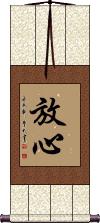
My Australian friends always say, “No worries, mate.” It's caught on with me, though I drop the “mate” part since it confuses my fellow Americans.
If you would like to express the idea of “no worries,” 放心 is the best and most natural way to say it in Chinese.
The characters you see to the left can be translated as “put your mind at rest” or “to be at ease.” You could literally translate “no worries,” but it doesn't “flow” like this simple Chinese version.
For your info, the first character means to release, to free, to let go, to relax, or to rest. The second character means your heart or your mind.
Note that in Japanese and Korean, this holds the similar meaning of “peace of mind” but can also mean absentmindedness or carelessness, depending on context.
Preparation Yields No Fear or Worries
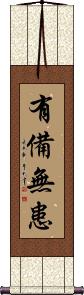
有備無患 means “When you are well-prepared, you have nothing to fear.”
Noting that the third character means “no” or “without” and modifies the last... The last character can mean misfortune, troubles, worries, or fears. It could even be stretched to mean sickness. Therefore you can translate this proverb in a few ways. I've also seen it translated as “Preparedness forestalls calamities.”
有備無患 is comparable to the English idiom, “Better safe than sorry,” but does not directly/literally mean this.
One Who Does Not Do Bad Things, Worries Not of Knocks at His Door
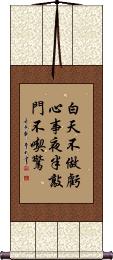
白天不做亏心事夜半敲门不吃惊 literally translates as: [If one does] not do bad things in the daytime, one need not be alarmed at knocks on the door in the middle of the night.
The meaning is something like, “A quiet conscience sleeps in thunder.” Basically, the message is, “don't commit crimes and you won't be jumpy every time the doorbell rings (so don't do anything wrong and your life will have fewer worries and you can sleep at night).”
No man knows what he owes to his parents until he comes to have children of his own
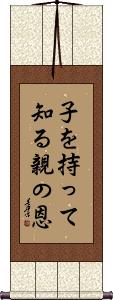
子を持って知る親の恩 literally translates as: Only after you have a baby, you would appreciate your parents (feel the way they do, etc).
This is a bit like the “walk a mile in another man's shoes” saying. Basically, it's about you cannot fully understand the plight of others until you experience it yourself. It also shows appreciation for the plight of parents.
This Japanese proverb can also be translated a few more ways:
No man knows what he owes to his parents till he comes to have children of his own.
One knows not what one owes to one's parents till one comes to have children of one's own.
Only after you have a baby, you will appreciate your parents or feel the way they do.
Only after becoming a parent yourself do you realize how much you owe [how indebted you are] to your own parents.
Note: Because this selection contains some special Japanese Hiragana characters, it should be written by a Japanese calligrapher.
Belief / Trust
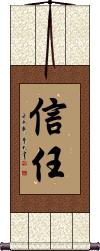
信任 means belief or trust in Chinese characters, old Korean Hanja, and Japanese Kanji.
It can also mean having confidence in or credence.
Without a big net, how can you catch fish?
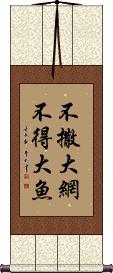
不撒大網不得大魚 is a Chinese proverb that literally translates as: [if one does] not cast a big net, [one can] not get big fish.
Figuratively, this means: One cannot make great accomplishments without making great efforts or taking great pains.
This is sort of the fishing version of, “No pain, no gain.”
The Brave Have No Fears
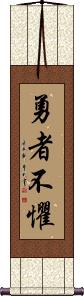
This proverb means “Brave people [are] without fear,” or “The brave are without fear.”
勇者不懼 is a proverb credited to Confucius. It's one of three phrases in a set of things he said.
This phrase is originally Chinese but has penetrated Japanese culture as well (many Confucian phrases have) back when Japan borrowed Chinese characters into their language.
This phrase has also been converted into modern Japanese grammar when written as 勇者は懼れず. If you want this version just click on those characters.
See Also: No Fear
Bravery / Courage
Courage in the face of Fear
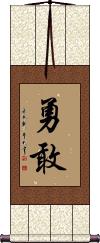
勇敢 is about courage or bravery in the face of fear.
You do the right thing even when it is hard or scary. When you are courageous, you don't give up. You try new things. You admit mistakes. This kind of courage is the willingness to take action in the face of danger and peril.
勇敢 can also be translated as braveness, valor, heroic, fearless, boldness, prowess, gallantry, audacity, daring, dauntless, and/or courage in Japanese, Chinese, and Korean. This version of bravery/courage can be an adjective or a noun. The first character means bravery and courage by itself. The second character means “daring” by itself. The second character emphasizes the meaning of the first but adds the idea that you are not afraid of taking a dare, and you are not afraid of danger.
勇敢 is more about brave behavior and not so much the mental state of being brave. You'd more likely use this to say, “He fought courageously in the battle,” rather than “He is very courageous.”
Bravery / Courage
Single Character for Courage
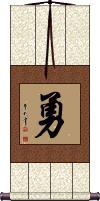
勇 can be translated as bravery, courage, valor, or fearless in Chinese, Japanese and Korean.
勇 is the simplest form to express courage or bravery, as there is also a two-character form that starts with this same character.
勇 can also be translated as brave, daring, fearless, plucky, or heroic.
This is also a virtue of the Samurai Warrior
See our page with just Code of the Samurai / Bushido here
No Trouble / Freedom from Problems
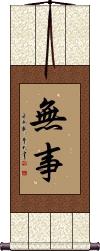
無事 is a Zen Buddhist term meaning no problem and no trouble.
無事 is the Zen state of perfect freedom from troubles and leaving secular affairs behind.
Sometimes this is used to describe the state of satori and complete tranquility of mind.
Written as 無事に with an extra Hiragana at the end, this becomes an adverb to describe something in the condition of safety, peace, quietness, and without troubles.
無事 (Buji) can also be a given name in Japan.
This has more meaning in the Japanese Zen Buddhist community than in China or Korea, where it can mean “be free” or “nothing to do or worry about.”
Confidence / Faithful Heart
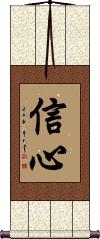
信心 is a Chinese, Japanese, and Korean word that means confidence, faith, or belief in somebody or something.
The first character means faith, and the second can mean heart or soul. Therefore, you could say this means “faithful heart” or “faithful soul.”
In Korean especially, this word has a religious connotation.
In the old Japanese Buddhist context, this was a word for citta-prasāda (clear or pure heart-mind).
In modern Japan (when read by non-Buddhists), this word is usually understood as “faith,” “belief,” or “devotion.”
See Also: Self-Confidence
The Confident Helmsman Inspires Confidence in the Passengers
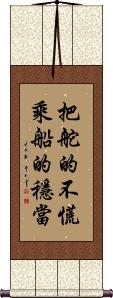
把舵的不慌乘船的稳当 is a Chinese proverb that literally translates as: [If the] helmsman is not nervous, the passengers [will feel] secure.
Figuratively, this means: If the leader appears confident, his/her followers will gain confidence also.
This is a great suggestion that a confident leader inspires confidence in his/her troops or followers. Of course, a nervous leader will create fear in troops or followers.
Bravery / Courage
Courageous Energy
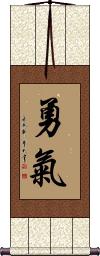
勇氣 is one of several ways to express bravery and courage in Chinese, Japanese, and Korean.
This version is the most spiritual. This is the essence of bravery from deep within your being. This is the mental state of being brave versus actual brave behavior. You'd more likely use this to say, “He is very courageous,” rather than “He fought courageously in the battle.”
The first character also means bravery or courage when it's seen alone. With the second character added, an element of energy or spirit is added. The second character is the same “chi” or “qi” energy that Kung Fu masters focus on when they strike. For this reason, you could say this means “spirit of courage” or “brave spirit.”
This is certainly a stronger word than just the first character alone.
Beyond bravery or courage, dictionaries also translate this word as valor/valour, nerve, audacity, daring, pluck, plucky, gallantry, guts, gutsy, and boldness.
This is also one of the 8 key concepts of tang soo do.
 While the version shown to the left is commonly used in Chinese and Korean Hanja (and ancient Japanese Kanji), please note that the second character is written with slightly fewer strokes in modern Japanese. If you want the modern Japanese version, please click on the character to the right. Both styles would be understood by native Chinese, Japanese, and many (but not all) Korean people. You should make your selection based on the intended audience for your calligraphy artwork. Or pick the single-character form of bravery/courage which is universal.
The Great Path has No Gate
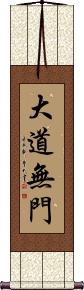
大道無門 is a Buddhist proverb that means “The Great Way has no entrance,” “The Great Way is gateless,” or “The Great Path lacks a gate.”
This can be translated in many other ways.
This concept was authored within a long sacred text by 無門慧開 (known as Wúmén Huìkāi in Chinese or Mumon Ekai in Japanese). He was a Chinese Chan Master (in Japanese, a Zen Master) who lived between 1183 and 1260 AD. His most famous work was a 48-koan collection titled “The Gateless Barrier” or “The Gateless Gate” (無門關 Wú Mén Guān in Chinese, or 無門関 Mu Mon Kan in Japanese). This calligraphy title is a notable line from this collection.
I like this reference to the source of this proverb: The Gateless Gate 無門關
Honorable Death - No Surrender
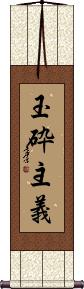
This ancient Japanese proverb can be translated as “The principle of honorable death and no surrender,” or simply “No surrender.”
If you directly translate this, you get something that means “Doctrine of suicide,” or “Ideology of honorable death.”
玉砕主義 is a specifically-Japanese proverb that embraces the long history of honorable suicide or self-sacrifice for honor in Japanese culture.
Die Without Regret
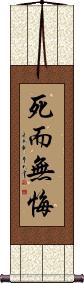
死而無悔 is how to say “die with no regrets” in Mandarin Chinese.
This proverb comes from the Analects of Confucius.
See Also: No Regrets
Benevolent and Skilled Doctor
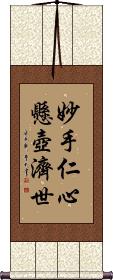
妙手仁心悬壶济世 is a phrase that celebrates the benevolence, skill, and service to his/her patients.
Here's a breakdown of the characters:
妙手 miào shǒu admirable skill in curing disease (when used in reference to doctors).
仁心 rén xīn kindheartedness, charity, benevolent heart.
悬壶济世 xuán hú jì shì practice medicine or pharmacy to help the people or the public.
Benevolent and Skilled Doctor
Short version
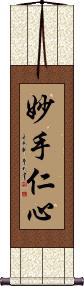
妙手仁心 is a phrase that celebrates the benevolence, skill, and service to his/her patients.
Here's a breakdown of the characters:
妙手 miào shǒu is an admirable skill in curing disease (when referring to doctors).
仁心 rén xīn kindheartedness, charity, benevolent heart.
Fear No Evil
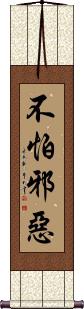
不怕邪惡 literally means “no fear of evil” in Chinese.
Chinese grammar and word order are a little different than English. 不怕邪惡 is the best way to write something that means “fear no evil” in Chinese.
The first character means “not,” “don't” or “no.”
The second means “fear.”
The last two mean “evil” but can also be translated as sinister, vicious, wickedness, or just “bad.”
Fear No Evil
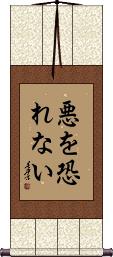
悪を恐れない is “Fear No Evil” in Japanese.
Japanese grammar and phrase construction is different than English, so this literally reads, “Evil Fear Not.”
The “evil” Kanji can also be translated as “wickedness.”
Note: Because this selection contains some special Japanese Hiragana characters, it should be written by a Japanese calligrapher.
Fear No Man / Fear Nothing
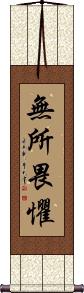
無所畏懼 means “fear nothing,” but it's the closest thing in Chinese to the phrase “fear no man” which many of you have requested.
This would also be the way to say “fear nobody” and can be translated simply as “undaunted.”
Fearless / Daring
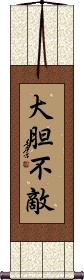
大胆不敵 is a Japanese word that can mean a few things depending on how you read it.
Popular translations include fearless, audacity (the attitude of a) daredevil, or daring.
The first two Kanji create a word that means: bold, fearless, or daring; audacious.
The last two Kanji create a word meaning: no match for, cannot beat, daring, fearless, intrepid, bold, or tough.
As with many Japanese words, the two similar-meaning words work together to multiply the meaning and intensity of the whole 4-Kanji word.
Fire and Water Have No Mercy
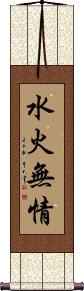
水火無情 is a Chinese proverb that means “fire [and] water have-not mercy.”
This serves to remind us that the forces of nature are beyond human control.
Some may also translate this as “implacable fate.”
Do No Harm / Harmless
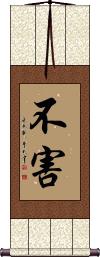
不害 is a Buddhist term that comes from the Sanskrit “ahiṃsā” meaning harmlessness, not injuring or doing harm to no one.
Soul Mates at Heart
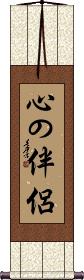
心の伴侶 is a Japanese-only title for soulmates.
心 means heart, soul, mind, core, or center. In ancient times, the heart was believed to be the mind or center of your soul and being.
の is a possessive article that connects everything here.
伴侶 means mates, companions, partners, and spouses.
This Japanese version of soulmates is about two partners, coupled or joined by their hearts.
No Place Like Home
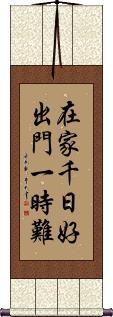
在家千日好出门一时难 is a Chinese proverb that literally means “At home, one can spend a thousand days in comfort but spending a day away from home can be challenging.”
Figuratively, this means “There's no place like home,” or roughly a Chinese version of “Home sweet home.”
No Surrender
Honor Does Not Allow Second Thoughts
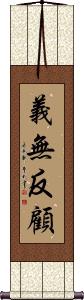
義無反顧 is a Chinese proverb that can be translated in a few different ways. Here are some examples:
Honor does not allow one to glance back.
Duty-bound not to turn back.
No surrender.
To pursue justice with no second thoughts.
Never surrender your principles.
This proverb is about the courage to do what is right without questioning your decision to take the right and just course.
Ichigo No Hana / Strawberry Flower
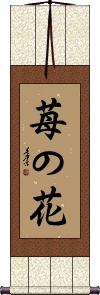
苺の花 is Ichigo No Hana or “Strawberry Flower” in Japanese.
Indomitable Spirit / Indomitable Attitude
Fukutsu no Seishin
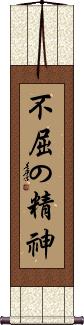
不屈の精神 is one of several versions or ways to write “Indomitable Spirit” in Japanese.
This one is the famous “Fukutsu no Seishin” phrase.
Jiko no Kansei / Self-Completion
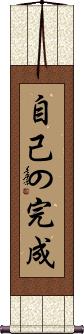
自己の完成 or Jiko no Kansei is a Japanese phrase that means self-completion, self-accomplishment, or self-perfection.
Kawa no Kami / River God
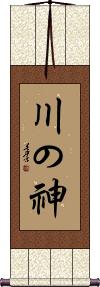
川の神 is the title of Kawa no Kami - a River deity of Japanese folklore.
Kemo no Shin
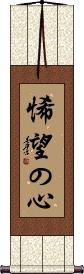
悕望の心 is “Kemō no Shin,” a Japanese Zen Buddhist word that means “The seeking mind” or “[Having] The mind to seek something.”
The first two characters mean longing for. The last two mean “of mind” or “of heart.” So, this is a mind that longs for or seeks knowledge, etc.
Kokoro no Heiwa
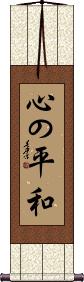
心の平和 means “heart of peace” or “peaceful heart” in Japanese.
Kokoro no Michi

心の道 is “Kokoro no Michi” or “The Way of the Heart” in Japanese.
Kunshi no Ken

君子の拳 is “Kunshi no Ken” in Japanese.
The meaning is literally “Noble Fist” or “Fist of Nobility” but it's often used to describe the effort to concentrate on cultivating oneself to become a well-rounded, respectful individual.
You will see 君子の拳 sometimes written in the full Kanji form of 君子之拳. Both versions mean the same thing. If you want this more traditional Kanji version, just let me know when you place your order.
The Way of Learning Has No End
Kyudo Mugen

究道無限 or Kyudo Mugen can be translated as “The way of learning has no end,” “The path of study never ends,” or “Infinite Pursuit.”
Live Without Regret
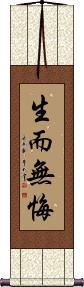
生而無悔 is how to say “live without regrets” in Mandarin Chinese.
Note: There is some debate about whether this makes sense in Japanese. It would be read, "nama ji mu ke," and be understood in Japanese. But, a Japanese person will probably think it’s Chinese (not Japanese).
See Also: Live for Today
Live Without Regret
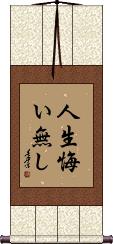
人生悔い無し is how to say “live without regrets” in Japanese.
Note: Because this selection contains some special Japanese Hiragana characters, it should be written by a Japanese calligrapher.
See Also: Live for Today
Makoto no Kokoro

誠の心 or “Makoto no Kokoro” means heart of truth or truthful heart in Japanese.
This concept is often associated with the Shinto religion of Japan.
Mind Like Water
Mizu No Kokoro
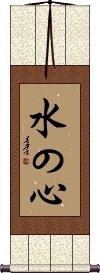
水の心 is the Japanese Buddhist and martial arts phrase, “Mizu no Kokoro,” which means “mind like water” or “heart of water.”
The phrase is a metaphor describing the pond that clearly reflects its surroundings when calm but whose images are obscured once a pebble is dropped into its waters.
Mono no Aware
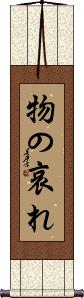
This translates as “the pathos of things,” “an empathy toward things,” or “a sensitivity to ephemera.”
物の哀れ is a Japanese proverb for the awareness of impermanence, or transience of things.
Both things and the emotions about those things do not last forever.
Note: Because this selection contains some special Japanese Hiragana characters, it should be written by a Japanese calligrapher.
Never Give Up
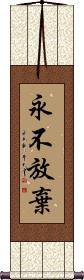
The first character means “eternal” or “forever,” and the second means “not” (together, they mean “never”). The last two characters mean “give up” or “abandon.” Altogether, you can translate this proverb as “never give up” or “never abandon.”
Depending on how you want to read this, 永不放棄 is also a statement that you will never abandon your hopes, dreams, family, or friends.
Freedom from Anger and Worry Yields Longevity
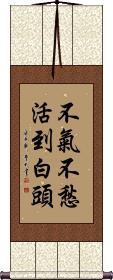
不气不愁活到白头 is a Chinese proverb that means “Without anger or worry, you will have a long life, until after all your hair is white.”
It more literally reads, “Don't get angry or worried [and you will] live [long] till [all your] hair [becomes] white.”
No arrogance in victory, No despair in defeat
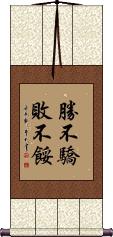
勝不驕敗不餒 is a Chinese proverb suggesting you should have no arrogance when you experience a victory and not despair in failure or defeat.
Fear not long roads; Fear only short ambition
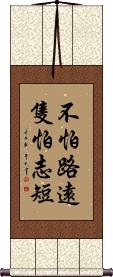
不怕路遠隻怕志短 is a Chinese proverb that literally translates as “Fear not long roads; fear only short ambition,” or “Don't fear that the road is long, only fear that your will/ambition/aspiration is short.”
Figuratively, this means: However difficult the goal is, one can achieve it as long as one is determined to do so.
Others may translate the meaning as “Don't let a lack of willpower stop you from pressing onward in your journey.”
Do not fear poverty; Fear low ambitions
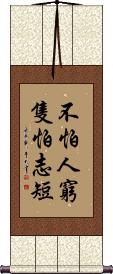
不怕人窮隻怕志短 is a Chinese proverb that literally translates as: It is not poverty that is to be feared; It is low ambition.
Figuratively, this means: It is not poverty but a lack of lofty aspiration that is to be regretted.
Do not fear being slow, fear standing still
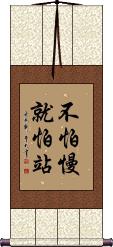
不怕慢就怕站 is a Chinese proverb that translates as: Don't worry about being slow; only worry about standing still.
Figuratively, this means: A slow progress holds some promise but to stand still promises failure.
No Fear
(2 characters)
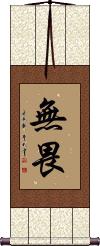
無畏 literally means “No Fear.” But perhaps not the most natural Chinese phrase (see our other “No Fear” phrase for a complete thought). However, this two-character version of “No Fear” seems to be a very popular way to translate this into Chinese when we checked Chinese Google.
Note: This also means “No Fear” in Japanese and Korean, but this character pair is not often used in Japan or Korea.
This term appears in various Chinese dictionaries with definitions like “without fear,” intrepidity, fearless, dauntless, and bold.
In the Buddhist context, this is a word derived from the word Abhaya, meaning: Fearless, dauntless, secure, nothing, and nobody to fear. Also, from vīra meaning: courageous, bold.
See Also: Never Give Up | No Worries | Undaunted | Bravery | Courage | Fear No Man
No Fear
(four-character version)
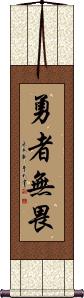
勇者無畏 is a complete sentence that means “Brave People Have No Fear” or “A Brave Person Has No Fear” (plural or singular is not implied).
We translated “No Fear” into the two variations that you will find on our website. Then we checked Chinese Google and found that others had translated “No Fear” in the exact same ways. Pick the one you like best. A great gift for your fearless friend.
See Also: Fear No Man
No Fear
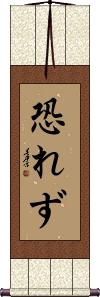
恐れず is probably the best way to express “No Fear” in Japanese.
The first Kanji and the following Hiragana character create a word that means: to fear, to be afraid of, frightened, or terrified.
The last Hiragana character serves to modify and negate the first word (put it in negative form). Basically, they carry a meaning like “without” or “keeping away.” 恐れず is almost like the English modifier “-less.”
Altogether, you get something like “Without Fear” or “Fearless.”
Here's an example of using this in a sentence: 彼女かのじょは思い切ったことを恐れずにやる。
Translation: She is not scared of taking big risks.
Note: Because this selection contains some special Japanese Hiragana characters, it should be written by a Japanese calligrapher.
There is no god but Allah, and Muhammad is His Messenger
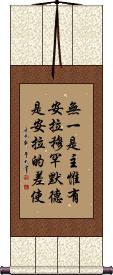
無一是主惟有安拉穆罕默德是安拉的差使 is one of the key creeds of Islam.
While perhaps more often seen in Arabic as
there are many native Chinese Muslims (especially the Hui ethnicity) that do not speak Arabic.
Instead, they use this Chinese phrase to express this idea or statement of faith.
No Limits
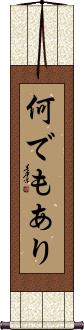
何でもあり is a Japanese phrase meaning, no holds barred, anything goes, or no limits.
Note: Because this selection contains some special Japanese Hiragana characters, it should be written by a Japanese calligrapher.
No Mercy
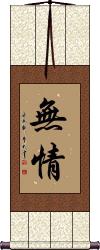
無情 is a terrible phrase for a calligraphy wall scroll. I'm not even sure any of my calligraphers will write this. It's just that many people have searched my website for “no mercy.”
This word means pitiless, ruthless, merciless, heartless, heartlessness, hardness, cruelty, or ruthless.
In the context of Buddhism, this is used to describe something or someone that is non-sentient (inhuman or without feeling).
There’s No Place Like Home
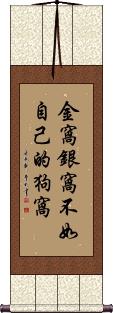
金窝银窝不如自己的狗窝 is a Chinese slang proverb that means “Golden house, [or a] silver house, not as good as my own dog house.”
It's basically saying that even a house made of gold or silver is not as good as my own home (which may only be suitable for a dog but at least it's mine).
No Regrets
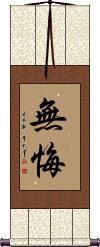
無悔 is how to say “no regrets” in Mandarin Chinese.
This also makes sense in Japanese, though not the most common way to express “no regrets” in Japanese.
See Also: Live for Today
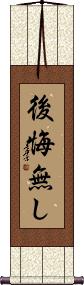
No Regrets
There is No Royal Road to Learning
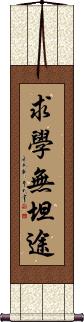
求學無坦途 is a Chinese proverb that translates as “There is no royal road to learning.”
This suggests that the path of learning can never be smooth, there will be difficulties and troubles along the way.
See Also: Learning is Eternal
No Mind / Mushin
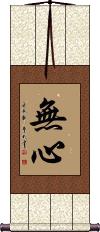
In Japanese, 無心 means innocent or without knowledge of good and evil. It literally means “without mind.”
無心 is one of the five spirits of the warrior (budo) and is often used as a Japanese martial arts tenet. Under that context, places such as the Budo Dojo define it this way: “No mind, a mind without ego. A mind like a mirror which reflects and dos not judge.” The original term was “mushin no shin,” meaning “mind of no mind.” It is a state of mind without fear, anger, or anxiety. Mushin is often described by the phrase “Mizu no Kokoro,” which means “mind like water.” The phrase is a metaphor describing the pond that clearly reflects its surroundings when calm but whose images are obscured once a pebble is dropped into its waters.
This has a good meaning in conjunction with Chan / Zen Buddhism in Japan. However, out of that context, it means mindlessness or absent-mindedness. To non-Buddhists in China, this is associated with doing something without thinking.
In Korean, this usually means indifference.
Use caution and know your audience before ordering this selection.
More info: Wikipedia: Mushin
No Apologies
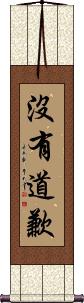
沒有道歉 means “no apologies” or “without apologies” in Chinese.
This phrase is inappropriate for custom calligraphy and is for educational purposes only.
No Guts, No Glory
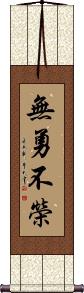
While difficult to translate “No guts no glory,” into Mandarin Chinese, 無勇不榮 is kind of close.
The first two characters mean “without bravery,” or “without courage.” In this case, bravery/courage is a stand-in for “guts.”
The last two characters mean “no glory.”
The idea that guts (internal organs) are somehow equal to courage, does not crossover to Chinese. However, translating the phrase back from Chinese to English, you get, “No Courage, No Glory,” which is pretty close to the intended idea.
No one knows a son better than the father
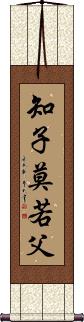
知子莫若父 can be translated as “No one knows a son better than his father.”
This idiom is based on the idea that after spending many years together, family members know everything about each other. Better than anyone else, a father knows the qualities and shortcomings of his son.
If you are looking for something about “father and son,” this is probably the best selection.
While this is the original proverb (very old), others have been composed about various combinations of mothers, sons, daughters, and fathers. Let me know if you need a custom version.
No Place Like Home
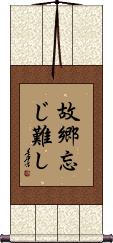
故郷忘じ難し is a Japanese proverb that means “there is no place like home” or “home is sweet to an exile.”
Note: Because this selection contains some special Japanese Hiragana characters, it should be written by a Japanese calligrapher.
No Rain No Flowers
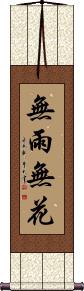
無雨無花 means “No Rain, No Flowers” in Chinese.
The Sea of Knowledge Has No Limits
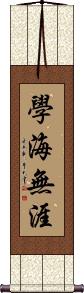
學海無涯 is a Chinese proverb that reads, “sea of learning, no horizon.”
Colloquially, it means there are no limits to what one still has left to learn.
This would be the Chinese equivalent to the quote from Hippocrates, “ars longa, vita brevis,” meaning “it takes a long time to acquire and perfect one's expertise.”
See Also: Learning is Eternal
Osu No Seishin
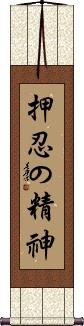
押忍の精神 is the name Osu No Seishin or “Spirit of Osu” in Japanese.
This Spirit of Osu is an essential concept in Karate. You will hear “Osu!” shouted in every Karate dojo which is not just a sign of respect and obedience to the Sensei but also means patience, determination, and perseverance. Shouting “Osu!” serves as a reminder to embody these qualities.
No Pain No Gain
Literally: No Pain, No Strength
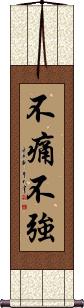
不痛不強 is a proverb that is close to our idea of “no pain, no gain” in English. It holds this meaning in the context of working out at the gym etc.
不痛不強 means “no pain, no strength,” meaning that if you don't experience a little pain, you will not gain any strength.
No Pain No Gain
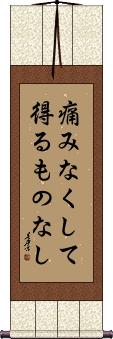
痛みなくして得るものなし is a Japanese phrase that means “no pain, no gain.”
This suggests that with pain, a gain must follow.
The pain Kanji here can also be translated as sorrow or suffering. The gain can also mean profit, advantage, or benefit. In the Japanese Buddhist context, that gain Kanji can mean rebirth in paradise, entering nirvana.
The character breakdown:
痛みなく (itami naku) pain; ache; sore; grief; distress. The naku part adds the meaning of “a lot of” or “extended”
して (shite) and then. (indicates a causative expression; acts as a connective particle)
得る (eru) to get; to acquire; to obtain; to procure; to earn; to win; to gain; to secure; to attain.
もの (mono) conjunctive particle indicating a cause or reason.
なし (nashi) none of; -less; without; no.
Note: Because this selection contains some special Japanese Hiragana characters, it should be written by a Japanese calligrapher.
Undaunted After Repeated Setbacks
Persistence to overcome all challenges
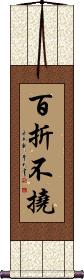
百折不撓 is a Chinese proverb that means “Be undaunted in the face of repeated setbacks.”
More directly translated, it reads, “[Overcome] a hundred setbacks, without flinching.” 百折不撓 is of Chinese origin but is commonly used in Japanese and somewhat in Korean (same characters, different pronunciation).
This proverb comes from a long, and occasionally tragic story of a man that lived sometime around 25-220 AD. His name was Qiao Xuan, and he never stooped to flattery but remained an upright person at all times. He fought to expose the corruption of higher-level government officials at great risk to himself.
Then when he was at a higher level in the Imperial Court, bandits were regularly capturing hostages and demanding ransoms. But when his own son was captured, he was so focused on his duty to the Emperor and the common good that he sent a platoon of soldiers to raid the bandits' hideout, and stop them once and for all even at the risk of his own son's life. While all of the bandits were arrested in the raid, they killed Qiao Xuan's son at first sight of the raiding soldiers.
Near the end of his career, a new Emperor came to power, and Qiao Xuan reported to him that one of his ministers was bullying the people and extorting money from them. The new Emperor refused to listen to Qiao Xuan and even promoted the corrupt Minister. Qiao Xuan was so disgusted that in protest, he resigned from his post as minister (something almost never done) and left for his home village.
His tombstone reads “Bai Zhe Bu Nao” which is now a proverb used in Chinese culture to describe a person of strong will who puts up stubborn resistance against great odds.
My Chinese-English dictionary defines these 4 characters as “keep on fighting despite all setbacks,” “be undaunted by repeated setbacks,” and “be indomitable.”
Our translator says it can mean “never give up” in modern Chinese.
Although the first two characters are translated correctly as “repeated setbacks,” the literal meaning is “100 setbacks” or “a rope that breaks 100 times.” The last two characters can mean “do not yield” or “do not give up.”
Most Chinese, Japanese, and Korean people will not take this absolutely literal meaning but will instead understand it as the title suggests above. If you want a single big word definition, it would be indefatigability, indomitableness, persistence, or unyielding.
See Also: Tenacity | Fortitude | Strength | Perseverance | Persistence
There is no pleasure without pain
No pain, no gain
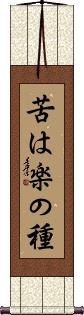
苦は楽の種 is a Japanese proverb that means “One cannot have pleasure without pain.”
It's one of a few Japanese ways to say, “No pain, no gain.”
Note: Because this selection contains some special Japanese Hiragana characters, it should be written by a Japanese calligrapher.
Preparation Yields No Regrets
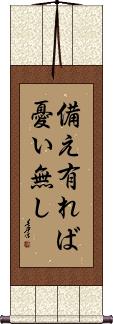
備え有れば憂い無し is as proverb that means “When you are well-prepared, you have nothing to regret” in Japanese.
Note: Because this selection contains some special Japanese Hiragana characters, it should be written by a Japanese calligrapher.
Shingeki no Kyojin
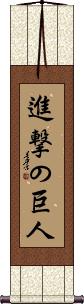
進撃の巨人 is the Shingeki no Kyojin or “Attack on Titan” in Japanese.
This literally means “Advancing Giants.”
Shinobi No Mono
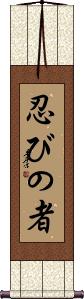
忍びの者 or “Shinobi no Mono” is a series of jidaigeki novels written by Tomoyoshi Murayama and the title of a movie and TV series.
Note: Because this selection contains some special Japanese Hiragana characters, it should be written by a Japanese calligrapher.
Spiritual Soul Mates
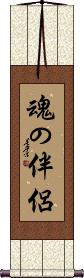
魂の伴侶 is a Japanese-only title for soulmates.
魂 means soul, spirit, immortal soul (the part of you that lives beyond your physical body), or the conscious mind. In the Buddhist context, this is vijñāna or viññāṇa (consciousness, life force, or mind).
の is a possessive article that connects everything here.
伴侶 means mates, companions, partners, and spouses.
Spare No Effort
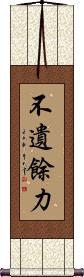
不遺餘力 is a Chinese proverb that can be translated in many ways. Here are some of them: go to any lengths; with all one's might; spare no pain; do one's utmost.
If you feel hard work and holding nothing back is your philosophy, this is the phrase for you.
Time and Tide Wait for No Man
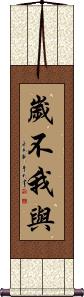
歲不我與 is a Chinese proverb that means is a way to express, “Time and tide wait for no man.”
The literal meaning of these Chinese characters is, “Years don't [for] oneself wait.” In more natural English, it's more like, “Years will pass by, with or without you.”
There is also an alternate version, 时不我待, which literally means “Time doesn't [for] oneself, wait.” In natural English, it's more like, “Time waits for no man.”
Time and Tide Wait for No Man
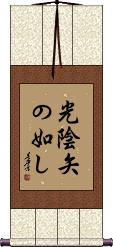
光陰矢の如し is a Japanese proverb that means “time flies like an arrow.” It's very similar to the English idiom, “time and tide wait for no man,” or “life is short.”
The Kanji breakdown:
光陰 = Time (the cycle of light and dark).
[and an]
矢 = Arrow
の = are
如し = Alike
Note: Because this selection contains some special Japanese Hiragana characters, it should be written by a Japanese calligrapher.
Time Waits For No One
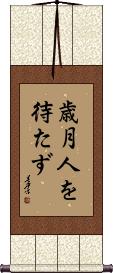
歳月人を待たず is a Japanese idiom “Saigetsu hito o matazu” which means “Time waits for no one.”
Another way to put it is, “Time and tide stay for no man.”
Note: Because this selection contains some special Japanese Hiragana characters, it should be written by a Japanese calligrapher.
Trust No One / Trust No Man
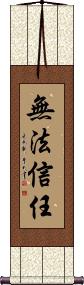
無法信任 is the kind of thing you expect to hear in a spy movie.
“Trust no one, 007!”
The first two characters express the idea of “no way” or “cannot.”
The last two characters mean “trust.”
The characters must go in this order due to Chinese grammar issues and in order to sound natural.
Note: This is not an ancient Chinese phrase by any means. It's just that we received a lot of requests for this phrase.
This is as close as you can get to the phrase “trust no man,” though technically, no gender is specified.
Trust No One / Trust No Man
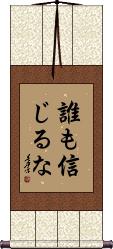
誰も信じるな is as close as you can get to the phrase “trust no man” in Japanese, though no gender is specified.
The first two characters mean everyone or anyone but change to “no one” with the addition of a negative verb.
The third through fifth characters express the idea of believing in, placing trust in, confiding in, or having faith in.
The last character makes the sentence negative (without the last character, this would mean “trust everyone,” with that last character, it's “trust no one”).
Note: Because this selection contains some special Japanese Hiragana characters, it should be written by a Japanese calligrapher.
Tsuki no Kokoro / Mind like the Moon
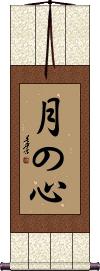
月の心 means “Mind like the Moon” or, more directly translated, “Moon of Mind.”
月の心 is a phrase used in Zen Buddhism and some Japanese martial arts.
Mujo no Kaze / Wind of Impermanence
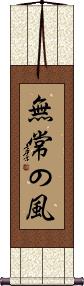
無常の風 is an old Japanese proverb that means the wind of impermanence or the wind of change in Japanese.
This can refer to the force that ends life, like the wind scattering a flower's petals. Life is yet another impermanent existence that is fragile, blown out like a candle.
The first two characters mean uncertainty, transiency, impermanence, mutability, variable, and/or changeable.
In some Buddhist contexts, 無常 can be analogous to a spirit departing at death (with a suggestion of the impermanence of life).
The last two characters mean “of wind” or a possessive like “wind of...” but Japanese grammar will have the wind come last in the phrase.
No Limitations
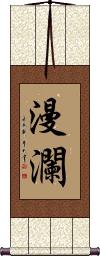
漫瀾 is the Chinese, Japanese Kanji, and old Korean Hanja for “Having no boundaries or limitations.”
This literally talks of the vastness of an ocean or river.
Character breakdown:
漫 = free; unrestrained; to inundate; overflowing; boundless.
澜 = swelling water; large wave.
Endless / Without Limit
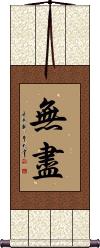
無盡 is the Chinese, Japanese Kanji, and old Korean Hanja for endless; inexhaustible; without limits; infinite.
In the Buddhist context, this can refer to the infinitude of living beings, of worlds, of space, of the dharmadhātu, of nirvāṇa, etc.
The following table may be helpful for those studying Chinese or Japanese...
| Title | Characters | Romaji (Romanized Japanese) | Various forms of Romanized Chinese | |
| No Worries | 放心 | houshin / hoshin | fàng xīn / fang4 xin1 / fang xin / fangxin | fang hsin / fanghsin |
| Preparation Yields No Fear or Worries | 有備無患 有备无患 | yǒu bèi wú huàn you3 bei4 wu2 huan4 you bei wu huan youbeiwuhuan | yu pei wu huan yupeiwuhuan |
|
| One Who Does Not Do Bad Things, Worries Not of Knocks at His Door | 白天不做虧心事夜半敲門不吃驚 白天不做亏心事夜半敲门不吃惊 | bái tiān bú zuò kuī xīn shì yè bàn qiāo mén bù chī jīng bai2 tian1 bu2 zuo4 kui1 xin1 shi4 ye4 ban4 qiao1 men2 bu4 chi1 jing1 bai tian bu zuo kui xin shi ye ban qiao men bu chi jing | pai t`ien pu tso k`uei hsin shih yeh pan ch`iao men pu ch`ih ching pai tien pu tso kuei hsin shih yeh pan chiao men pu chih ching |
|
| No man knows what he owes to his parents until he comes to have children of his own | 子を持って知る親の恩 | ko wo motte shiru oya no on kowomotteshiruoyanoon | ||
| Belief Trust | 信任 | shinnin | xìn rèn / xin4 ren4 / xin ren / xinren | hsin jen / hsinjen |
| Without a big net, how can you catch fish? | 不撒大網不得大魚 不撒大网不得大鱼 | bù sā dà wǎng bù dé dà yú bu4 sa1 da4 wang3 bu4 de2 da4 yu2 bu sa da wang bu de da yu busadawangbudedayu | pu sa ta wang pu te ta yü pusatawangputetayü |
|
| The Brave Have No Fears | 勇者不懼 勇者不惧 | yuu sha fu ku yuushafuku yu sha fu ku | yǒng zhě bú jù yong3 zhe3 bu2 ju4 yong zhe bu ju yongzhebuju | yung che pu chü yungchepuchü |
| Bravery Courage | 勇敢 | yuu kan / yuukan / yu kan | yǒng gǎn / yong3 gan3 / yong gan / yonggan | yung kan / yungkan |
| Bravery Courage | 勇 | isamu / yu- | yǒng / yong3 / yong | yung |
| No Trouble Freedom from Problems | 無事 无事 | buji | wú shì / wu2 shi4 / wu shi / wushi | wu shih / wushih |
| Confidence Faithful Heart | 信心 | shin jin / shinjin | xìn xīn / xin4 xin1 / xin xin / xinxin | hsin hsin / hsinhsin |
| The Confident Helmsman Inspires Confidence in the Passengers | 把舵的不慌乘船的穩當 把舵的不慌乘船的稳当 | bǎ tuò de bù huāng chéng chuán de wěn dang ba3 tuo4 de bu4 huang1 cheng2 chuan2 de wen3 dang ba tuo de bu huang cheng chuan de wen dang | pa t`o te pu huang ch`eng ch`uan te wen tang pa to te pu huang cheng chuan te wen tang |
|
| Bravery Courage | 勇氣 勇气 / 勇気 | yuuki / yuki | yǒng qì / yong3 qi4 / yong qi / yongqi | yung ch`i / yungchi / yung chi |
| The Great Path has No Gate | 大道無門 大道无门 | dai dou mu mon daidoumumon dai do mu mon | dà dào wú mén da4 dao4 wu2 men2 da dao wu men dadaowumen | ta tao wu men tataowumen |
| Honorable Death - No Surrender | 玉砕主義 | gyokusai shugi gyokusaishugi | ||
| Die Without Regret | 死而無悔 死而无悔 | sǐ ér wú huǐ si3 er2 wu2 hui3 si er wu hui sierwuhui | ssu erh wu hui ssuerhwuhui |
|
| Benevolent and Skilled Doctor | 妙手仁心懸壺濟世 妙手仁心悬壶济世 | miào shǒu rén xīn xuán hú jì shì miao4 shou3 ren2 xin1 xuan2 hu2 ji4 shi4 miao shou ren xin xuan hu ji shi | miao shou jen hsin hsüan hu chi shih | |
| Benevolent and Skilled Doctor | 妙手仁心 | miào shǒu rén xīn miao4 shou3 ren2 xin1 miao shou ren xin miaoshourenxin | miao shou jen hsin miaoshoujenhsin |
|
| Fear No Evil | 不怕邪惡 不怕邪恶 | bú pà xié è bu2 pa4 xie2 e4 bu pa xie e bupaxiee | pu p`a hsieh o pupahsieho pu pa hsieh o |
|
| Fear No Evil | 悪を恐れない | aku o osore nai akuoosorenai | ||
| Fear No Man Fear Nothing | 無所畏懼 无所畏惧 | wú suǒ wèi jù wu2 suo3 wei4 ju4 wu suo wei ju wusuoweiju | wu so wei chü wusoweichü |
|
| Fearless Daring | 大膽不敵 大胆不敵 | dai tan fu teki daitanfuteki | ||
| Fire and Water Have No Mercy | 水火無情 水火无情 | shuǐ huǒ wú qíng shui3 huo3 wu2 qing2 shui huo wu qing shuihuowuqing | shui huo wu ch`ing shuihuowuching shui huo wu ching |
|
| Do No Harm Harmless | 不害 | fu gai / fugai | bù hài / bu4 hai4 / bu hai / buhai | pu hai / puhai |
| Soul Mates at Heart | 心の伴侶 | kokoro no han ryo kokoronohanryo | ||
| No Place Like Home | 在家千日好出門一時難 在家千日好出门一时难 | zài jiā qiān rì hǎo chū mén yì shí nán zai4 jia1 qian1 ri4 hao3 chu1 men2 yi4 shi2 nan2 zai jia qian ri hao chu men yi shi nan | tsai chia ch`ien jih hao ch`u men i shih nan tsai chia chien jih hao chu men i shih nan |
|
| No Surrender | 義無反顧 义无反顾 | yì wú fǎn gù yi4 wu2 fan3 gu4 yi wu fan gu yiwufangu | i wu fan ku iwufanku |
|
| Ichigo No Hana Strawberry Flower | 苺の花 | ichigo no hana ichigonohana | ||
| Indomitable Spirit Indomitable Attitude | 不屈の精神 | fu kutsu no sei shin fukutsunoseishin | ||
| Jiko no Kansei Self-Completion | 自己の完成 | ji ko no kan sei jikonokansei | ||
| Kawa no Kami River God | 川の神 | kawa no kami kawanokami | ||
| Kemo no Shin | 悕望の心 | kemou no shin kemounoshin kemo no shin | ||
| Kokoro no Heiwa | 心の平和 | kokoro no heiwa kokoronoheiwa | ||
| Kokoro no Michi | 心の道 | kokoro no michi kokoronomichi | ||
| Kunshi no Ken | 君子の拳 | kun shi no ken kunshinoken | ||
| The Way of Learning Has No End | 究道無限 | kyuu do mu gen kyuudomugen kyu do mu gen | ||
| Live Without Regret | 生而無悔 生而无悔 | shēng ér wú huǐ sheng1 er2 wu2 hui3 sheng er wu hui shengerwuhui | sheng erh wu hui shengerhwuhui |
|
| Live Without Regret | 人生悔い無し | jinsei kui nashi jinseikuinashi | ||
| Makoto no Kokoro | 誠の心 | makoto no kokoro makotonokokoro | ||
| Mind Like Water | 水の心 | mizu no kokoro mizunokokoro | ||
| Mono no Aware | 物の哀れ | mono no awa-re mononoawa-re | ||
| Never Give Up | 永不放棄 永不放弃 | yǒng bù fàng qì yong3 bu4 fang4 qi4 yong bu fang qi yongbufangqi | yung pu fang ch`i yungpufangchi yung pu fang chi |
|
| Freedom from Anger and Worry Yields Longevity | 不氣不愁活到白頭 不气不愁活到白头 | bù qì bù chóu huó dào bái tóu bu4 qi4 bu4 chou2 huo2 dao4 bai2 tou2 bu qi bu chou huo dao bai tou buqibuchouhuodaobaitou | pu ch`i pu ch`ou huo tao pai t`ou puchipuchouhuotaopaitou pu chi pu chou huo tao pai tou |
|
| No arrogance in victory, No despair in defeat | 勝不驕敗不餒 胜不骄败不馁 | shèng bù jiāo bài bù něi sheng4 bu4 jiao1 bai4 bu4 nei3 sheng bu jiao bai bu nei shengbujiaobaibunei | sheng pu chiao pai pu nei shengpuchiaopaipunei |
|
| Fear not long roads; Fear only short ambition | 不怕路遠隻怕志短 不怕路远只怕志短 | bú pà lù yuǎn zhǐ pà zhì duǎn bu2 pa4 lu4 yuan3 zhi3 pa4 zhi4 duan3 bu pa lu yuan zhi pa zhi duan bupaluyuanzhipazhiduan | pu p`a lu yüan chih p`a chih tuan pu pa lu yüan chih pa chih tuan |
|
| Do not fear poverty; Fear low ambitions | 不怕人窮隻怕志短 不怕人穷只怕志短 | bú pà rén qióng zhǐ pà zhì duǎn bu2 pa4 ren2 qiong2 zhi3 pa4 zhi4 duan3 bu pa ren qiong zhi pa zhi duan buparenqiongzhipazhiduan | pu p`a jen ch`iung chih p`a chih tuan pu pa jen chiung chih pa chih tuan |
|
| Do not fear being slow, fear standing still | 不怕慢就怕站 | bú pà màn jiù pà zhàn bu2 pa4 man4 jiu4 pa4 zhan4 bu pa man jiu pa zhan bupamanjiupazhan | pu p`a man chiu p`a chan pupamanchiupachan pu pa man chiu pa chan |
|
| No Fear | 無畏 无畏 | mui | wú wèi / wu2 wei4 / wu wei / wuwei | |
| No Fear | 勇者無畏 勇者无畏 | yǒng zhě wú wèi yong3 zhe3 wu2 wei4 yong zhe wu wei yongzhewuwei | yung che wu wei yungchewuwei |
|
| No Fear | 恐れず | oso re zu / osorezu | ||
| There is no god but Allah, and Muhammad is His Messenger | 無一是主惟有安拉穆罕默德是安拉的差使 无一是主惟有安拉穆罕默德是安拉的差使 | wú yī shì zhǔ wéi yǒu ān lā mù hǎn mò dé shì ān lā de chāi shǐ wu2 yi1 shi4 zhu3 wei2 you3 an1 la1 mu4 han3 mo4 de2 shi4 an1 la1 de chai1 shi3 wu yi shi zhu wei you an la mu han mo de shi an la de chai shi | wu i shih chu wei yu an la mu han mo te shih an la te ch`ai shih wu i shih chu wei yu an la mu han mo te shih an la te chai shih |
|
| No Limits | 何でもあり | nan de mo a ri nandemoari | ||
| No Mercy | 無情 无情 | mujou / mujo | wú qíng / wu2 qing2 / wu qing / wuqing | wu ch`ing / wuching / wu ching |
| There’s No Place Like Home | 金窩銀窩不如自己的狗窩 金窝银窝不如自己的狗窝 | jīn wō yín wō bù rú zì jǐ de gǒu wō jin1 wo1 yin2 wo1 bu4 ru2 zi4 ji3 de5 gou3 wo1 jin wo yin wo bu ru zi ji de gou wo | chin wo yin wo pu ju tzu chi te kou wo | |
| No Regrets | 無悔 无悔 | mu ke / muke | wú huǐ / wu2 hui3 / wu hui / wuhui | |
| No Regrets | 後悔無し | kou kai na shi koukainashi ko kai na shi | ||
| There is No Royal Road to Learning | 求學無坦途 求学无坦途 | qiú xué wú tǎn tú qiu2 xue2 wu2 tan3 tu2 qiu xue wu tan tu qiuxuewutantu | ch`iu hsüeh wu t`an t`u chiuhsüehwutantu chiu hsüeh wu tan tu |
|
| No Mind Mushin | 無心 无心 | mu shin / mushin | wú xīn / wu2 xin1 / wu xin / wuxin | wu hsin / wuhsin |
| No Apologies | 沒有道歉 没有道歉 | méi yǒu dào qiàn mei2 you3 dao4 qian4 mei you dao qian meiyoudaoqian | mei yu tao ch`ien meiyutaochien mei yu tao chien |
|
| No Guts, No Glory | 無勇不榮 无勇不荣 | wú yǒng bù róng wu2 yong3 bu4 rong2 wu yong bu rong wuyongburong | wu yung pu jung wuyungpujung |
|
| No one knows a son better than the father | 知子莫若父 | zhī zǐ mò ruò fù zhi1 zi3 mo4 ruo4 fu4 zhi zi mo ruo fu zhizimoruofu | chih tzu mo jo fu chihtzumojofu |
|
| No Place Like Home | 故郷忘じ難し | kokyouboujigatashi kokyobojigatashi | ||
| No Rain No Flowers | 無雨無花 无雨无花 | wú yù wú huā wu2 yu4 wu2 hua1 wu yu wu hua wuyuwuhua | wu yü wu hua wuyüwuhua |
|
| The Sea of Knowledge Has No Limits | 學海無涯 学海无涯 | xué hǎi wú yá xue2 hai3 wu2 ya2 xue hai wu ya xuehaiwuya | hsüeh hai wu ya hsüehhaiwuya |
|
| Osu No Seishin | 押忍の精神 | o su no sei shin osunoseishin | ||
| No Pain No Gain | 不痛不強 不痛不强 | bú tòng bù qiáng bu2 tong4 bu4 qiang2 bu tong bu qiang butongbuqiang | pu t`ung pu ch`iang putungpuchiang pu tung pu chiang |
|
| No Pain No Gain | 痛みなくして得るものなし | itami naku shite erumono wa nashi | ||
| Undaunted After Repeated Setbacks | 百折不撓 百折不挠 | hyaku setsu su tou hyakusetsusutou hyaku setsu su to | bǎi zhé bù náo bai3 zhe2 bu4 nao2 bai zhe bu nao baizhebunao | pai che pu nao paichepunao |
| There is no pleasure without pain | 苦は楽の種 | ku wa raku no tane kuwarakunotane | ||
| Preparation Yields No Regrets | 備え有れば憂い無し | sona e a re ba ure i na shi sonaearebaureinashi | ||
| Shingeki no Kyojin | 進撃の巨人 | shingeki no kyojin shingekinokyojin | ||
| Shinobi No Mono | 忍びの者 | shinobi no mono shinobinomono | ||
| Spiritual Soul Mates | 魂の伴侶 | tamashii no han ryo tamashiinohanryo tamashi no han ryo | ||
| Spare No Effort | 不遺餘力 / 不遺余力 不遗余力 | bù yí yú lì bu4 yi2 yu2 li4 bu yi yu li buyiyuli | pu i yü li puiyüli |
|
| Time and Tide Wait for No Man | 歲不我與 岁不我与 | suì bù wǒ yǔ sui4 bu4 wo3 yu3 sui bu wo yu suibuwoyu | sui pu wo yü suipuwoyü |
|
| Time and Tide Wait for No Man | 光陰矢の如し 光阴矢の如し | kouinya no goto shi kouinyanogotoshi koinya no goto shi | ||
| Time Waits For No One | 歳月人を待たず | sai getsu hito o ma ta zu saigetsuhitoomatazu | ||
| Trust No One Trust No Man | 無法信任 无法信任 | wú fǎ xìn rèn wu2 fa3 xin4 ren4 wu fa xin ren wufaxinren | wu fa hsin jen wufahsinjen |
|
| Trust No One Trust No Man | 誰も信じるな | dare mo shin ji ru na daremoshinjiruna | ||
| Tsuki no Kokoro Mind like the Moon | 月の心 | tsuki no kokoro tsukinokokoro | ||
| Mujo no Kaze Wind of Impermanence | 無常の風 | mu jou no kaze mujounokaze mu jo no kaze | ||
| No Limitations | 漫瀾 漫澜 | man ran / manran | màn lán / man4 lan2 / man lan / manlan | |
| Endless Without Limit | 無盡 无尽 | mu jin / mujin | wú jìn / wu2 jin4 / wu jin / wujin | wu chin / wuchin |
| In some entries above you will see that characters have different versions above and below a line. In these cases, the characters above the line are Traditional Chinese, while the ones below are Simplified Chinese. | ||||



