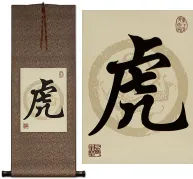
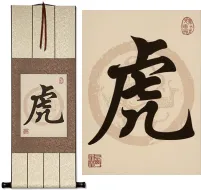
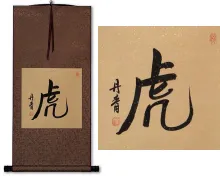
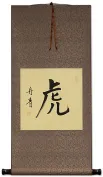
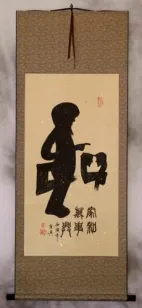
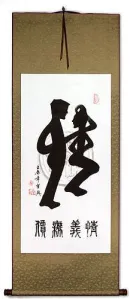
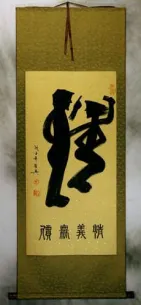
Special Tiger Calligraphy Scroll
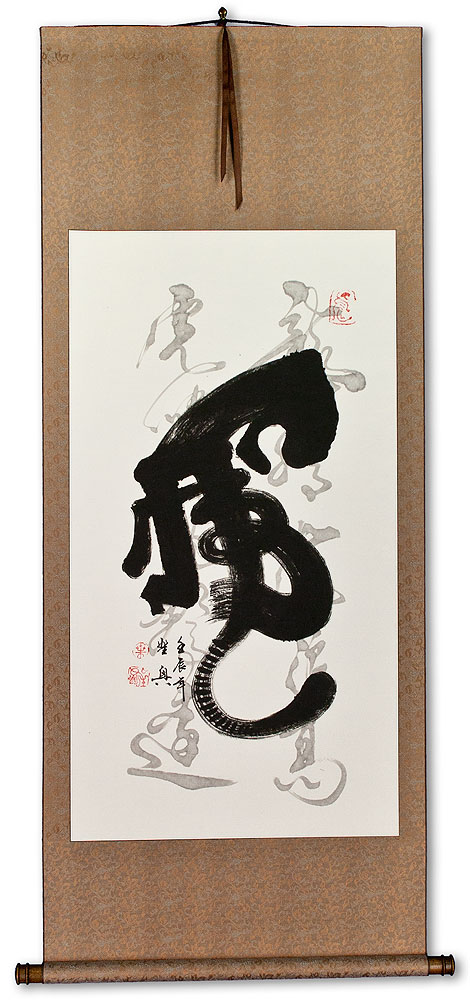
60½"
28"
Typical Gallery Price: $200.00
$69.88Sold Out
Sorry you missed it.
• Hand-Painted Artwork.
• Handmade Wall Scroll.
• Money-Back Guarantee.
Approximate Measurements
Artwork Panel: 53cm x 98cm ≈ 20¾" x 38½"
Silk/Brocade: 62cm x 154cm ≈ 24½" x 60½"
Width at Wooden Knobs: 71cm ≈ 28"
Information about caring for your wall scrollSee Larger Image
Tiger
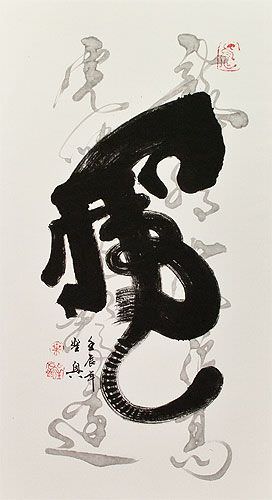
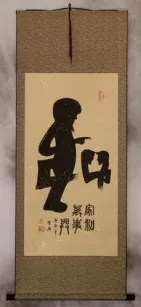
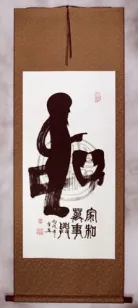
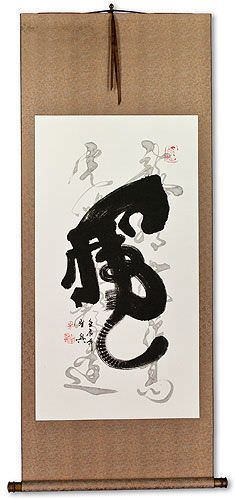
Close up view of the tiger artwork mounted to this silk brocade wall scroll
This is a very unique form of calligraphy. It's a Chinese character that is made to look like an actual figure. In this case, a roaring tiger.
The large character is pronounced "hu" in Chinese. It's also the symbol for tiger in Japanese Kanji and old Korean Hanja. Though it might take a bit of imagination to actually "read" this tiger-shaped character.
These are some of the variations of how the tiger character has been written in the past 3000 years:


The last one is a curive style, and you may see the curly stroke in the body of the tiger that matches this one.
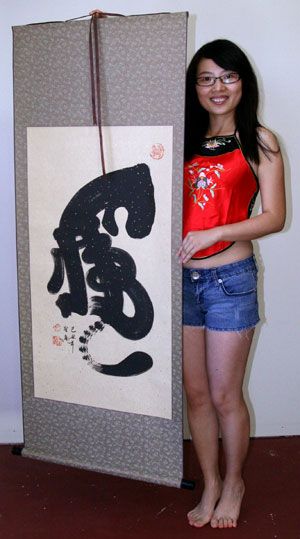
Here's Sandy holding a tiger special Asian calligraphy wall scroll. As you can see, it's a nice large-sized wall scroll that will look great in your home.
About the Artist...
This was painted by a very shy artist named Ye Ying-Xing from near Guilin, China. I asked if I could take his picture, but he politely refused with a gesture of modesty. He does not seek fame, and in another gesture of Chinese modesty, he insulted his own artwork, saying that it was not good enough to make such a fuss over.
I think the artwork is worthy, and offers a unique and different style that most people in the west have never seen before (it's even rare in China).
This item was listed or modified
Feb 23rd, 2017
Typical Gallery Price: $200.00
$69.88Sold Out
Sorry you missed it.