Many custom options...


And formats...



Affection in Chinese / Japanese...
Buy an Affection calligraphy wall scroll here!
Personalize your custom “Affection” project by clicking the button next to your favorite “Affection” title below...
Love and Affection
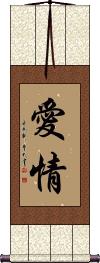
愛情 is a universal word in Japanese, Korean, and Chinese which means love and affection.
Some may translate this as “love between a man and a woman.”
Depending on the context, it can mean utter devotion or favorite.
Passions / Feelings / Emotions
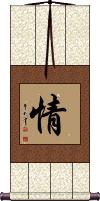
情 means feelings, emotions, passions, and sometimes refers to the situation you are in (with your emotions).
At least, this is the definition in Chinese and Japanese. This word is a bit stronger in Korean Hanja, where it means affection, love, compassion, sympathy, tender feelings, and emotions. Just as in Chinese and Japanese, this can also refer to your circumstances or your facts of life in Korean.
情 is also the original Korean Hanja for the surname Jeong (정).
In Japanese, this can be the surname Sei.
Love
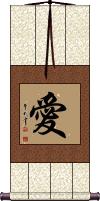
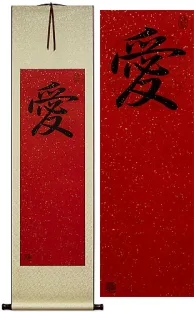
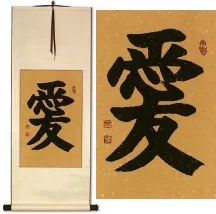
愛 universally means love in Chinese, Japanese Kanji, old Korean Hanja, and old Vietnamese.
愛 is one of the most recognized Asian symbols in the West and is often seen on tee shirts, coffee mugs, tattoos, and more.
愛 can also be defined as affection, to be fond of, to like, or to be keen on. It often refers to romantic love, and is found in phrases like, “I love you.” But in Chinese, one can say, “I love that movie” using this character as well.
This can also be a pet name or part of a pet name in the way we say “dear” or “honey” in English.
This can be a girl’s name “Ai” in both Chinese and Japanese.
More about this character:
This may be hard to imagine as a westerner but the strokes at the top of this love character symbolize family & marriage.
 The symbol in the middle is a little easier to identify. It is the character for "heart" (it can also mean "mind" or "soul"). I guess you can say that no matter if you are from the East or the West, you must put your heart into your love.
 The strokes at the bottom create a modified character that means "friend" or "friendship."
I suppose you could say that the full meaning of this love character is to love your family, spouse, and friends with all of your heart, since all three elements exist in this character.
See Also: I Love You | Caring | Benevolence | Friendliness | Double Happiness Happy Marriage Wall Scroll
Best Love / Most Sincere Love
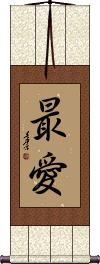
最愛 is a Japanese word that means the best love, beloved, or most sincere love of your life.
This could be a romantic love such as your love for your spouse or a boyfriend/girlfriend.
It can also apply to the extreme love you have for your children or a parent and maybe a really good friend.
Best Love / Most Sincere Love
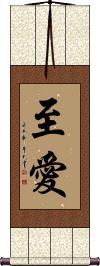
至愛 can mean the best love or most sincere love of your life.
This could be a romantic love such as your love for your spouse or a boyfriend/girlfriend.
It can also apply to the extreme love you have for your children or a parent and maybe a really good friend.
See Also: I Love You
This in-stock artwork might be what you are looking for, and ships right away...
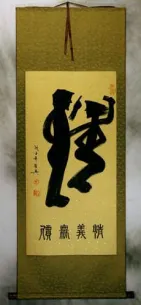
Gallery Price: $200.00
Your Price: $69.88
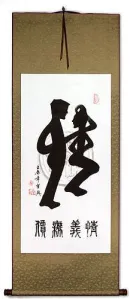
Gallery Price: $53.00
Your Price: $29.00
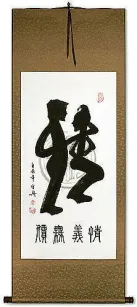
Gallery Price: $53.00
Your Price: $29.00
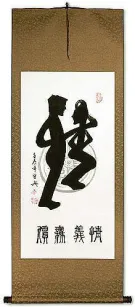
Gallery Price: $35.00
Your Price: $19.00
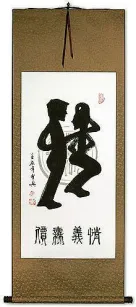
Gallery Price: $53.00
Your Price: $29.00


Gallery Price: $60.00
Your Price: $36.88

Gallery Price: $200.00
Your Price: $122.88
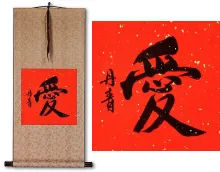
Gallery Price: $65.00
Your Price: $39.88
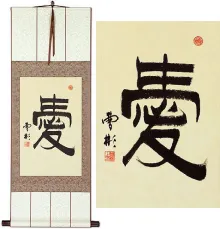
Gallery Price: $90.00
Your Price: $49.88
Gallery Price: $87.50
Your Price: $39.00
Not the results for affection that you were looking for?
Below are some entries from our dictionary that may match your affection search...
| Characters If shown, 2nd row is Simp. Chinese |
Pronunciation Romanization |
Simple Dictionary Definition |
友 see styles |
yǒu you3 yu yuuji / yuji ゆうじ |
More info & calligraphy: Friend / Friendship(1) (archaism) (See 友・とも・1) friend; (noun or adjectival noun) (2) (archaism) affection (for siblings); (personal name) Yūji friend |
嫪 see styles |
lào lao4 lao rō |
More info & calligraphy: Laoto have affection |
情 see styles |
qíng qing2 ch`ing ching makoto まこと |
More info & calligraphy: Passions / Feelings / Emotions(1) feelings; emotion; sentiment; (2) compassion; sympathy; (3) passion; affection; love; (4) the way things really are; the actual situation; (personal name) Makoto The feelings, passions, desires, affections, sensations; sentient; affinities; affairs, facts. Particular affections, duties, or affairs. |
愛 爱 see styles |
ài ai4 ai rui るい |
More info & calligraphy: Love(n,n-suf) (1) (See 愛する) love; affection; care; (2) {Buddh} attachment; craving; desire; (3) {Christn} (See アガペー・1) agape; (4) (abbreviation) Ireland; (female given name) Rui kāma; rāga. Love, affection, desire; also used for tṛṣṇā, thirst, avidity, desire, one of the twelve nidānas. It is intp. as 貪 coveting, and 染著 defiling attachment; also defined as defiling love like that toward wife and children, and undefiling love like that toward one's teachers and elders. |
慈 see styles |
cí ci2 tz`u tzu yoshimi よしみ |
More info & calligraphy: Mercy / Compassion / Love(personal name) Yoshimi Affection (as that of a mother), mercy, compassion, tenderness; mother. |
好意 see styles |
hǎo yì hao3 yi4 hao i koui / koi こうい |
More info & calligraphy: Good Intentions(1) kindness; favor; favour; friendliness; (2) goodwill; affection; liking (for someone); love |
情義 情义 see styles |
qíng yì qing2 yi4 ch`ing i ching i jougi / jogi じょうぎ |
More info & calligraphy: Love and Honorjustice and humanity |
想い see styles |
omoi おもい |
More info & calligraphy: Omoi / Desire |
愛心 爱心 see styles |
ài xīn ai4 xin1 ai hsin rabu らぶ |
More info & calligraphy: Loving Heart / Compassion(obsolete) love; affection; (female given name) Rabu A loving heart; a mind full of desire; a mind dominated by desire. |
愛情 爱情 see styles |
ài qíng ai4 qing2 ai ch`ing ai ching aijou / aijo あいじょう |
More info & calligraphy: Love and Affection(noun - becomes adjective with の) love; affection |
慈愛 慈爱 see styles |
cí ài ci2 ai4 tz`u ai tzu ai yasue やすえ |
More info & calligraphy: Love and Devotionaffection (esp. parental); love; fondness; (female given name) Yasue to love affectionately |
敬愛 敬爱 see styles |
jìng ài jing4 ai4 ching ai yoshinari よしなり |
More info & calligraphy: Love and Respect(noun, transitive verb) respect and affection; love and respect; (personal name) Yoshinari Reverence and love; reverent love. |
残心 see styles |
zanshin ざんしん |
More info & calligraphy: Alert / On Guard / Lingering Mind |
親情 亲情 see styles |
qīn qíng qin1 qing2 ch`in ch`ing chin ching |
More info & calligraphy: Family Love |
親思い see styles |
oyaomoi おやおもい |
More info & calligraphy: Love for Parents |
寵 宠 see styles |
chǒng chong3 ch`ung chung chou / cho ちょう |
to love; to pamper; to spoil; to favor (See 寵愛) favor; favour; affection; (given name) Chō |
憮 怃 see styles |
wǔ wu3 wu |
(literary) to have tender affection for; (literary) discouraged; disappointed; (literary) startled |
眷 see styles |
juàn juan4 chüan ken けん |
(bound form) one's family, esp. wife and children; (literary) to regard with love and affection; to feel concern for (given name) Ken Regard, love; wife; family; relatives; retainers. |
睠 眷 see styles |
juàn juan4 chüan |
(literary) to regard with love and affection; to feel concern for (variant of 眷[juan4]) See: 眷 |
瞖 翳 see styles |
yì yi4 i ei |
variant of 翳[yi4] timira, an affection of the eye, eye-film, cataract, dim sight, blindness. |
老 see styles |
lǎo lao3 lao rou / ro ろう |
prefix used before the surname of a person or a numeral indicating the order of birth of the children in a family or to indicate affection or familiarity; old (of people); venerable (person); experienced; of long standing; always; all the time; of the past; very; outdated; (of meat etc) tough (n,n-pref,n-suf) (1) old age; age; old people; the old; the aged; senior; elder; (pronoun) (2) (archaism) (humble language) (used by the elderly) I; me; my humble self; (surname) Rou jarā; old, old age. |
萌 see styles |
méng meng2 meng moyuru もゆる |
(bound form) to sprout; to bud; (coll.) cute; adorable (orthographic borrowing from Japanese 萌え "moe", affection for an anime or manga character); variant of 氓[meng2] (female given name) Moyuru a sprout |
貪 贪 see styles |
tān tan1 t`an tan tan; ton; don たん; とん; どん |
to have a voracious desire for; to covet; greedy; corrupt (1) coveting; (2) {Buddh} (usu. とん) raga (desire) rāga; colouring, dyeing, tint, red; affection, passion, vehement longing or desire; cf. M. W. In Chinese: cupidity, desire; intp. tainted by and in bondage to the five desires; it is the first in order of the 五鈍使 pañca-kleśa q. v., and means hankering after, desire for, greed, which causes clinging to earthly life and things, therefore reincarnation. |
鍾 钟 see styles |
zhōng zhong1 chung chin ちん |
handleless cup; goblet; (bound form) to concentrate (one's affection etc); variant of 鐘|钟[zhong1] round bronze jar used for storing alcohol (Han dynasty China); (surname) Chin |
閃 闪 see styles |
shǎn shan3 shan sen せん |
to dodge; to duck out of the way; to beat it; shaken (by a fall); to sprain; to pull a muscle; lightning; spark; a flash; to flash (across one's mind); to leave behind; (Internet slang) (of a display of affection) "dazzlingly" saccharine (female given name) Sen Flash; get out of the way. |
厚愛 厚爱 see styles |
hòu ài hou4 ai4 hou ai atsue あつえ |
to show great affection and care (female given name) Atsue |
友愛 友爱 see styles |
yǒu ài you3 ai4 yu ai yume ゆめ |
friendly affection; fraternal love fraternity; friendship; (female given name) Yume |
吃醋 see styles |
chī cù chi1 cu4 ch`ih ts`u chih tsu |
to feel jealous (esp. because of a rival in love or affection) |
和人 see styles |
wajin わじん |
(archaism) you (nuance of either deep affection or contempt); (archaism) Japanese person (term esp. used in ancient China, etc.); (personal name) Wajin |
好き see styles |
zuki ずき |
(suffix) (1) love of; affection for; enthusiast for; lover of; fan; -phile; (suffix) (2) being attractive to; being liked by |
Click here for more affection results from our dictionary
The following table may be helpful for those studying Chinese or Japanese...
| Title | Characters | Romaji (Romanized Japanese) | Various forms of Romanized Chinese | |
| Love and Affection | 愛情 爱情 | aijou / aijo | ài qíng / ai4 qing2 / ai qing / aiqing | ai ch`ing / aiching / ai ching |
| Passions Feelings Emotions | 情 | jou / nasake jo / nasake | qíng / qing2 / qing | ch`ing / ching |
| Love | 愛 爱 | ai | ài / ai4 / ai | |
| Best Love Most Sincere Love | 最愛 | moai | ||
| Best Love Most Sincere Love | 至愛 至爱 | zhì ài / zhi4 ai4 / zhi ai / zhiai | chih ai / chihai | |
| In some entries above you will see that characters have different versions above and below a line. In these cases, the characters above the line are Traditional Chinese, while the ones below are Simplified Chinese. | ||||

Successful Chinese Character and Japanese Kanji calligraphy searches within the last few hours...



