Many custom options...


And formats...



God in Chinese / Japanese...
Buy a God calligraphy wall scroll here!
Personalize your custom “God” project by clicking the button next to your favorite “God” title below...
2. Trust in God
3. Trust in God / In God We Trust
6. Fear God
8. Trust in God / Belief in God
9. God of Zion / God of Abraham
10. God Bless You / May God Protect You
11. God Bless You / God Be With You
13. God of Warcraft
16. God is Love
17. Heaven Blesses the Diligent
18. God in the Glorious Center of Heaven
19. Trust in God / Faith in God
20. Warrior of God / Soldier of God
21. God is Good
23. Blessed by God
25. God of Thunder
26. Child of God
27. God is Good
29. Grace of God / Divine Blessing
30. God Forgive Me
31. God of War
32. God Loves You
35. God Bless You
37. Venus / Amor / God of Love
38. Xuan Wu / Genbu / Black Tortoise God
39. There is no god but Allah, and Muhammad is His Messenger
42. Religious Devotion / Faith in God / Religious Faith
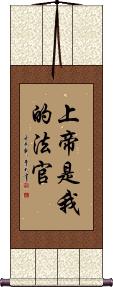
God is my Judge
Trust in God
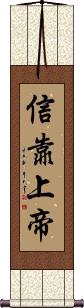
信靠上帝 means “Trust in God,” “Faith in God,” “Rely upon God” and/or “Believe in God.”
Trust in God / In God We Trust
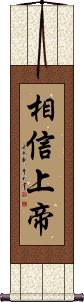
相信上帝 means exactly what the title suggests. The first two characters mean “trust” or “believe,” and the second two mean “God” (as in the God of Abraham and the God of Zion).
Thisis also how the American phrase “In God We Trust” as seen on U.S. Currency would be translated into Chinese. It would also be correct to say that this means “Believe in God,” though, in this arrangement/context, one would be more likely to interpret it as “trust.”
Only God Can Judge Me
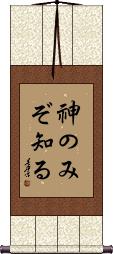
神のみぞ知る means “Only God can judge me” in Japanese.
Note: Because this selection contains some special Japanese Hiragana characters, it should be written by a Japanese calligrapher.
Only God Can Judge Me
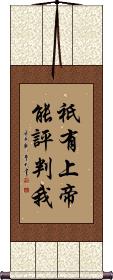
只有上帝能评判我 means “Only God can judge me” in Chinese.
God is Always With You
God is With Me Always
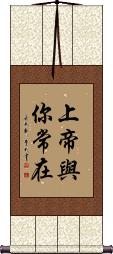
The direct translation of the Chinese characters, 上帝与你常在, is “God Together [with] You Always Exist.”
Keep in mind that Chinese grammar is sometimes very different from English. This makes perfect sense in Chinese.
Note: The title for God is the first two characters - the other words in the direct translation represent one character each.
Fear God
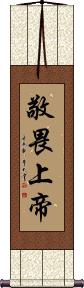
敬畏上帝 is probably the best way to translate the Christian English phrase “Fear God” into Chinese.
The first two characters mean to revere, be in awe of, or a general term of reverence. It can mean fear, but only in the context of respect or fear of authority.
Fighter for God
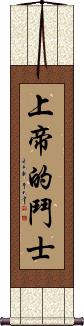
上帝的鬥士 means “God's Fighter.”
While a lot of people search for “Warrior of God,” or “Soldier of God,” this is actually the most natural way to say something like this in Chinese.
Trust in God / Belief in God
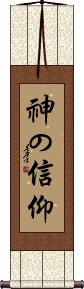
神の信仰 is the simplest way to express “Trust in God” in Japanese.
The first character means God, deity, divinity, or spirit (in this case, it will be read as God).
The second character is a particle that links the ideas.
The last two characters mean faith, belief, or creed in a religious context.
God of Zion / God of Abraham
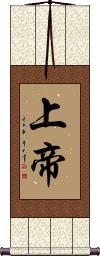
上帝 is how Chinese Christians and Jews refer to God, AKA The Judeo-Christian God.
There are Chinese Jews whose ancestry dates back to Jewish traders on the silk road. They are known as the Kaifeng Jews. Most have left China for Israel now.
There are also plenty of Christians in China of the Protestant and Catholic varieties. However, the churches are basically run by the government, and the Chinese Catholic church does not recognize the Pope.
Oddly, in my experience, I found the Chinese Protestant church to be much less political compared to Baptist and other Protestant churches that I have visited in America.
上帝 is also the typically-used title for God in Japanese.
While you may find this term in old Korean dictionaries, it is an obscure and rarely-used title for God in modern Korean.
See Also: Christianity | Jesus Christ
God Bless You / May God Protect You
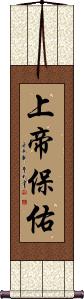
上帝保佑 is a blessing exchanged between Chinese Christians.
The first two characters mean God (The God of Zion). The second two characters express the idea of giving protection. Another way to translate this is “May God protect you.”
See Also: Guardian Angel
God Bless You / God Be With You
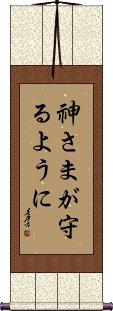
神さまが守るように is about as close as you can get to, “God Bless You” in Japanese.
This literally means “[May] God Protect [You].” It can also mean “God is Always With You,” as the word in this phrase that means “protect” can also mean to follow or be with. In fact, the Japanese dictionary entry for that word reads like this: to protect; to guard; to defend; to keep (i.e. a promise); to abide; to observe; to follow.
Note: Because this selection contains some special Japanese Hiragana characters, it should be written by a Japanese calligrapher.
Word of God / The Gospel
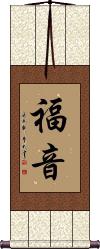
福音 is the Chinese, Korean and Japanese word for “Gospel” or “Word of God.”
福音 is a specifically Christian word in Asia (not used for any other religion).
The first character means blessing, good fortune, or good luck. This first character is a special character used throughout China to bring good tidings and fortune - especially during Chinese New Year. The second character means sound, noise, or news.
Together, these characters create a word that means “The Good News” or “The Sound of Good Fortune.”
When read by a Chinese or Japanese person, this word is always perceived as “The Christian Gospel,” “Word of God,” or even “The Voice of God.”
See Also: Christianity | Jesus Christ
God of Warcraft
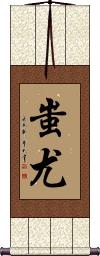
蚩尤 is the name Chi You, legendary creator of metalworking and weapons.
There is also a comet named in his honor. Some refer to him as the Chinese god of war. He is also somewhat-known in Japan as “Shiyu.”
God Is With You Always
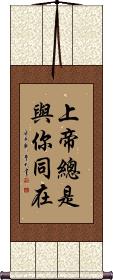
I was going to write this phrase as “God is with me always” but as a wall scroll, hanging in your room, it is talking to you (you're not talking), so it works better with you.
上帝總是與你同在 is a nice phrase that any Chinese Christian would enjoy on his/her wall.
If I annotate this, it sounds a little strange in English but it's perfectly natural in Chinese:
上帝 God | 总是 always | 与 and | 你 you | 同 together | 在 existing
Allah / God of Islam
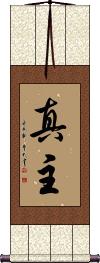
真主 is how Chinese Muslims refer to God (it literally means “True Master”).
Oddly, in China, two different names for God have emerged. Even though Muslims, Christians, and Jews all worship the same God of Abraham.
In Arabic, the word Allah is just the Arabic way to say, God. Arab Christians pray to Allah, just like Arab Muslims. Somehow in China, the title of God diverged.
If you are curious, there are millions of Muslims throughout China but especially in the northwest portion of China known as Xinjiang. Here you will find descendants of Turkmen, Persian, Arab, and other ethnicities. Some are mixed with Han-Chinese blood; others appear to be pure Turkmen. Many have fair complexions, green eyes, and light hair but all are citizens of China. A visit to Xinjiang will shift your paradigm and blow away all of your stereotypes about what it means to be Chinese.
God is Love
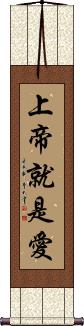
上帝就是愛 is a common way to express “God is Love” in Chinese.
God is Love
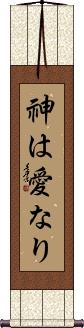
神は愛なり is a common way to express “God is Love” in Japanese.
Note: Because this selection contains some special Japanese Hiragana characters, it should be written by a Japanese calligrapher.
Heaven Blesses the Diligent
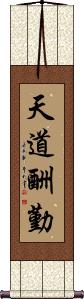
天道酬勤 can be interpreted in a few different ways:
God blesses those who work hard.
It is the way of Heaven to smile on the diligent.
God will reward those that are worthy.
Heaven blesses those who are diligent.
Whichever translation you like, a scroll like this on your wall may serve as a reminder to work hard because your diligence will pay off both in this life and the next.
Note: This can be pronounced in Korean, but it's not a commonly used term.
God in the Glorious Center of Heaven
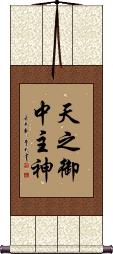
天之御中主神 is a phrase submitted by a customer.
I do not have information on the origin of this phrase.
Trust in God / Faith in God
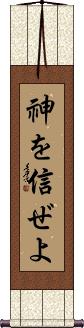
神を信ぜよ is a way to express “Trust in God” in Japanese.
The first character is “God.”
The second character is a particle that links the ideas here.
The last three characters are a word that means “to believe,” “to believe in,” “to place trust in,” “to confide in,” and “to have faith in.”
Basically, this is the Japanese phrase for “Have faith in God,” “Belief in God,” or “Trust in God.”
Note: Because this selection contains some special Japanese Hiragana characters, it should be written by a Japanese calligrapher.
Warrior of God / Soldier of God
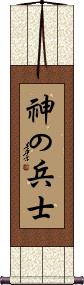
神の兵士 means “Warrior of God” or “Soldier of God” in Japanese.
God is Good
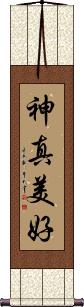
神真美好 means “God is good,” in Chinese.
You can also translate this as “God is really good” or “God is so good.”
The last two characters are a version of good that suggests very strong goodness. The characters read, “beautifully good.”
Hachiman: God of War
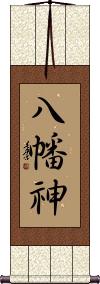
八幡神 is the Japanese God of War.
He is often known by the short name “Hachiman.” This version has the “God” title “jin” at the end, completing the idea of “God of War.”
Blessed by God
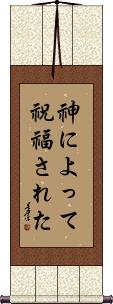
神によって祝福された means “Blessed by God” in Japanese.
This would be understood to mean “We have been blessed by God.”
Note: Because this selection contains some special Japanese Hiragana characters, it should be written by a Japanese calligrapher.
Sanctified by God
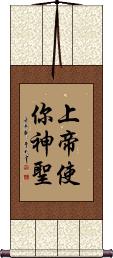
上帝使你神聖 means “Sanctified by God,” in Chinese.
This was added at the request of a customer. This may be more appropriate for a priest or reverend than a layman. But that depends on how your religion sees the order of things.
If you directly translate, you get something like, “God made you Holy.”
Here's the character breakdown:
上帝 = God
使 = Makes; Made; Let
你 = You
神聖 = Sacred; Holy; Sanctification; Divine; Hallow; Holiness
God of Thunder
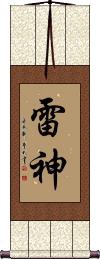
雷神 is how to write the Japanese “Thunder God.” They don't really have separate words for thunder and lightning in Japanese, so this is also the “Lightning God.”
雷神 makes sense in Chinese (though not a common title).
This is also the origin of the English name Raiden.
Child of God
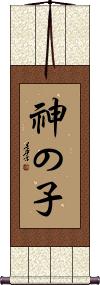
神の子 is “Child of God” in Japanese.
Child of God
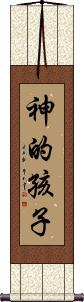
神的孩子 is “Child of God” in Chinese.
God is Good
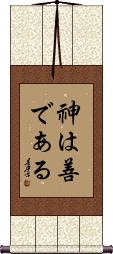
神は善である means “God is Good,” in Japanese.
Note: Because this selection contains some special Japanese Hiragana characters, it should be written by a Japanese calligrapher.
God is Always With Me
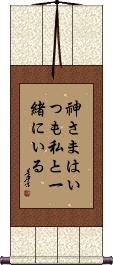
神さまはいつも私と一緒にいる is a Japanese phrase that means “God is always with me.”
Note: Because this selection contains some special Japanese Hiragana characters, it should be written by a Japanese calligrapher.
Grace of God / Divine Blessing
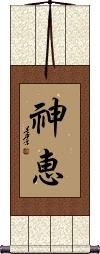
神惠 can be translated as “God's Blessing,” “Blessed by God,” or “Divine Blessing” in Japanese Kanji.
God Forgive Me
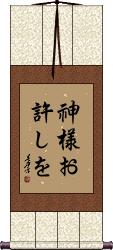
神様お許しを is how to write “God Forgive Me” in Japanese.
There is an essence of humble begging or “please” implied in this phrase.
Note: Because this selection contains some special Japanese Hiragana characters, it should be written by a Japanese calligrapher.
God of War
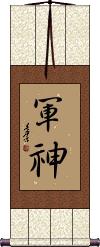
軍神 is a Japanese title meaning god of war, or war hero.
This can also be the surname Gunshin.
God Loves You
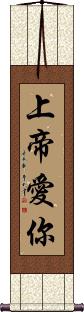
上帝愛你 means “God loves you,” in Chinese.
God is Always With You
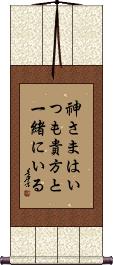
神さまはいつも貴方と一緒にいる is a Japanese phrase that means “God is always with you.”
Note: Because this selection contains some special Japanese Hiragana characters, it should be written by a Japanese calligrapher.
Guandi: God of War
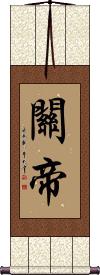
關帝 is the title, Guandi, the God of War, a deified hero of the Three Kingdoms, and a protector of Buddhism.
God Bless You
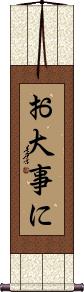
お大事に means “God bless you” in Japanese.
It can also mean “take care of yourself,” or “get well soon.” It's not always associated with religious meaning.
Note: Because this selection contains some special Japanese Hiragana characters, it should be written by a Japanese calligrapher.
God Give Me Strength
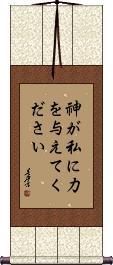
神が私に力を与えてください is “God give me strength” in Japanese.
This is the long and formal version. We also have a short version.
Note: Because this selection contains some special Japanese Hiragana characters, it should be written by a Japanese calligrapher.
God Give Me Strength
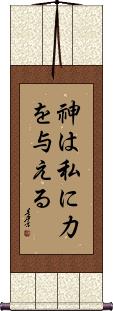
神は私に力を與える means “God give me strength,” in Japanese.
神は私に力を與える is the short version, we also have a longer more formal version.
Note: Because this selection contains some special Japanese Hiragana characters, it should be written by a Japanese calligrapher.
Venus / Amor / God of Love
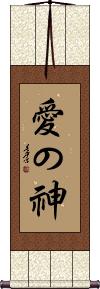
愛の神 is the Japanese title for Amor, Eros, Venus, or God of Love.
Xuan Wu / Genbu / Black Tortoise God
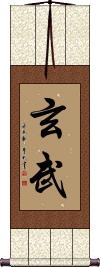
玄武 can refer to the Black Tortoise (an ancient Chinese constellation of stars- part of the seven mansions of the north sky).
In Daoism, this is the God of the North sky.
This also refers to a Black Tortoise god, said to rule over the northern heavens in Japanese. Can also be pronounced/romanized as genmu or when used as a personal name, Hirotake in Japanese.
There is no god but Allah, and Muhammad is His Messenger
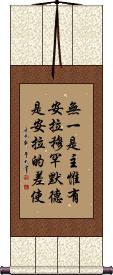
無一是主惟有安拉穆罕默德是安拉的差使 is one of the key creeds of Islam.
While perhaps more often seen in Arabic as
there are many native Chinese Muslims (especially the Hui ethnicity) that do not speak Arabic.
Instead, they use this Chinese phrase to express this idea or statement of faith.
God Give Me Strength
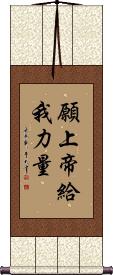
願上帝給我力量 is a wish or a prayer that you might call out at a desperate time.
Translated by us for a military serviceman in Iraq. He may need to use this phrase often, though I am not sure where he's going to find a place to hang a wall scroll.
Kawa no Kami / River God
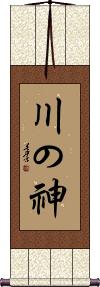
川の神 is the title of Kawa no Kami - a River deity of Japanese folklore.
Religious Devotion / Faith in God / Religious Faith
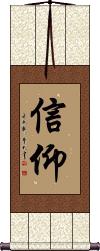
信仰 means firm belief, faith, persuasion, conviction, and sometimes religion or creed in Chinese, Japanese Kanji, and old Korean Hanja.
This clearly fits the religious connotation of the English word “devotion.”
This is often used to refer to a person of faith or a religious person.
This can be directly translated as “firm belief,” “creed,” “conviction,” or simply as “religious,” depending on context.
Some will also use this to mean “trust in God” in Japanese (though the term for God is not actually in this title).
It should be noted that this word is a little strange alone on a wall scroll.
While this can be pronounced in Japanese, it’s not a great selection for a wall scroll if your audience is Japanese.
Grace from Heaven / Grace from God
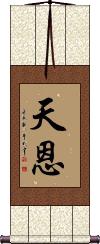
天恩 is the deepest way to say “Heaven's Grace” or “God's Grace” in Chinese.
The first character means Heaven or sky (referring, in this case, to the domain of God).
The second character means grace, blessings, benevolence, favor/favour, acts of kindness, merits, or beneficial influence.
This title can also be defined as:
Blessings of Heaven, Favor of the Emperor, Divination's luckiest day, or blessings of nature. Note: When you see “Emperor” above, remember that the Emperor, like the Pope, is theoretically chosen by God or seen as an emissary or conduit of God in ancient Asian culture. It would only be read that way in a certain context, such as “The Emperor, in his mercy, bestowed upon him Heaven's Grace, and the prisoner was set free.”
Note: Technically, this is a Japanese word too (pronounced "ten-on") but it’s rarely used in Japan anymore. Therefore, this title is best if your audience is Chinese.
Grace from Heaven / Grace from God
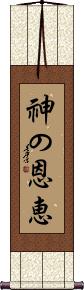
神の恩恵 means God's Grace in Japanese.
The first two characters act to create a word that means “divine,” “God's,” or “The Spirit's.”
The last two Kanji mean grace, favor/favour, blessing, or benefit.
Soldier of the Gods
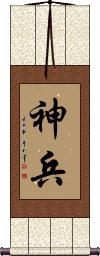
神兵 is a Japanese, Chinese, and Korean title that means “soldier dispatched by a god,” or “soldier under the protection of the gods.”
神兵 is used more in Japanese (especially in animation) than the other languages.
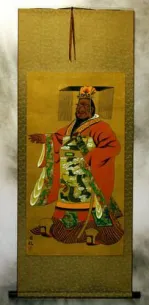
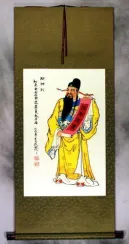
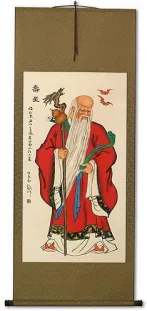
This in-stock artwork might be what you are looking for, and ships right away...
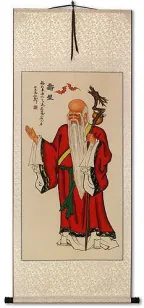
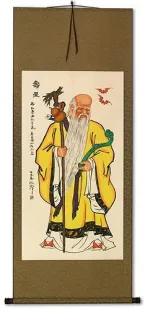
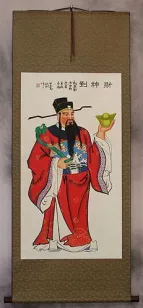
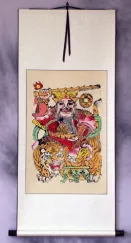
Gallery Price: $108.00
Your Price: $59.88
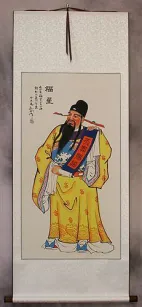
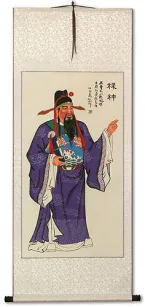
Gallery Price: $71.00
Your Price: $39.00
These search terms might be related to God:
Advance Bravely / Indomitable Spirit
Beautiful Heart / Beautiful Spirit
Beautiful Spirit
Body Mind Spirit
Courageous Spirit
Divine Spirit
Dragon Spirit
Esprit De Corps / Team Spirit
Fighting Spirit
Free Spirit
Fruit of the Spirit
Ghost / Soul / Spirit
Goddess of Beauty / Beautiful Spirit
Heart / Mind / Spirit
Heroic Spirit
Heroic Spirit / Great Ambition
Heroic Spirit / Heroism
Holy Spirit / Holy Ghost
Independent Spirit
Independent Spirit / Independent Heart
Indomitable Spirit
Indomitable Spirit / Indomitable Attitude
Inner Beauty / Beauty of Spirit
Inugami / Dog Spirit
Mind Body Spirit
Old, but More Vigorous in Spirit
Purified Spirit / Enlightened Attitude
Soul / Spirit
Spirit
Spirit / Soul
Spirit / Spiritual Essence
Spirit of Taekwondo
Spirit of the Dragon Martial Arts
Spiritual Strength / Strength of Spirit
Taekwondo Tenets / Spirit of Taekwon-Do
The Spirit of Dragon and Tiger
The Spirit of the Dragon Horse
The Spirit of the Dragon Horse and Power of a Tiger
Warrior Essence / Warrior Spirit / Martial
Warrior Soul / Heroic Spirit
Warrior Soul / Spirit of a Fighter
Wolf Spirit / Soul of a Wolf
The following table may be helpful for those studying Chinese or Japanese...
| Title | Characters | Romaji (Romanized Japanese) | Various forms of Romanized Chinese | |
| God is my Judge | 上帝是我的法官 | shàng dì shì wǒ de fǎ guān shang4 di4 shi4 wo3 de fa3 guan1 shang di shi wo de fa guan shangdishiwodefaguan | shang ti shih wo te fa kuan shangtishihwotefakuan |
|
| Trust in God | 信靠上帝 | xìn kào shàng dì xin4 kao4 shang4 di4 xin kao shang di xinkaoshangdi | hsin k`ao shang ti hsinkaoshangti hsin kao shang ti |
|
| Trust in God In God We Trust | 相信上帝 | xiāng xìn shàng dì xiang1 xin4 shang4 di4 xiang xin shang di xiangxinshangdi | hsiang hsin shang ti hsianghsinshangti |
|
| Only God Can Judge Me | 神のみぞ知る | kami nomi zo shiru kaminomizoshiru | ||
| Only God Can Judge Me | 衹有上帝能評判我 只有上帝能评判我 | zhǐ yǒu shàng dì néng píng pàn wǒ zhi3 you3 shang4 di4 neng2 ping2 pan4 wo3 zhi you shang di neng ping pan wo | chih yu shang ti neng p`ing p`an wo chih yu shang ti neng ping pan wo |
|
| God is Always With You | 上帝與你常在 上帝与你常在 | shàng dì yǔ nǐ cháng zài shang4 di4 yu3 ni3 chang2 zai4 shang di yu ni chang zai shangdiyunichangzai | shang ti yü ni ch`ang tsai shangtiyünichangtsai shang ti yü ni chang tsai |
|
| Fear God | 敬畏上帝 | jìng wèi shàng dì jing4 wei4 shang4 di4 jing wei shang di jingweishangdi | ching wei shang ti chingweishangti |
|
| Fighter for God | 上帝的鬥士 上帝的斗士 | shàng dì de dòu shì shang4 di4 de dou4 shi4 shang di de dou shi shangdidedoushi | shang ti te tou shih shangtitetoushih |
|
| Trust in God Belief in God | 神の信仰 | kami no shin kou kaminoshinkou kami no shin ko | ||
| God of Zion God of Abraham | 上帝 | joutei / jotei | shàng dì / shang4 di4 / shang di / shangdi | shang ti / shangti |
| God Bless You May God Protect You | 上帝保佑 | shàng dì bǎo yòu shang4 di4 bao3 you4 shang di bao you shangdibaoyou | shang ti pao yu shangtipaoyu |
|
| God Bless You God Be With You | 神さまが守るように | kami sa ma ga mamo ru you ni kamisamagamamoruyouni kami sa ma ga mamo ru yo ni | ||
| Word of God The Gospel | 福音 | fukuin | fú yīn / fu2 yin1 / fu yin / fuyin | |
| God of Warcraft | 蚩尤 | shi yuu / shiyuu / shi yu | chī yóu / chi1 you2 / chi you / chiyou | ch`ih yu / chihyu / chih yu |
| God Is With You Always | 上帝總是與你同在 上帝总是与你同在 | shàn dì zǒng shì yǔ nǐ tóng zài shan4 di4 zong3 shi4 yu3 ni3 tong2 zai4 shan di zong shi yu ni tong zai shandizongshiyunitongzai | shan ti tsung shih yü ni t`ung tsai shan ti tsung shih yü ni tung tsai |
|
| Allah God of Islam | 真主 | zhēn zhǔ / zhen1 zhu3 / zhen zhu / zhenzhu | chen chu / chenchu | |
| God is Love | 上帝就是愛 上帝就是爱 | shàng dì jiù shì ài shang4 di4 jiu4 shi4 ai4 shang di jiu shi ai shangdijiushiai | shang ti chiu shih ai shangtichiushihai |
|
| God is Love | 神は愛なり | kami wa ai na ri kamiwaainari | ||
| Heaven Blesses the Diligent | 天道酬勤 | tiān dào chóu qín tian1 dao4 chou2 qin2 tian dao chou qin tiandaochouqin | t`ien tao ch`ou ch`in tientaochouchin tien tao chou chin |
|
| God in the Glorious Center of Heaven | 天之御中主神 | tiān zhī yù zhōng zhǔ shén tian1 zhi1 yu4 zhong1 zhu3 shen2 tian zhi yu zhong zhu shen tianzhiyuzhongzhushen | t`ien chih yü chung chu shen tienchihyüchungchushen tien chih yü chung chu shen |
|
| Trust in God Faith in God | 神を信ぜよ | kami wo shin ze yo kamiwoshinzeyo | ||
| Warrior of God Soldier of God | 神の兵士 | kami no heishi kaminoheishi | ||
| God is Good | 神真美好 | shén zhēn měi hǎo shen2 zhen1 mei3 hao3 shen zhen mei hao shenzhenmeihao | shen chen mei hao shenchenmeihao |
|
| Hachiman: God of War | 八幡神 | hachi man jin hachimanjin | ||
| Blessed by God | 神によって祝福された | kami ni yotte shukufuku sa remashita | ||
| Sanctified by God | 上帝使你神聖 上帝使你神圣 | shèng dì shǐ nǐ shén shèng sheng4 di4 shi3 ni3 shen2 sheng4 sheng di shi ni shen sheng shengdishinishensheng | sheng ti shih ni shen sheng shengtishihnishensheng |
|
| God of Thunder | 雷神 | rai jin / raijin | léi shén / lei2 shen2 / lei shen / leishen | |
| Child of God | 神の子 | kami no kou kaminokou kami no ko | ||
| Child of God | 神的孩子 | shén de hái zi shen2 de hai2 zi shen de hai zi shendehaizi | shen te hai tzu shentehaitzu |
|
| God is Good | 神は善である | kami wa zendearu kamiwazendearu | ||
| God is Always With Me | 神さまはいつも私と一緒にいる | kamisama wa itsumo watashi to issho ni iru kamisama wa itsumo watashi to isho ni iru | ||
| Grace of God Divine Blessing | 神恵 / 神惠 神恵 | shin kei / shinkei | ||
| God Forgive Me | 神様お許しを | kami sama o yuru shi wo kamisamaoyurushiwo | ||
| God of War | 軍神 | gunjin / gunshin / ikusagami | ||
| God Loves You | 上帝愛你 上帝爱你 | shàng dì ài nǐ shang4 di4 ai4 ni3 shang di ai ni shangdiaini | shang ti ai ni shangtiaini |
|
| God is Always With You | 神さまはいつも貴方と一緒にいる | kamisama wa itsumo watashi to anata to issho ni iru kamisama wa itsumo watashi to anata to isho ni iru | ||
| Guandi: God of War | 關帝 关帝 | kan tei / kantei | Guān dì / Guan1 di4 / Guan di / Guandi | Kuan ti / Kuanti |
| God Bless You | お大事に | odaijini | ||
| God Give Me Strength | 神が私に力を與えてください 神が私に力を与えてください | kami ga watashi ni chikara o atae te kudasai | ||
| God Give Me Strength | 神は私に力を與える 神は私に力を与える | kami wa watashi ni chikara o ataeru | ||
| Venus Amor God of Love | 愛の神 | ainokami | ||
| Xuan Wu Genbu Black Tortoise God | 玄武 | genbu | xuán wǔ / xuan2 wu3 / xuan wu / xuanwu | hsüan wu / hsüanwu |
| There is no god but Allah, and Muhammad is His Messenger | 無一是主惟有安拉穆罕默德是安拉的差使 无一是主惟有安拉穆罕默德是安拉的差使 | wú yī shì zhǔ wéi yǒu ān lā mù hǎn mò dé shì ān lā de chāi shǐ wu2 yi1 shi4 zhu3 wei2 you3 an1 la1 mu4 han3 mo4 de2 shi4 an1 la1 de chai1 shi3 wu yi shi zhu wei you an la mu han mo de shi an la de chai shi | wu i shih chu wei yu an la mu han mo te shih an la te ch`ai shih wu i shih chu wei yu an la mu han mo te shih an la te chai shih |
|
| God Give Me Strength | 願上帝給我力量 愿上帝给我力量 | yuàn shàng dì gěi wǒ lì liàng yuan4 shang4 di4 gei3 wo3 li4 liang4 yuan shang di gei wo li liang yuanshangdigeiwoliliang | yüan shang ti kei wo li liang yüanshangtikeiwoliliang |
|
| Kawa no Kami River God | 川の神 | kawa no kami kawanokami | ||
| Religious Devotion Faith in God Religious Faith | 信仰 | shin kou / shinkou / shin ko | xìn yǎng / xin4 yang3 / xin yang / xinyang | hsin yang / hsinyang |
| Grace from Heaven Grace from God | 天恩 | tiān ēn / tian1 en1 / tian en / tianen | t`ien en / tienen / tien en | |
| Grace from Heaven Grace from God | 神の恩恵 | kami no on kei kaminoonkei | ||
| Soldier of the Gods | 神兵 | shin pei / shinpei | shén bīng shen2 bing1 shen bing shenbing | shen ping shenping |
| In some entries above you will see that characters have different versions above and below a line. In these cases, the characters above the line are Traditional Chinese, while the ones below are Simplified Chinese. | ||||

Successful Chinese Character and Japanese Kanji calligraphy searches within the last few hours...



