Many custom options...


And formats...



Last in Chinese / Japanese...
Buy a Last calligraphy wall scroll here!
Personalize your custom “Last” project by clicking the button next to your favorite “Last” title below...
Switched to secondary search mode due to lack of results using primary.
These secondary results may not be very accurate. Try a different but similar meaning word or phrase for better results. Or...
Look up Last in my Japanese Kanji & Chinese Character Dictionary(My dictionary is a different system then the calligraphy search you just tried)
If you want a special phrase, word, title, name, or proverb, feel free to contact me, and I will translate your custom calligraphy idea for you.
1. Year-In Year-Out Have Abundance
2. Acupuncture
3. Aikikai
4. Alastair
5. Alastor
11. Architect
13. Avenger
14. Banzai
15. Be Yourself
17. Beautiful Soul
20. Blue Dragon
21. Bodhidharma
22. Born To Be Wild
23. Butt
24. Carpe Diem / Seize the Day
25. Chau
26. Choose Life
27. Chou
28. Christian / Disciple of Christ
31. Color
32. Daodejing / Tao Te Ching - Chapter 9
33. Dark Angel
36. Don’t Panic
37. Dragon and Phoenix Brings Luck
38. The Spirit of Dragon and Tiger
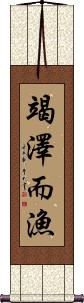
39. Drain the pond to get all the fish
40. Realize Your Ambitions / Embrace Your Ambition
41. Empress
42. Enjoy Life
44. Eternal Friendship / Friends Forever
45. Eternal Love
46. Eternal Life / Everlasting Life / Immortality
47. Everything Happens for a Reason
48. Fall Down Seven Times, Get Up Eight
50. Fear No Evil
52. Keep Your Feet on the Ground
53. Five Elements Tai Chi Fist
54. Forbidden Love
56. Forever Love
57. Forever Family
58. Forgive Yourself
59. Forgive Yourself / Release Yourself
60. Fraternity
61. Free Spirit
62. Free Will
63. Eternal Friendship / Friends Forever
64. Soul Mates
65. From This Moment Forward / From This Day Forward
66. God is Good
67. 50th Golden Wedding Anniversary
68. Grace from Heaven / Grace from God
69. Greatest Love
70. Happy Birthday
71. Happy Family
73. Healing Hands
74. Heart and Soul
75. Home of the Auspicious Golden Dragon
77. Hung Gar
78. Hung Ga Kuen
79. Hung Kuen
80. Hyakuren-Jitoku
81. I am Enough
82. Imagination
83. Immovable Mind
86. I Need You
87. A Life of Serenity Yields Understanding
88. Inner Peace
89. Achieve Inner Peace; Find Deep Understanding
90. Islam
91. Jeet Kune Do
Year-In Year-Out Have Abundance
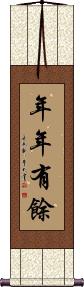
年年有餘 is a common proverb or wish of prosperity you'll hear around the time of Chinese New Year.
Directly translated character by character, it means “Year Year Have Surplus.” A more natural English translation including the deeper meaning would be “Every Year may you Have Abundance in your life.”
On a side note, this phrase often goes with a gift of something related to fish. This is because the last character, “yu” which means surplus or abundance, has exactly the same pronunciation in Mandarin as the word for “fish.”
This is also one of the most common titles for traditional paintings that feature koi fish.
In China, this phrase might make an odd wall scroll - a customer asked especially for this common phrase which is why it appears here. See my other abundance-related words if you want a wall scroll that will seem more comfortable in Chinese culture.
Note: This can be pronounced in Korean, but it's not a commonly used term.
See Also: Prosperity | Good Fortune
Acupuncture
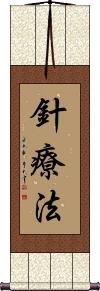
針療法 is one of two ways to write acupuncture in Chinese and Japanese.
The first character means “needle” or “pin.” The second character means “to treat” or “to cure.” The last character means “method” or “way.”
This is the only reasonable selection if your audience is Japanese. This is the formal way to express acupuncture in Chinese, so this version is universal in most of Asia (the best all-around choice in most cases).
Aikikai
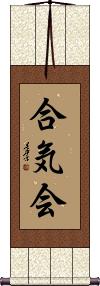
合気会 or “Aikikai” is the original school of Aikido.
Several organizations use this title. The first was established in Japan in 1940 (The Aikikai Foundation or 財団法人合気会).
The only difference between this title and Aikido is the last character, “kai” which means club, group, fraternity, organization, or assembly.
Note: 合気会 may be romanized with a dash like this: Aiki-Kai.
Alastair
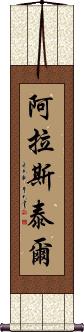
阿拉斯泰爾 is the name Alastair in Chinese (Mandarin).
Alastair
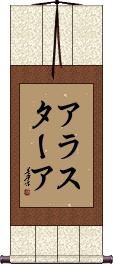
アラスターア is the name Alastair in Japanese (Katakana).
Note: Because this title is entirely Japanese Katakana, it should be written by a Japanese calligrapher.
Alastor
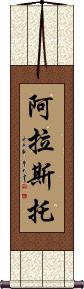
阿拉斯托 is the name Alastor in Chinese (Mandarin).
Alastor
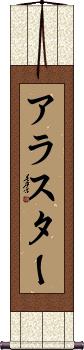
アラスター is the name Alastor in Japanese (Katakana).
Note: Because this title is entirely Japanese Katakana, it should be written by a Japanese calligrapher.
Amazing Grace
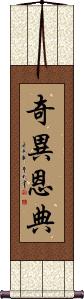
奇異恩典 is the title, “Amazing Grace” in Chinese.
The first two characters can also mean amazing, fantastic, exotic, astonishing, odd, strange, wonderful, extraordinary, uncommon, or rare.
The last two characters mean “grace,” as in “grace or favor of/from God.”
American Football
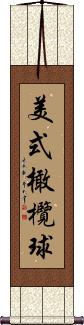
美式橄欖球 is the Chinese title for “American football” (not to be confused with international football known as soccer in the USA).
If you are a player or fan of American football, this will make a great wall scroll for your home.
The first two characters mean “American style.”
The last three characters mean football or rugby (a game involving an oblong or ovoid ball).
The “American” adjective is needed in this title to differentiate between Canadian football, Australian rules football, and rugby.
See Also: Soccer
Animal Kingdom
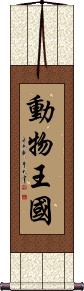
動物王國 is literally what it says.
There is even a TV show in China that is similar to Wild Kingdom or what you would currently see on the Discovery Channel that has this same title.
For your information: In the Chinese way of thinking, the Tiger is the king of the animal kingdom (lions are not native to China, so the tiger took the role that we have given to the lion in our western way of thinking).
The modern Japanese version has a slight variation on the last character (国 instead of 國). Let me know if you want the modern Japanese version (國 would be considered the old or traditional version).
Content and Motionless
The condition of perfect meditation
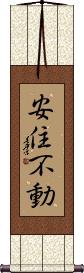
安住不動 means at peace and immovable.
The first two Kanji mean being content with one's present position or well-composed.
The last two Kanji mean immobile, firmness, fixed, and/or motionless.
In the Zen school, this is being well-composed and immovable - the ideal state of Zen meditation.
Archangel / Arch Angel
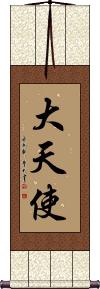
大天使 is the title Archangel in Chinese characters, Japanese Kanji, and old Korean Hanja.
The first character means big or great (in this case, it means “arch”).
The second means heaven (or sky).
The last means messenger.
The second and third characters together make the title for angel, which is literally “Heaven's Messenger.”
This title would be understood as “The Chief of all Angels,” or “The Great Angel.” Some might even say it's the boss of Angels.
See Also: Angel
Architect
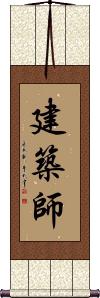
建築師 means Architect in Chinese.
The first two characters mean construction or architecture (of buildings).
The last character means teacher, master, or expert.
Sun Tzu - Art of War
military strategy, tactics, and procedure
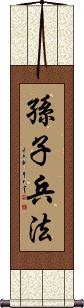
孫子兵法 is the full title of the most famous book of military proverbs about warfare.
The English title is “Sun Tzu's The Art of War.”
The last two characters have come to be known in the west as “The Art of War,” but a better translation would be “military strategy and tactics,” “military skills” or “army procedures.”
Note: Sometimes the author's name is Romanized as “Sun Zi” or “Sunzi.”
It's written the same in Chinese, Japanese Kanji, and Korean Hanja.
Avenger
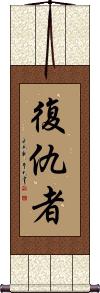
復仇者 is a Chinese title that means avenger or taker of revenge.
The first two characters literally mean avenge, vengeance, reprisal, or revenge.
The last character is a way to say, person. This last character is like adding -er or -ist to subjects like write and art to get writer and artist.
Avenger
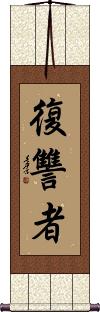
復讐者 is a Japanese Kanji title that means avenger or revenger.
The first two characters literally mean revenge or avenge.
The last character is a way to say a person (or soldier/warrior).
Altogether, you have something like, an “avenging person,” hence avenger.
Banzai
Modern Japanese Version
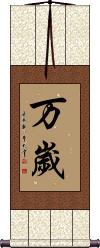
万歲 is the modern Japanese way to write banzai.
We've made two almost identical entries for this word, with just a variation on the first character. In the last century, 萬 was simplified to 万 in Japan and China. The new generation will expect it to be written as 万 but the old generation can still read the more traditional 萬 form. You must make your determination as to what version is best for you. If your audience is mostly Japanese, I suggest 万歲.
While it has become a popular, if not an odd, thing to scream as you jump out of an airplane (preferably with a parachute attached), banzai is actually a very old Asian way to say “hooray.” The Japanese word “banzai” comes from the Chinese word “wan sui” which means “The age of 10,000 years.” It is actually a wish that the Emperor or the Empire live that long.
Imagine long ago when the Emperor made a rare public appearance. This is what all of the people would yell to their leader in respect.
So if you like it as a hooray, or you want to wish someone that they live for 10,000 years, this is the calligraphy for you.
To other things with banzai in their names, I am still waiting for the promised sequel to Buckaroo Banzai.
Other translations: hurrah, long life, congratulations, cheers, live long.
Notes: Sometimes people confuse banzai with bonsai. A bonsai is a miniature tree. They have nothing to do with each other. Further, Bonzai is not a word at all - although it would make a great name for a calcium supplement for older people.
Be Yourself
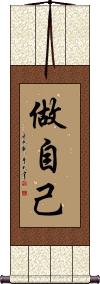
做自己 means “be yourself” in Chinese.
The first character means “to be,” “to become,” or “to act as.”
The last two characters are a word that means “oneself” or “yourself.”
Beautiful Princess
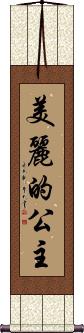
美麗的公主 is how to write beautiful princess in Chinese.
The first two characters mean feminine beauty or rather a way to say beautiful that only applies to women. The middle character is just a connecting character. The last two characters mean princess.
See Also: Queen
Beautiful Soul
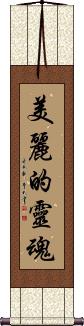
美麗的靈魂 means “Beautiful Soul” in Chinese.
The first two characters mean beautiful, beauty, or gorgeous.
The middle character connects the ideas (a possessive article).
The last two characters mean soul or spirit.
Beware of the Lawyers
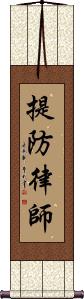
提防律師 is a kind of Chinese joke about lawyers.
The first two characters mean “guard yourself against (an attack)” or “beware.”
The last two characters can be translated as lawyer, attorney, or solicitor.
Separately, those characters mean law/regulation/control and master/expert/teacher. Here, you can see the attorney meaning is pretty clear in the individual characters.
Please note this is Chinese only (it won't make sense in Japanese, and the last two characters are sometimes translated together as “Buddhist Priest” in Japanese).
Bloodless Victory
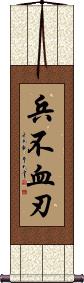
Perhaps a pacifist view or perhaps the best kind of victory; 兵不血刃 reflect this idea:
The edges of the swords not being stained with blood.
You could also translate it as: Win victory without firing a shot.
The first character means army or force. The second character means without or none. The last two characters mean bloodstained knives. So it represents a returning victorious army without bloodstained knives. 兵不血刃 is the very literal sense of this Chinese proverb. The title definition is more accurate to the way this proverb is understood.
Asking yourself why the direct or literal translation is different?
...Think of compound words in English such as “nevertheless” if we break it apart to “never the less,” we will have trouble getting the real definition of “in spite of that.” Similar things happen when multiple characters create a compounded word in Chinese.
Blue Dragon
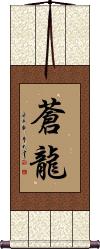
蒼龍 is one of a couple of possible titles for “blue dragon” (occasionally also translated as “green dragon”).
The first character means “deep blue” or “azure.”
The last character is dragon.
Bodhidharma
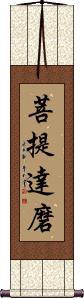
菩提達磨 is the title Bodhidharma in Chinese and Japanese.
Bodhidharma, commonly known as Damo, is reputed as the founder of the Chan (Zen) or Intuitional or Mystic School.
He likely came from south India and spread Mahayana Buddhism throughout China (even meeting the Emperor) and his disciples likely spread this all the way to Korea, Japan, and beyond in the 5th and 6th centuries.
Sometimes the last character varies in Chinese to 摩 instead of 磨 - let me know if you need a certain variation when you order.
Born To Be Wild
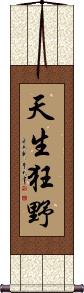
天生狂野 is “Born To Be Wild” (like the Steppenwolf song) in Chinese (Mandarin).
If you get to the deep meaning, the first two characters can mean “born” but refer as much to the nature, disposition, calling, or innate qualities of something or someone.
The last two mean coarse and/or wild.
So it kind of means that it is your nature to be wild.
Butt
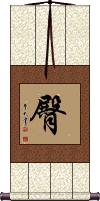
臀 is the most simple way to write butt, buttocks, behind, rump, bottom, last place, or end in Japanese, Chinese and Korean.
臀 is not appropriate for calligraphy. Also, the two-character word 屁股 or pigu, is also very common in China for butt or ass.
Carpe Diem / Seize the Day
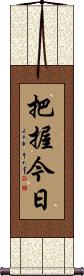
把握今日 is the closest and most natural way to express this proverb in Chinese.
The first two characters mean “to seize” but can also be translated as “take control of.”
The last two characters mean “today.”
Chau
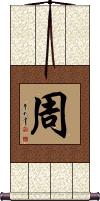
周 is the name Chau in Chinese (Mandarin).
The last name Chau (or Châu) has diverse origins, most prominently as a Vietnamese surname meaning "pearl," linking to Chinese roots, and also as various anglicized forms of Chinese names like Zhou (周), meaning dynasty/circle, or Zhu (朱), meaning vermilion.
If you need 朱 instead of 周, please let me know when ordering.
Choose Life
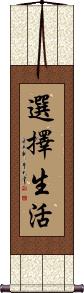
選擇生活 can mean to choose life instead of death (or suicide) or to choose to live life to the fullest.
I think of it as the key phrase used by Renton (Ewan McGregor) in the movie Trainspotting. While Chinese people will not think of Trainspotting when they see this phrase, for me, it will always be what comes near the end of this colorful rant:
Choose life. Choose a job. Choose a career. Choose a family. Choose a fucking big television. Choose washing machines, cars, compact disc players, and electrical tin can openers. Choose good health, low cholesterol, and dental insurance. Choose fixed-interest mortgage repayments. Choose a starter home. Choose your friends. Choose leisure wear and matching luggage. Choose a three-piece suite on-hire purchase in a range of fucking fabrics. Choose DIY and wondering who the fuck you are on a Sunday morning. Choose sitting on that couch watching mind-numbing, spirit-crushing game shows, stuffing fucking junk food into your mouth. Choose rotting away at the end of it all, pissing your last in a miserable home, nothing more than an embarrassment to the selfish, fucked-up brats you have spawned to replace yourself. Choose your future. Choose life.
Chou
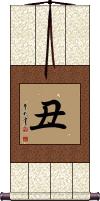
丑 can refer to the astrological time of the ox, or a Chinese surname, Chou.
丑 represents the 2nd earthly branch. In daily time, 1:00-3:00 AM, or the 12th/last month in the Chinese calendar.
In an ancient year-naming scheme, this can represent the year of the Ox (one of twelve animals paired with one of five element characters yielding a 60-year cycle).
Christian / Disciple of Christ
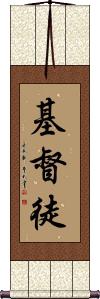
基督徒 is a very strong and direct word in Chinese for “Christian.”
The literal translation of the first two characters is “Christ.”
The last character means apprentice, follower, or disciple.
Altogether these three characters mean “Christ's Disciple” or “Christ's Apprentice.” 基督徒 is a pretty cool title to hang on your wall if you are a devout Christian.
Also used by Japanese Christians (but may be unfamiliar to non-Christian Japanese people).
See Also: Jesus Christ | God of Abraham
Disciple of Christianity
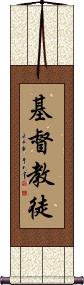
基督教徒 is the most verbose (longest) word for “Christian” in the Chinese and Japanese languages.
The literal translation of the first two characters is Christ.
The third Character means “Religion” or “Teaching.”
The last character means “apprentice” or “disciple.”
Altogether these three characters mean “Christ's Teaching Disciple” or “Christ's Religion Apprentice.”
Note: The last two characters are sometimes translated together as “follower (of a religion),” so you could also say it means “Follower of Christ.”
This four-character title makes it very clear what you are talking about in Chinese.
See Also: Jesus Christ | God of Abraham
Christianity / Christian
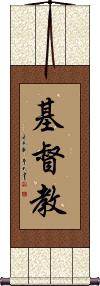
基督教 is the Chinese, Japanese and Korean word for “Christianity.”
Just as in English, this word is often used to mean “Protestant” but includes Catholics in the true definition.
It is the word used to refer to the whole “Christian religion” or “Christian Faith,” and therefore, it can be translated as “Christianity.” However, used as an adjective in regard to a person, it would translate as “Christian.” But more like saying, “His religion is Christianity,” rather than a noun form.
If you break it apart, the characters mean Base/Foundation Leading/Supervising Religion/Teaching. It makes more sense in Japanese, Chinese, and Korean. The first two characters together are translated as “Christ.” So you can also say this means “Christ's Religion” or “Christ's Teachings” when directly translated, or in reverse, “The Religion of Christ” or “The Teaching of Christ.”
Notes: The last character has a slight difference in one stroke - however, in calligraphic form, this will not be apparent. This entry can easily be read by any Korean person who knows Hanja characters (Chinese characters used in Korean).
See Also: Jesus Christ | God of Abraham
Color
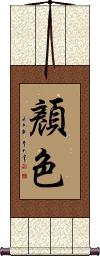
顏色 is kind of a weird selection for a wall scroll, but we added it to our database at the request of a customer.
顏色 means “color” in Chinese. However, in Japanese, it would mean complexion, countenance, or expression. The last character is used alone in Japanese (and sometimes in Chinese with/as an adjective/modifier) to mean “color.”
Daodejing / Tao Te Ching - Chapter 9
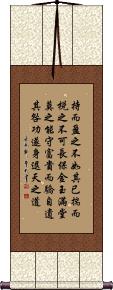
This text is the ninth chapter of the Daodejing / Tao Te Ching.
To hold until full is not as good as stopping.
An oversharpened sword cannot last long.
A room filled with gold and jewels cannot be protected.
Boasting of wealth and virtue brings your demise.
After finishing the work, withdraw.
持而盈之不如其已揣而梲之不可長保金玉滿堂莫之能守富貴而驕自遺其咎功遂身退天之道 is the Way of Heaven.
Dr. Muller's translation of all 81 Daodejing chapters
The text reads:
持而盈之、不如其已。揣而梲之、不可長保。 金玉滿堂、莫之能守。 富貴而驕、自遺其咎。 功遂身退、天之道。
This classical Chinese passage comes from the Mawangdui (馬王堆帛書) text.
Dark Angel
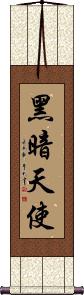
黑暗天使 means “Dark Angel” in Chinese.
The first character means black, but the second means dark by itself, so this can also be written with the first character dropped.
The last two characters mean angel.
Dark Angel
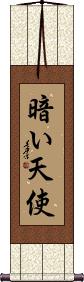
暗い天使 means “Dark Angel,” in Japanese.
The first character means dark, gloomy, hidden, or secret.
The second character is a connecting article.
The last two characters mean angel.
Death Before Surrender
Rather die than compromise
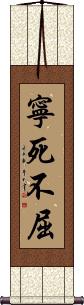
寧死不屈 is often translated as “Death Before Dishonor.”
The literal translation is more like, “Better die than compromise.” The last two characters mean “not to bend” or “not to bow down.” Some might even say that it means “not to surrender.” Thus, you could say this proverb means “Better to die than live on my knees” or simply “no surrender” (with the real idea being that you would rather die than surrender).
Death Before Dishonor
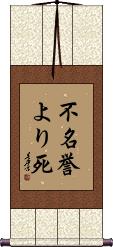
不名誉より死 is the Japanese version of “Death Before Dishonor.”
Japanese grammar is a bit different than English, so this really means something like “Rather die than to be dishonored.” However, “dishonor” is the first three Kanji, and death is the last Kanji. There are two Hiragana (より) which indicate the preference is death when comparing dishonor to death.
Note: Because this selection contains some special Japanese Hiragana characters, it should be written by a Japanese calligrapher.
Don’t Panic
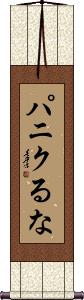
パニクるな means Don’t Panic in Japanese.
An homage to the Hitchhiker's Guide to the Galaxy, a novel with a cult following that extends just a little into Japan.
The first part, パニク, is a loan word that sounds like panic (paniku) in Japanese Katakana. The last bit, るな, connects the idea of “don't” to the panic.
Note: Because this title is entirely Japanese Hiragana and Katakana, it should be written by a Japanese calligrapher.
Dragon and Phoenix Brings Luck
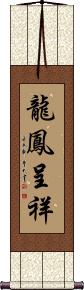
龍鳳呈祥 is often seen at weddings and other celebrations in China.
It suggests that the dragon and phoenix will bring you auspicious tidings.
The first character is a dragon.
The second is a phoenix.
The third is presents or brings.
And the last means auspicious, propitious, or luck.
Throughout China, the dragon and phoenix are symbols of good fortune. You will see these auspicious figures as decorative symbols on everything from buildings, furniture, wedding costumes, and sculptures in public parks to caskets and items used in ceremonies.
The Spirit of Dragon and Tiger
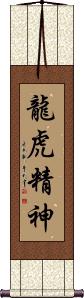
龍虎精神 means the spirit of the dragon and tiger.
It speaks to the vitality and vigor that is the nature of these two creatures.
Beyond “spirit,” the last two characters can also mean mind, soul, or heart. Therefore, you can also say this means “Heart of the Dragon and Tiger,” etc.
龍虎精神 is often titled “Ryukoseishin” in many Japanese martial arts.
Drain the pond to get all the fish
Kill the goose that lays the golden eggs
In 632 BC, Duke Wen of the Kingdom of Jin was about to lead an army against the forces of the Kingdom of Chu.
The Duke asked one of his advisers, Jiu Fan, how they could win the impending battle, as they were drastically outnumbered.
Jiu Fan said, “All is fair in war,” and suggested a plan of dishonorable tactics (cheating).
The Duke was unsure of this advice, so he asked another adviser, Yong Ji, who replied, “If you catch fish by draining the pond, you can certainly get all the fish. But there will be no fish the following year. You can cheat this one time in battle, but such tactics can only be used once, as the enemy will be wise in future encounters.”
The Duke heard the words of his wiser adviser but cheated to gain victory in the battle. However, he rewarded Yong Ji more than Jiu Fan at the victory celebration, stating that while Jiu Fan's advice gained one victory, the wise words of Yong Ji would last forever.
This Chinese idiom/proverb is still used, over 2600 years later to remind people not to burn bridges, cheat, or dishonor themselves in exchange for a short-term gain while sacrificing the future.
竭澤而漁 is very similar to the meaning of the English phrase, “Kill the goose that lays the golden eggs.”
Realize Your Ambitions / Embrace Your Ambition
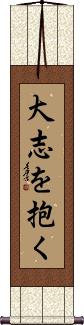
大志を抱く is a Japanese proverb that suggests you should embrace, pursue, and realize your ambitions.
The first part means ambitions or aspirations.
The last part means to embrace or to hold in your arms.
Here's the character breakdown:
大志 (taishi) ambition; aspiration.
を (o) particle
抱く (idaku) to embrace; to hold in the arms (e.g. a baby); to hug; to harbor/harbour; to bear (e.g., a grudge); to entertain (e.g., suspicion); to sleep with; to sit on eggs.
Note: Because this selection contains some special Japanese Hiragana characters, it should be written by a Japanese calligrapher.
Empress
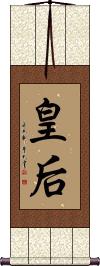
皇后 is the title of empress/emperess, the female form of the emperor.
皇后 is used in Chinese, Japanese Kanji, and old Korean Hanja.
While the emperor's reign was for life, if he died, his wife would hold his power. In this case, a woman was the ultimate ruler of the greater part of East Asia (now China) until her death and the succession of the emperor's firstborn son to lead the empire. Numerous times in various Chinese dynasties, an empress took power in this way.
The first character means emperor by itself.
The second character alone can mean “wife of an emperor or king” (the first character clarifies that we are talking about an empress and not a queen). It can also mean sovereign or last offspring, depending on context.
Note: In some books, this word is translated as queen. While only incorrect if you get technical (because an empress is theoretically a higher level than a queen), the meaning is very similar.
皇后 is sometimes used for the title of queen, but more technically, this is the wife of the emperor (a higher level than a queen).
Enjoy Life
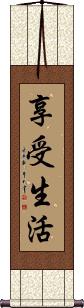
享受生活 is a Chinese proverb that means “Enjoy Life.”
The first two characters mean “to enjoy” and the last two mean “life” or “living.”
Enlightened Warrior
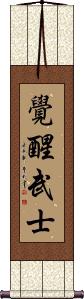
覺醒武士 is not a commonly used title in Chinese but is sometimes used in Martial arts and military contexts to refer to a warrior who seems always to be fully aware, enlightened, knowledgeable, noble, and just.
The first two characters are a word that means: to awaken; to come to realize; awakened to the truth; the truth dawns upon one; scales fall from the eyes; to become aware.
The last two characters mean warrior but can also refer to a samurai, soldier, or fighter.
Eternal Friendship / Friends Forever
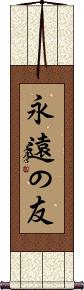
永遠の友 is a Japanese phrase about eternal friendship.
The first two characters mean eternal, eternity, perpetuity, forever, immortality, and permanence.
The third character is a possessive article which sort of makes this selection mean “Love, of the eternal kind.”
The last character is “friend” or “Friendship.”
See Also: Best Friends
Eternal Love
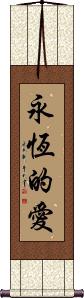
永恆的愛 is the best way to write “Eternal Love” in Chinese.
The first two characters mean eternal, eternally, everlasting, and/or perpetual.
The third character is a possessive article which sort of makes this selection mean “Love of the eternal kind.”
The last character is “love.”
This version is best if your audience is Chinese. We also have a Japanese version of eternal love.
See Also: Forever Love | Eternal Love (Japanese)
Eternal Love
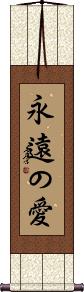
永遠の愛 is a great way to write “Eternal Love” in Japanese.
The first two characters mean eternal, eternity, perpetuity, forever, immortality, and permanence.
The third character is a possessive article which sort of makes this selection mean “Love, of the eternal kind.”
The last character is “love.”
Cultural note: Most of the time, it is taboo to use the word “love” in Japanese. For instance, a Japanese man will say, “I like you,” rather than, “I love you,” to his spouse/girlfriend. However, this entry for eternal love is acceptable because of the way it is composed.
This entry is only appropriate if your audience is Japanese. We also have a Chinese version of this eternal love.
Eternal Life / Everlasting Life / Immortality
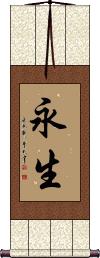
永生 are the last two words from John 3:16 in the Chinese Union Bible.
Although not specifically Christian, this is the way to express ever-lasting life or eternal life in Chinese.
In Japanese, this can either mean eternal life or immortality.
See Also: Eternity | Rebirth | Reincarnation | Immortality
Everything Happens for a Reason
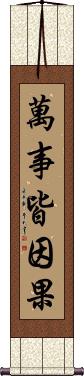
萬事皆因果 means “Everything happens for a reason” in Chinese.
The first two characters mean “all things” or “everything.”
The middle character kind of means “in all cases.”
The last two characters create a complex word that can be defined in many ways, such as “karma,” “cause and effect,” “fate,” and “every cause has its effect, as every effect arises from a cause.”
Keep in mind that Chinese grammar is a bit different than English, so trust me that this makes a natural-sounding proverb in Chinese.
Fall Down Seven Times, Get Up Eight
Always rising after a fall or repeated failures
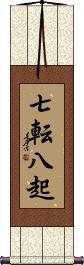
七転八起 is a Japanese proverb that relays the vicissitudes of life, with the meaning “seven times down eight times up.”
Some would more naturally translate it into English as “Always rising after a fall or repeated failures” or compare it to the English, “If at first, you don't succeed, try, try again.”
The first Kanji is literally “7.” The second means “fall down” (sometimes this Kanji means “turn around,” “revolve” or “turn over” but in this case, it holds the meaning of “fall”). The third is “8.” And the last is “get up,” “rouse,” or “rise.”
Basically, if you fail 7 times, you should recover from those events and be prepared to rise an 8th time. This also applies if it is the world or circumstances that knock you down seven times...
...just remember that you have the ability to bounce back from any kind of adversity.
Note: This can be pronounced in two ways. One is “shichi ten hakki” or “shichitenhakki.” The other is “nana korobi ya oki” also written, “nanakorobi-yaoki.”
Special Note: The second character is a Kanji that is not used in China. Therefore, please select a Japanese calligrapher for this title.
Family Over Everything
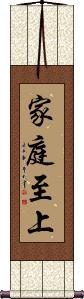
家庭至上 is a Chinese phrase that means “family above all else.”
The first two characters mean family, household, or home (they will be read as “family” in this case).
The last two characters mean supreme, paramount, or above all else.
Fear No Evil
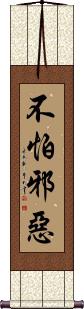
不怕邪惡 literally means “no fear of evil” in Chinese.
Chinese grammar and word order are a little different than English. 不怕邪惡 is the best way to write something that means “fear no evil” in Chinese.
The first character means “not,” “don't” or “no.”
The second means “fear.”
The last two mean “evil” but can also be translated as sinister, vicious, wickedness, or just “bad.”
Fearless / Daring
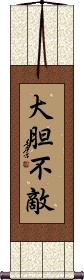
大胆不敵 is a Japanese word that can mean a few things depending on how you read it.
Popular translations include fearless, audacity (the attitude of a) daredevil, or daring.
The first two Kanji create a word that means: bold, fearless, or daring; audacious.
The last two Kanji create a word meaning: no match for, cannot beat, daring, fearless, intrepid, bold, or tough.
As with many Japanese words, the two similar-meaning words work together to multiply the meaning and intensity of the whole 4-Kanji word.
Keep Your Feet on the Ground
Be Down-to-Earth
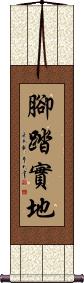
腳踏實地 is a four-character proverb that suggests that you should be practical, realistic, and grounded.
Some translate this as a suggestion to be down-to-earth.
The first character means “feet.”
The second means “step on” or “stand.”
The third means “solid,” “real,” or “true.”
The last character means “ground,” “earth,” or “terra.”
Literally, this means “[keep your] Feet Standing [on] Solid Ground.”
Five Elements Tai Chi Fist
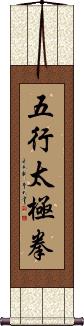
五行太極拳 is a certain school or style of Tai Chi (Taiji).
The characters literally mean “Five Elements Tai Chi Fist.”
Notes:
In Taiwan, it would be Romanized as “Wu Hsing Tai Chi Chuan” - see the standard Mandarin method above in the gray box (used in mainland China and the official Romanization used by the Library of Congress).
The last three characters are sometimes translated as “Grand Ultimate Fist,” so the whole thing can be “Five Elements Grand Ultimate Fist” if you wish.
I have not confirmed the use of this title in Korean but if it is used, it's probably only by martial arts enthusiasts. The pronunciation is correct, as shown above for Korean.
Forbidden Love
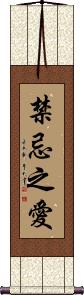
禁忌之愛 means “forbidden love” in Chinese.
The first two characters are a word that means forbidden, taboo, or “[something] to be avoided.”
The third character is a particle that connects forbidden to love.
The last character means love.
Always in My Heart
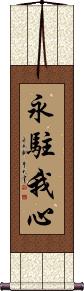
永駐我心 is one of a few ways to write “always in my heart” or “forever in my heart” in Chinese.
The first character means eternal, forever, or always.
The second character means resides, in, or stationed (in the case of troops).
The third character means me, my, or mine.
The last character means heart (but can also mean mind or soul).
Forever Love
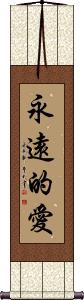
永遠的愛 refers to love that will last forever.
The first two characters mean forever, eternal, eternity, perpetuity, immortality, and/or permanence.
The third character is a possessive article which sort of makes this selection mean “The forever kind of love.”
The last character is “love.”
See Also: Eternal Love Always
Forever Family
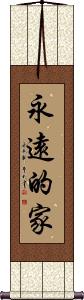
永遠的家 is a special phrase that we composed for a “family by adoption” or “adoptive family.”
It's the dream of every orphan and foster child to be formally adopted and find their “forever family.”
The first two characters mean forever, eternal, eternity, perpetuity, immortality, and/or permanence. The third character connects this idea with the last character which means “family” and/or “home.”
See Also: Family
Forgive Yourself
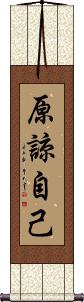
原諒自己 is how to write “forgive yourself” in Chinese.
The first two characters mean “to excuse,” “to forgive,” or “to pardon.”
The last two characters mean “self” (reflexive pronoun), “yourself,” or “oneself.”
Forgive Yourself / Release Yourself
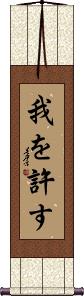
我を許す is how to write “forgive yourself” in Japanese.
The first two characters mean “regarding myself.”
The last two characters mean “to forgive,” “to excuse (from),” “to pardon,” “to release,” “to let off,” “to permit,” “to allow,” and/or “to approve.”
Note: Because this selection contains some special Japanese Hiragana characters, it should be written by a Japanese calligrapher.
Fraternity
University Brotherhood / House
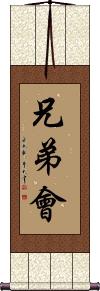
兄弟會 is the word in Chinese for a college fraternity or some other kind of fraternal order.
Literally, these characters mean “Elder brother younger brother association.” The last character can also be translated as a group, union, gathering, assembly, meeting, or conference.
Free Spirit
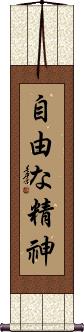
自由な精神 is very similar to the English term “free spirit.”
The first two characters mean freedom or liberty.
The middle character is a connecting Hiragana which is needed for Japanese grammar.
The last two characters mean spirit, heart, mind, or soul.
See Also: Freedom | Independence
Free Will
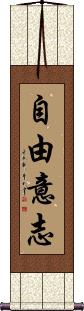
自由意志 is a concept that has existed for thousands of years that humans can understand right and wrong, then make a decision one way or the other (thus affecting their fate).
Sources such as Confucius, Buddhist scriptures, the Qur'an, and the Bible all address this idea.
As for the characters shown here, the first two mean free, freedom, or liberty. The last two mean “will.”
Can be romanized from Japanese as jiyū-ishi, jiyuu-ishi, and sometimes jiyuu-ishii.
It's 자유의지 or jayuu-yiji in Korean and zìyóu yìzhì in Chinese.
See Also: Freedom | Strong Willed | Fate
Eternal Friendship / Friends Forever
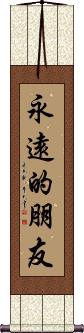
永遠的朋友 means friends that are eternal or a friendship that will last forever - you will remain the best of friends as long as you live.
The first two characters mean forever, eternal, eternity, perpetuity, immortality, and/or permanence.
The middle character links the words (it's a possessive article).
The last two characters represent friendship, or simply “friends.”
Soul Mates
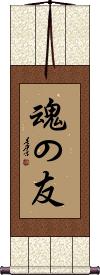
魂の友 is one of a few ways to write “Soul Mates” in Japanese.
The first Kanji means soul, spirit, ghost, immortal soul, the mind, or conscious mind. From Sanskrit, it's Vijñāna.
The middle character is a Japanese Hiragana connecting or possessive article that links the two ideas together.
The last Kanji means friends or friendship.
From This Moment Forward / From This Day Forward
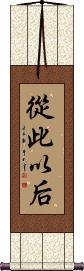
In simple terms, 從此以后 means “from now on,” but you can also interpret it as “Now is the beginning of the future” or “From this day forward.
The first two characters roughly mean “henceforth.” The last two characters mean later, afterward, following, or “in the future.”
God is Good
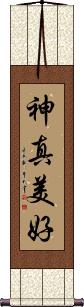
神真美好 means “God is good,” in Chinese.
You can also translate this as “God is really good” or “God is so good.”
The last two characters are a version of good that suggests very strong goodness. The characters read, “beautifully good.”
50th Golden Wedding Anniversary
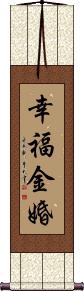
幸福金婚 means “Happy Golden Anniversary” and is a great gift for a couple who is celebrating 50 years together.
The first two characters mean happy, blessed, or happiness.
The last two characters mean “couple's golden anniversary.” It means “golden wedding” or “golden marriage,” but this is only used for the 50-year-mark of a marriage (the same way we use gold to represent 50 years in the west).
幸福金婚 is a nice title to use with an inscription. You could request something like, “Happy 50th Anniversary, Mr. and Mrs. Smith,” to be written down the side of this title in smaller Chinese characters.
Please note: This can be pronounced and understood in Japanese but not as commonly used in Japan. Japanese people who read this will understand it but might tend to feel it’s of Chinese origin.
Grace from Heaven / Grace from God
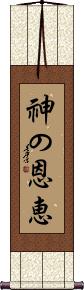
神の恩恵 means God's Grace in Japanese.
The first two characters act to create a word that means “divine,” “God's,” or “The Spirit's.”
The last two Kanji mean grace, favor/favour, blessing, or benefit.
Greatest Love
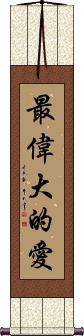
最偉大的愛 means “the greatest love” in Chinese.
Keeping in mind that Chinese is different than English, the first character is like “-est” or adding “the most” as a modifier to the next word.
The 2nd and 3rd characters mean great, mighty, and/or large.
The 4th is a possessive article.
The last is the character for love.
When you put it all together, you get a phrase that means the greatest love, enormous love, or the mightiest love.
Happy Birthday
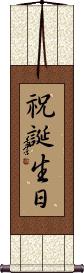
祝誕生日 is the shortest way to write “Happy Birthday” in Japanese.
The first Kanji means “wish” or “express good wishes,” and the last three characters mean “birthday.”
Because a birthday only lasts one day per year, we strongly suggest that you find an appropriate and personal calligraphy gift that can be hung in the recipient's home year-round.
Happy Birthday
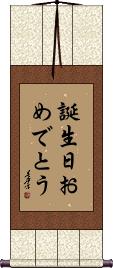
誕生日おめでとう is a verbose way to write “Happy Birthday” in Japanese.
The first part says “birthday” and the last 5 Kanji mean “congratulations.”
Note: Because this selection contains some special Japanese Hiragana characters, it should be written by a Japanese calligrapher.
Happy Family
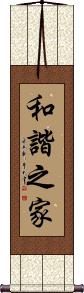
和諧之家 means “harmonious family” or “happy family” in Chinese.
The first two characters relay the idea of happiness and harmony.
The third character is a connecting or possessive article (connects harmony/happiness to family).
The last character means family but can also mean home or household.
Happy Family
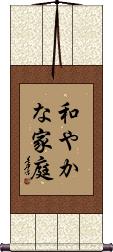
和やかな家庭 means “happy family” or “harmonious family” in Japanese.
The first three Kanji create a word that means mild, calm, gentle, quiet, or harmonious. After that is a connecting article. The last two Kanji mean family, home, or household.
Note: Because this selection contains some special Japanese Hiragana characters, it should be written by a Japanese calligrapher.
Eternal / Long-Lasting
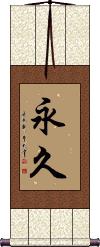
永久 is a Japanese, Chinese, and old Korean word that means everlasting, perpetual, lasting, forever, permanent, eternity, perpetuity, and/or immortality.
This can also be a female given name Haruku in Japan.
Healing Hands
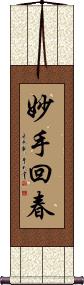
妙手回春 can be translated as “healing hands.”
The first two characters are used to describe a doctor or medical professional who has admirable skills in curing disease. Literally: Wonderful or skilled hands.
The last two characters mean “Springing back to life.”
Altogether, it suggests that these skilled hands can cure whatever ails you and bring you back to life. 妙手回春 is a great honor to bestow on your doctor or other healthcare professionals that have helped you.
Healing Hands
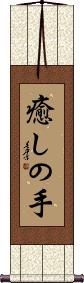
癒しの手 can be translated as “healing hands” in Japanese.
The first two characters mean healing, to heal, to cure, soothing, therapy, comfort, and solace.
The third character is a possessive particle that connects the ideas.
The last Kanji means hand or hands.
Note: Because this selection contains some special Japanese Hiragana characters, it should be written by a Japanese calligrapher.
Heart and Soul
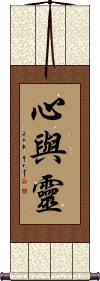
心與靈 is “heart and soul” in Chinese.
The first character means heart (but can also mean mind or soul).
The middle character is like the English “and.”
The last character means soul, spirit, or spiritual energy.
Heart and Soul
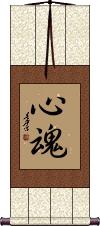
心魂 is “heart and soul” in Japanese Kanji.
The first character means heart (but can also mean mind or soul).
The last character means soul or spirit (spiritual essence).
Home of the Auspicious Golden Dragon
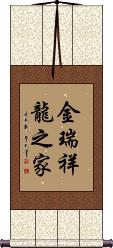
This 金瑞祥龍之家 or “home golden auspicious dragon” title was added by special request of a customer.
The first character means gold or golden.
The second and third characters hold the meaning of auspiciousness and good luck.
The fourth character is dragon.
The fifth is a possessive modifier (like making “dragon” into “dragon's”).
The last character means home (but in some context can mean “family” - however, here it would generally be understood as “home”).
Note: The word order is different than the English title because of grammar differences between English and Chinese. This phrase sounds very natural in Chinese in this character order. If written in the English word order, it would sound very strange and lose its impact in Chinese.
Note: Korean pronunciation is included above, but this has not been reviewed by a Korean translator.
Honor for Ancestors
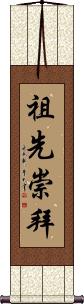
祖先崇拜 means “Appreciation and honor of your ancestors.”
This can refer to anyone from your grandparents and beyond.
The first two characters mean ancestors or forefathers.
The last two characters mean worship, adore/adoration, or admiration.
This is the kind of wall scroll that a filial son or daughter in China or Japan would hang to honor their ancestors who paved the way for the new generation.
 Japanese use a slight variation on the last Kanji. If you want this specifically Japanese version, just click on the Kanji image to the right (instead of the button above). Note that Japanese people would easily be able to identify the original Chinese form of that Kanji anyway.
They also have a similar phrase in old Korean but the first two characters are reversed - just let me know if you want that version when you place your order.
Hung Gar
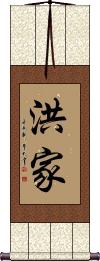
洪家 is the martial arts title Hung Ga or Hung Gar.
The first character means flood, big, immense, or great but it can also be the surname, Hong or Hung.
The last character means family or home.
This can also be read as “The Hung Family” or “The Hung Household.” This title is mostly associated with a style of Kung Fu.
Hung Ga Kuen
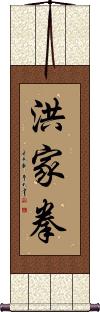
洪家拳 is the martial arts title Hung Ga Kuen.
The first character means flood, big, immense, or great but it can also be the surname, Hong or Hung.
The second character means family or home.
The last character is a fist.
Hung Kuen
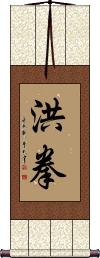
洪拳 is the martial arts title Hung Kuen.
The first character means flood, big, immense, or great but it can also be the surname, Hong or Hung.
The last character means fist.
Hyakuren-Jitoku
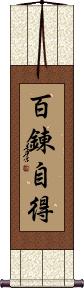
百錬自得 is a Japanese proverb that means only if you practice something 100 times will it become a part of yourself.
Some translate it in a short form like “Well train, self-gain.”
The first two characters are a word that means “100 forges” (or to forge 100 times). It translates more naturally as well-tempered, well-drilled, or well-trained.
The last two characters mean “self-benefit” or “self-gain.” It can also be translated into English as contented, self-satisfaction, realizing (through one's ability), or being paid back for one's deeds.
I am Enough
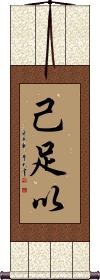
己足以 is a profound and philosophical way to say “I am enough” in Chinese.
The first character means self or oneself.
The last two characters are a word that means sufficient or enough.
Imagination
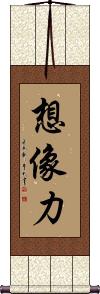
想像力 is probably the best way to express “imagination” in Chinese, Japanese Kanji, and old Korean Hanja.
It literally means “your strength to imagine.” The last character means strength or ability, while the first two mean imagine or conceptualize. My Japanese dictionary defines this as “The power of imagination.” While my Korean dictionary says, “imaginative power.”
Immovable Mind
fudoshin
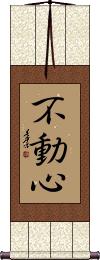
不動心 is one of the five spirits of the warrior (budo) and is often used as a Japanese martial arts tenet.
Under that context, places such as the Budo Dojo define it this way: An unshakable mind and an immovable spirit is the state of fudoshin. It is courage and stability displayed both mentally and physically. Rather than indicating rigidity and inflexibility, fudoshin describes a condition that is not easily upset by internal thoughts or external forces. It is capable of receiving a strong attack while retaining composure and balance. It receives and yields lightly, grounds to the earth, and reflects aggression back to the source.
Other translations of this title include unwavering mind, immovable mind, unwavering composure, imperturbability, steadfastness, keeping a cool head in an emergency, or keeping one's calm (during a fight).
The first two Kanji alone mean immobility, firmness, fixed, steadfastness, motionless, and idle.
The last Kanji means heart, mind, soul, or essence.
Together, these three Kanji create a title defined as “immovable mind” within the context of Japanese martial arts. However, in Chinese, it would mean “motionless heart,” and in Korean Hanja, “wafting heart” or “floating heart.”
Independent Spirit
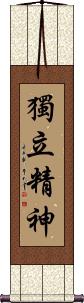
獨立精神 means independent spirit in Chinese.
The first two characters mean independent, independence, or to stand alone.
The last two characters mean spirit, spiritual, vigor, vitality, drive, mind, consciousness, thought, essence, heart, or soul.
With this information, you can make your translation combination such as “independent heart,” “stand-alone spirit,” or more creatively, “the drive to stand alone” in English. There are a lot of ways to interpret 獨立精神.
Indomitable / Unyielding
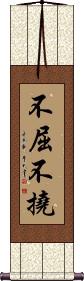
不屈不撓 means “Indomitable” or “Unyielding.”
不屈不撓 is a long word by Chinese standards. At least, it is often translated as a single word into English. It's actually a proverb in Chinese.
If you want to break it down, you can see that the first and third characters are the same. Both mean “not” (they work as a suffix to make a negative or opposite meaning to whatever character follows).
The second character means “bendable.”
The last means “scratched” or “bothered.”
So this really means “Won't be bent, can't be bothered.” I have also seen it written as “Will not crouch, will not submit.” This comes from the fact that the second character can mean “to crouch” and the last can mean “to submit” (as in “to give in” such as “submitting to the rule of someone else”). This may explain better why these four characters mean “indomitable.”
Notes:
Some will translate this as “indomitable spirit”; however, technically, there is no character to suggest the idea of “spirit” in this word.
Other translations include indefatigability, indomitableness, or unremitting tenacity.
The first two characters can be stand-alone words in Chinese.
In Japanese, this is considered two words (with very similar meanings). It's more common to see the word order flipped to 不撓不屈 in Japanese.
The same characters are used in old Korean Hanja. Just like in Japanese, the words are swapped to 不撓不屈 creating a word pronounced “불요불굴” in Korean.
See 不撓不屈
I Need You
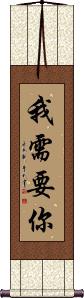
Some people like to say, “I love you” but others might want to say “I need you.” That is what this 我需要你 phrase is all about.
The first character means “I.” The second and third create a compound word that means “need” and “want” at the same time. The last character means “you.”
I Need You
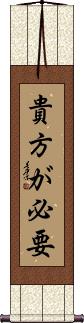
Some people like to say, “I love you” but others might want to say “I need you.” 貴方が必要 is “I need you” in Japanese.
The first two characters mean “You.”
The middle character is a connecting particle. In this case, it more or less means “are.”
The last two characters mean necessary, needed, essential, indispensable, or necessity.
The “I” in the title is implied. Effectively this means “I need you.”
A Life of Serenity Yields Understanding
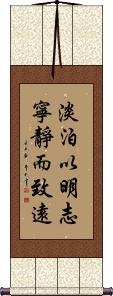
淡泊以明志寧靜而致遠 is a kind of complex ten-character proverb composed by Zhuge Liang about 1800 years ago.
淡泊以明志寧靜而致遠 is a Chinese proverb that means “Leading a simple life will yield a clear mind, and having inner peace will help you see far (into the world).”
What I have translated as “simple life” means NOT being materialistic and NOT competing in the rat race.
The last word means “far” but the deeper meaning is that you will surpass what you can currently see or understand. Perhaps even the idea of opening up vast knowledge and understanding of complex ideas.
The whole phrase has a theme that suggests that if you are NOT an aggressive, cut-throat person who fights their way to the top, no matter how many people they crush along the way, and instead seek inner peace, you will have a happier existence and be more likely to understand the meaning of life.
See Also: Serenity
Inner Peace
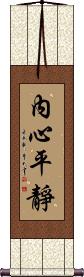
內心平靜 is a Chinese and Japanese phrase that is a direct translation of the western idea of inner peace.
The first two characters contain the idea of “heart,” “innermost being,” or “deep in the/your inner mind.”
The last two characters mean “tranquil” and “serene.”
I have seen this phrase used as “inner peace” for art prints and even on the side of coffee cups. But I think the translation is too literal. It feels like a direct translation from English rather than a nicely composed Chinese or Japanese phrase. See my other entries for “inner peace.”
See Also: Serenity | Simplicity | Peace
Achieve Inner Peace; Find Deep Understanding
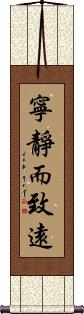
寧靜而致遠 is five characters from a longer ten-character proverb composed by Zhuge Liang about 1800 years ago.
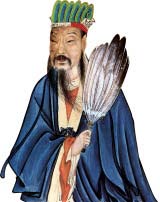
诸葛亮 Zhuge Liang
The proverb means “Your inner peace/tranquility/serenity will help you see or reach far (into the world).”
The last word means “far” but the deeper meaning is that you will surpass what you can currently see or understand. Perhaps even opening up vast knowledge and understanding of complex ideas.
Islam
(phonetic version)
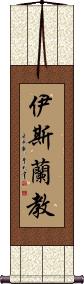
伊斯蘭教 both means and sounds like “Islam” in Mandarin Chinese.
The first three characters sound like the word “Islam,” and the last character means “religion” or “teaching.” It's the most general term for “Islam” in China. The highest concentration of Muslims in China is Xinjiang (the vast region in northwest China that was called The East Turkistan Republic until 1949 and is sometimes called Chinese Turkistan, Uyghuristan). Here you will find Uygurs, Kazakhs, Kyrgyz, and others that are descendants of Turkmen (possibly mixed with Persians and Arabs). Many of their ancestors were traders who traveled the silk road to buy and sell spices and silk and exchange other goods from the Orient and the Middle East.
I spent some time in Xinjiang and got to know this community. They are strong people who can endure much. They are friendly and love to have a good time. I was a stranger but was treated by villagers (near China's border with Afghanistan) as if I was a good friend.
However, I have heard that it's best not to cross them, as in this land, the law is the blade, and everything is “eye for an eye.” The Chinese government has little control in Xinjiang, with almost no police officers except in the capital of Urumqi (so it's a 60-hour roundtrip train ride to seek the aid of law enforcement in most cases).
While few seem devout, there are at least small mosques in every village. And you will never see a man or woman outside without a head covering.
It should be noted that these people are all citizens of China, but they are officially of the Caucasian race. A visit to Xinjiang will change your idea of what it means to be Chinese.
Jeet Kune Do
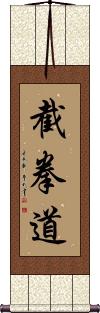
In Cantonese, 截拳道 is Jeet Kune Do. Often it is explained as the “Way of the Intercepting Fist.”
截拳道 is a martial art style founded by Bruce Lee.
The first character means to cut off or sever.
The second character is a fist.
The last character means way or method.
See Also: Bruce Lee
These search terms might be related to Last:
Carry On, Undaunted
Do Not Take Action Until the Time is Right
Endure and Survive
Fight to the End / Fight Until the Bitter End
Flowers Fall / the End Comes
Ikiru / to Live
Knowledge of Ultimate Truth
Live and Let Die
Live by the Sword Die by the Sword
Live for the Day
Live for the Day / Seize the Day
Live for What You Love
Live Free or Die
Live in Peace and Contentment
Live in Prosperity
Live in the Moment / Live in the Now
Live Laugh Love
Live Long and Prosper
Live Love Die
Live Strong
Live Together and Help Each Other
Live Well
Live Without Regret
Living / Live Life
One Who Walks by the River May End Up With Wet Feet
Patience / Perseverance / to Endure / Tolerant
Relax / Take It Easy
Survive
Take Refuge in the Three Treasures
Take Up a Challenge
Tathata / Ultimate Nature of All Things
The Way of Learning Has No End
Traveler / to Live Abroad
Ultimate Goodness of Water
Ultimate Loyalty to Your Country
Ultimate Reality
Ultimate Truth
You Must Endure a Harsh Winter to Appreciate the Warmth of Springtime
You Only Live Once

Successful Chinese Character and Japanese Kanji calligraphy searches within the last few hours...



