Many custom options...


And formats...



Plus in Chinese / Japanese...
Buy a Plus calligraphy wall scroll here!
Personalize your custom “Plus” project by clicking the button next to your favorite “Plus” title below...
Crisis equals Danger plus Opportunity?
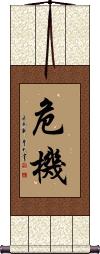
危機 means crisis in Chinese and Japanese.
Separately, the first character here does mean “danger” or “to endanger,” and the second character can mean “opportunity.”
However, I want to debunk a myth that was propagated by some westerners who did not have a clear understanding of Asian languages...
While often, Chinese/Japanese/Korean compound words (words of two or more characters) are the sum of their parts, this is not always the case. The compound is often understood with a completely different meaning than the two characters individually.
Many have said that the Chinese/Japanese/Korean word for Crisis is made up of the characters for “danger” and “opportunity.” 危機 is true when phrased this way.
However, it's not absolutely correct to say that “danger + opportunity = crisis” in Asian cultures.
English example:
If I tell you that...
Bovine creature + Guy behind the plate in baseball = Locomotive train protection

...you would think I was mad. But consider that “cow + catcher = cowcatcher,” which is the device that used to be found on steam engines to protect them if they hit an animal on the tracks. When we hear the word “cowcatcher,” we don't separate the words into their individual meanings (necessarily).
The same is true with the word for crisis in Chinese/Japanese/Korean. While you can separate the characters, few Asian people would automatically do so in their minds.
The final answer:
It is a half-truth to say, “danger plus opportunity equals crisis” in Chinese/Japanese/Korean. Use this statement and concept with caution.
Also, the second character can mean “secret” or “machine,” depending on context so I guess you have to say “a dangerous machine = crisis” or “danger + a secret = crisis.” Both of these are only slightly more ridiculous than the first premise.
PS: 危機 is probably not a great word for a scroll unless you have a special use for it.
Ten Commandments
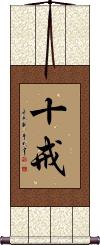
十戒 means Ten Commandments or Ten Precepts.
In the Buddhist context, these are prohibitions consisting of five commandments for the layman:
1. Not to destroy life 不殺生 Pāṇātipātāveramaṇi.
2. Not to steal 不倫盜 Adinnādānāver.
3. Not to commit adultery 不婬慾 Abrahmacaryaver.
4. Not to lie 不妄語 Musāvādāver.
5. Not to take intoxicating liquor 不飮酒 Suramereyya-Majjapamādaṭṭhānāver.
The ten commandments for the monk are the preceding five plus:
6. Not to eat food outside of regulated hours 不非時食 Vikāla-Bhojanāver.
7. Not to use garlands or perfumes 不著華鬘好香塗身 Mālā- Gandha-Vilepana-Dhāraṇa-Maṇḍana-Vibhūṣanaṭṭhānā.
8. Not to sleep on high or broad beds (chastity) 不坐高廣大牀 Uccāsayanā-Mahāsayanā.
9. Not to take part in singing, dancing, musical or theatrical performances 不歌舞倡伎不往觀聽 Nacca-Gīta-Vādita-Visūkadassanāver.
10. To refrain from acquiring uncoined or coined gold, or silver, or jewels 不得捉錢金銀寶物 Jātarūpa-Rajata-Paṭīggahaṇāver.
These original Buddhist commandments date back to about 2500 years ago. The English definitions above are followed by Chinese characters and original Pali pronunciation.
Under the Māhayāna Buddhism, these ten commands for the monk were changed, to accord with the new environment of the monk, to the following: not to kill, not to steal, to avoid all unchastity, not to lie, not to slander, not to insult, not to chatter, not to covet, not to give way to anger, to harbor no skepticism.
These search terms might be related to Plus:
1000 Good Moves Ruined by 1 Bad
A House Might Be Worth 1 Million Dollars, but Good Neighbors Are Worth 10 Million
Blessings and Good Wishes
Distinguish Good and Evil
Doing Good is the Greatest Source of Happiness
Even a Fool May Sometimes Come Up With a Good Idea
Every Day is a Good Day
Extremely Good Friends
Fragrant / Good Smell
God is Good
Good and Evil
Good Conduct
Good Good Study, Day Day Up
Good Health
Good Health / Healthy / Vigor
Good Heart
Good Intentions
Good Intentions / Good Will / Good Faith
Good Luck
Good Luck / Good Fortune
Good Night
Goodness / Good Deed
Hearing a Hundred Times is Not as Good as Seeing Once
House of Good Fortune
In Good Order
In Good Order / Organized
Initiative / Proactive / Positive
Life is Good
Life is Good / Life is Beautiful
Lucky / Auspicious / Good Omen
Mutual Benefit
Mutual Welfare and Benefit
One Good Deed Each Day
Opportunity / Good Luck
Peace and Good Health
Positive Attitude
Restoration to Good Health
The Foundation of Good Conduct
The Good Life / Beautiful Life
Work Together With One Heart
Work Together With One Mind
Work Unselfishly for the Common Good
Not the results for plus that you were looking for?
Below are some entries from our dictionary that may match your plus search...
| Characters If shown, 2nd row is Simp. Chinese |
Pronunciation Romanization |
Simple Dictionary Definition |
十戒 see styles |
shí jiè shi2 jie4 shih chieh jukkai じゅっかい |
More info & calligraphy: Ten Commandments(1) (Buddhist term) the 10 precepts; (2) Ten Commandments; Decalogue; Decalog; (surname) Jukkai Śikṣāpada. The ten prohibitions (in Pāli form) consist of five commandments for the layman: (1) not to destroy life 不殺生 pāṇātipātāveramaṇi; (2) not to steal 不倫盜 adinnādānāver; (3) not to commit adultery 不婬慾 abrahmacaryaver.; (4) not to lie 不妄語musāvādāver.; (5) not to take intoxicating liquor 不飮酒 suramereyya-majjapamādaṭṭhānāver. Eight special commandments for laymen consist of the preceding five plus: (6) not to eat food out of regulated hours 不非時食 vikāla-bhojanāver.; (7) not to use garlands or perfumes 不著華鬘好香塗身 mālā- gandha-vilepana-dhāraṇa-maṇḍana-vibhūṣanaṭṭhānā; (8) not to sleep on high or broad beds (chastity) 不坐高廣大牀 uccāsayanā-mahāsayanā. The ten commandments for the monk are the preceding eight plus: (9) not to take part in singing, dancing, musical or theatrical performances, not to see or listen to such 不歌舞倡伎不往觀聽 nacca-gīta-vādita-visūkadassanāver.; (10) to refrain from acquiring uncoined or coined gold, or silver, or jewels 不得捉錢金銀寶物 jātarūpa-rajata-paṭīggahaṇāver. Under the Māhayāna these ten commands for the monk were changed, to accord with the new environment of the monk, to the following: not to kill, not to steal, to avoid all unchastity, not to lie, not to slander, not to insult, not to chatter, not to covet, not to give way to anger, to harbour no scepticism. |
ブラス see styles |
purasu プラス |
More info & calligraphy: Bras |
メリット see styles |
meritto メリット |
More info & calligraphy: Merritt |
乧 see styles |
xx xx5 xx |
archaic Korean hanja pronounced dul, phonetic 斗 du plus 乙 ul |
加 see styles |
jiā jia1 chia kuwae くわえ |
to add; (math.) plus; to increase; to augment; (used before a disyllabic verb, often after an adverb like 不[bu4], 大[da4], 稍[shao1] etc, to indicate that the action applies to something previously mentioned, as in 稍加改良[shao1 jia1 gai3 liang2] "make some minor improvements to (it)") (1) addition; (2) (abbreviation) (See 加奈陀・カナダ) Canada; (surname) Kuwae Add, added; increase; put on. |
九宗 see styles |
jiǔ zōng jiu3 zong1 chiu tsung ku shū |
The eight sects 八宗 (q.v.) plus the 禪宗 Chan or Zen, or the Pure-land or Jōdo sect. |
九結 九结 see styles |
jiǔ jié jiu3 jie2 chiu chieh kyūketsu |
The nine bonds that bind men to mortality: love, hate, pride, ignorance, (wrong)views, possessions (or grasping), doubt, envy, meanness (or selfishness). They are the 六隨眠 plus grasping, envy, and meanness. |
九衆 九众 see styles |
jiǔ z hòng jiu3 z hong4 chiu z hung ku shu |
The 七衆 q.v. plus junior monks and nuns, i.e. novices who have received the eight commandments. |
二邊 二边 see styles |
èr biān er4 bian1 erh pien nihen |
(a) 有邊 That things exist; (6) 無邊 that since nothing is self-existent, things cannot be said to exist. (2) (a) 增益邊 The plus side, the common belief in a soul and permanence; (b) 損減邊 the minus side, that nothing exists even of karma. (3) (a) 斷邊見 and (b) 常邊見 annihilation and immortality; v. 見. |
六書 六书 see styles |
liù shū liu4 shu1 liu shu rikusho; rokusho りくしょ; ろくしょ |
Six Methods of forming Chinese characters, according to Han dictionary Shuowen 說文|说文 - namely, two primary methods: 象形 (pictogram), 指事 (ideogram), two compound methods: 會意|会意 (combined ideogram), 形聲|形声 (ideogram plus phonetic), and two transfer methods: 假借 (loan), 轉注|转注 (transfer) (1) (See 象形・2,指事,会意,形声,転注,仮借・3) the six classes of Chinese characters; (2) (See 六体) the six historical styles of writing Chinese characters; (3) (ろくしょ only) Hexateuch (first six books of the Hebrew Bible) |
加上 see styles |
jiā shàng jia1 shang4 chia shang kaue かうえ |
plus; to put in; to add; to add on; to add into; in addition; on top of that (surname) Kaue |
加号 see styles |
kagou / kago かごう |
plus sign; sign of addition |
加號 加号 see styles |
jiā hào jia1 hao4 chia hao |
plus sign + (math.) See: 加号 |
名數 名数 see styles |
míng shù ming2 shu4 ming shu myōsū |
(grammar) number plus classifier; household (in census) to be numbered |
形聲 形声 see styles |
xíng shēng xing2 sheng1 hsing sheng |
ideogram plus phonetic (one of the Six Methods 六書|六书 of forming Chinese characters); also known as phonogram, phonetic compound or picto-phonetic character See: 形声 |
得失 see styles |
dé shī de2 shi1 te shih tokushitsu とくしつ |
gains and losses; success and failure; merits and demerits advantages and disadvantages; plus and minuses gain and loss |
正号 see styles |
seigou / sego せいごう |
{math} (See 負号) plus sign (+); positive sign |
正號 正号 see styles |
zhèng hào zheng4 hao4 cheng hao |
(math.) plus sign (+) See: 正号 |
正負 正负 see styles |
zhèng fù zheng4 fu4 cheng fu seifu / sefu せいふ |
positive and negative (1) {math} positive and negative (numbers); plus and minus (signs); (2) positive and negative (poles) |
特上 see styles |
tokujou / tokujo とくじょう |
(noun - becomes adjective with の) first class plus; extra special |
複号 see styles |
fukugou / fukugo ふくごう |
{math} double sign; plus-minus sign; plus or minus sign |
阿含 see styles |
ā hán a1 han2 a han agon |
āgama, 阿含暮; 阿鋡; 阿伽摩 (or 阿笈摩), the āgamas, a collection of doctrines, general name for the Hīnayāna scriptures: tr. 法歸 the home or collecting-place of the Law or Truth; 無比法 peerless Law; or 趣無 ne plus ultra, ultimate, absolute truth. The 四阿含經 or Four Āgamas are (1) 長阿含 Dīrghāgama, 'Long' treatises on cosmogony. (2) Madhyamāgama, 中阿含, 'middle' treatises on metaphysics. (3) Saṃyuktāgama, 雜阿含 'miscellaneous' treatises on abstract contemplation. (4) Ekottarāgama 增一阿含 'numerical' treatises, subjects treated numerically. There is also a division of five āgamas. |
陽極 阳极 see styles |
yáng jí yang2 ji2 yang chi youkyoku / yokyoku ようきょく |
anode; positive electrode; positive pole (See 陰極) anode; positive pole; plus terminal |
二盃口 see styles |
ryanpeekoo リャンペーコー |
{mahj} (See 一盃口・イーペーコー) winning hand composed of two sets of two identical chows plus a pair (chi: liǎng bēi kǒu) |
加減號 加减号 see styles |
jiā jiǎn hào jia1 jian3 hao4 chia chien hao |
plus-minus sign (±); plus and minus signs (+ and -) |
合體字 合体字 see styles |
hé tǐ zì he2 ti3 zi4 ho t`i tzu ho ti tzu |
a Chinese character formed by combining existing elements - i.e. a combined ideogram 會意|会意 or radical plus phonetic 形聲|形声 See: 合体字 |
正符号 see styles |
seifugou / sefugo せいふごう |
plus sign |
正負號 正负号 see styles |
zhèng fù hào zheng4 fu4 hao4 cheng fu hao |
(math.) plus or minus sign; ± |
清老頭 see styles |
chinraotou / chinraoto チンラオトウ |
{mahj} all terminals (chi: qīng lǎo tóu); winning hand consisting of only ones and nines as pungs or kongs plus a pair |
無符號 无符号 see styles |
wú fú hào wu2 fu2 hao4 wu fu hao |
unsigned (i.e. the absolute value, regardless of plus or minus sign) |
Click here for more plus results from our dictionary
The following table may be helpful for those studying Chinese or Japanese...
| Title | Characters | Romaji (Romanized Japanese) | Various forms of Romanized Chinese | |
| Crisis equals Danger plus Opportunity? | 危機 危机 | kiki | wēi jī / wei1 ji1 / wei ji / weiji | wei chi / weichi |
| Ten Commandments | 十戒 | jukkai / jukai | shí jiè / shi2 jie4 / shi jie / shijie | shih chieh / shihchieh |
| In some entries above you will see that characters have different versions above and below a line. In these cases, the characters above the line are Traditional Chinese, while the ones below are Simplified Chinese. | ||||

Successful Chinese Character and Japanese Kanji calligraphy searches within the last few hours...



