Many custom options...


And formats...



Rest in Chinese / Japanese...
Buy a Rest calligraphy wall scroll here!
Personalize your custom “Rest” project by clicking the button next to your favorite “Rest” title below...
Sleep / Rest / Repose
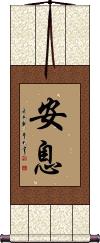
安息 means to rest, to go to sleep, to rest peacefully, or in repose, in Chinese characters, Japanese Kanji, and old Korean Hanja.
Relax / Rest / Repose
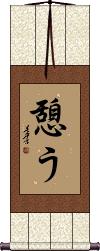
憩う is the Japanese word that means to relax, to rest, or to repose.
This in-stock artwork might be what you are looking for, and ships right away...

Gallery Price: $60.00
Your Price: $36.88

Gallery Price: $60.00
Your Price: $36.88
Gallery Price: $126.00
Your Price: $69.88
These search terms might be related to Rest:
A Moment of Time is as Precious as Gold
Balance / Equilibrium
Balance / Peace
Chill Out
Do Not Take Action Until the Time is Right
Each Time You Stumble and Fall, You Gain Experience and Wisdom
Harmony / Balance
If You Love Your Child, Send Them Out Into the World
Lean
Life in Balance / Balancing Life
Nature in Balance / Balanced Nature
Never Put Off Until Tomorrow What You Can Do Today
No Place Like Home
Put Out a Burning Wood Cart With a Cup of Water
Relax
Relax / Rest / Repose
Relax / Take It Easy
Respect Out of Fear is Never Genuine; Reverence Out of Respect is Never False
Tension and Relaxation
The Universe in Balance / Balanced Universe
There is Always a Way Out
There’s No Place Like Home
Time
Time and Tide Wait for No Man
Time Heals All Wounds
Time is as Precious as Gold
Time is Gold
Time is Money
Time is More Valuable Than Jade
Time Waits for No One
Year-in Year-Out Have Abundance
You Are Who You Hang Out With
Not the results for rest that you were looking for?
Below are some entries from our dictionary that may match your rest search...
| Characters If shown, 2nd row is Simp. Chinese |
Pronunciation Romanization |
Simple Dictionary Definition |
佛 see styles |
fú fu2 fu hotoke ほとけ |
More info & calligraphy: Buddhism / Buddha(surname) Hotoke Buddha, from budh to "be aware of", "conceive", "observe", "wake"; also 佛陀; 浮圖; 浮陀; 浮頭; 浮塔; 勃陀; 勃馱; 沒馱; 母馱; 母陀; 部陀; 休屠. Buddha means "completely conscious, enlightened", and came to mean the enlightener. he Chinese translation is 覺 to perceive, aware, awake; and 智 gnosis, knowledge. There is an Eternal Buddha, see e.g. the Lotus Sutra, cap. 16, and multitudes of Buddhas, but the personality of a Supreme Buddha, an Ādi-Buddha, is not defined. Buddha is in and through all things, and some schools are definitely Pan-Buddhist in the pantheistic sense. In the triratna 三寳 commonly known as 三寳佛, while Śākyamuni Buddha is the first "person" of the Trinity, his Law the second, and the Order the third, all three by some are accounted as manifestations of the All-Buddha. As Śākyamuni, the title indicates him as the last of the line of Buddhas who have appeared in this world, Maitreya is to be the next. As such he is the one who has achieved enlightenment, having discovered the essential evil of existence (some say mundane existence, others all existence), and the way of deliverance from the constant round of reincarnations; this way is through the moral life into nirvana, by means of self-abnegation, the monastic life, and meditation. By this method a Buddha, or enlightened one, himself obtains Supreme Enlightenment, or Omniscience, and according to Māhāyanism leads all beings into the same enlightenment. He sees things not as they seem in their phenomenal but in their noumenal aspects, as they really are. The term is also applied to those who understand the chain of causality (twelve nidānas) and have attained enlightenment surpassing that of the arhat. Four types of the Buddha are referred to: (1) 三藏佛the Buddha of the Tripiṭaka who attained enlightenment on the bare ground under the bodhi-tree; (2) 通佛the Buddha on the deva robe under the bodhi-tree of the seven precious things; (3) 別佛the Buddha on the great precious Lotus throne under the Lotus realm bodhi-tree; and (4) 圓佛the Buddha on the throne of Space in the realm of eternal rest and glory where he is Vairocana. The Hīnayāna only admits the existence of one Buddha at a time; Mahāyāna claims the existence of many Buddhas at one and the same time, as many Buddhas as there are Buddha-universes, which are infinite in number. |
三昧 see styles |
sān mèi san1 mei4 san mei sanmai さんまい |
More info & calligraphy: Samadhi(1) (さんまい only) {Buddh} samadhi (state of intense concentration achieved through meditation) (san:); (suffix noun) (2) (usu. ざんまい) being immersed in; being absorbed in; indulging in; doing to one's heart's content; (suffix noun) (3) (usu. ざんまい) prone to; apt to; (given name) Sanmai (三昧地) Samādhi, "putting together, composing the mind, intent contemplation, perfect absorption, union of the meditator with the object of meditation." (M. W.) Also 三摩地 (三摩提, 三摩帝, 三摩底). Interpreted by 定 or 正定, the mind fixed and undisturbed; by 正受 correct sensation of the object contemplated; by 調直定 ordering and fixing the mind; by 正心行處 the condition when the motions of the mind are steadied and harmonized with the object; by 息慮凝心 the cessation of distraction and the fixation of the mind; by 等持 the mind held in equilibrium; by 奢摩他, i.e. 止息 to stay the breathing. It is described as concentration of the mind (upon an object). The aim is 解脫, mukti, deliverance from all the trammels of life, the bondage of the passions and reincarnations. It may pass from abstraction to ecstasy, or rapture, or trance. Dhyāna 定 represents a simpler form of contemplation; samāpatti 三摩鉢底 a stage further advanced; and samādhi the highest stage of the Buddhist equivalent for Yoga, though Yoga is considered by some as a Buddhist development differing from samādhi. The 翻譯名義 says: 思專 when the mind has been concentrated, then 志一不分 the will is undivided; when 想寂 active thought has been put to rest, then 氣虛神朗 the material becomes etherealized and the spirit liberated, on which 智 knowledge, or the power to know, has free course, and there is no mystery into which it cannot probe. Cf. 智度論 5, 20, 23, 28; 止觀 2; 大乘義章 2, 9, 1 3, 20, etc. There are numerous kinds and degrees of samādhi. |
安心 see styles |
ān xīn an1 xin1 an hsin anshin あんしん |
More info & calligraphy: Peaceful Heart / Peace of Mind / Calm Mind{Buddh} obtaining peace of mind through faith or ascetic practice; (female given name) Anshin To quiet the heart, or mind; be at rest. |
安息 see styles |
ān xī an1 xi1 an hsi ansoku あんそく |
More info & calligraphy: Sleep / Rest / Repose(n,vs,vi) rest; repose (安息國) Parthia, 波斯 modern Persia, from which several monks came to China in the later Han dynasty, such as 安世高 An Shigao, 安玄 Anxuan, 曇無諦 Tan Wudi, 安法欽 An Faqin, 安淸 Anqing.; To rest. |
安穩 安稳 see styles |
ān wěn an1 wen3 an wen an non |
More info & calligraphy: Stable - Mind at Peace安隱 Body and mind at rest. |
憩う see styles |
ikou / iko いこう |
More info & calligraphy: Relax / Rest / Repose |
お休み see styles |
oyasumi おやすみ |
More info & calligraphy: Good Night |
奢摩他 see styles |
shē mó tā she1 mo2 ta1 she mo t`a she mo ta shamata |
More info & calligraphy: Samatha |
休 see styles |
xiū xiu1 hsiu yasumu やすむ |
to rest; to stop doing something for a period of time; to cease; (imperative) don't (personal name) Yasumu Desist, give up; resign; divorce; blessing, favour. |
停 see styles |
tíng ting2 t`ing ting chō |
to stop; to halt; to park (a car) To stop, rest, settle, delay. |
台 see styles |
tái tai2 t`ai tai dai だい |
(classical) you (in letters); variant of 臺|台[tai2] (n,n-suf) (1) stand; rest; base; pedestal; platform; table; holder; support; rack; (2) setting (of a gem); mounting; (3) (See 台木・1) stock (in grafting); (counter) (4) counter for machines and vehicles; (suffix) (5) (after a rounded value) level (e.g. price level); mark; range; decade (of one's life); (suffix noun) (6) tall building (with a fine view); (observation) platform; (suffix noun) (7) (in place names) plateau; heights; (surname) Dai A flat place, platform, plateau, terrace; an abbrev. for 臺 and for 天台 Tiantai, hence 台嶽 the Tiantai mountain; 台宗; 台家 its 'school'; 台徒 its disciples; 台教; 台道 its doctrine, or way. |
呬 see styles |
xì xi4 hsi ki |
to rest to breathe |
唞 see styles |
dǒu dou3 tou |
to take a rest (Cantonese) |
坐 see styles |
zuò zuo4 tso za |
to sit; to take a seat; to take (a bus, airplane etc); to bear fruit; variant of 座[zuo4] niṣad; niṣaṇṇa; sit; rest; situated. |
塈 see styles |
jì ji4 chi |
(literary) to plaster; (literary) to pick up; (literary) to rest |
宴 see styles |
yàn yan4 yen utage うたげ |
(bound form) feast; repose party; banquet; feast; (female given name) Utage A banquet; to repose; at ease. |
寢 寝 see styles |
qǐn qin3 ch`in chin shin |
(bound form) to lie down to sleep or rest; (bound form) bedroom; (bound form) imperial tomb; (literary) to stop; to cease To sleep, rest; stop; a retiring room, resting place. |
息 see styles |
xī xi1 hsi yasumu やすむ |
breath; news; interest (on an investment or loan); to cease; to stop; to rest; Taiwan pr. [xi2] (form) son; (personal name) Yasumu To breathe; breath; rest, stop, settle, cease; produce, interest. |
憩 see styles |
qì qi4 ch`i chi yasumu やすむ |
to rest (noun - becomes adjective with の) rest; (personal name) Yasumu to rest |
懸 悬 see styles |
xuán xuan2 hsüan kakeru かける |
to hang or suspend; to worry; public announcement; unresolved; baseless; without foundation (suf,adj-no) (1) -clad; (2) (kana only) in the midst of; (3) tenths (e.g. wholesale price, as tenths of retail price); (4) times (i.e. multiplied by); (5) able-to-seat (of a chair, etc.); (1) (abbreviation) credit; (2) money owed on an account; bill; (3) (abbreviation) (kana only) hot noodles in broth; (n,n-suf) (4) proportion (of wholesale price, as tenths of list price); (suffix) (5) in the midst of; (6) rest; rack; hanger; (personal name) Kakeru Suspend, hang. |
托 see styles |
tuō tuo1 t`o to taku |
to hold up in one's hand; to support with one's palm; something serving as a support: a prop, a rest (e.g. arm rest); (bound form) a shill; to ask; to beg; to entrust (variant of 託|托[tuo1]); torr (unit of pressure) To carry on the palm, entrust to. |
掛 挂 see styles |
guà gua4 kua kake かけ |
to hang; to suspend (from a hook etc); to hang up (the phone); (of a line) to be dead; to be worried; to be concerned; (dialect) to make a phone call; to register (at a hospital); to make an appointment (with a doctor); (slang) to kill; to die; to be finished; to fail (an exam); classifier for sets or clusters of objects (suf,adj-no) (1) -clad; (2) (kana only) in the midst of; (3) tenths (e.g. wholesale price, as tenths of retail price); (4) times (i.e. multiplied by); (5) able-to-seat (of a chair, etc.); (suffix) charge; duty; person in charge; official; clerk; (1) (abbreviation) credit; (2) money owed on an account; bill; (3) (abbreviation) (kana only) hot noodles in broth; (n,n-suf) (4) proportion (of wholesale price, as tenths of list price); (suffix) (5) in the midst of; (6) rest; rack; hanger; (surname) Kake To hang, suspend. |
枕 see styles |
zhěn zhen3 chen makura まくら |
(bound form) pillow; to rest one's head on (Taiwan pr. [zhen4]) (n,n-suf) (1) pillow; bolster; (n,n-suf) (2) introduction (e.g. to a rakugo story); lead-in; (female given name) Makura pillow |
棲 栖 see styles |
xī xi1 hsi sumie すみえ |
used in 棲棲|栖栖[xi1 xi1] (personal name) Sumie Roost, rest. |
棳 see styles |
zhuó zhuo2 cho |
small pillars that support the roof, those which rest on the main beam |
歇 see styles |
xiē xie1 hsieh |
to rest; to take a break; to stop; to halt; (dialect) to sleep; a moment; a short while |
止 see styles |
zhǐ zhi3 chih tomeru とめる |
to stop; to prohibit; until; only (given name) Tomeru To stop, halt, cease; one of the seven definitions of 禪定 dhyāna described as 奢摩他 śamatha or 三摩地 samādhi; it is defined as 靜息動心 silencing, or putting to rest the active mind, or auto-hypnosis; also 心定止於一處 the mind centred, lit. the mind steadily fixed on one place, or in one position. It differs from 觀 which observes, examines, sifts evidence; 止 has to do with 拂妄 getting rid of distraction for moral ends; it is abstraction, rather than contemplation; see 止觀 In practice there are three methods of attaining such abstraction: (a) by fixing the mind on the nose, navel, etc.; (b) by stopping every thought as it arises; (c) by dwelling on the thought that nothing exists of itself, but from a preceding cause. |
残 see styles |
zan ざん |
(n,pref) remainder; the rest; what is left; (surname) Zan |
滅 灭 see styles |
miè mie4 mieh metsu |
to extinguish or put out; to go out (of a fire etc); to exterminate or wipe out; to drown Extinguish, exterminate, destroy; a tr. of nirodha, suppression, annihilation; of nirvāṇa, blown out, extinguished, dead, perfect rest, highest felicity, etc.; and of nivṛtti, cessation, disappearance. nirodha is the third of the four axioms: 苦, 集, 滅, 道 pain, its focussing, its cessation (or cure), the way of such cure. Various ideas are expressed as to the meaning of 滅, i.e. annihilation or extinction of existence; or of rebirth and mortal existence; or of the passions as the cause of pain; and it is the two latter views which generally prevail; cf. M017574 10 strokes. |
落 see styles |
luò luo4 lo raku らく |
to fall or drop; (of the sun) to set; (of a tide) to go out; to lower; to decline or sink; to lag or fall behind; to fall onto; to rest with; to get or receive; to write down; whereabouts; settlement (irregular okurigana usage) (1) slip; omission; (2) outcome; final result; the end; (3) (kana only) punch line (of a joke); (surname) Raku Falling leaves: to fall, drop, descend, settle; translit. la, na. |
Click here for more rest results from our dictionary
The following table may be helpful for those studying Chinese or Japanese...
| Title | Characters | Romaji (Romanized Japanese) | Various forms of Romanized Chinese | |
| Sleep Rest Repose | 安息 | an soku / ansoku | ān xī / an1 xi1 / an xi / anxi | an hsi / anhsi |
| Relax Rest Repose | 憩う | ikou / iko | ||

Successful Chinese Character and Japanese Kanji calligraphy searches within the last few hours...



