Many custom options...


And formats...



Ryu in Chinese / Japanese...
Buy a Ryu calligraphy wall scroll here!
Personalize your custom “Ryu” project by clicking the button next to your favorite “Ryu” title below...
Goju Ryu
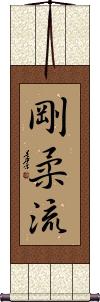
剛柔流 is the title of the Goju-Ryu or Gōjū-Ryū school/style of Karate or Japanese martial arts.
Sometimes romanized as Gojo-Ryu or Gojoryu, though technically, it should be Gōjū-Ryū (the accents indicating long vowel sounds like “gou juu ryuu”).
Fudoshin-Ryu

不動心流 can be translated as “Fudoshin-Ryu,” or “Immovable Mind Style.”
Daito-Ryu
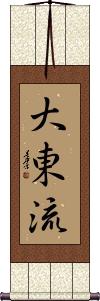
大東流 is Daitō-ryū, a Japanese martial art style - usually associated with Aikido.
Genseiryu / Gensei-Ryu
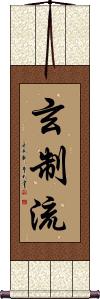
玄制流 is the Japanese title for the Genseiryū or Gensei-Ryū style of Karate.
Uechi-Ryu
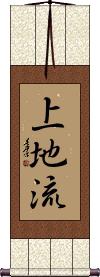
上地流 or Uechi-Ryū is the short name for a traditional style of Okinawan karate.
Uechi-Ryū is named after its creator, Kanbun Uechi. Uechi was an Okinawan man who left at the age of 19 for China to study Chinese martial arts and medicine.
The meaning of this title is “Uechi Flow,” “Uechi Style,” or “Uechi School.” Although, the name 上地 or Uechi can mean “higher stages of practice” in the Buddhist context. Therefore, you can stretch the meaning to be “Higher-Stages-of-Practice Style.”
Shorin Ji Ryu
Shaolin Temple Style
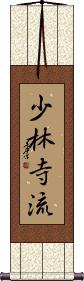
少林寺流 is the Japanese martial arts title “Shorin-ji-ryu.”
Though the first part of the title comes from the Shaolin temple in China. In Japan, this refers to an Okinawa school of karate.
Note: Sometimes, this title is written without the “ji” or “temple” Kanji.
Muso Jikiden Eishin-Ryu
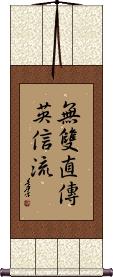
無雙直傳英信流 is the traditional or old way to write the Japanese martial arts title, Musō Jikiden Eishin-Ryū (iaido style).
In modern Japanese, the second and fourth Kanji are different, making them 無双直伝英信流.
Musō Jikiden Eishin-Ryū is arguably the most renowned Japanese sword art school, with a history dating back to the early 1600s.
Daito-Ryu Aiki-jujutsu
School of Japanese Martial Arts
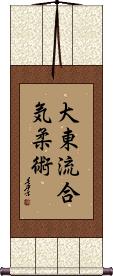
大東流合気柔術 is Daitō-Ryū Aiki-jūjutsu, a Japanese martial art established by Takeda Sōkaku.
The most famous student of Daitō-Ryū Aiki-jūjutsu is Morihei Ueshiba who later founded the school or branch of martial arts known as Aikido.
Note: 大東流合気柔術 can also be romanized as Daito-ryu Aiki-Jujutsu, Daitou-Ryuu Aiki-Juujutsu or Daito-Ryu Aiki-Jujitsu.
Muso Jikiden Eishin-Ryu
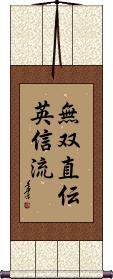
無双直伝英信流 is the modern way to write the Japanese martial arts term, Musō Jikiden Eishin-Ryū (iaido style).
Sometimes the second Kanji is written as 雙, and the fourth Kanji is written 傳, making the full title 無雙直傳英信流. See the other version of this title if you want that traditional version.
Taido
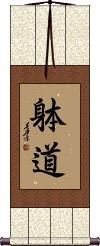
Taidō (The Way of the Body) is a style of Karate practiced in Japan and popular worldwide.
Taidō or 躰道 traces a lineage from Genseiryū (玄制流), which came from Shuri-te (首里手), one of the original martial arts schools of ancient Okinawa.
The first character 躰 is a variant of the original Chinese character 體. In modern Japan, they tend to use 体, a more simple character form. 体 is also the modern Simplified Chinese form of 體.
The 躰 character is correct for this 躰道 martial arts title. But it can be confusing with so many variants out there, not to mention other homophonic Japanese words that also romanize as Taidō or Taidou.
To have a bit more fun with this 躰 character, it has a 身 radical on the left, which sets it apart. The meaning doubles up on the “body” as 身 (shin) is a character that also means body in Japanese and Chinese. On the right is 本, which often means root, stem, origin, source, or fundamental (but can also mean “book” in some contexts). This has deviated from the original 體 which was 骨 (bone) + 豊 (vessel). Hence, the body was your “bone vessel” in ancient Asia.
The meaning of 躰, as well as 體 and 体, is usually translated as the body. When related to the physical body, it can also refer to the torso, trunk, build, physique, or the constitution of a person. As an extension of this, it can also refer to someone's health (good body = good health).
However, depending on the context, it can encompass other meanings such as form, style, system, experience, aspect, corpus, corporeal, substance, or essentials.
The second character, 道, is recognized and well-known as the “Way” and is the same “do” as in Karate-do or Aikido.
Shorin-Ryu Shidokan
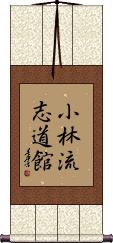
小林流志道館 is the Japanese title Shorin-ryu Shidōkan.
Shito-Ryu Ki-Me-Kan Karate-Do
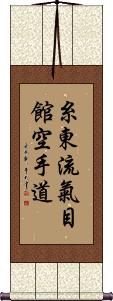
糸東流氣目館空手道 is the title for Shito-Ryu Ki-Me-Kan Karate-Do.
A school of Karate.
Note that while this title can be pronounced in Chinese, it only makes complete sense in Japanese.
This in-stock artwork might be what you are looking for, and ships right away...

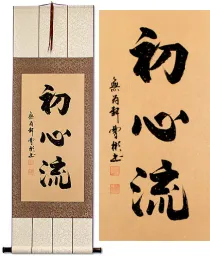

Gallery Price: $106.00
Your Price: $58.88
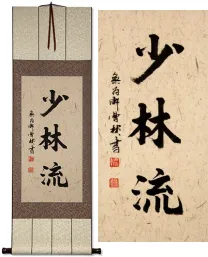
Gallery Price: $178.00
Your Price: $98.88
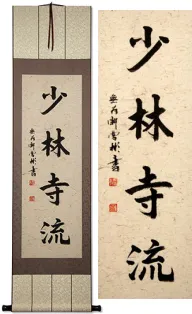
Gallery Price: $180.00
Your Price: $99.88

Gallery Price: $106.00
Your Price: $58.88
The following table may be helpful for those studying Chinese or Japanese...
| Title | Characters | Romaji (Romanized Japanese) | Various forms of Romanized Chinese | |
| Goju Ryu | 剛柔流 刚柔流 | gou juu ryuu goujuuryuu go ju ryu | ||
| Fudoshin-Ryu | 不動心流 | fu dō shin ryū fudōshinryū | bù dòng xīn liú bu4 dong4 xin1 liu2 bu dong xin liu budongxinliu | pu tung hsin liu putunghsinliu |
| Daito-Ryu | 大東流 | dai tou ryuu daitouryuu dai to ryu | ||
| Genseiryu Gensei-Ryu | 玄制流 | |||
| Uechi-Ryu | 上地流 | ue chi ryuu uechiryuu ue chi ryu | ||
| Shorin Ji Ryu | 少林寺流 | shou rin ji ryuu shourinjiryuu sho rin ji ryu | ||
| Muso Jikiden Eishin-Ryu | 無雙直傳英信流 無双直伝英信流 | mu sou jiki den ei shin ryuu musoujikideneishinryuu mu so jiki den ei shin ryu | ||
| Daito-Ryu Aiki-jujutsu | 大東流合氣柔術 大東流合気柔術 | dai tou ryuu ai ki ju jutsu daitouryuuaikijujutsu dai to ryu ai ki ju jutsu | ||
| Muso Jikiden Eishin-Ryu | 無雙直傳英信流 無双直伝英信流 | mu sou jiki den ei shin ryuu musoujikideneishinryuu mu so jiki den ei shin ryu | ||
| Taido | 躰道 | tai dou / taidou / tai do | ||
| Shorin-Ryu Shidokan | 小林流志道館 | sho rin ryu shi dou kan shorinryushidoukan sho rin ryu shi do kan | ||
| Shito-Ryu Ki-Me-Kan Karate-Do | 糸東流氣目館空手道 糸东流気目馆空手道 | shito-ryu ki-me-kan karate-dou shito-ryu ki-me-kan karate-do | mì dōng liú qì mù guǎn kōng shǒu dào mi4 dong1 liu2 qi4 mu4 guan3 kong1 shou3 dao4 mi dong liu qi mu guan kong shou dao | mi tung liu ch`i mu kuan k`ung shou tao mi tung liu chi mu kuan kung shou tao |
| In some entries above you will see that characters have different versions above and below a line. In these cases, the characters above the line are Traditional Chinese, while the ones below are Simplified Chinese. | ||||

Successful Chinese Character and Japanese Kanji calligraphy searches within the last few hours...



