Many custom options...


And formats...



Xian in Chinese / Japanese...
Buy a Xian calligraphy wall scroll here!
Personalize your custom “Xian” project by clicking the button next to your favorite “Xian” title below...
1. Infinity / Infinite / Unlimited / Unbounded
2. Immortal
3. Sian
5. Active Duty
6. Adventure
7. Darshan
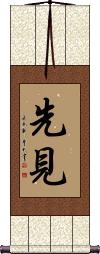
10. Foresight
12. Live In The Moment / Live In The Now
13. Sensei / Master / Teacher / Mister
15. Risk / Venture
17. Senpai / The Elder or Master
18. Phenomenon
19. Sacrifice / Devotion / Dedication
21. Adventurer
22. Infinite Love
23. Mugendo
24. North Korea
25. Shania
26. Adventure
28. Forza
37. When the sun rises it first shines on the highest mountain
39. Fix the roof before the rain; Dig the well before you are thirsty
40. Daodejing / Tao Te Ching - Excerpt
41. The key to immortality is first living a life worth remembering
Infinity / Infinite / Unlimited / Unbounded
Japanese = Infinity / Chinese = No limits
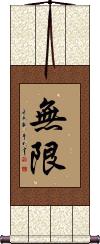
無限 is the Chinese and Japanese word meaning infinity, unlimited or unbounded.
無限 literally translates as “without limits” or “without [being] bound.”
The first character means “never” or “not,” like the prefix “un-.”
The second means “limited,” “restricted,” or “bound.”
Please note that the Japanese definition leans more toward “infinity” and the Chinese is more about being “boundless” or “without limits.”
In Korean, this means infinity, infinitude, or boundlessness. But in Korean, this term has many interpretations or contexts, so your intended meaning might be vague or ambiguous.
Immortal
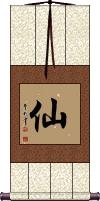
仙 means immortal (as in a being or person).
In some contexts, it can mean hermit, ascetic, man of the hills, or wizard. The Buddha is often put in this category.
In Chinese mythology and folklore, there is a famous group of eight immortals (八仙).
The 楞嚴經 (Śūraṅgama Sūtra) speaks of many kinds of immortals including walkers on the earth, fliers, wanderers at will (into space or into the deva heavens), beings with the ability to transform themselves into any form, etc.
Sian
This is a common transliteration to Mandarin Chinese for the Welsh name Sian, Siân, or Shân.
Wise and Virtuous
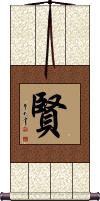
賢 is used to refer to being a wise, trustworthy, and virtuous person. But it also contains the ideas of intelligence, genius, scholarship, virtue, sage, saint, good, and excellent in character.
賢 is used in Chinese, Japanese Kanji, and old Korean Hanja. Also used in a Buddhist context with the same meaning.
Note: Can also be the male given name, Masaru, in Japanese.
Active Duty
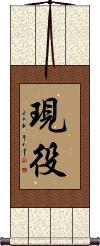
現役 is a simple way to say “active duty.”
When I got off active duty in the Marines, I suddenly discovered that everyone on active duty seemed very proud of that fact. These Japanese / Chinese characters are offered to those servicemen with that pride.
Please note that there is a longer yet more natural phrase that means “Active Duty Soldier” or literally “Active Duty Military Person” - see the next entry...
Adventure
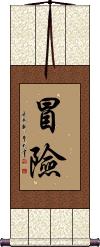
冒險 is another Chinese and Korean word for “Adventure.”
This is more of a “risk-taking” version of adventure.
The first character can mean “brave” and “bold.” The second character means “dangerous” and “rugged.” Together they can be defined as a word meaning “adventure” in Chinese and Korean.
Note: Some dictionaries translate these two characters as “take a risk.”
Darshan
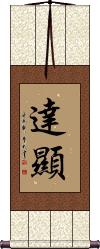
達顯 is the name Darshan in Chinese (Mandarin).
Eight Immortals
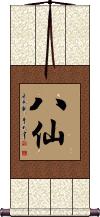
八仙 is the Chinese title for the Eight Immortals of Daoist / Taoist mythology.
In Japanese, this can be the given name Hassen.
Fairy / Nymph
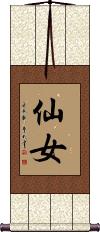
仙女 is a Chinese, Japanese Kanji, and old Korean Hanja way to write fairy or nymph.
This can also be translated as a female elf or female sage.
In Japanese, this can be the female given name, Sennyo.
Foresight
Wise Younger Brother
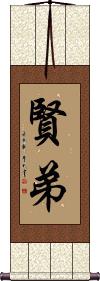
賢弟 is an honorific title for a little brother.
This can be translated as a worthy little brother or wise younger brother. This can also be a polite reference to another person's younger brother, your junior, or your subordinate.
Live In The Moment / Live In The Now
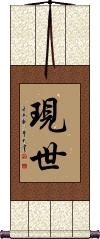
現世 is a very short way to write “live in the moment” or “live in the now” in Japanese.
This short word is open to interpretation. It's used in Japanese Buddhism to mean “the current epoch” or “the current age” (the current age is but a brief moment in the greater scope of existence). In that context, this is pronounced “utsushiyo” or “ustusiyo” in Japanese. Otherwise, it's pronounced “gensei” in Japanese.
Other translation possibilities include:
Earthly world
This world
This life
Present life
Present generation
Present incarnation
This existence
This (momentary) reality
Note: This is also a word in Chinese and old Korean Hanja. While the meaning is more or less the same, this is not recommended for a wall scroll if your audience is Chinese or Korean. This selection is best if your audience is Japanese.
Sensei / Master / Teacher / Mister
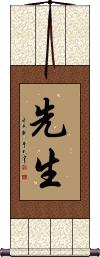
先生 is sensei, which is associated in the west with a master or instructor of karate, aikido, judo, and other Japanese martial arts.
In reality, this is a term of respect for almost any professional or skilled person (doctor, lawyer, teacher, etc.). Sometimes, it is used for musicians and artists who have achieved a certain level of fame, skill, or accomplishment.
It should be noted that this is also a courtesy title in Chinese but more like calling someone “mister” or “gentleman.” It doesn't have the “master” or “teacher” meaning in Chinese - see our Chinese “Master / Sifu / Shi Fu” entry if your audience is Chinese.
In Korean Hanja, this means teacher, instructor, schoolmaster, or schoolmistress.
This entry is for educational purposes. 先生 is kind of a strange thing to put on a wall scroll. It's a title that is used more orally to show respect rather than something written in calligraphy. If you feel it is appropriate in your circumstances, we will create a piece of sensei Japanese calligraphy artwork for you.
Paradise / Wonderland
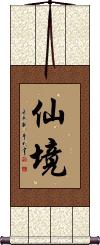
仙境 means fairyland, wonderland, paradise, or enchanted land.
Same meaning in both Chinese and Japanese Kanji.
Risk / Venture
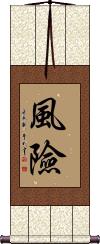
風險 is the Chinese word that means risk or venture.
風險 is mostly used in the context of a business venture or the risk you might take on the stock market.
If you like to gamble on the stock market or “let it all hang out” when doing business transactions, this might be the wall scroll for you.
Scarlet / Bright Red
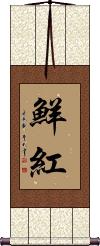
鮮紅 is a Japanese and Chinese title for scarlet or bright red color.
Senpai / The Elder or Master
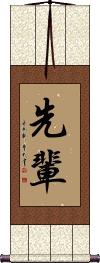
先輩 is a Chinese, Japanese, and old Korean word or title that means elders, senior (at work or school), superior, older graduate, progenitor, or old-timer.
In American dojos, this is sometimes romanized as Sempai.
Phenomenon
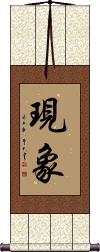
I must first say that 現象 is an odd thing to put on a wall scroll in Asian cultures. It won't make a lot of sense alone unless you have a special or personal meaning that you attach to it for yourself.
These two characters mean phenomenon in Chinese, Japanese, and Korean Hanja. They can also be translated as “a happening,” depending on context.
The sum of these characters is a little different than their individual meanings. But I will break it down anyway...
The first character means present, existing, actual, apparent, now, or current.
The second character alone means pattern after, imitate, image, shape, sign (of the times), form, appearance, to be like, to resemble, to take after, to seem, or elephant.
Sacrifice / Devotion / Dedication
(complete bodily devotion)
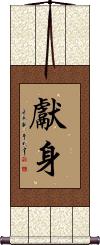
獻身 is used to describe being so devoted to something that you will make sacrifices for that goal/thing/person.
You can also translate this word as any of the following:
Sacrifice one's life for...
To dedicate oneself to...
Self-devotion
Dedication
Devote to...
Self-sacrifice
Giving your whole body to...
This can be a dedication to or for someone but is often used as a dedication or making sacrifices for your country, public service, or a cause. For instance, an Olympic athlete makes great sacrifices to train in his/her sport for their country and compatriots.

 While the form shown to the upper-left is considered an ancient Japanese version, in modern Japan, they use the simplified version of the first Kanji (shown to the right). Click on the Kanji at the right instead of the button above if you want this modern Japanese version.
If you are looking for a more religious meaning of devotion, see Faith.
See Also: Confidence | Dedication
Wisdom / Intelligence
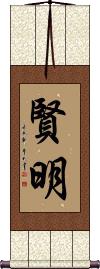
賢明 is a Japanese word that refers to wisdom, intelligence, and prudence.
賢明 was originally a Chinese word that referred to a wise person or enlightened ruler. It means wise and able, sagacious now in China.
Adventurer
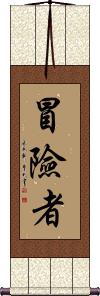
冒險者 is how to write adventurer in Chinese.
Infinite Love
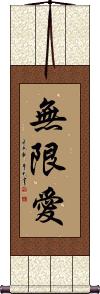
無限愛 is the Chinese and Japanese title meaning infinite love, unlimited love, or unbounded love.
The first character means never, not, or like the prefix “un-.”
The second means limited, restricted, or bound.
The third means love or affection.
Mugendo
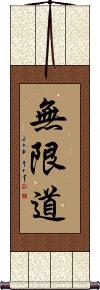
This is Mugendo or Mu Gen Do, a Japanese martial arts style that means “unlimited way,” “unbounded way,” “eternal way,” or “limitless way.”
North Korea
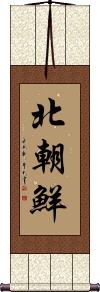
北朝鮮 is the Chinese and Japanese name for the country of North Korea.
The official English name being Democratic People's Republic of Korea.
See Also: South Korea | Asia
Shania
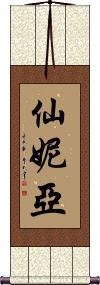
仙妮亞 is the name Shania in Chinese (Mandarin).
Adventure
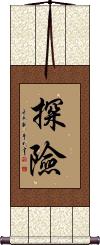
If you lead a life of adventure (like I do), a 探險 wall scroll is for you.
Alone, the first character can mean “to explore,” “to search out,” or “to scout.” The second character holds the meanings of “dangerous” and “rugged.” Together these two characters create the word that means “adventure” or “to explore.”
探険 is a modern Japanese Kanji version, but it more precisely means exploration or expedition rather than adventure. 探險 is the old/ancient Japanese version used before WWII. Let us know if you want the modern Japanese version instead.
See Also: Bon Voyage | Travel
Active Duty Military
Person on Active Duty
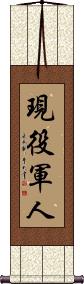
現役軍人 means “Active Duty Soldier” or literally “Active Duty Military Person.”
This title is a great way to show pride in being an active duty member of the armed forces.
The first two characters mean “active duty” and the second two characters can be translated as “military personnel,” “soldier,” or “serviceman” (it is unisex, so male or female is not indicated).
See Also: Military
Forza
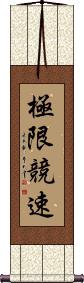
極限競速 is the name Forza in Chinese (Mandarin).
To Infinity and Beyond
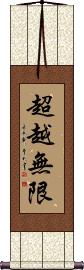
超越無限 means “to infinity and beyond,” in Chinese.
This is how the slogan/phrase from Toy Story's Buzz Lightyear was translated from the movie into Chinese.
Learn from Wisdom
(When you see a wise person, try to be like them)
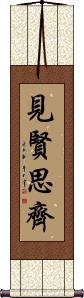
When you meet a wise person, you should learn from them and be inspired to become as wise as they are.
見賢思齊 is a pretty long proverb in English, but in Chinese, it's only four characters.
However, in Chinese, the deeper meaning often surpasses the dictionary definition of each character.
In this case, you should seek wise people to learn from throughout your life...
Always try to learn enough to become equal to them. It also suggests that learning and seeking wisdom is a non-ending cycle.
See Also: Knowledge
The Red Thread of Fate
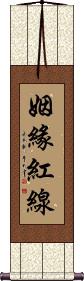
姻緣紅線 is the legendary red string of destiny that binds all soul mates or lovers together.
In ancient Chinese culture, a mythological matchmaker named 月老 (Yuè Lǎo) was the controller of the fate that led lovers to meet. He did this by tying a celestial red string to the ankle of each person. Sometime during their life, they will meet and marry as fate dictates.
While the origin of the red string comes from China, it has spread to other parts of Asia (such as Japan, where it's known as 赤い糸).
Self Actualization
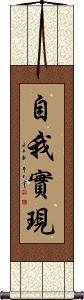
自我實現 is the Chinese and old Korean Hanja title for self-actualization or self-realization.
Love Myself First
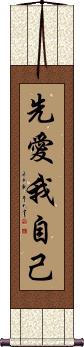
This directly translates as, “First, love myself.”
While you might be looking for “Love yourself first,” there's the problem with yourself versus myself. If this is on your wall or tattooed on your arm, should it not say “myself” since it's directed at you, and not others?
See Also: Love Yourself First
Love Yourself First
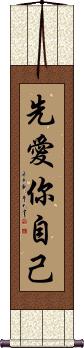
This directly translates as, “First, love yourself.”
Because this uses “yourself” instead of “myself,” this is a direction for those reading it. It could be the owner of the art or those who view it.
This would be weird as a tattoo, so please avoid it since for whom the tattoo is directed would be confusing.
See Also: Love Myself First
Realize Your Dreams
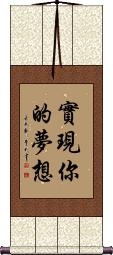
實現你的夢想 means “realize your dreams” or “live your dreams” in Chinese.
實現 means to achieve, to implement, to realize, or to bring about.
The characters 你的 effectively mean “your.”
夢想 means to dream, imagine, or have a vision.
Past Future and Present
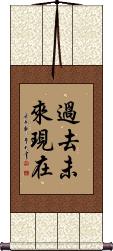
過去未來現在 is a Buddhist term meaning “past, future, and present.”
In Buddhism, it is taught that we can often get stuck in thoughts about past regrets, or future plans and worries. However, what we may want to focus on is being in the present moment.
When the sun rises it first shines on the highest mountain
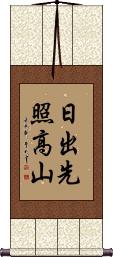
This old Buddhist phrase means, “When the sun rises it always shines first on the highest mountain,” or “When the sun appears, it first casts its light upon the highest mountain.”
This comes from the Avatamsaka Sutra and has been used as the name or portion of the name for temples in Japan and sites in China.
The Buddha's first round of teaching (Avatamsaka period) is likened to the time when the sun rises from the east horizon. When the sun first rises it illuminates the high mountains. In this analogy, the high mountains represent the great Bodhisattvas and/or those most ready to receive enlightenment and liberation.
This can be romanized from Japanese as “Nichi shutsu sen shō kō san,” “Nisshutsu saki teru takayama,” or “Hide temazu kōzan wo terasu yama.” The last one is probably the most common. Ask three Japanese people what they think the pronunciation is, and you will get three different opinions.
Honor for Ancestors
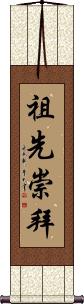
祖先崇拜 means “Appreciation and honor of your ancestors.”
This can refer to anyone from your grandparents and beyond.
The first two characters mean ancestors or forefathers.
The last two characters mean worship, adore/adoration, or admiration.
This is the kind of wall scroll that a filial son or daughter in China or Japan would hang to honor their ancestors who paved the way for the new generation.
 Japanese use a slight variation on the last Kanji. If you want this specifically Japanese version, just click on the Kanji image to the right (instead of the button above). Note that Japanese people would easily be able to identify the original Chinese form of that Kanji anyway.
They also have a similar phrase in old Korean but the first two characters are reversed - just let me know if you want that version when you place your order.
Fix the roof before the rain; Dig the well before you are thirsty
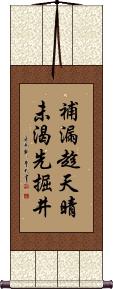
补漏趁天晴未渴先掘井 is a Chinese proverb that literally translates as: Mend the roof while the weather is fine, [and when you are] not yet thirsty, dig the well beforehand.
In simple terms, this means: Always being prepared in advance.
See Also: Have a Walking Stick at the Ready Before You Stumble
Daodejing / Tao Te Ching - Excerpt
Excerpt from Chapter 67
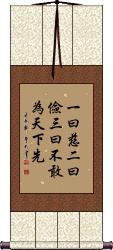
一曰慈二曰儉三曰不敢為天下先 is an excerpt from the 67th Chapter of Lao Tzu's (Lao Zi's) Te-Tao Ching (Dao De Jing).
This is the part where the three treasures are discussed. In English, we'd say these three treasures are compassion, frugality, and humility. Some may translate these as love, moderation, and lack of arrogance. I have also seen them translated as benevolence, modesty, and “Not presuming to be at the forefront in the world.” You can mix them up the way you want, as translation is not really a science but rather an art.
I should also explain that the first two treasures are single-character ideas, yet the third treasure was written out in six characters (there are also some auxiliary characters to number the treasures).
If Lao Tzu's words are important to you, then a wall scroll with this passage might make a great addition to your home.
The key to immortality is first living a life worth remembering
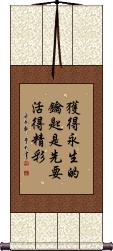
獲得永生的鑰匙是先要活得精彩 is a famous quote from Bruce Lee.
However, when quoted, he was speaking in English. So this is a translation of his English quote into Chinese. Since Bruce spoke both Chinese and English, his quotes sometimes go both ways.
1 Corinthians 14:22
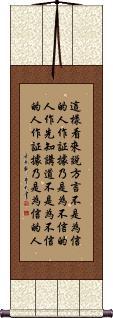
Here is 1 Corinthians 14:22 in Chinese.
The text with punctuation:
这样看来,说方言,不是为信的人作证据,乃是为不信的人。作先知讲道,不是为不信的人作证据,乃是为信的人。
Hand-painted calligraphy does not retain punctuation.
This translation is from the Chinese Union Bible.
You may know it from the KJV as:
Wherefore tongues are for a sign, not to them that believe, but to them that believe not: but prophesying serveth not for them that believe not, but for them which believe.
Return to Dwell in Gardens and Fields Poem

This is Tao Yuanming's poem, “Returning to Dwell in Gardens and Fields.”
少無適俗韻 性本愛丘山。
誤落塵網中 一去三十年。
羈鳥戀舊林 池魚思故淵。
開荒南野際 抱拙歸園田。
方宅十餘畝 草屋八九間。
榆柳蔭後簷 桃李羅堂前。
暖暖遠人村 依依墟裡煙。
狗吠深巷中 雞鳴桑樹顛。
戶庭無塵雜 虛室有餘閒。
久在樊籠裡 復得返自然。
Not the results for xian that you were looking for?
Below are some entries from our dictionary that may match your xian search...
| Characters If shown, 2nd row is Simp. Chinese |
Pronunciation Romanization |
Simple Dictionary Definition |
仙 see styles |
xiān xian1 hsien hisa ひさ |
More info & calligraphy: Immortal(1) (See 仙人・1) hermit; wizard; (2) (See 仙術) wizardry; (personal name) Hisa 僊 ṛṣi, 哩始 an immortal. 仙人; 人仙 the genī, of whom there is a famous group of eight 八仙; an ascetic, a man of the hills, a hermit; the Buddha. The 楞嚴經 gives ten kinds of immortals, walkers on the earth, fliers, wanderers at will, into space, into the deva heavens, transforming themselves into any form, etc. The names of ten ṛṣis, who preceded Śākyamuni, the first being 闍提首那? Jatisena; there is also a list of sixty-eight 大仙 given in the 大孔雀咒經下 A classification of five is 天仙 deva genī, 神仙 spirit genī, 人仙 human genī, 地仙 earth, or cavern genī, and 鬼仙 ghost genī. |
賢 贤 see styles |
xián xian2 hsien masaru まさる |
More info & calligraphy: Wise and Virtuous(noun or adjectival noun) (archaism) intelligence; genius; scholarship; virtue; (male given name) Masaru Wise and virtuous, sage, second rank to a 聖 saint; good, excellent in character, virtuous. |
仙人 see styles |
xiān rén xian1 ren2 hsien jen sennin せんにん |
More info & calligraphy: Sennin(1) immortal mountain wizard (in Taoism); mountain man (esp. a hermit); (2) one not bound by earthly desires or the thoughts of normal men; (surname, given name) Sennin seer |
仙境 see styles |
xiān jìng xian1 jing4 hsien ching senkyou / senkyo せんきょう |
More info & calligraphy: Paradise / Wonderlandfairyland; enchanted land |
仙女 see styles |
xiān nǚ xian1 nu:3 hsien nü sennyo せんにょ |
More info & calligraphy: Fairy / Nymphfairy; nymph; elf; (given name) Sennyo female sage |
先生 see styles |
xiān sheng xian1 sheng5 hsien sheng senjou / senjo せんじょう |
More info & calligraphy: Sensei / Master / Teacher / Mister(honorific or respectful language) (rare) man (chi: xiānshēng); boy; (surname) Senjō Senior, sir, teacher, master, Mr.; a previous life. |
先見 先见 see styles |
xiān jiàn xian1 jian4 hsien chien sakimi さきみ |
More info & calligraphy: Foresight(noun, transitive verb) foresight; anticipation; (personal name) Sakimi |
先輩 先辈 see styles |
xiān bèi xian1 bei4 hsien pei senpai せんぱい |
More info & calligraphy: Senpai / The Elder or Master(See 後輩・こうはい) senior (at work or school); superior; elder; older graduate; progenitor; old-timer |
先驅 先驱 see styles |
xiān qū xian1 qu1 hsien ch`ü hsien chü |
to pioneer; pioneer; trailblazer |
八仙 see styles |
bā xiān ba1 xian1 pa hsien hassen はっせん |
More info & calligraphy: Eight Immortals(given name) Hassen |
冒險 冒险 see styles |
mào xiǎn mao4 xian3 mao hsien |
More info & calligraphy: Adventure |
探險 探险 see styles |
tàn xiǎn tan4 xian3 t`an hsien tan hsien |
More info & calligraphy: Adventure |
無限 无限 see styles |
wú xiàn wu2 xian4 wu hsien mugen むげん |
More info & calligraphy: Infinity / Infinite / Unlimited / Unbounded(1) infinity; infinitude; eternity; (adj-no,adj-na) (2) infinite; limitless; (given name) Mugen infinite |
獻身 献身 see styles |
xiàn shēn xian4 shen1 hsien shen |
More info & calligraphy: Sacrifice / Devotion / DedicationSee: 献身 |
現世 现世 see styles |
xiàn shì xian4 shi4 hsien shih ariyo ありよ |
More info & calligraphy: Live In The Moment / Live In The Now(1) {Buddh} (usu. げんせ) this world; this life; (2) (げんせい only) (See 完新世) current epoch (i.e. the Holocene epoch); (female given name) Ariyo The present world. |
現役 现役 see styles |
xiàn yì xian4 yi4 hsien i geneki げんえき |
More info & calligraphy: Active Duty(noun - becomes adjective with の) (1) active duty; active service; (noun - becomes adjective with の) (2) (often as 現役で) (See 浪人・ろうにん・3) student taking (university) entrance exams while still enrolled in school; student who passed their university entrance exams on the first try |
現象 现象 see styles |
xiàn xiàng xian4 xiang4 hsien hsiang genshou / gensho げんしょう |
More info & calligraphy: Phenomenonphenomenon phenomenon |
賢弟 贤弟 see styles |
xián dì xian2 di4 hsien ti kentei / kente けんてい |
More info & calligraphy: Wise Younger Brother(pronoun) wise younger brother; polite reference to another's younger brother, or to one's junior; (personal name) Kentei |
賢明 贤明 see styles |
xián míng xian2 ming2 hsien ming yoshimitsu よしみつ |
More info & calligraphy: Wisdom / Intelligence(noun or adjectival noun) wise; sensible; well-advised; intelligent; sagacious; prudent; (given name) Yoshimitsu wise |
風險 风险 see styles |
fēng xiǎn feng1 xian3 feng hsien |
More info & calligraphy: Risk / Venture |
鮮紅 鲜红 see styles |
xiān hóng xian1 hong2 hsien hung senkou / senko せんこう |
More info & calligraphy: Scarlet / Bright Redscarlet; bright red; (given name) Senkou |
冒險者 冒险者 see styles |
mào xiǎn zhě mao4 xian3 zhe3 mao hsien che |
More info & calligraphy: Adventurer |
北朝鮮 北朝鲜 see styles |
běi cháo xiǎn bei3 chao2 xian3 pei ch`ao hsien pei chao hsien kitachousen / kitachosen きたちょうせん |
More info & calligraphy: North KoreaNorth Korea; (place-name) Kitachōsen |
仚 see styles |
xiān xian1 hsien |
old variant of 仙[xian1] |
佡 see styles |
xiān xian1 hsien |
variant of 仙, immortal; light (as a feather) |
僊 仙 see styles |
xiān xian1 hsien senzaki せんざき |
variant of 仙[xian1] (surname) Senzaki immortal |
僩 see styles |
xiàn xian4 hsien |
courageous; valiant |
僴 see styles |
xiàn xian4 hsien |
old variant of 僩[xian4] |
先 see styles |
xiān xian1 hsien hirosaki ひろさき |
beforehand; first; earlier; at first; originally; for the time being; for now; (prefix) my late (in referring to deceased relatives older than oneself) (adj-no,n) (1) former; previous; old; (2) first move (in go, shogi, etc.); opening move; (surname) Hirosaki Fore, before, former, first; precede. |
冼 see styles |
xiǎn xian3 hsien |
surname Xian |
Click here for more xian results from our dictionary
The following table may be helpful for those studying Chinese or Japanese...
| Title | Characters | Romaji (Romanized Japanese) | Various forms of Romanized Chinese | |
| Infinity Infinite Unlimited Unbounded | 無限 无限 | mu gen / mugen | wú xiàn / wu2 xian4 / wu xian / wuxian | wu hsien / wuhsien |
| Immortal | 仙 | sento / sen | xiān / xian1 / xian | hsien |
| Sian | 仙 | xiān / xian1 / xian | hsien | |
| Wise and Virtuous | 賢 贤 | ken | xián / xian2 / xian | hsien |
| Active Duty | 現役 现役 | geneki | xiàn yì / xian4 yi4 / xian yi / xianyi | hsien i / hsieni |
| Adventure | 冒險 冒险 | mào xiǎn / mao4 xian3 / mao xian / maoxian | mao hsien / maohsien | |
| Darshan | 達顯 达显 | dá xiǎn / da2 xian3 / da xian / daxian | ta hsien / tahsien | |
| Eight Immortals | 八仙 | hassen / hasen | bā xiān / ba1 xian1 / ba xian / baxian | pa hsien / pahsien |
| Fairy Nymph | 仙女 | sen nyo / sennyo | xiān nǚ / xian1 nu:3 / xian nu: / xiannu: | hsien nü / hsiennü |
| Foresight | 先見 先见 | senken | xiān jiàn xian1 jian4 xian jian xianjian | hsien chien hsienchien |
| Wise Younger Brother | 賢弟 贤弟 | ken tei / kentei | xián dì / xian2 di4 / xian di / xiandi | hsien ti / hsienti |
| Live In The Moment Live In The Now | 現世 现世 | gen sei / gensei | xiàn shì / xian4 shi4 / xian shi / xianshi | hsien shih / hsienshih |
| Sensei Master Teacher Mister | 先生 | sen sei / sensei | xiān shēng xian1 sheng1 xian sheng xiansheng | hsien sheng hsiensheng |
| Paradise Wonderland | 仙境 | sen kyou / senkyou / sen kyo | xiān jìng xian1 jing4 xian jing xianjing | hsien ching hsienching |
| Risk Venture | 風險 风险 | fēng xiǎn feng1 xian3 feng xian fengxian | feng hsien fenghsien |
|
| Scarlet Bright Red | 鮮紅 鲜红 | sen kou / senkou / sen ko | xiān hóng xian1 hong2 xian hong xianhong | hsien hung hsienhung |
| Senpai The Elder or Master | 先輩 先辈 | sen pai / senpai | xiān bèi / xian1 bei4 / xian bei / xianbei | hsien pei / hsienpei |
| Phenomenon | 現象 现象 | genshou / gensho | xiàn xiàng xian4 xiang4 xian xiang xianxiang | hsien hsiang hsienhsiang |
| Sacrifice Devotion Dedication | 獻身 献身 | ken shin / kenshin | xiàn shēn xian4 shen1 xian shen xianshen | hsien shen hsienshen |
| Wisdom Intelligence | 賢明 贤明 | ken mei / kenmei | xián míng xian2 ming2 xian ming xianming | hsien ming hsienming |
| Adventurer | 冒險者 冒险者 | mào xiǎn zhě mao4 xian3 zhe3 mao xian zhe maoxianzhe | mao hsien che maohsienche |
|
| Infinite Love | 無限愛 无限爱 | mu gen ai / mugenai | wú xiàn ài wu2 xian4 ai4 wu xian ai wuxianai | wu hsien ai wuhsienai |
| Mugendo | 無限道 无限道 | mu gen do / mugendo | wú xiàn dào wu2 xian4 dao4 wu xian dao wuxiandao | wu hsien tao wuhsientao |
| North Korea | 北朝鮮 北朝鲜 | kita chousen kitachousen kita chosen | běi cháo xiǎn bei3 chao2 xian3 bei chao xian beichaoxian | pei ch`ao hsien peichaohsien pei chao hsien |
| Shania | 仙妮亞 仙妮亚 | xiān nī yà xian1 ni1 ya4 xian ni ya xianniya | hsien ni ya hsienniya |
|
| Adventure | 探險 探险 / 探険 | tanken | tàn xiǎn / tan4 xian3 / tan xian / tanxian | t`an hsien / tanhsien / tan hsien |
| Active Duty Military | 現役軍人 现役军人 | geneki gunjin genekigunjin | xiàn yì jūn rén xian4 yi4 jun1 ren2 xian yi jun ren xianyijunren | hsien i chün jen hsienichünjen |
| Forza | 極限競速 极限竞速 | jí xiàn jìng sù ji2 xian4 jing4 su4 ji xian jing su jixianjingsu | chi hsien ching su chihsienchingsu |
|
| To Infinity and Beyond | 超越無限 超越无限 | chāo yuè wú xiàn chao1 yue4 wu2 xian4 chao yue wu xian chaoyuewuxian | ch`ao yüeh wu hsien chaoyüehwuhsien chao yüeh wu hsien |
|
| Learn from Wisdom | 見賢思齊 见贤思齐 | jiàn xián sī qí jian4 xian2 si1 qi2 jian xian si qi jianxiansiqi | chien hsien ssu ch`i chienhsienssuchi chien hsien ssu chi |
|
| The Red Thread of Fate | 姻緣紅線 姻缘红线 | yīn yuán hóng xiàn yin1 yuan2 hong2 xian4 yin yuan hong xian yinyuanhongxian | yin yüan hung hsien yinyüanhunghsien |
|
| Self Actualization | 自我實現 自我实现 | zì wǒ shí xiàn zi4 wo3 shi2 xian4 zi wo shi xian ziwoshixian | tzu wo shih hsien tzuwoshihhsien |
|
| Love Myself First | 先愛我自己 先爱我自己 | xiān ài wǒ zì jǐ xian1 ai4 wo3 zi4 ji3 xian ai wo zi ji xianaiwoziji | hsien ai wo tzu chi hsienaiwotzuchi |
|
| Love Yourself First | 先愛你自己 先爱你自己 | xiān ài nǐ zì jǐ xian1 ai4 ni3 zi4 ji3 xian ai ni zi ji xianainiziji | hsien ai ni tzu chi hsienainitzuchi |
|
| Realize Your Dreams | 實現你的夢想 实现你的梦想 | shí xiàn nǐ de mèng xiǎng shi2 xian4 ni3 de meng4 xiang3 shi xian ni de meng xiang shixiannidemengxiang | shih hsien ni te meng hsiang shihhsiennitemenghsiang |
|
| Past Future and Present | 過去未來現在 过去未来现在 | kako mirai genzai kakomiraigenzai | guō qù wèi lái xiàn zài guo1 qu4 wei4 lai2 xian4 zai4 guo qu wei lai xian zai guoquweilaixianzai | kuo ch`ü wei lai hsien tsai kuochüweilaihsientsai kuo chü wei lai hsien tsai |
| When the sun rises it first shines on the highest mountain | 日出先照高山 | hiide temazu kousan wo terasu yama hide temazu kosan wo terasu yama | rì chū xiān zhào gāo shān ri4 chu1 xian1 zhao4 gao1 shan1 ri chu xian zhao gao shan richuxianzhaogaoshan | jih ch`u hsien chao kao shan jihchuhsienchaokaoshan jih chu hsien chao kao shan |
| Honor for Ancestors | 祖先崇拜 祖先崇拜 / 祖先崇拝 | so sen suu hai sosensuuhai so sen su hai | zǔ xiān chóng bài zu3 xian1 chong2 bai4 zu xian chong bai zuxianchongbai | tsu hsien ch`ung pai tsuhsienchungpai tsu hsien chung pai |
| Fix the roof before the rain; Dig the well before you are thirsty | 補漏趁天晴未渴先掘井 补漏趁天晴未渴先掘井 | bǔ lòu chèn tiān qíng wèi kě xiān jué jǐng bu3 lou4 chen4 tian1 qing2 wei4 ke3 xian1 jue2 jing3 bu lou chen tian qing wei ke xian jue jing | pu lou ch`en t`ien ch`ing wei k`o hsien chüeh ching pu lou chen tien ching wei ko hsien chüeh ching |
|
| Daodejing Tao Te Ching - Excerpt | 一曰慈二曰儉三曰不敢為天下先 一曰慈二曰俭三曰不敢为天下先 | yī yuē cí èr yuē jiǎn sān yuē bù gǎn wéi tiān xià xiān yi1 yue1 ci2 er4 yue1 jian3 san1 yue1 bu4 gan3 wei2 tian1 xia4 xian1 yi yue ci er yue jian san yue bu gan wei tian xia xian | i yüeh tz`u erh yüeh chien san yüeh pu kan wei t`ien hsia hsien i yüeh tzu erh yüeh chien san yüeh pu kan wei tien hsia hsien |
|
| The key to immortality is first living a life worth remembering | 獲得永生的鑰匙是先要活得精彩 获得永生的钥匙是先要活得精彩 | huò dé yǒng shēng de yào shí shì xiān yào huó dé jīng cǎi huo4 de2 yong3 sheng1 de yao4 shi2 shi4 xian1 yao4 huo2 de2 jing1 cai3 huo de yong sheng de yao shi shi xian yao huo de jing cai | huo te yung sheng te yao shih shih hsien yao huo te ching ts`ai huo te yung sheng te yao shih shih hsien yao huo te ching tsai |
|
| 1 Corinthians 14:22 | 這樣看來說方言不是為信的人作証據乃是為不信的人作先知講道不是為不信的人作証據乃是為信的人 这样看来说方言不是为信的人作证据乃是为不信的人作先知讲道不是为不信的人作证据乃是为信的人 | zhè yàng kàn lái shuō fāng yán bù shì wéi xìn de rén zuò zhèng jù nǎi shì wéi bù xìn de rén zuò xiān zhī jiǎng dào bù shì wéi bù xìn de rén zuò zhèng jù nǎi shì wéi xìn de rén zhe4 yang4 kan4 lai2 shuo1 fang1 yan2 bu4 shi4 wei2 xin4 de ren2 zuo4 zheng4 ju4 nai3 shi4 wei2 bu4 xin4 de ren2 zuo4 xian1 zhi1 jiang3 dao4 bu4 shi4 wei2 bu4 xin4 de ren2 zuo4 zheng4 ju4 nai3 shi4 wei2 xin4 de ren2 zhe yang kan lai shuo fang yan bu shi wei xin de ren zuo zheng ju nai shi wei bu xin de ren zuo xian zhi jiang dao bu shi wei bu xin de ren zuo zheng ju nai shi wei xin de ren | che yang k`an lai shuo fang yen pu shih wei hsin te jen tso cheng chü nai shih wei pu hsin te jen tso hsien chih chiang tao pu shih wei pu hsin te jen tso cheng chü nai shih wei hsin te jen che yang kan lai shuo fang yen pu shih wei hsin te jen tso cheng chü nai shih wei pu hsin te jen tso hsien chih chiang tao pu shih wei pu hsin te jen tso cheng chü nai shih wei hsin te jen |
|
| Return to Dwell in Gardens and Fields Poem | 少無適俗韻性本愛丘山誤落塵網中一去三十年羈鳥戀舊林池魚思故淵開荒南野際抱拙歸園田方宅十余畝草屋八九間榆柳蔭后檐桃李羅堂前暖暖遠人村依依墟里煙狗吠深巷中雞鳴桑樹顛戶庭無塵雜虛室有余閑久在樊籠里復得返自然 少无适俗韵性本爱丘山误落尘网中一去三十年羁鸟恋旧林池鱼思故渊开荒南野际抱拙归园田方宅十余亩草屋八九间榆柳荫后檐桃李罗堂前暖暖远人村依依墟里烟狗吠深巷中鸡鸣桑树颠户庭无尘杂虚室有余闲久在樊笼里复得返自然 | shào wú shì sú yùn xìng běn ài qiū shān wù luò chén wǎng zhōng yī qù sān shí nián jī niǎo liàn jiù lín chí yú sī gù yuān kāi huāng nán yě jì bào zhuō guī yuán tián fāng zhái shí yú mǔ cǎo wū bā jiǔ jiān yú liǔ yīn hòu yán táo lǐ luó táng qián nuǎn nuǎn yuǎn rén cūn yī yī xū lǐ yān gǒu fèi shēn xiàng zhōng jī míng sāng shù diān hù tíng wú chén zá xū shì yǒu yú xián jiǔ zài fán lóng lǐ fù dé fǎn zì rán shao4 wu2 shi4 su2 yun4 xing4 ben3 ai4 qiu1 shan1 wu4 luo4 chen2 wang3 zhong1 yi1 qu4 san1 shi2 nian2 ji1 niao3 lian4 jiu4 lin2 chi2 yu2 si1 gu4 yuan1 kai1 huang1 nan2 ye3 ji4 bao4 zhuo1 gui1 yuan2 tian2 fang1 zhai2 shi2 yu2 mu3 cao3 wu1 ba1 jiu3 jian1 yu2 liu3 yin1 hou4 yan2 tao2 li3 luo2 tang2 qian2 nuan3 nuan3 yuan3 ren2 cun1 yi1 yi1 xu1 li3 yan1 gou3 fei4 shen1 xiang4 zhong1 ji1 ming2 sang1 shu4 dian1 hu4 ting2 wu2 chen2 za2 xu1 shi4 you3 yu2 xian2 jiu3 zai4 fan2 long2 li3 fu4 de2 fan3 zi4 ran2 shao wu shi su yun xing ben ai qiu shan wu luo chen wang zhong yi qu san shi nian ji niao lian jiu lin chi yu si gu yuan kai huang nan ye ji bao zhuo gui yuan tian fang zhai shi yu mu cao wu ba jiu jian yu liu yin hou yan tao li luo tang qian nuan nuan yuan ren cun yi yi xu li yan gou fei shen xiang zhong ji ming sang shu dian hu ting wu chen za xu shi you yu xian jiu zai fan long li fu de fan zi ran | shao wu shih su yün hsing pen ai ch`iu shan wu lo ch`en wang chung i ch`ü san shih nien chi niao lien chiu lin ch`ih yü ssu ku yüan k`ai huang nan yeh chi pao cho kuei yüan t`ien fang chai shih yü mu ts`ao wu pa chiu chien yü liu yin hou yen t`ao li lo t`ang ch`ien nuan nuan yüan jen ts`un i i hsü li yen kou fei shen hsiang chung chi ming sang shu tien hu t`ing wu ch`en tsa hsü shih yu yü hsien chiu tsai fan lung li fu te fan tzu jan shao wu shih su yün hsing pen ai chiu shan wu lo chen wang chung i chü san shih nien chi niao lien chiu lin chih yü ssu ku yüan kai huang nan yeh chi pao cho kuei yüan tien fang chai shih yü mu tsao wu pa chiu chien yü liu yin hou yen tao li lo tang chien nuan nuan yüan jen tsun i i hsü li yen kou fei shen hsiang chung chi ming sang shu tien hu ting wu chen tsa hsü shih yu yü hsien chiu tsai fan lung li fu te fan tzu jan |
|
| In some entries above you will see that characters have different versions above and below a line. In these cases, the characters above the line are Traditional Chinese, while the ones below are Simplified Chinese. | ||||

Successful Chinese Character and Japanese Kanji calligraphy searches within the last few hours...



