Many custom options...


And formats...



Yong in Chinese / Japanese...
Buy a Yong calligraphy wall scroll here!
Personalize your custom “Yong” project by clicking the button next to your favorite “Yong” title below...
1. Drain the pond to get all the fish
10. Dedication
11. Eternal Peace
12. Eternal Life / Everlasting Life / Immortality
14. Eternity / Always and Forever
16. Swim / Swimming
17. Villon
18. Wing Chun
19. Deyon
20. Ayon
21. Eternal Love / Love Eternally
22. Love Forever / Love Eternal
24. Wing Chun Fist
25. Jaceyon
26. Advance Bravely / Indomitable Spirit
28. Brave Heart
29. Embrace Life / Embrace Living
30. Eternal Beauty
31. Eternal Love
32. Courage to do what is right
35. Forever Love
36. Forever Young
37. Forever Family
38. Honor Courage
39. Never Give Up
40. No Fear
42. Never Forget
43. Semper Fidelis / Always Faithful
44. Synergy / Cooperative Interaction
45. Timeless Beauty
46. Warrior Soul / Heroic Spirit
51. Strong and brave
53. Forever Sisters
54. Eternal Friendship / Friends Forever
55. Miss You Forever
57. Together Forever
63. Dragon Quest
65. Eternal Peace and Happiness
67. Fierce and courageous training defeats the strong and protects the body.
68. The key to immortality is first living a life worth remembering
69. John 8:8
71. Learning leads to Knowledge, Study leads to Benevolence, Shame leads to Courage
72. Hebrews 13:8
73. John 3:16
74. Serenity Prayer
76. Daodejing / Tao Te Ching - Chapter 27
Drain the pond to get all the fish
Kill the goose that lays the golden eggs
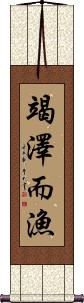
In 632 BC, Duke Wen of the Kingdom of Jin was about to lead an army against the forces of the Kingdom of Chu.
The Duke asked one of his advisers, Jiu Fan, how they could win the impending battle, as they were drastically outnumbered.
Jiu Fan said, “All is fair in war,” and suggested a plan of dishonorable tactics (cheating).
The Duke was unsure of this advice, so he asked another adviser, Yong Ji, who replied, “If you catch fish by draining the pond, you can certainly get all the fish. But there will be no fish the following year. You can cheat this one time in battle, but such tactics can only be used once, as the enemy will be wise in future encounters.”
The Duke heard the words of his wiser adviser but cheated to gain victory in the battle. However, he rewarded Yong Ji more than Jiu Fan at the victory celebration, stating that while Jiu Fan's advice gained one victory, the wise words of Yong Ji would last forever.
This Chinese idiom/proverb is still used, over 2600 years later to remind people not to burn bridges, cheat, or dishonor themselves in exchange for a short-term gain while sacrificing the future.
竭澤而漁 is very similar to the meaning of the English phrase, “Kill the goose that lays the golden eggs.”
Tai Chi Wing Chun Kung Fu
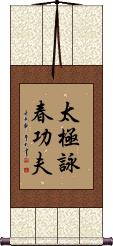
太極詠春功夫 is the title Tai Chi Wing Chun Kung Fu.
Please note that it can be romanized in a variety of ways such as:
Tai Chi Ving Tsun Kung Fu
Tai Qi Yong Chun Gong Fu
Taai Gik Wing Ceon Gung Fu
Be sure this is the right title for what you are looking for before you order.
Sticky Hands / Chi Sau
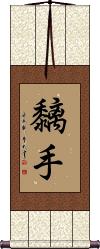
The first character means “wood glue” or can be understood as “sticky” or “sticking.”
The second character means “hand” (or “hands”).
This term can be romanized as “Chi Sau,” “Chi Sao,” or from Mandarin, “Chi Shou.”
黐手 is a concept that comes from the Wing Chun (AKA: Ving Tsun, Wing Tsun, or Yong Chun) style of martial arts. If you are looking for this term, chances are, you already know the meaning within the context of Wing Chun.
Wing Chun Fist Maxims
Wing Chun Kuen Kuit
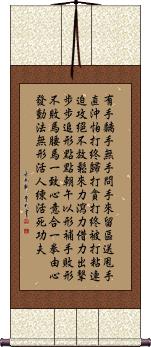
This text is the chant or poem of Wing Chun.
I call it a “chant” because it was meant to be a somewhat rhythmic poem to help practitioners memorize many aspects of Wing Chun.
1 有手黐手,無手問手
2 來留區送, 甩手直沖
3 怕打終歸打, 貪打終被打
4 粘連迫攻, 絕不放鬆
5 來力瀉力, 借力出擊
6 步步追形, 點點朝午
7 以形補手, 敗形不敗馬
8 腰馬一致, 心意合一
9 拳由心發, 動法無形
10 活人練活死功夫
You will see this referred to as “Wing Chun Kuem Kuit.” This Cantonese romanization is popular in the west (and there is no official way to romanize Cantonese, so many variations exist). In Mandarin, it would be, “Yong Chun Quan Jue.” The last character (kuit or kyut from Cantonese, jue or chüeh from Mandarin) kind of means “secrets of the art.” It's a short way to write 口訣, meaning “mnemonic chant” or “rhyme for remembering.”
In the west (especially in the military), we often use acronyms to remember things. There are no initials to make acronyms in Chinese, so in ancient times, chants like this are used to remember vast amounts of information.
I will presume you already know the meaning of the 10 maxims, so I will skip that to keep this calligraphy entry from getting too large.
Some think 练拳者必记 is the title but that just says, “(When) training (the) fist, people should remember:.” Therefore, I've not included that in the calligraphy. However, you can put a note in the special instructions if you want it added.
Note: On a traditional calligraphy wall scroll, the characters will be written in vertical columns, starting from the right, and proceeding left.
Note: This is an except and variation from a huge 口訣. These 10 maxims are used extensively in Wing Chun training, and you’ll find them all over the internet. Just know there is a much longer version out there, along with several variations and excepts like this one. If you know of, or want a different version, just contact me, and I will add it for you.
Bravery / Courage
Single Character for Courage
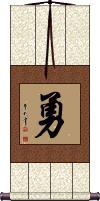
勇 can be translated as bravery, courage, valor, or fearless in Chinese, Japanese and Korean.
勇 is the simplest form to express courage or bravery, as there is also a two-character form that starts with this same character.
勇 can also be translated as brave, daring, fearless, plucky, or heroic.
This is also a virtue of the Samurai Warrior
See our page with just Code of the Samurai / Bushido here
Eternity / Forever
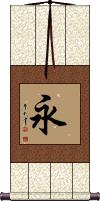
永 is the simplest form of eternity or “always and forever.”
永 can sometimes mean forever, always, perpetual, infinite, or “without end,” depending on context.
Note: Not often seen as a single Kanji in Japanese. Best if your audience is Chinese.
See Also: Forever | Ever Lasting
Brave Warrior
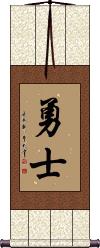
勇士 is the Chinese, Japanese Kanji, and old Korean Hanja for a brave warrior, a brave person, a hero, or a brave man.
In Japanese, this can be a given name, Yuuji.
Bravery / Courage
Courage in the face of Fear
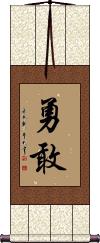
勇敢 is about courage or bravery in the face of fear.
You do the right thing even when it is hard or scary. When you are courageous, you don't give up. You try new things. You admit mistakes. This kind of courage is the willingness to take action in the face of danger and peril.
勇敢 can also be translated as braveness, valor, heroic, fearless, boldness, prowess, gallantry, audacity, daring, dauntless, and/or courage in Japanese, Chinese, and Korean. This version of bravery/courage can be an adjective or a noun. The first character means bravery and courage by itself. The second character means “daring” by itself. The second character emphasizes the meaning of the first but adds the idea that you are not afraid of taking a dare, and you are not afraid of danger.
勇敢 is more about brave behavior and not so much the mental state of being brave. You'd more likely use this to say, “He fought courageously in the battle,” rather than “He is very courageous.”
Courage and Strength
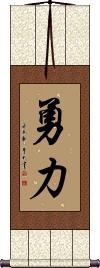
勇力 is a very short way to say “courage and strength” in Chinese and Japanese.
In Japanese, it's read more like “strong courage” or “powerful courage.” This can also be the personal name Yuri or Yuuri in Japanese.
Dedication
Dedicated to One Thing
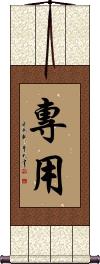
專用 is the dedication you might have to your job or a person.
Trivia: It is the same word used as an adjective in front of the word for “network” to say “dedicated network” in Chinese.
Please note: While this is a word in Korean, the meaning is private or “exclusive use.” So this is best if your audience is Chinese.
See Also: Devotion | Passion | Tenacious | Commitment
Eternal Peace
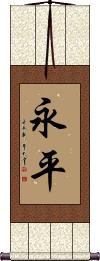
永平 is a way to write “eternal peace” in Chinese and Japanese.
This may also refer to Yongping county in Dali Bai autonomous prefecture. 永平 is also a Japanese surname that romanizes as Nagahira.
Eternal Life / Everlasting Life / Immortality
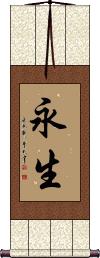
永生 are the last two words from John 3:16 in the Chinese Union Bible.
Although not specifically Christian, this is the way to express ever-lasting life or eternal life in Chinese.
In Japanese, this can either mean eternal life or immortality.
See Also: Eternity | Rebirth | Reincarnation | Immortality
Eternal / Eternity
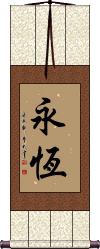
永恆 is the Chinese word for eternity.
The first character means always, forever, and perpetual. The second character holds the meaning of permanent. Together, they create a word that means eternal, eternally, or infinite time.
See Also: Immortality
Eternity / Always and Forever
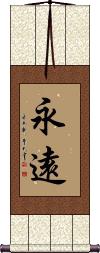
永遠 is the Chinese, Korean and Japanese word for forever.
If we take this word apart, the first character means always, forever, or perpetual. While the second character means far or distant.
See Also: Immortality
Eternal / Long-Lasting
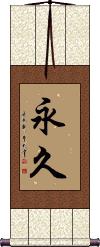
永久 is a Japanese, Chinese, and old Korean word that means everlasting, perpetual, lasting, forever, permanent, eternity, perpetuity, and/or immortality.
This can also be a female given name Haruku in Japan.
Swim / Swimming
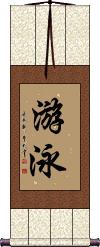
游泳 is the Chinese and Japanese Kanji for swimming, or swim. This can be the act of or the sport of swimming.
In a certain context, this could mean bathing. Further, like the old phrase, “it's going swimmingly.” this word can refer to the “conduct of life.”
Villon
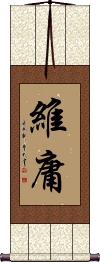
維庸 is the name Villon in Chinese (Mandarin).
Wing Chun
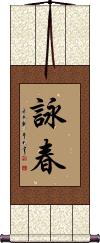
詠春 is a martial arts technique that has an oral history (versus a written one) so very little can be said for sure about its origins.
Wing Chun (or Wing Cheun) is a Chinese martial art that emphasizes short combat strokes.
The characters 詠春 literally mean “Singing Spring” (as in springtime).
If you are wondering, the spelling and pronunciation of this martial arts style in English come from the Cantonese pronunciation of these characters. The second character sounds similar in both Mandarin and Cantonese, but the first is quite different.
Note: This title can be pronounced in Japanese, but only a Japanese practitioner of Wing Chun would recognize or understand this title. It is not considered a Japanese word or martial art at all.
Deyon

戴永 is the name Deyon in Chinese (Mandarin).
Ayon

阿永 is the name Ayon in Chinese (Mandarin).
Eternal Love / Love Eternally
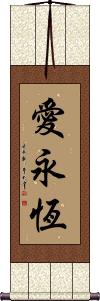
愛永恆 is the shortest way to express the idea of “love eternally” in Chinese.
The first character here means “love”
The last two mean eternal, eternally, everlasting, and/or perpetual.
See Also: Love Forever
Love Forever / Love Eternal
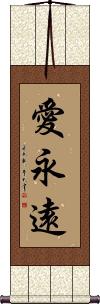
The first character here means “love.”
The last two mean forever, eternity, eternal, perpetuity, immortality, and/or permanence.
愛永遠 is the shortest and most universal way to express this idea in Chinese and Japanese.
Japanese note: This sound more like a title than a phrase in Japanese (if that makes any sense). 愛永遠 is a great title for a romantic book, the title of a movie, the name of a perfume, or even a name for a store.
See Also: Eternal Love | Forever Love
Soldier of Fortune
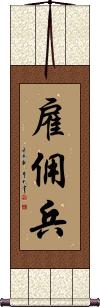
雇佣兵 is “soldier of fortune” in Chinese.
It can also be read as “mercenary” or “hired gun.”
Wing Chun Fist
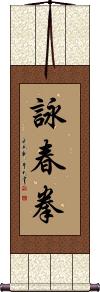
詠春拳 is the title for the “Wing Chun” school of martial arts but with the addition of the character for “fist” at the end. So this is “Wing Chun Fist” or literally “Singing Spring Fist.”
There are lots of alternate Cantonese romanizations for this, such as “Wing Chun Kuen,” “Wing Tsun Cheun,” “Eng Chun Pai,” and “Wing Ceon Kyun.” The characters are the same; just the lack of a standard Cantonese romanization means that people make up their own based on what they think it sounds like.
Jaceyon

杰西永 is the name Jaceyon in Chinese (Mandarin).
Advance Bravely / Indomitable Spirit
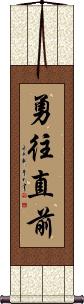
This proverb creates an image of a warrior bravely advancing against an enemy regardless of the odds.
This proverb can also be translated as “indomitable spirit” or “march fearlessly onward.”
See Also: Indomitable | Fortitude
The Brave Have No Fears
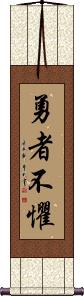
This proverb means “Brave people [are] without fear,” or “The brave are without fear.”
勇者不懼 is a proverb credited to Confucius. It's one of three phrases in a set of things he said.
This phrase is originally Chinese but has penetrated Japanese culture as well (many Confucian phrases have) back when Japan borrowed Chinese characters into their language.
This phrase has also been converted into modern Japanese grammar when written as 勇者は懼れず. If you want this version just click on those characters.
See Also: No Fear
Brave Heart
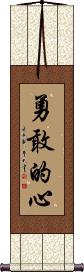
勇敢的心 is the title “Braveheart,” as in the movie starring Mel Gibson.
The character meanings break down this way:
勇敢 brave.
的 possessive particle.
心 heart/mind.
Embrace Life / Embrace Living
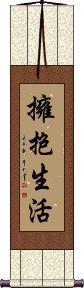
擁抱生活 is a Chinese title that means to embrace or to hug life, or embrace what it is to live.
Eternal Beauty
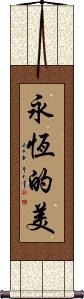
永恆的美 is how to write “Eternal Beauty” in Chinese.
Eternal Love
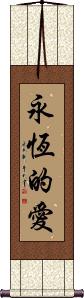
永恆的愛 is the best way to write “Eternal Love” in Chinese.
The first two characters mean eternal, eternally, everlasting, and/or perpetual.
The third character is a possessive article which sort of makes this selection mean “Love of the eternal kind.”
The last character is “love.”
This version is best if your audience is Chinese. We also have a Japanese version of eternal love.
See Also: Forever Love | Eternal Love (Japanese)
Courage to do what is right
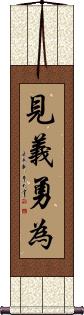
見義勇為 means the courage to do what is right in Chinese.
This could also be translated as “Never hesitate to do what is right.”
This comes from Confucian thought:
Your courage should head in an honorable direction. For example, you should take action when the goal is to attain a just result as, without honorable intent, a person’s gutsy fervor can easily lead them astray.
One who flaunts courage but disregards justice is bound to do wrong; someone who possesses courage and morality is destined to become a hero.
Some text above paraphrased from The World of Chinese - The Character of 勇
See Also: Work Unselfishly for the Common Good | Justice | Bravery
Eternal Happiness
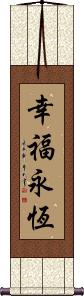
幸福永恆 is a short way to say eternal happiness in Chinese.
Breaking down the parts:
幸福 means happiness, happy, blessed, blessedness, joy, and/or well-being.
永恆 means eternal, everlasting, and/or forever.
Another way to write this is 永恆的幸福. It reverses the word order and adds a possessive article. I prefer the shorter version, which is slightly more natural in Chinese.
Always in My Heart
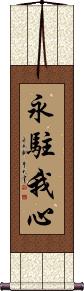
永駐我心 is one of a few ways to write “always in my heart” or “forever in my heart” in Chinese.
The first character means eternal, forever, or always.
The second character means resides, in, or stationed (in the case of troops).
The third character means me, my, or mine.
The last character means heart (but can also mean mind or soul).
Forever Love
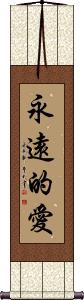
永遠的愛 refers to love that will last forever.
The first two characters mean forever, eternal, eternity, perpetuity, immortality, and/or permanence.
The third character is a possessive article which sort of makes this selection mean “The forever kind of love.”
The last character is “love.”
See Also: Eternal Love Always
Forever Young
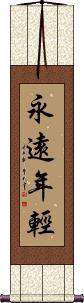
永遠年輕 is “forever young” in Chinese characters.
Forever Family
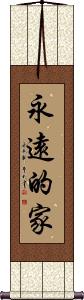
永遠的家 is a special phrase that we composed for a “family by adoption” or “adoptive family.”
It's the dream of every orphan and foster child to be formally adopted and find their “forever family.”
The first two characters mean forever, eternal, eternity, perpetuity, immortality, and/or permanence. The third character connects this idea with the last character which means “family” and/or “home.”
See Also: Family
Honor Courage
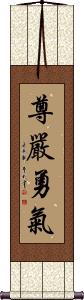
尊嚴勇氣 is a word list that means “Honor [and] Courage.”
Word lists are not common in Chinese, but we've put this one in the best order/context to make it as natural as possible.
We used the “honor” that leans toward the definition of dignity and integrity since that seemed like the best match for courage.
Never Give Up
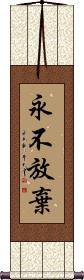
The first character means “eternal” or “forever,” and the second means “not” (together, they mean “never”). The last two characters mean “give up” or “abandon.” Altogether, you can translate this proverb as “never give up” or “never abandon.”
Depending on how you want to read this, 永不放棄 is also a statement that you will never abandon your hopes, dreams, family, or friends.
No Fear
(four-character version)
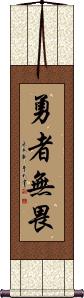
勇者無畏 is a complete sentence that means “Brave People Have No Fear” or “A Brave Person Has No Fear” (plural or singular is not implied).
We translated “No Fear” into the two variations that you will find on our website. Then we checked Chinese Google and found that others had translated “No Fear” in the exact same ways. Pick the one you like best. A great gift for your fearless friend.
See Also: Fear No Man
No Guts, No Glory
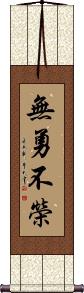
While difficult to translate “No guts no glory,” into Mandarin Chinese, 無勇不榮 is kind of close.
The first two characters mean “without bravery,” or “without courage.” In this case, bravery/courage is a stand-in for “guts.”
The last two characters mean “no glory.”
The idea that guts (internal organs) are somehow equal to courage, does not crossover to Chinese. However, translating the phrase back from Chinese to English, you get, “No Courage, No Glory,” which is pretty close to the intended idea.
Never Forget
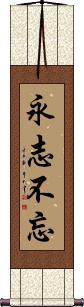
永志不忘 literally translates as “forever remember, never forget.”
But most will just understand this as “never forget” or “never forgotten” in Chinese.
Semper Fidelis / Always Faithful
U.S. Marines Slogan
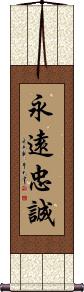
永遠忠誠 is the clearest and most natural way to translate “Semper Fidelis” or “Always Faithful” into Mandarin Chinese. 永遠忠誠 is meant explicitly for U.S. Marines who often use the shortened term “Semper Fi.”
The first two characters are a word that always means, forever, and/or eternally.
The last two characters are a word that means fidelity, loyal, and/or devotion.
I spent 10 years in the Marines, so it was a no-brainer to add this to our calligraphy database.
Synergy / Cooperative Interaction
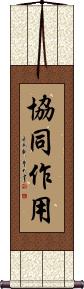
協同作用 is probably the best way to express “synergy” in Chinese and Japanese.
This is not a particularly common word in either language, so you might want to look at “cooperation.”
Timeless Beauty
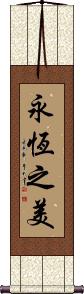
永恆之美 means Timeless Beauty, Eternal Beauty, or Beauty Forever in Chinese.
Warrior Soul / Heroic Spirit
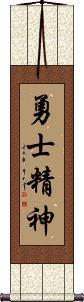
勇士精神 can be translated as the warrior's spirit or warrior's soul. The first two characters can be translated as “warrior” or literally “brave soldier/man,” although some will translate this word as “hero.” Therefore, this is also how to say “heroic spirit.”
The second two characters mean vigor, vitality, drive, spirit, mind, heart, mental essence, and psychological component. Basically “your soul.”
We have two versions of this phrase. The only difference is the first two and last two characters are swapped. The version here suggests that you admire or like the idea of the spirit of a warrior. The other version suggests that you are the warrior or hero.
Soul of a Warrior
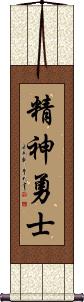
精神勇士 can be translated as the spirit or soul of a warrior. The first two characters can be translated as vigor, vitality, drive, spirit, mind, heart, mental essence, and psychological component. Basically, “your soul.”
The second two characters mean “warrior” or literally “brave soldier/man,” although some will translate this word as “hero.” Therefore, this is also how to say “soul of a hero.”
Note: This title is best for Chinese and old Korean. It does make sense in Japanese but is not a common or natural Kanji combination in Japanese.
We have two versions of this phrase. The only difference is the first two and last two characters are swapped. The version here suggests that you are the warrior or hero. The other version suggests that you admire or like the idea of the spirit of a warrior.
Wing Chun Kung Fu
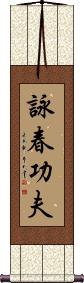
詠春功夫 is Wing Chun Kung Fu.
The first two characters literally mean “Singing Spring” (as in springtime).
The last two are “Kung Fu” (high skill).
Indomitable Courage

不屈勇氣 can be translated as “Unyielding,” “Unstoppable Bravery,” or “Indomitable Courage.”
In martial contexts, this phrase is often used as a motto emphasizing mindset, conduct, or training attitude.
Wing Chun Fist Law

咏春拳法 can be translated as “Wing Chun Martial Arts,” or “Wing Chun Fist Law.”
咏春 = Wing Chun.
拳法 = Fist method, fist law, Kempo/Kenpo.
Strong and brave

剛健勇猛 can be translated as “Strong and brave.”
剛健 = Strong and healthy, or robust spirit/body.
勇猛 = Valor, fierce, and/or courage.
Forever In My Heart
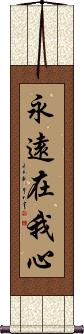
永遠在我心 means “forever in my heart” or “always in my heart” in Chinese.
This is the shorter, somewhat lyrical version of this phrase.
永遠 forever/eternal
在 at/in/exists
我 me/myself/my
心 heart/mind/soul
Forever Sisters
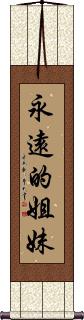
This literally means forever sisters in Chinese.
This is a weird phrase in Chinese, as by default, sisters are forever. I added this because people were searching for it.
Eternal Friendship / Friends Forever
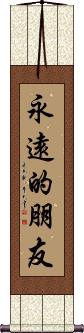
永遠的朋友 means friends that are eternal or a friendship that will last forever - you will remain the best of friends as long as you live.
The first two characters mean forever, eternal, eternity, perpetuity, immortality, and/or permanence.
The middle character links the words (it's a possessive article).
The last two characters represent friendship, or simply “friends.”
Miss You Forever
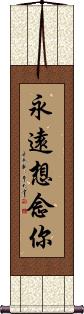
永遠想念你 is how to write “missing you forever” in Chinese.
The first two characters mean “forever” or “eternally.”
The third and fourth characters mean “missing” or “longing for.”
The last character means “you.”
This might suggest that you are missing someone whom you will never see again (depending on how you read it, or in what context it is used).
Strength and Courage
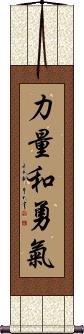
While 力量和勇氣 is not a typical Chinese phrase, this is how to write “strength and courage.”
If this is an important idea for you, we can make a great custom Chinese “strength and courage” wall scroll for you.
Together Forever
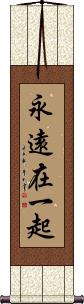
永遠在一起 is “together forever” in Chinese.
This is a great idea for couples making a commitment of a lifetime.
Forever In My Heart
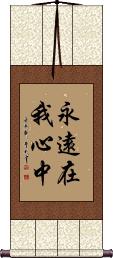
永远在我心中 means “forever in my heart” or “always in my heart” in Chinese.
Fidelity Honor Courage
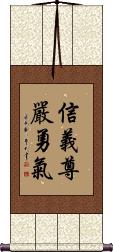
信義尊嚴勇氣 means fidelity, honor, and courage in Chinese.
This is a word list that was requested by a customer. Word lists are not common in Chinese, but we've put this one in the best order/context to make it as natural as possible.
We used the “honor” that leans toward the definition of “dignity” since that seemed the best match for the other two words.
Please note: These are three two-character words. You should choose the single-column format when you get to the options when you order this selection. The two-column option would split one word or be arranged with four characters on one side and two on the other.
From Here to Eternity
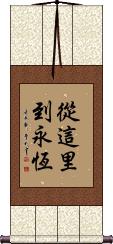
從這里到永恆 is the translation of the phrase “From here to eternity” into Mandarin Chinese.
Honor Courage Commitment
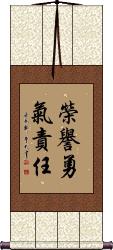
榮譽勇氣責任 is a word list that reads, “榮譽 勇氣 責任” or “honor courage commitment.”
If you are looking for this, it is likely that you are in the military (probably Navy or Marines).
We worked on this for a long time to find the right combination of words in Chinese. However, it should still be noted that word lists are not very natural in Chinese. Most of the time, there would be a subject, verb, and object for a phrase with this many words.
Together Forever in Love
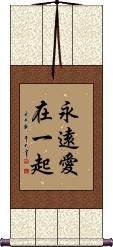
永遠愛在一起 is “together forever in love” in Chinese.
It's a nice phrase if you're a couple who plans to stay together and make your love last as long as you live.
Dragon Quest
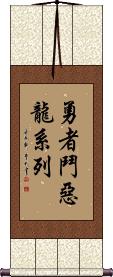
This is the title of the Nintendo Dragon Quest series/game in Chinese.
Fortune Favors The Brave
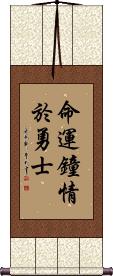
命運鐘情於勇士 means “Fortune favors the brave” in Chinese.
This is not the only way to express the idea of fortune favoring the bold or brave.
It's not originally a Chinese phrase, so it's been translated into Chinese in various ways.
Eternal Peace and Happiness

永恆和平與幸福 means “Eternal Peace And Happiness” in Chinese.
Fortune Favors the Bold
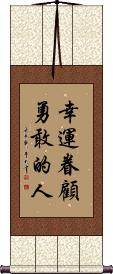
幸运眷顾勇敢的人 can be translated as “Fortune favors the brave/bold/courageous” in Chinese.
Fierce and courageous training defeats the strong and protects the body.

This is a martial arts phrase that roughly translates as, “Fierce and courageous training defeats the strong and protects the body,” or “Brave and fierce training result in victory over the strong and defend the body.”
The key to immortality is first living a life worth remembering
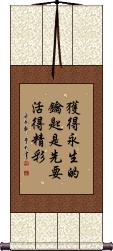
獲得永生的鑰匙是先要活得精彩 is a famous quote from Bruce Lee.
However, when quoted, he was speaking in English. So this is a translation of his English quote into Chinese. Since Bruce spoke both Chinese and English, his quotes sometimes go both ways.
John 8:8
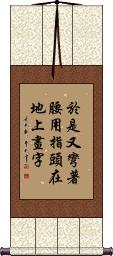
於是又彎著腰用指頭在地上畫字 is John 8:8 in Chinese.
This text is from the 1919 Chinese Union Bible.
You may know it from the KJV as:
And again he stooped down and wrote on the ground.
Value of Warrior Generals
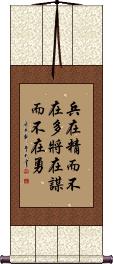
兵在精而不在多將在謀而不在勇 is a proverb that informs how it is better to have warriors of quality, rather than just a large quantity of warriors in your army/force.
This literally means: [Just as] warriors [are valued for their] quality and not [just] for quantity, [so] generals [are valued] for their tactics, not [just] for [their] bravery.
See Also: 兵在精而不在多
Learning leads to Knowledge, Study leads to Benevolence, Shame leads to Courage
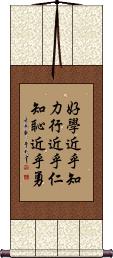
好學近乎知力行近乎仁知恥近乎勇 is a Saying from Confucius which relates certain actions to virtues.
A more verbose translation:
To love learning is akin to knowledge,
to study diligently is akin to benevolence,
to know shame is akin to courage.
Hebrews 13:8
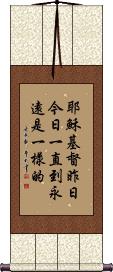
耶穌基督昨日今日一直到永遠是一樣的 is Hebrews 13:8 which reads, Jesus Christ the same yesterday, and today, and forever.
John 3:16

神愛世人甚至將他的獨生子賜給他們叫一切信他的不至滅亡反得永生 is the full translation of John 3:16 into Chinese.
This is from the Chinese Union Bible which comes from a revised version of the King James. This Chinese Bible was originally translated and printed in 1919 (several revisions since then).
Because of the origin being the KJV, I'll say that in English, this would be, “For God so loved the world, that he gave his only begotten Son, that whosoever believeth in him should not perish but have everlasting life.”
As with any translation, there are interesting cultural and linguistic issues. For instance, the word used for “world” in Chinese can also mean “common people.” So you could say that it means “For God so loved the common people...”
This does not take away from the text, as it will be understood with the same meaning and connotation.
There is no direct Greek-to-Chinese translation in print (that I know of), so this is the best available. Of course, you can ask any Greek person of faith, and they will claim that a bit is lost from the original Greek of the New Testament to any of the English versions of the Bible in print.
Serenity Prayer
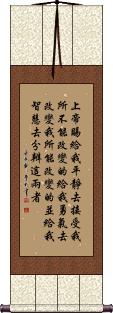
This is the serenity prayer, as used by many 12-step programs and support groups.
In Chinese, this says:
God grant me the serenity to accept the things I cannot change, the courage to change the things I can, and the wisdom to know the difference.
Shaolin Generational Poem
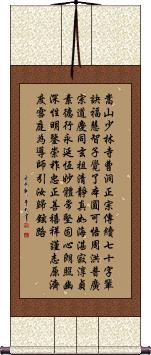
This is a poem, including a title, that celebrates the tactics and virtues of the Shaolin Kung Fu Monks for future generations.
Daodejing / Tao Te Ching - Chapter 27
The Mastery of Effortless Skill

Chapter 27 of the Daodejing reveals a profound truth about mastery: the highest skill leaves no trace, requires no force, and appears almost invisible.
善行無轍跡,
善言無瑕謫,
善數不用籌策,
善閉無關鍵而不可開,
善結無繩約而不可解。
是以聖人常善救人,
故無棄人;
常善救物,
故無棄物。
是謂襲明。
故善人者,不善人之師;
不善人者,善人之資。
不貴其師,不愛其資,
雖智大迷,
是謂要妙。
The sage moves through life with such natural harmony that nothing seems imposed; doors need no locks, knots require no rope, and actions leave no mark behind.
This is the essence of wúwéi (effortless action), where true ability arises from deep alignment with the Tao rather than deliberate effort.
At its heart, this chapter teaches compassion without exception. The sage “abandons no one and nothing,” recognizing value in all people and all things. Even those who seem flawed or unrefined are not rejected, but understood as part of a greater whole with each person both a student and a teacher in the unfolding of life.
Laozi reminds us that wisdom is not about perfection or control, but about subtle awareness. The truly skilled individual does not rely on tools, rules, or rigid structures; instead, they embody an intuitive understanding that makes their actions naturally complete.
In this way, excellence becomes quiet, effortless, and beyond imitation.
This teaching also reflects a deeper philosophical insight: Opposites are interdependent. The “good” person learns from the “not good,” and the “not good” provides the material for growth. To reject either is to misunderstand the balance of existence itself.
As calligraphy, Daodejing Chapter 27 serves as a reminder to cultivate inner mastery rather than outward display. It is a meditation on refinement, humility, and the quiet power of skill perfected through harmony with the natural order.
Note: The Chinese text used here is based on the early Mawangdui silk manuscript tradition (2nd century BCE). The Guodian manuscripts do NOT preserve Chapter 27 in full form.
The Lord's Prayer / Mathew 6:9-13
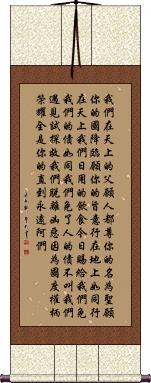
Here is the Lord's Prayer in Chinese from Mathew 6:9-13.
The Chinese text with punctuation is:
Part of 6:9 ...我们在天上的父,愿人都尊你的名为圣。
6:10 愿你的国降临,愿你的旨意行在地上,如同行在天上。
6:11 我们日用的饮食,今日赐给我们。
6:12 免我们的债,如同我们免了人的债。
6:13 不叫我们遇见试探,救我们脱离凶恶,因为国度,权柄,荣耀,全是你的,直到永远,阿们。
Note that punctuation is not included in traditional Chinese calligraphy artwork.
From KJV, this is:
Part of 6:9 ...Our Father which art in heaven, Hallowed be thy name.
6:10 Thy kingdom come. Thy will be done in earth, as it is in heaven.
6:11 Give us this day our daily bread.
6:12 And forgive us our debts, as we forgive our debtors.
6:13 And lead us not into temptation, but deliver us from evil: For thine is the kingdom, and the power, and the glory, forever. Amen.
The Lord's Prayer / Luke 11:2-4
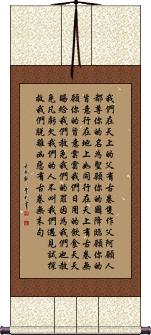
Here is the Lord's Prayer in Chinese from Luke 11:2-4.
The Chinese text with punctuation is:
Part of 11:2 ...我们在天上的父,有古卷只作父阿愿人都尊你的名为圣。愿你的国降临。愿你的旨意行在地上,如同行在天上。有古卷无愿你的旨意云云。
11:3 我们日用的饮食,天天赐给我们。
11:4 赦免我们的罪,因为我们也赦免凡亏欠我们的人。不叫我们遇见试探。救我们脱离凶恶。有古卷无末句。
Note that punctuation is not included in traditional Chinese calligraphy artwork.
From KJV, this is:
Part of 11:2 ...Our Father which art in heaven, Hallowed be thy name. Thy kingdom come. Thy will be done, as in heaven, so in earth.
11:3 Give us day by day our daily bread.
11:4 And forgive us our sins; for we also forgive everyone that is indebted to us. And lead us not into temptation, but deliver us from evil.
Not the results for yong that you were looking for?
Below are some entries from our dictionary that may match your yong search...
| Characters If shown, 2nd row is Simp. Chinese |
Pronunciation Romanization |
Simple Dictionary Definition |
勇 see styles |
yǒng yong3 yung yuuji / yuji ゆうじ |
More info & calligraphy: Bravery / Courage(See 勇気) bravery; courage; heroism; (personal name) Yūji Brave, bold, courageous, fearless. |
永 see styles |
yǒng yong3 yung hisashi ひさし |
More info & calligraphy: Eternity / Forever(pref,suf) long; (adj-na,n,adj-no) eternity; perpetuity; immortality; (given name) Hisashi Perpetual, eternal, everlasting (like the unceasing flow of water). |
勇力 see styles |
yǒng lì yong3 li4 yung li yuuri / yuri ゆうり |
More info & calligraphy: Courage and Strengthcourage; (personal name) Yūri |
勇士 see styles |
yǒng shì yong3 shi4 yung shih yuuji / yuji ゆうじ |
More info & calligraphy: Brave Warriorbrave warrior; hero; brave man; (given name) Yūji |
勇敢 see styles |
yǒng gǎn yong3 gan3 yung kan yuukan / yukan ゆうかん |
More info & calligraphy: Bravery / Courage(adjectival noun) brave; heroic; gallant |
勇氣 勇气 see styles |
yǒng qì yong3 qi4 yung ch`i yung chi |
More info & calligraphy: Bravery / Courage |
專用 专用 see styles |
zhuān yòng zhuan1 yong4 chuan yung |
More info & calligraphy: Dedication |
永久 see styles |
yǒng jiǔ yong3 jiu3 yung chiu haruku はるく |
More info & calligraphy: Eternal / Long-Lasting(n,adj-na,adj-no) (1) eternity; permanence; perpetuity; (2) (hist) Eikyū era (1113.7.13-1118.4.3); (female given name) Haruku |
永平 see styles |
yǒng píng yong3 ping2 yung p`ing yung ping yunpin ユンピン |
More info & calligraphy: Eternal Peace(place-name) Yongping (China) eternal peace |
永恆 永恒 see styles |
yǒng héng yong3 heng2 yung heng yōgō |
More info & calligraphy: Eternal / Eternityforever |
永生 see styles |
yǒng shēng yong3 sheng1 yung sheng hisaki ひさき |
More info & calligraphy: Eternal Life / Everlasting Life / Immortalityeternal life; immortality; (personal name) Hisaki Eternal life; immortality; nirvana is defined as 不生 not being born, i. e. not reborn, and therefore 不滅 not dying; 永生 is also perpetual life; the Amitābha cult says in the Pure Land. |
永遠 永远 see styles |
yǒng yuǎn yong3 yuan3 yung yüan mirai みらい |
More info & calligraphy: Eternity / Always and Forever(n,adj-no,adj-na) eternity; perpetuity; permanence; immortality; (female given name) Mirai forever |
游泳 see styles |
yóu yǒng you2 yong3 yu yung yuuei / yue ゆうえい |
More info & calligraphy: Swim / Swimming(n,vs,adj-no) (1) swimming; bathing; (2) conduct of life |
詠春 咏春 see styles |
yǒng chūn yong3 chun1 yung ch`un yung chun |
More info & calligraphy: Wing Chun |
詠春拳 咏春拳 see styles |
yǒng chūn quán yong3 chun1 quan2 yung ch`un ch`üan yung chun chüan |
More info & calligraphy: Wing Chun Fist |
佣 see styles |
yòng yong4 yung |
commission (for middleman); brokerage fee |
俑 see styles |
yǒng yong3 yung you / yo よう |
wooden figures buried with the dead (hist) (See 俑を作る) terra-cotta figure (in Qin dynasty tombs in China) |
傭 佣 see styles |
yōng yong1 yung isao いさお |
to hire; to employ; servant; hired laborer; domestic help employee; employment; (given name) Isao |
勈 see styles |
yǒng yong3 yung |
old variant of 勇[yong3] |
嗈 see styles |
yōng yong1 yung |
to choke |
埇 see styles |
yǒng yong3 yung |
raised path |
墉 see styles |
yōng yong1 yung |
fortified wall; city wall |
壅 see styles |
yōng yong1 yung |
to obstruct; to stop up; to heap soil around the roots of a plant |
庸 see styles |
yōng yong1 yung yon よん |
ordinary; to use tax paid to avoid forced labor (ritsuryo period); (female given name) Yon |
廱 see styles |
yōng yong1 yung |
harmonious |
恿 see styles |
yǒng yong3 yung |
used in 慫恿|怂恿[song3 yong3] |
悀 see styles |
yǒng yong3 yung |
to be angry; to like; variant of 湧|涌[yong3] |
惥 恿 see styles |
yǒng yong3 yung |
old variant of 恿[yong3] |
愑 see styles |
yǒng yong3 yung |
variant of 悀[yong3] |
慂 恿 see styles |
yǒng yong3 yung |
old variant of 恿[yong3] |
Click here for more yong results from our dictionary
The following table may be helpful for those studying Chinese or Japanese...
| Title | Characters | Romaji (Romanized Japanese) | Various forms of Romanized Chinese | |
| Drain the pond to get all the fish | 竭澤而漁 竭泽而渔 | jié zé ér yú jie2 ze2 er2 yu2 jie ze er yu jiezeeryu | chieh tse erh yü chiehtseerhyü |
|
| Tai Chi Wing Chun Kung Fu | 太極詠春功夫 太极咏春功夫 | tài jí yǒng chūn gōng fu tai4 ji2 yong3 chun1 gong1 fu tai ji yong chun gong fu taijiyongchungongfu | t`ai chi yung ch`un kung fu taichiyungchunkungfu tai chi yung chun kung fu |
|
| Sticky Hands Chi Sau | 黐手 | chī shǒu / chi1 shou3 / chi shou / chishou | ch`ih shou / chihshou / chih shou | |
| Wing Chun Fist Maxims | 有手黐手無手問手來留區送甩手直沖怕打終歸打貪打終被打粘連迫攻絕不放鬆來力瀉力借力出擊步步追形點點朝午以形補手敗形不敗馬腰馬一致心意合一拳由心發動法無形活人練活死功夫 有手黐手无手问手来留区送甩手直冲怕打终归打贪打终被打粘连迫攻绝不放松来力泻力借力出击步步追形点点朝午以形补手败形不败马腰马一致心意合一拳由心发动法无形活人练活死功夫 | |||
| Bravery Courage | 勇 | isamu / yu- | yǒng / yong3 / yong | yung |
| Eternity Forever | 永 | ei | yǒng / yong3 / yong | yung |
| Brave Warrior | 勇士 | yuu shi / yuushi / yu shi | yǒng shì / yong3 shi4 / yong shi / yongshi | yung shih / yungshih |
| Bravery Courage | 勇敢 | yuu kan / yuukan / yu kan | yǒng gǎn / yong3 gan3 / yong gan / yonggan | yung kan / yungkan |
| Courage and Strength | 勇力 | yuu ri / yuuri / yu ri | yǒng lì / yong3 li4 / yong li / yongli | yung li / yungli |
| Dedication | 專用 专用 | zhuān yòng zhuan1 yong4 zhuan yong zhuanyong | chuan yung chuanyung |
|
| Eternal Peace | 永平 | eihei | yǒng píng yong3 ping2 yong ping yongping | yung p`ing yungping yung ping |
| Eternal Life Everlasting Life Immortality | 永生 | eisei | yǒng shēng yong3 sheng1 yong sheng yongsheng | yung sheng yungsheng |
| Eternal Eternity | 永恆 永恒 | yǒng héng yong3 heng2 yong heng yongheng | yung heng yungheng |
|
| Eternity Always and Forever | 永遠 永远 | ei-en | yǒng yuǎn yong3 yuan3 yong yuan yongyuan | yung yüan yungyüan |
| Eternal Long-Lasting | 永久 | haruku | yǒng jiǔ / yong3 jiu3 / yong jiu / yongjiu | yung chiu / yungchiu |
| Swim Swimming | 游泳 | yuuei / yue yuei / yue | yóu yǒng / you2 yong3 / you yong / youyong | yu yung / yuyung |
| Villon | 維庸 维庸 | wéi yōng / wei2 yong1 / wei yong / weiyong | wei yung / weiyung | |
| Wing Chun | 詠春 咏春 | ei haru / eiharu | yǒng chūn yong3 chun1 yong chun yongchun | yung ch`un yungchun yung chun |
| Deyon | 戴永 | dài yǒng / dai4 yong3 / dai yong / daiyong | tai yung / taiyung | |
| Ayon | 阿永 | ā yǒng / a1 yong3 / a yong / ayong | a yung / ayung | |
| Eternal Love Love Eternally | 愛永恆 爱永恒 | ài yǒng héng ai4 yong3 heng2 ai yong heng aiyongheng | ai yung heng aiyungheng |
|
| Love Forever Love Eternal | 愛永遠 爱永远 | ai ei en / aieien | ài yǒng yuǎn ai4 yong3 yuan3 ai yong yuan aiyongyuan | ai yung yüan aiyungyüan |
| Soldier of Fortune | 雇佣兵 | gù yōng bīng gu4 yong1 bing1 gu yong bing guyongbing | ku yung ping kuyungping |
|
| Wing Chun Fist | 詠春拳 咏春拳 | yǒng chūn quán yong3 chun1 quan2 yong chun quan yongchunquan | yung ch`un ch`üan yungchunchüan yung chun chüan |
|
| Jaceyon | 杰西永 | jié xī yǒng jie2 xi1 yong3 jie xi yong jiexiyong | chieh hsi yung chiehhsiyung |
|
| Advance Bravely Indomitable Spirit | 勇往直前 | yǒng wǎng zhí qián yong3 wang3 zhi2 qian2 yong wang zhi qian yongwangzhiqian | yung wang chih ch`ien yungwangchihchien yung wang chih chien |
|
| The Brave Have No Fears | 勇者不懼 勇者不惧 | yuu sha fu ku yuushafuku yu sha fu ku | yǒng zhě bú jù yong3 zhe3 bu2 ju4 yong zhe bu ju yongzhebuju | yung che pu chü yungchepuchü |
| Brave Heart | 勇敢的心 | yǒng gǎn de xīn yong3 gan3 de xin1 yong gan de xin yonggandexin | yung kan te hsin yungkantehsin |
|
| Embrace Life Embrace Living | 擁抱生活 拥抱生活 | yōng bào shēng huó yong1 bao4 sheng1 huo2 yong bao sheng huo yongbaoshenghuo | yung pao sheng huo yungpaoshenghuo |
|
| Eternal Beauty | 永恆的美 永恒的美 | yǒng héng de měi yong3 heng2 de mei3 yong heng de mei yonghengdemei | yung heng te mei yunghengtemei |
|
| Eternal Love | 永恆的愛 永恒的爱 | yǒng héng de ài yong3 heng2 de ai4 yong heng de ai yonghengdeai | yung heng te ai yunghengteai |
|
| Courage to do what is right | 見義勇為 见义勇为 | jiàn yì yǒng wéi jian4 yi4 yong3 wei2 jian yi yong wei jianyiyongwei | chien i yung wei chieniyungwei |
|
| Eternal Happiness | 幸福永恆 幸福永恒 | xìng fú yǒng héng xing4 fu2 yong3 heng2 xing fu yong heng xingfuyongheng | hsing fu yung heng hsingfuyungheng |
|
| Always in My Heart | 永駐我心 永驻我心 | yǒng zhù wǒ xīn yong3 zhu4 wo3 xin1 yong zhu wo xin yongzhuwoxin | yung chu wo hsin yungchuwohsin |
|
| Forever Love | 永遠的愛 永远的爱 | yǒng yuǎn de ài yong3 yuan3 de ai4 yong yuan de ai yongyuandeai | yung yüan te ai yungyüanteai |
|
| Forever Young | 永遠年輕 永远年轻 | yǒng yuǎn nián qīng yong3 yuan3 nian2 qing1 yong yuan nian qing yongyuannianqing | yung yüan nien ch`ing yungyüannienching yung yüan nien ching |
|
| Forever Family | 永遠的家 永远的家 | yǒng yuǎn de jiā yong3 yuan3 de jia1 yong yuan de jia yongyuandejia | yung yüan te chia yungyüantechia |
|
| Honor Courage | 尊嚴勇氣 尊严勇气 | zūn yán yǒng qì zun1 yan2 yong3 qi4 zun yan yong qi zunyanyongqi | tsun yen yung ch`i tsunyenyungchi tsun yen yung chi |
|
| Never Give Up | 永不放棄 永不放弃 | yǒng bù fàng qì yong3 bu4 fang4 qi4 yong bu fang qi yongbufangqi | yung pu fang ch`i yungpufangchi yung pu fang chi |
|
| No Fear | 勇者無畏 勇者无畏 | yǒng zhě wú wèi yong3 zhe3 wu2 wei4 yong zhe wu wei yongzhewuwei | yung che wu wei yungchewuwei |
|
| No Guts, No Glory | 無勇不榮 无勇不荣 | wú yǒng bù róng wu2 yong3 bu4 rong2 wu yong bu rong wuyongburong | wu yung pu jung wuyungpujung |
|
| Never Forget | 永志不忘 | yǒng zhì bù wàng yong3 zhi4 bu4 wang4 yong zhi bu wang yongzhibuwang | yung chih pu wang yungchihpuwang |
|
| Semper Fidelis Always Faithful | 永遠忠誠 永远忠诚 | yǒng yuǎn zhōng chéng yong3 yuan3 zhong1 cheng2 yong yuan zhong cheng yongyuanzhongcheng | yung yüan chung ch`eng yungyüanchungcheng yung yüan chung cheng |
|
| Synergy Cooperative Interaction | 協同作用 协同作用 | kyou dou sa you kyoudousayou kyo do sa yo | xié tóng zuò yòng xie2 tong2 zuo4 yong4 xie tong zuo yong xietongzuoyong | hsieh t`ung tso yung hsiehtungtsoyung hsieh tung tso yung |
| Timeless Beauty | 永恆之美 永恒之美 | yǒng héng zhī měi yong3 heng2 zhi1 mei3 yong heng zhi mei yonghengzhimei | yung heng chih mei yunghengchihmei |
|
| Warrior Soul Heroic Spirit | 勇士精神 | yǒng shì jīng shén yong3 shi4 jing1 shen2 yong shi jing shen yongshijingshen | yung shih ching shen yungshihchingshen |
|
| Soul of a Warrior | 精神勇士 | jīng shén yǒng shì jing1 shen2 yong3 shi4 jing shen yong shi jingshenyongshi | ching shen yung shih chingshenyungshih |
|
| Wing Chun Kung Fu | 詠春功夫 咏春功夫 | yǒng chūn gōng fu yong3 chun1 gong1 fu yong chun gong fu yongchungongfu | yung ch`un kung fu yungchunkungfu yung chun kung fu |
|
| Indomitable Courage | 不屈勇氣 不屈勇气 | fukutsu-yūki | bù qū yǒng qì bu4 qu1 yong3 qi4 bu qu yong qi buquyongqi | pu ch`ü yung ch`i puchüyungchi pu chü yung chi |
| Wing Chun Fist Law | 詠春拳法 咏春拳法 | ei shun ken pō eishunkenpō | yǒng chūn quán fǎ yong3 chun1 quan2 fa3 yong chun quan fa yongchunquanfa | yung ch`un ch`üan fa yungchunchüanfa yung chun chüan fa |
| Strong and brave | 剛健勇猛 | gō ken yū mō gōkenyūmō | gāng jiàn yǒng měng gang1 jian4 yong3 meng3 gang jian yong meng gangjianyongmeng | kang chien yung meng kangchienyungmeng |
| Forever In My Heart | 永遠在我心 永远在我心 | yǒng yuǎn zài wǒ xīn yong3 yuan3 zai4 wo3 xin1 yong yuan zai wo xin yongyuanzaiwoxin | yung yüan tsai wo hsin yungyüantsaiwohsin |
|
| Forever Sisters | 永遠的姐妹 永远的姐妹 | yǒng yuàn de jiě mèi yong3 yuan4 de jie3 mei4 yong yuan de jie mei yongyuandejiemei | yung yüan te chieh mei yungyüantechiehmei |
|
| Eternal Friendship Friends Forever | 永遠的朋友 永远的朋友 | yǒng yuǎn de péng yǒu yong3 yuan3 de peng2 you3 yong yuan de peng you yongyuandepengyou | yung yüan te p`eng yu yungyüantepengyu yung yüan te peng yu |
|
| Miss You Forever | 永遠想念你 永远想念你 | yǒng yuǎn xiǎng niàn nǐ yong3 yuan3 xiang3 nian4 ni3 yong yuan xiang nian ni yongyuanxiangnianni | yung yüan hsiang nien ni yungyüanhsiangnienni |
|
| Strength and Courage | 力量和勇氣 力量和勇气 | lì liàng hé yǒng qì li4 liang4 he2 yong3 qi4 li liang he yong qi liliangheyongqi | li liang ho yung ch`i lilianghoyungchi li liang ho yung chi |
|
| Together Forever | 永遠在一起 永远在一起 | yǒng yuǎn zài yī qǐ yong3 yuan3 zai4 yi1 qi3 yong yuan zai yi qi yongyuanzaiyiqi | yung yüan tsai i ch`i yungyüantsaiichi yung yüan tsai i chi |
|
| Forever In My Heart | 永遠在我心中 永远在我心中 | yǒng yuǎn zài wǒ xīn zhōng yong3 yuan3 zai4 wo3 xin1 zhong1 yong yuan zai wo xin zhong yongyuanzaiwoxinzhong | yung yüan tsai wo hsin chung yungyüantsaiwohsinchung |
|
| Fidelity Honor Courage | 信義尊嚴勇氣 信义尊严勇气 | xìn yì zūn yán yǒng qì xin4 yi4 zun1 yan2 yong3 qi4 xin yi zun yan yong qi xinyizunyanyongqi | hsin i tsun yen yung ch`i hsinitsunyenyungchi hsin i tsun yen yung chi |
|
| From Here to Eternity | 從這里到永恆 从这里到永恒 | cóng zhè lǐ dào yǒng héng cong2 zhe4 li3 dao4 yong3 heng2 cong zhe li dao yong heng congzhelidaoyongheng | ts`ung che li tao yung heng tsungchelitaoyungheng tsung che li tao yung heng |
|
| Honor Courage Commitment | 榮譽勇氣責任 荣誉勇气责任 | róng yù yǒng qì zé rèn rong2 yu4 yong3 qi4 ze2 ren4 rong yu yong qi ze ren rongyuyongqizeren | jung yü yung ch`i tse jen jungyüyungchitsejen jung yü yung chi tse jen |
|
| Together Forever in Love | 永遠愛在一起 永远爱在一起 | yǒng yuǎn ài zài yī qǐ yong3 yuan3 ai4 zai4 yi1 qi3 yong yuan ai zai yi qi yongyuanaizaiyiqi | yung yüan ai tsai i ch`i yungyüanaitsaiichi yung yüan ai tsai i chi |
|
| Dragon Quest | 勇者鬥惡龍系列 勇者斗恶龙系列 | yǒng zhě dòu è lóng xì liè yong3 zhe3 dou4 e4 long2 xi4 lie4 yong zhe dou e long xi lie yongzhedouelongxilie | yung che tou o lung hsi lieh yungchetouolunghsilieh |
|
| Fortune Favors The Brave | 命運鐘情於勇士 命运钟情于勇士 | mìng yùn zhōng qíng yú yǒng shì ming4 yun4 zhong1 qing2 yu2 yong3 shi4 ming yun zhong qing yu yong shi | ming yün chung ch`ing yü yung shih ming yün chung ching yü yung shih |
|
| Eternal Peace and Happiness | 永恆和平與幸福 永恒和平与幸福 | yǒng héng hé píng yù xìng fú yong3 heng2 he2 ping2 yu4 xing4 fu2 yong heng he ping yu xing fu yonghenghepingyuxingfu | yung heng ho p`ing yü hsing fu yunghenghopingyühsingfu yung heng ho ping yü hsing fu |
|
| Fortune Favors the Bold | 幸運眷顧勇敢的人 幸运眷顾勇敢的人 | xìng yùn juàn gù yǒng gǎn de rén xing4 yun4 juan4 gu4 yong3 gan3 de ren2 xing yun juan gu yong gan de ren | hsing yün chüan ku yung kan te jen | |
| Fierce and courageous training defeats the strong and protects the body. | 剛勇之猛練勝強而保體 刚勇之猛练胜强而保体 | gāng yǒng zhī měng liàn shèng qiáng ér bǎo tǐ gang1 yong3 zhi1 meng3 lian4 sheng4 qiang2 er2 bao3 ti3 gang yong zhi meng lian sheng qiang er bao ti | kang yung chih meng lien sheng ch`iang erh pao t`i kang yung chih meng lien sheng chiang erh pao ti |
|
| The key to immortality is first living a life worth remembering | 獲得永生的鑰匙是先要活得精彩 获得永生的钥匙是先要活得精彩 | huò dé yǒng shēng de yào shí shì xiān yào huó dé jīng cǎi huo4 de2 yong3 sheng1 de yao4 shi2 shi4 xian1 yao4 huo2 de2 jing1 cai3 huo de yong sheng de yao shi shi xian yao huo de jing cai | huo te yung sheng te yao shih shih hsien yao huo te ching ts`ai huo te yung sheng te yao shih shih hsien yao huo te ching tsai |
|
| John 8:8 | 於是又彎著腰用指頭在地上畫字 于是又弯着腰用指头在地上画字 | yú shì yòu wān zhe yāo yòng zhǐ tou zài dì shàng huà zì yu2 shi4 you4 wan1 zhe yao1 yong4 zhi3 tou zai4 di4 shang4 hua4 zi4 yu shi you wan zhe yao yong zhi tou zai di shang hua zi | yü shih yu wan che yao yung chih t`ou tsai ti shang hua tzu yü shih yu wan che yao yung chih tou tsai ti shang hua tzu |
|
| Value of Warrior Generals | 兵在精而不在多將在謀而不在勇 兵在精而不在多将在谋而不在勇 | bīng zài jīng ér bú zài duō jiàng zài móu ér bú zài yǒng bing1 zai4 jing1 er2 bu2 zai4 duo1 jiang4 zai4 mou2 er2 bu2 zai4 yong3 bing zai jing er bu zai duo jiang zai mou er bu zai yong | ping tsai ching erh pu tsai to chiang tsai mou erh pu tsai yung | |
| Learning leads to Knowledge, Study leads to Benevolence, Shame leads to Courage | 好學近乎知力行近乎仁知恥近乎勇 好学近乎知力行近乎仁知耻近乎勇 | hào xué jìn hū zhī lì xíng jìn hū rén zhī chǐ jìn hū yǒng hao4 xue2 jin4 hu1 zhi1 li4 xing2 jin4 hu1 ren2 zhi1 chi3 jin4 hu1 yong3 hao xue jin hu zhi li xing jin hu ren zhi chi jin hu yong | hao hsüeh chin hu chih li hsing chin hu jen chih ch`ih chin hu yung hao hsüeh chin hu chih li hsing chin hu jen chih chih chin hu yung |
|
| Hebrews 13:8 | 耶穌基督昨日今日一直到永遠是一樣的 耶稣基督昨日今日一直到永远是一样的 | yē sū jī dū zuó rì jīn rì yī zhí dào yǒng yuǎn shì yī yàng de ye1 su1 ji1 du1 zuo2 ri4 jin1 ri4 yi1 zhi2 dao4 yong3 yuan3 shi4 yi1 yang4 de ye su ji du zuo ri jin ri yi zhi dao yong yuan shi yi yang de | yeh su chi tu tso jih chin jih i chih tao yung yüan shih i yang te | |
| John 3:16 | 神愛世人甚至將他的獨生子賜給他們叫一切信他的不至滅亡反得永生 神爱世人甚至将他的独生子赐给他们叫一切信他的不至灭亡反得永生 | shén ài shì rén shèn zhì jiāng tā de dú shēng zǐ cì gè tā mén jiào yí qiè xìn tā de bú zhì miè wáng fǎn dé yǒng shēng shen2 ai4 shi4 ren2 shen4 zhi4 jiang1 ta1 de du2 sheng1 zi3 ci4 gei3 ta1 men2 jiao4 yi2 qie4 xin4 ta1 de bu2 zhi4 mie4 wang2 fan3 de2 yong3 sheng1 shen ai shi ren shen zhi jiang ta de du sheng zi ci gei ta men jiao yi qie xin ta de bu zhi mie wang fan de yong sheng | shen ai shih jen shen chih chiang t`a te tu sheng tzu tz`u kei t`a men chiao i ch`ieh hsin t`a te pu chih mieh wang fan te yung sheng shen ai shih jen shen chih chiang ta te tu sheng tzu tzu kei ta men chiao i chieh hsin ta te pu chih mieh wang fan te yung sheng |
|
| Serenity Prayer | 上帝賜給我平靜去接受我所不能改變的給我勇氣去改變我所能改變的並給我智慧去分辨這兩者 上帝赐给我平静去接受我所不能改变的给我勇气去改变我所能改变的并给我智慧去分辨这两者 | shàng dì cì wǒ píng jìng qù jiē shòu wǒ suǒ bù néng gǎi biàn de wǒ yǒng qì qù gǎi biàn wǒ suǒ néng gǎi biàn de bìng wǒ zhì huì qù fēn biàn zhè liǎng zhě shang4 di4 ci4 gei3 wo3 ping2 jing4 qu4 jie1 shou4 wo3 suo3 bu4 neng2 gai3 bian4 de gei3 wo3 yong3 qi4 qu4 gai3 bian4 wo3 suo3 neng2 gai3 bian4 de bing4 gei3 wo3 zhi4 hui4 qu4 fen1 bian4 zhe4 liang3 zhe3 shang di ci gei wo ping jing qu jie shou wo suo bu neng gai bian de gei wo yong qi qu gai bian wo suo neng gai bian de bing gei wo zhi hui qu fen bian zhe liang zhe | shang ti tz`u kei wo p`ing ching ch`ü chieh shou wo so pu neng kai pien te kei wo yung ch`i ch`ü kai pien wo so neng kai pien te ping kei wo chih hui ch`ü fen pien che liang che shang ti tzu kei wo ping ching chü chieh shou wo so pu neng kai pien te kei wo yung chi chü kai pien wo so neng kai pien te ping kei wo chih hui chü fen pien che liang che |
|
| Shaolin Generational Poem | 嵩山少林寺曹洞正宗傳續七十字輩訣福慧智子覺了本圓可悟周洪普廣宗道慶同玄祖清靜真如海湛寂淳貞素德行永延恆妙體常堅固心朗照幽深性明鑒崇祚忠正善禧祥謹志原濟度雪庭為導師引汝歸鉉路 嵩山少林寺曹洞正宗传续七十字辈诀福慧智子觉了本圆可悟周洪普广宗道庆同玄祖清静真如海湛寂淳贞素德行永延恒妙体常坚固心朗照幽深性明鉴崇祚忠正善禧祥谨志原济度雪庭为导师引汝归铉路 | sōng shān shào lín sì cáo dòng zhèng zōng chuán xù qī shí zì bèi jué fú huì zhì zǐ jiào le běn yuán kě wù zhōu hóng pǔ guǎng zōng dào qìng tóng xuán zǔ qīng jìng zhēn rú hǎi zhàn jì chún zhēn sù dé xíng yong song1 shan1 shao4 lin2 si4 cao2 dong4 zheng4 zong1 chuan2 xu4 qi1 shi2 zi4 bei4 jue2 fu2 hui4 zhi4 zi3 jiao4 le5 ben3 yuan2 ke3 wu4 zhou1 hong2 pu3 guang3 zong1 dao4 qing4 tong2 xuan2 zu3 qing1 jing4 zhen1 ru2 hai3 zhan4 ji4 chun2 zhen1 su4 de2 xing2 yong song shan shao lin si cao dong zheng zong chuan xu qi shi zi bei jue fu hui zhi zi jiao le ben yuan ke wu zhou hong pu guang zong dao qing tong xuan zu qing jing zhen ru hai zhan ji chun zhen su de xing yong | sung shan shao lin ssu ts`ao tung cheng tsung ch`uan hsü ch`i shih tzu pei chüeh fu hui chih tzu chiao le pen yüan k`o wu chou hung p`u kuang tsung tao ch`ing t`ung hsüan tsu ch`ing ching chen ju hai chan chi ch`un chen su te hsing yung sung shan shao lin ssu tsao tung cheng tsung chuan hsü chi shih tzu pei chüeh fu hui chih tzu chiao le pen yüan ko wu chou hung pu kuang tsung tao ching tung hsüan tsu ching ching chen ju hai chan chi chun chen su te hsing yung |
|
| Daodejing Tao Te Ching - Chapter 27 | 善行無轍跡善言無瑕謫善數不用籌策善閉無關鍵而不可開善結無繩約而不可解是以聖人常善救人故無棄人常善救物故無棄物是謂襲明故善人者不善人之師不善人者善人之資不貴其師不愛其資雖智大迷是謂要妙 善行无辙迹善言无瑕谪善数不用筹策善闭无关键而不可开善结无绳约而不可解是以圣人常善救人故无弃人常善救物故无弃物是谓袭明故善人者不善人之师不善人者善人之资不贵其师不爱其资虽智大迷是谓要妙 | shàn xíng wú zhé jì shàn yán wú xiá zhé shàn shù bù yòng chóu cè shàn bì wú guān jiàn ér bù kě kāi shàn jié wú shéng yuē ér bù kě jiě shì yǐ shèng rén cháng shàn jiù rén gù wú qì rén cháng shàn jiù wù gù wú qì wù shì wèi xí míng gù shàn rén zhě bù shàn rén zhī shī bù shàn rén zhě shàn rén zhī zī bù guì qí shī bù ài qí zī suī zhì dà mí shì wèi yào miào shan4 xing2 wu2 zhe2 ji4 shan4 yan2 wu2 xia2 zhe2 shan4 shu4 bu4 yong4 chou2 ce4 shan4 bi4 wu2 guan1 jian4 er2 bu4 ke3 kai1 shan4 jie2 wu2 sheng2 yue1 er2 bu4 ke3 jie3 shi4 yi3 sheng4 ren2 chang2 shan4 jiu4 ren2 gu4 wu2 qi4 ren2 chang2 shan4 jiu4 wu4 gu4 wu2 qi4 wu4 shi4 wei4 xi2 ming2 gu4 shan4 ren2 zhe3 bu4 shan4 ren2 zhi1 shi1 bu4 shan4 ren2 zhe3 shan4 ren2 zhi1 zi1 bu4 gui4 qi2 shi1 bu4 ai4 qi2 zi1 sui1 zhi4 da4 mi2 shi4 wei4 yao4 miao4 shan xing wu zhe ji shan yan wu xia zhe shan shu bu yong chou ce shan bi wu guan jian er bu ke kai shan jie wu sheng yue er bu ke jie shi yi sheng ren chang shan jiu ren gu wu qi ren chang shan jiu wu gu wu qi wu shi wei xi ming gu shan ren zhe bu shan ren zhi shi bu shan ren zhe shan ren zhi zi bu gui qi shi bu ai qi zi sui zhi da mi shi wei yao miao | shan hsing wu che chi shan yen wu hsia che shan shu pu yung ch`ou ts`e shan pi wu kuan chien erh pu k`o k`ai shan chieh wu sheng yüeh erh pu k`o chieh shih i sheng jen ch`ang shan chiu jen ku wu ch`i jen ch`ang shan chiu wu ku wu ch`i wu shih wei hsi ming ku shan jen che pu shan jen chih shih pu shan jen che shan jen chih tzu pu kuei ch`i shih pu ai ch`i tzu sui chih ta mi shih wei yao miao shan hsing wu che chi shan yen wu hsia che shan shu pu yung chou tse shan pi wu kuan chien erh pu ko kai shan chieh wu sheng yüeh erh pu ko chieh shih i sheng jen chang shan chiu jen ku wu chi jen chang shan chiu wu ku wu chi wu shih wei hsi ming ku shan jen che pu shan jen chih shih pu shan jen che shan jen chih tzu pu kuei chi shih pu ai chi tzu sui chih ta mi shih wei yao miao |
|
| The Lord's Prayer Mathew 6:9-13 | 我們在天上的父願人都尊你的名為聖願你的國降臨願你的旨意行在地上如同行在天上我們日用的飲食今日賜給我們免我們的債如同我們免了人的債不叫我們遇見試探救我們脫離凶惡因為國度權柄榮耀全是你的直到永遠阿們 我们在天上的父愿人都尊你的名为圣愿你的国降临愿你的旨意行在地上如同行在天上我们日用的饮食今日赐给我们免我们的债如同我们免了人的债不叫我们遇见试探救我们脱离凶恶因为国度权柄荣耀全是你的直到永远阿们 | wǒ men zài tiān shàng de fù yuàn rén dōu zūn nǐ de míng wèi shèng yuàn nǐ de guó jiàng lín yuàn nǐ de zhǐ yì xíng zài dì shàng rú tóng xíng zài tiān shàng wǒ men rì yòng de yǐn shí jīn rì cì gěi wǒ men miǎn wǒ men de zhài rú tóng wǒ men miǎn le rén de zhài bù jiào wǒ men yù jiàn shì tàn jiù wǒ men tuō lí xiōng è yīn wèi guó dù quán bǐng róng yào quán shì nǐ de zhí dào yǒng yuǎn ā men wo3 men zai4 tian1 shang4 de fu4 yuan4 ren2 dou1 zun1 ni3 de ming2 wei4 sheng4 yuan4 ni3 de guo2 jiang4 lin2 yuan4 ni3 de zhi3 yi4 xing2 zai4 di4 shang4 ru2 tong2 xing2 zai4 tian1 shang4 wo3 men ri4 yong4 de yin3 shi2 jin1 ri4 ci4 gei3 wo3 men mian3 wo3 men de zhai4 ru2 tong2 wo3 men mian3 le ren2 de zhai4 bu4 jiao4 wo3 men yu4 jian4 shi4 tan4 jiu4 wo3 men tuo1 li2 xiong1 e4 yin1 wei4 guo2 du4 quan2 bing3 rong2 yao4 quan2 shi4 ni3 de zhi2 dao4 yong3 yuan3 a1 men wo men zai tian shang de fu yuan ren dou zun ni de ming wei sheng yuan ni de guo jiang lin yuan ni de zhi yi xing zai di shang ru tong xing zai tian shang wo men ri yong de yin shi jin ri ci gei wo men mian wo men de zhai ru tong wo men mian le ren de zhai bu jiao wo men yu jian shi tan jiu wo men tuo li xiong e yin wei guo du quan bing rong yao quan shi ni de zhi dao yong yuan a men | wo men tsai t`ien shang te fu yüan jen tou tsun ni te ming wei sheng yüan ni te kuo chiang lin yüan ni te chih i hsing tsai ti shang ju t`ung hsing tsai t`ien shang wo men jih yung te yin shih chin jih tz`u kei wo men mien wo men te chai ju t`ung wo men mien le jen te chai pu chiao wo men yü chien shih t`an chiu wo men t`o li hsiung o yin wei kuo tu ch`üan ping jung yao ch`üan shih ni te chih tao yung yüan a men wo men tsai tien shang te fu yüan jen tou tsun ni te ming wei sheng yüan ni te kuo chiang lin yüan ni te chih i hsing tsai ti shang ju tung hsing tsai tien shang wo men jih yung te yin shih chin jih tzu kei wo men mien wo men te chai ju tung wo men mien le jen te chai pu chiao wo men yü chien shih tan chiu wo men to li hsiung o yin wei kuo tu chüan ping jung yao chüan shih ni te chih tao yung yüan a men |
|
| The Lord's Prayer Luke 11:2-4 | 我們在天上的父有古卷隻作父阿願人都尊你的名為聖願你的國降臨願你的旨意行在地上如同行在天上有古卷無願你的旨意雲雲我們日用的飲食天天賜給我們赦免我們的罪因為我們也赦免凡虧欠我們的人不叫我們遇見試探救我們脫離凶惡有古卷無末句 我们在天上的父有古卷只作父阿愿人都尊你的名为圣愿你的国降临愿你的旨意行在地上如同行在天上有古卷无愿你的旨意云云我们日用的饮食天天赐给我们赦免我们的罪因为我们也赦免凡亏欠我们的人不叫我们遇见试探救我们脱离凶恶有古卷无末句 | wǒ men zài tiān shàng de fù yǒu gǔ juǎn zhǐ zuò fù ā yuàn rén dōu zūn nǐ de míng wèi shèng yuàn nǐ de guó jiàng lín yuàn nǐ de zhǐ yì xíng zài dì shàng rú tóng xíng zài tiān shàng yǒu gǔ juǎn wú yuàn nǐ de zhǐ yì yún yún wǒ men rì yòng de yǐn shí tiān tiān cì gěi wǒ men shè miǎn wǒ men de zuì yīn wèi wǒ men yě shè miǎn fán kuī qiàn wǒ men de rén bù jiào wǒ men yù jiàn shì tàn jiù wǒ men tuō lí xiōng è yǒu gǔ juǎn wú mò jù wo3 men zai4 tian1 shang4 de fu4 you3 gu3 juan3 zhi3 zuo4 fu4 a1 yuan4 ren2 dou1 zun1 ni3 de ming2 wei4 sheng4 yuan4 ni3 de guo2 jiang4 lin2 yuan4 ni3 de zhi3 yi4 xing2 zai4 di4 shang4 ru2 tong2 xing2 zai4 tian1 shang4 you3 gu3 juan3 wu2 yuan4 ni3 de zhi3 yi4 yun2 yun2 wo3 men ri4 yong4 de yin3 shi2 tian1 tian1 ci4 gei3 wo3 men she4 mian3 wo3 men de zui4 yin1 wei4 wo3 men ye3 she4 mian3 fan2 kui1 qian4 wo3 men de ren2 bu4 jiao4 wo3 men yu4 jian4 shi4 tan4 jiu4 wo3 men tuo1 li2 xiong1 e4 you3 gu3 juan3 wu2 mo4 ju4 wo men zai tian shang de fu you gu juan zhi zuo fu a yuan ren dou zun ni de ming wei sheng yuan ni de guo jiang lin yuan ni de zhi yi xing zai di shang ru tong xing zai tian shang you gu juan wu yuan ni de zhi yi yun yun wo men ri yong de yin shi tian tian ci gei wo men she mian wo men de zui yin wei wo men ye she mian fan kui qian wo men de ren bu jiao wo men yu jian shi tan jiu wo men tuo li xiong e you gu juan wu mo ju | wo men tsai t`ien shang te fu yu ku chüan chih tso fu a yüan jen tou tsun ni te ming wei sheng yüan ni te kuo chiang lin yüan ni te chih i hsing tsai ti shang ju t`ung hsing tsai t`ien shang yu ku chüan wu yüan ni te chih i yün yün wo men jih yung te yin shih t`ien t`ien tz`u kei wo men she mien wo men te tsui yin wei wo men yeh she mien fan k`uei ch`ien wo men te jen pu chiao wo men yü chien shih t`an chiu wo men t`o li hsiung o yu ku chüan wu mo chü wo men tsai tien shang te fu yu ku chüan chih tso fu a yüan jen tou tsun ni te ming wei sheng yüan ni te kuo chiang lin yüan ni te chih i hsing tsai ti shang ju tung hsing tsai tien shang yu ku chüan wu yüan ni te chih i yün yün wo men jih yung te yin shih tien tien tzu kei wo men she mien wo men te tsui yin wei wo men yeh she mien fan kuei chien wo men te jen pu chiao wo men yü chien shih tan chiu wo men to li hsiung o yu ku chüan wu mo chü |
|
| In some entries above you will see that characters have different versions above and below a line. In these cases, the characters above the line are Traditional Chinese, while the ones below are Simplified Chinese. | ||||

Successful Chinese Character and Japanese Kanji calligraphy searches within the last few hours...



