Virtues and Words to Live By
Below you will find a list of words or ideas that cross over from Asian to Western cultures. We tried our best to extensively research each word to make sure it was understood the same way in both cultures and was properly translated.
After more than 200 hours of work by our translators, the list and this web page are finally ready.
Simply select the virtue that is most meaningful to you and your life (click on a "Select & Customize" button) and then choose from several options to customize your completely handmade wall scroll...
1. Achievement / Accomplishment
2. Adoring Love
3. Beautiful
5. Beauty / Beautiful / Handsome
7. Benevolence
10. Brotherly and Sisterly Love
11. Calm / Cool
15. Caring
16. Charity
17. Chastity
19. Commitment
20. Compassion
21. Confidence / Faithful Heart
22. Cooperation
23. Courage to do what is right
26. Creativity
28. Dedication
29. Dependable
30. Determination
31. Determination to Achieve / Will-Power
32. Devotion / Diligence / Vigorous / Energetic
34. Dignity / Honor / Sanctity / Integrity
35. Diligence
36. Discipline
37. Elegant / Exquisite / Grace
38. Endurance
39. Enlightenment
40. Enthusiasm / Passion for a Cause
42. Ethics / Ethical / Morality
43. Excellence
44. Faith / Trusting in the Unseen
45. Faithful / Honorable / Trustworthy / Fidelity / Loyalty
46. Flexibility
47. Foresight
48. Forgive
49. Forgiveness
50. Fortitude / Strength of Character
51. Friendliness
52. Friendship
53. Generosity
54. Gentleness
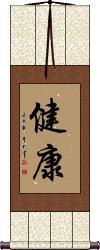
55. Good Health
56. Good Health / Healthy / Vigor
57. Happiness
60. Happy
61. Happy / Laughter / Cheerful Bliss
63. Healthy Living
64. Helpfulness
65. Honesty
67. Honor
68. Hope
69. Humble
70. Humble / Modest
71. Humble / Modesty / Humility
73. Imagination
74. Independence
75. Independent Spirit / Independent Heart
76. Indomitable / Persistence / Fortitude
78. Industrious / Hard Working
80. Initiative / Proactive / Positive
81. Inner Peace
82. Inner Peace / Silence / Serenity
83. Inner Strength
84. Inspiration
85. Integrity
Achievement / Accomplishment
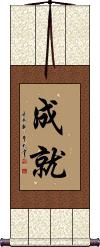
成就 is the word most often used in Chinese, Korean and Japanese to mean accomplishment or achievement.
成就 can also be used to mean success, attain a result, fulfillment, realization, or completion.
Adoring Love
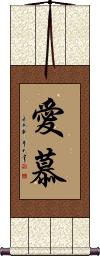
愛慕 means “adoring love” in Chinese, Japanese, and Korean.
I suppose this is the best kind of love to have. 愛慕 has the common character for love. But the second character modifies and reinforces the meaning to become adore, adoring love, or to love and adore.
Ancient Chinese warning:
Adoring someone is fine until you are in the shoes of the Prince of the Kingdom of Wu. This Prince adored a certain beautiful woman (Xi Shi) so much that he neglected his duties and soon let the kingdom fall into ruins.
Beautiful
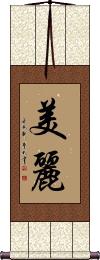
美麗 is a two-character word used often in Chinese, old Korean, and ancient Japanese to express beauty.
I've had a few requests for a “two-character beautiful,” and this is by far the best word. This is not a common word for an Asian person to want on a wall scroll. However, you will see it commonly used as an adjective in phrases, stories, and titles throughout magazines and signage in China.
美麗 can also be translated as gorgeous or lovely.
Note: 美麗 is not commonly used in modern Japan.
Beautiful Virtue
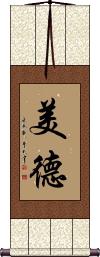
美德 written in Chinese or Korean Hanja can also mean “grace of character” or “noble virtue.”
 There is a slight variation in the modern Japanese Kanji form of the second character. If you want the modern Japanese version, please click on the special Kanji shown to the right instead of the button above. Note that the traditional Chinese form is still readable and understood by Japanese people (
it’s
the ancient Japanese form anyway).
There is a slight variation in the modern Japanese Kanji form of the second character. If you want the modern Japanese version, please click on the special Kanji shown to the right instead of the button above. Note that the traditional Chinese form is still readable and understood by Japanese people (
it’s
the ancient Japanese form anyway).
Beauty / Beautiful / Handsome
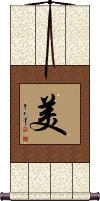
美 is often used to describe the beauty of a woman.
However, when applied to a man, it can mean handsome. It's also the first character in the word for “beauty salon” which you will see all over China and Japan.
This can be used as the given name for a girl (spell it or say it as “Mei” or “May”).
For a bit of trivia: The title for the “USA” in Chinese is “Mei Guo” which literally means “Beautiful Country.” This name was bestowed at a time before Chairman Mao came to power and decided that China didn't like the USA anymore (even though we fought together against the Japanese in WWII). But these days, Chinese people love Americans (but have a distaste for American politics and policy). But I digress...
美 is also how “Beautiful” is written in Japanese Kanji and Korean Hanja. 美 can also mean: very satisfactory; good; to be pleased with oneself; abbreviation for the USA; fine; handsome; admirable; madhura; sweet; and/or pleasant.
See Also: Beautiful Woman | Beautiful Girl
Believe / Faith / Trust
śraddhā
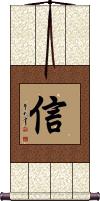
信 can mean to believe, truth, faith, fidelity, sincerity, trust, and confidence in Chinese, old Korean Hanja, and Japanese Kanji.
This single character is often part of other words with similar meanings.
It is one of the five basic tenets of Confucius.
In Chinese, it sometimes has the secondary meaning of a letter (as in the mail) depending on context but it will not be read that way when seen on a wall scroll.
In the Buddhist context, this is śraddhā (faith through hearing or being taught).
Benevolence
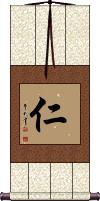
Beyond benevolence, 仁 can also be defined as “charity” or “mercy” depending on context.
The deeper meaning suggests that one should pay alms to the poor, care for those in trouble, and take care of his fellow man (or woman).
仁 is one of the five tenets of Confucius. In fact, it is a subject that Confucius spent a great deal of time explaining to his disciples.
I have also seen this benevolent-related word translated as perfect virtue, selflessness, love for humanity, humaneness, goodness, goodwill, or simply “love” in the non-romantic form.
This is also a virtue of the Samurai Warrior
See our page with just Code of the Samurai / Bushido here
Benevolent Heart
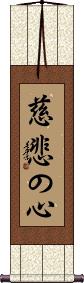
慈悲の心 means benevolent heart, compassionate heart, or merciful heart in Japanese.
This is a Japanese-only phrase and should be ordered from our Japanese master calligrapher. This is because the third character is unique Hiragana.
Chances are you are into Inuyasha and are seeking the title of chapter 471 which is often translated as “Merciful Heart.”
Bravery / Courage
Courage in the face of Fear
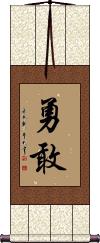
勇敢 is about courage or bravery in the face of fear.
You do the right thing even when it is hard or scary. When you are courageous, you don't give up. You try new things. You admit mistakes. This kind of courage is the willingness to take action in the face of danger and peril.
勇敢 can also be translated as braveness, valor, heroic, fearless, boldness, prowess, gallantry, audacity, daring, dauntless, and/or courage in Japanese, Chinese, and Korean. This version of bravery/courage can be an adjective or a noun. The first character means bravery and courage by itself. The second character means “daring” by itself. The second character emphasizes the meaning of the first but adds the idea that you are not afraid of taking a dare, and you are not afraid of danger.
勇敢 is more about brave behavior and not so much the mental state of being brave. You'd more likely use this to say, “He fought courageously in the battle,” rather than “He is very courageous.”
Bravery / Courage
Single Character for Courage
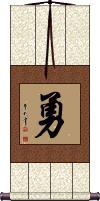
勇 can be translated as bravery, courage, valor, or fearless in Chinese, Japanese and Korean.
勇 is the simplest form to express courage or bravery, as there is also a two-character form that starts with this same character.
勇 can also be translated as brave, daring, fearless, plucky, or heroic.
This is also a virtue of the Samurai Warrior
See our page with just Code of the Samurai / Bushido here
Bravery / Courage
Courageous Energy
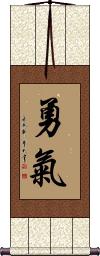
勇氣 is one of several ways to express bravery and courage in Chinese, Japanese, and Korean.
This version is the most spiritual. This is the essence of bravery from deep within your being. This is the mental state of being brave versus actual brave behavior. You'd more likely use this to say, “He is very courageous,” rather than “He fought courageously in the battle.”
The first character also means bravery or courage when it's seen alone. With the second character added, an element of energy or spirit is added. The second character is the same “chi” or “qi” energy that Kung Fu masters focus on when they strike. For this reason, you could say this means “spirit of courage” or “brave spirit.”
This is certainly a stronger word than just the first character alone.
Beyond bravery or courage, dictionaries also translate this word as valor/valour, nerve, audacity, daring, pluck, plucky, gallantry, guts, gutsy, and boldness.
This is also one of the 8 key concepts of tang soo do.
 While the version shown to the left is commonly used in Chinese and Korean Hanja (and ancient Japanese Kanji), please note that the second character is written with slightly fewer strokes in modern Japanese. If you want the modern Japanese version, please click on the character to the right. Both styles would be understood by native Chinese, Japanese, and many (but not all) Korean people. You should make your selection based on the intended audience for your calligraphy artwork. Or pick the single-character form of bravery/courage which is universal.
Brotherly and Sisterly Love
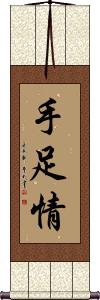
手足情 is the love between siblings.
When you love, protect, care for, and have a deep bond that only brothers or sisters can.
The actual translation is “Hand and Foot,” but the relationship between brothers or sisters is like that of hands and feet. They belong together and complete the body. Even though this says “hand and foot,” it will always be read with the brotherly and sisterly love meaning in Chinese.
Note: During the past 20 years, the “One child policy” in China is slowly making this term obsolete.
Calm / Cool
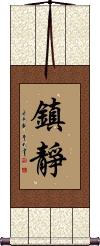
鎮靜 represents the idea of being calm, cool, or relaxed in Chinese, Japanese Kanji, and old Korean Hanja.
My Korean dictionary further defines this as quiet, calm, tranquility, and pacification.
From my Japanese dictionary: calm, quiet, tranquility, appeasement, pacification.
Note: This term is also used in Korean Hanja but there is a slight deviation in the way they write the second character in Korean. Still, a Korean person who can read Hanja, will be able to read this word. We can write it in the Korean form if you wish (just let us know when you place your order). In Korean, this is the word you might use to tell someone to "calm down" or "take it easy."
Calm / Cool-Headed
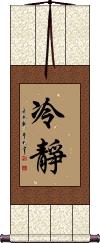
冷靜 means calm and cool-headed in Chinese, Japanese, and Korean.
Other translations: calmness, composure, coolness, serenity, tranquility.
冷靜 is a good wall scroll for someone that wants to remind themselves to stay calm and level-headed.
See Also: Sober Calm
Calm / Tranquility
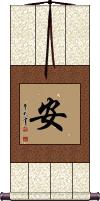
安 is used in a lot of compound words in the CJK world.
Alone, this character has a broad span of possible meanings. These meanings include relaxed, quiet, rested, contented, calm, still, to pacify, peaceful, at peace, soothing, or soothed.
安 and even the pronunciation was borrowed from Chinese and absorbed into both Japanese Kanji and Korean Hanja. In all these languages, this character is pronounced like “an.”
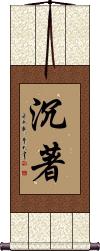
Calm and Collected
Caring
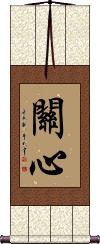
關心 means caring in Chinese.
Caring is giving love and attention to people and things that matter to you and anyone who needs help. When you care about people, you help them. You do a careful job, giving your very best effort. You treat people and things gently and respectfully. Caring makes the world a safer place.
Note: 關心 is also a word in Korean Hanja, but in Korean, it means taking interest or concern. In Korean, it's still a good word, but it doesn't quite have the “caring for a person” meaning that it does in Chinese.
See Also: Benevolence | Altruism
Charity
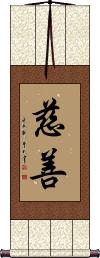
There are a few different words used to express charity in Chinese characters, Japanese Kanji and old Korean Hanja but 慈善 is the most common.
Some of the other words describe acts such as “giving alms” etc.
Note: Sometimes this is translated as benevolence or benevolent.
Also, this considered to be one of the Seven Heavenly Virtues.
If you need a different meaning, just contact me.
See Also: Benevolence | Altruism
Chastity
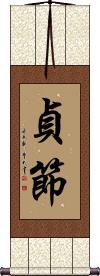
In Chinese, 貞節 would be defined as “The state of being sexually pure” or “chaste.”
Culturally, this especially applies to young women. 貞節 is not actually far off from our western view on this subject. In Japanese and Korean, this could also be used to express virtue, faithfulness, and fidelity.
See Also: Modesty
Chastity / Pure Heart
Also: Clean / Innocent / Pure
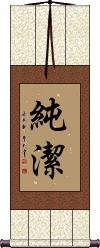
純潔 is associated with “chastity” but with the direct meaning of clean, innocent, and pure.
If you were expressing the idea of a “pure heart” in Chinese, while not literal, this would be the word you would use.
In Japanese, this word is sometimes used to express purity.
In Korean, it describes purity, chastity, virginity, and innocence (basically the same as the Chinese definition).
Commitment
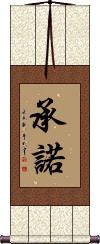
承諾 embodies the idea of commitment but also means to make a big effort or to undertake a great task.
Commitment is caring deeply about something or someone. It is deciding carefully what you want to do and then giving it 100%, holding nothing back. You give your all to a friendship, a task, or something you believe in. You finish what you start. You keep your promises.
In Chinese, this word directly means to undertake something or to make a promise to do something.
Outside of the commitment idea, this particular word can also mean approval, acceptance, consent, assent, acquiescence, or agreement, depending on context (especially in Japanese and Korean). Therefore, this word is probably best if your audience is Chinese.
See Also: Partnership | Hard Work | Dedication
Compassion
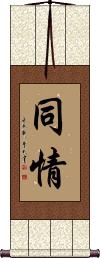
These two characters mean compassion and sympathy in Chinese, Japanese, and Korean, which makes this word universal.
Compassion is caring and understanding someone is hurt or troubled (even if you don't know them). It is wanting to help, even if all you can do is listen and say kind words. You forgive mistakes. You are a friend when someone needs a friend.
Confidence / Faithful Heart
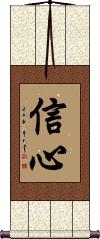
信心 is a Chinese, Japanese, and Korean word that means confidence, faith, or belief in somebody or something.
The first character means faith, and the second can mean heart or soul. Therefore, you could say this means “faithful heart” or “faithful soul.”
In Korean especially, this word has a religious connotation.
In the old Japanese Buddhist context, this was a word for citta-prasāda (clear or pure heart-mind).
In modern Japan (when read by non-Buddhists), this word is usually understood as “faith,” “belief,” or “devotion.”
See Also: Self-Confidence
Cooperation
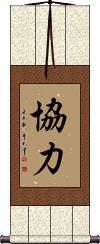
協力 is a Japanese word that means cooperation.
If you look at the second character, which means “strength” or “power,” and then you look at the first character, you will see that the first character seems to represent multiple “strengths” together. Thus, you can visually see the meaning of this word as “stronger when working together.” The combination of characters that form this word is commonly seen in Japanese Kanji and Korean Hanja but not used in China (however, a Chinese person could probably guess the meaning, and it can be pronounced in Chinese).
It is implied that you are cooperating to create some project or product.
This can also be translated as “joint effort.”
See Also: Partnership
Courage to do what is right
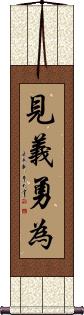
見義勇為 means the courage to do what is right in Chinese.
This could also be translated as “Never hesitate to do what is right.”
This comes from Confucian thought:
Your courage should head in an honorable direction. For example, you should take action when the goal is to attain a just result as, without honorable intent, a person’s gutsy fervor can easily lead them astray.
One who flaunts courage but disregards justice is bound to do wrong; someone who possesses courage and morality is destined to become a hero.
Some text above paraphrased from The World of Chinese - The Character of 勇
See Also: Work Unselfishly for the Common Good | Justice | Bravery
Courtesy / Etiquette
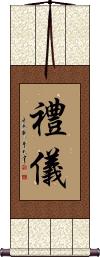
In Chinese, old Korean Hanja, and old Japanese Kanji, 禮儀 means “etiquette” or “courtesy.”
You'll also find a Japanese entry on our website, which uses a modern/simplified first Kanji. The characters shown here compose the best choice if your audience is Chinese or Korean - but also acceptable if you want an ancient-style Japanese scroll (in modern Japanese, it has the same pronunciation, but is written 礼儀).
Note: This can also be translated as propriety, decorum, or formality.
Courtesy / Etiquette
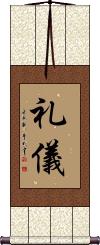
In Japanese, 礼儀 means “manners,” “courtesy,” or “etiquette.”
This also clearly means etiquette in Chinese, though the first Japanese Kanji has been “modernized” and happens to be the same as the modern Simplified Chinese version. Therefore, this word will be understood by both Japanese and Chinese people but best if your audience is mostly Japanese (Chinese people would generally prefer the ancient Traditional Chinese version).
Courtesy / Politeness
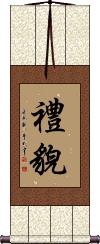
禮貌 is a Chinese and old Korean word that means courtesy or politeness.
Courtesy is being polite and having good manners. When you speak and act courteously, you give others a feeling of being valued and respected. Greet people pleasantly. Bring courtesy home. Your family needs it most of all. Courtesy helps life to go smoothly.
If you put the words "fēi cháng bù" in front of this, it is like adding "very much not." it’s a great insult in China, as nobody wants to be called "extremely discourteous" or "very much impolite."
Creativity
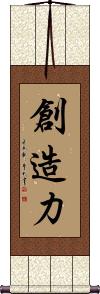
創造力 is a word that means “strength of creativity” or sort of “creativity (is your) strength.”
This can also be translated as “ingenuity.”
Creativity is the power of imagination. It is discovering your own special talents. Daring to see things in new ways and find different ways to solve problems. With your creativity, you can bring something new into the world.
The first character means “to create,” and the second means “to make or build.” Together they mean “creative.” The third character means “strength.”
Curious / Inquisitive
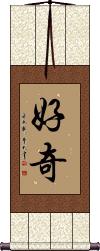
好奇 means curiosity or inquisitive in Chinese, Japanese Kanji, and old Korean Hanja.
It is a rather positive word in all three languages - though not as commonly used in Japanese.
Dedication
Dedicated to One Thing
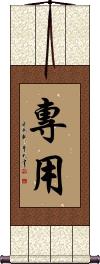
專用 is the dedication you might have to your job or a person.
Trivia: It is the same word used as an adjective in front of the word for “network” to say “dedicated network” in Chinese.
Please note: While this is a word in Korean, the meaning is private or “exclusive use.” So this is best if your audience is Chinese.
See Also: Devotion | Passion | Tenacious | Commitment
Dependable
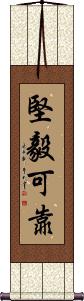
The first two characters mean resolute with firm determination.
The second two characters mean reliable.
Together, this creates a 4-character expression that means dependable.
Determination
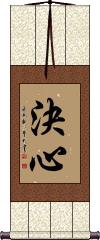
決心 is a Chinese, Japanese, and Korean word that holds the dictionary definition of determination but literally means determined heart.
The first character means to determine or determined.
The second character means heart, mind, or soul, so you can imagine that this form of determination partially means putting your heart into something. It can also be translated as resolve, resolution, or decision (as in a decision made and followed).
See Also: Devotion | Tenacious | Passion | Dedication | Will-Power
Determination to Achieve / Will-Power
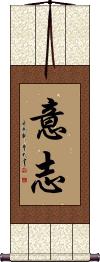
意志 is a Chinese, Korean, and Japanese word that means “determination to achieve.” It can also be translated as: will; willpower; determination; volition; intention; or intent.
In Japanese, this can also be the given name, Ishi.
Devotion / Diligence / Vigorous / Energetic
vīrya
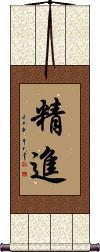
精進 is a wide-ranging word that is used in Chinese, Japanese, and Korean.
It can mean devotion, diligence, concentration, aggressive, enterprising, vigorous, energetic, purification, pushing, asceticism, assiduity, or virility. 精進 is deep, and these two characters can express ideas that take a full English phrase to describe, such as “concentration of mind,” “to forge ahead vigorously,” or “to dedicate oneself to progress.”
Used in the context of Buddhism, it means “making earnest efforts to cultivate virtue and get rid of evil” or “zeal in one's quest for enlightenment.”
Devotion / Enthusiasm
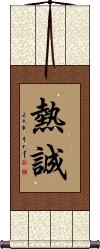
熱誠 is universal in Chinese, Japanese Kanji, and old Korean Hanja.
It can mean earnestness, enthusiasm, ardor, zeal, devotion, spirit, or fervor.
Dignity / Honor / Sanctity / Integrity
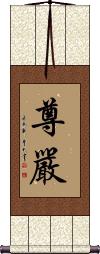
尊嚴 is a form of honor that means showing great respect for yourself, other people, and the rules you live by.
When you are honorable, you keep your word. You do the right thing regardless of what others are doing.
尊嚴 is the kind of personal honor or dignity that is of great value. If you lose this, you have lost yourself and perhaps the reputation of your family as well.
While this is not directly the same thing as “face” or “saving face” in Asian culture, it is associated with the same concept in China.
 In Japan, they currently use a more simplified second character for this word. The ancient Japanese form is the same as China but after WWII some Kanji were changed. If you want the modern Japanese version, just click on the Kanji image shown to the right, instead of the button above.
Diligence
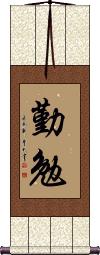
勤勉 can be translated as diligence, industrious, assiduity, assiduous, diligent, or sedulity.
Diligence is working hard and doing your absolute best. You take special care by doing things step by step. Diligence helps you to get things done with excellence and enthusiasm. Diligence leads to success.
See Also: Hard Work | Tenacity | Commitment | Passion for a Cause
Diligence
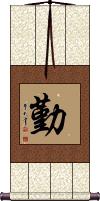
勤 is a single character that means diligence or “sense of duty” in Chinese and Korean (also understood in Japanese but not commonly seen as a stand-alone Kanji).
As a single character on a wall scroll, this will only be seen with this meaning. However, it can also mean industrious, hardworking, frequent, regular, constant, energy, zeal, fortitude, or virility.
In Buddhism, this can represent vīrya (viriya), the idea of energy, diligence, enthusiasm, or effort. It can be defined as an attitude of gladly engaging in wholesome activities, and it functions to cause one to accomplish wholesome or virtuous actions. Some Buddhists may even define this as “manliness” (a definition from a hundred years ago, before equality).
If you or someone you know is a hard worker (or needs a reminder to be diligent), then this is the wall scroll to have in your/their office.
Discipline
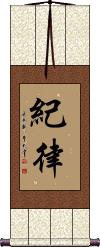
紀律 is a Chinese and Korean word that conveys the idea of extreme self-control and perhaps self-sacrifice, and obedience.
This word matches the kind of “discipline” I was in the Marine Corps. There is also an additional idea of maintaining order or being orderly in your tasks.
This idea would also fit an athlete training for the Olympics who gives up many pleasures to stay focused on their training.
See Also: Self-Control | Will-Power
Discipline

鍛練 is the Japanese Kanji and Korean Hanja word used for discipline.
This has a meaning like “forging or creating something from lots of training and practice.” My Japanese dictionary translates this as “tempering, forging, hardening, disciplining, training.”
This is for Japanese and Korean only. In Chinese, these characters might be translated as (physical) “exercise.”


The modern form of the second Japanese Kanji looks like the first image to the right. There’s also an alternate modern form after that, and finally, an alternate traditional form. Because calligraphy is an art, the calligrapher could choose any of these possible forms. Let us know if you have a preference.
See Also: Self-Control | Will-Power
Elegant / Exquisite / Grace
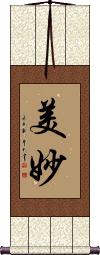
Beyond elegant and exquisite elegance, 美妙 is also the word used to say “beautiful” or “marvelous” when referring to a work of art.
Can also be translated as exquisiteness, gracefulness.
Note: Not a commonly used word in Japanese.
Endurance
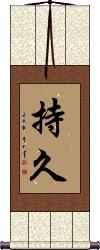
持久 means to endure or lasting.
In some contexts, it can mean “persistent” or “persistence” (especially in Japanese and Korean).
Enlightenment
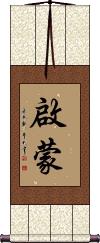
啟蒙 is the Chinese word for enlightenment.
The first character means to open, to start, to begin, to commence, or to explain. The second character means deception or ignorance. It suggests that enlightenment is the opening or cutting through what deceives you in the world or the ignorance of the world. This title can also mean to educate.
 The Japanese and Korean version of the first character of this title varies slightly from the Chinese. Please click on the Kanji to the right, instead of the button above, if you want the Japanese/Korean version.
Enthusiasm / Passion for a Cause
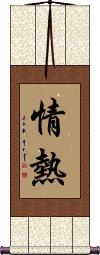
情熱 is the Japanese word that means enthusiasm or “passion for a cause.”
In some contexts, this could mean being extremely fond of something or having a fondness for a cause or person.
Can also be translated as passion, zeal, ardor/ardour, or fervor.
Note: This word (or character order) is not natural in Chinese. However, a typical Chinese person can guess this is a Japanese or Korean word and understand the intended meaning. This selection is best if your audience is Japanese or old-school Korean.
See Also: Persistence | Devotion | Tenacity | Commitment | Motivation
Enthusiasm / Warm-Hearted
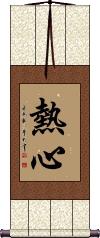
熱心 literally means “warm-hearted” (can also mean warm-spirited or warm-souled).
This is one of a few ways to say Enthusiasm in Chinese, Japanese Kanji, and old Korean Hanja.
熱心 is also used to express the ideas of earnestness or eagerness.
Can mean “zeal” in Japanese.
Ethics / Ethical / Morality
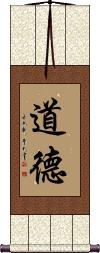
道德 is a Chinese, Japanese, and old Korean word that can also be defined as “moral principles,” morality, ethics, ethical, morals, or virtue.
The first character is the same that is associated with Daoism / Taoism. This word is also used to express morality, virtue, or simply morals.
There is a slight deviation in the Japanese Kanji form. If you want the modern Japanese version, please click on the special Kanji shown to the right instead of the button above. Note that the traditional Chinese form is still readable and understood by Japanese people.
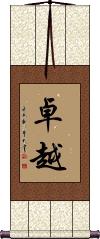
Excellence
Faith / Trusting in the Unseen
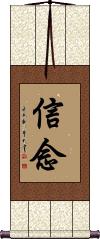
信念 expresses the idea of “having a belief” or “trusting in the unseen.”
信念 could also be translated as beliefs or convictions.
Note: Also considered to be one of the Seven Heavenly Virtues.
See Also: Devotion | Dedication | Trust
Faithful / Honorable / Trustworthy / Fidelity / Loyalty
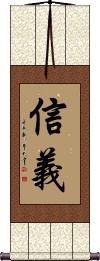
信義 is a word often used to describe a person with an honest and loyal reputation.
Simply put, this applies to somebody you can trust (with your life).
In Chinese, this is often defined as good faith, honor, trust, and justice.
In Korean, this word means fidelity, truthfulness, or faithfulness.
In Japanese: faith, fidelity, and loyalty. It's also a Japanese male given name when pronounced “Nobuyoshi.”
Flexibility
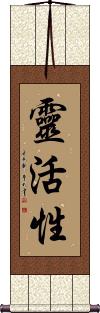
靈活性 is a Chinese and Korean word that means flexibility or being open to change.
You consider others' ideas and feelings and don't insist on your own way. Flexibility gives you creative new ways to get things done. Flexibility helps you to keep changing for the better. 靈活性 could also be defined as having a “flexible nature.”
See Also: Cooperation
Flexibility
Alternate / Japanese version
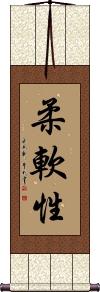
柔軟性 is the Chinese, Japanese Kanji, and Korean Hanja word that means “flexibility.”
It can also mean “compatibility,” “pliability,” “softness” and “elasticity.”
See Also: Flexibility | Cooperation
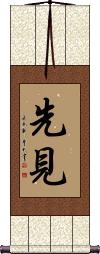
Foresight
Forgive
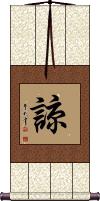
This single character means “forgive” in Chinese.
In Korean, this kind of means forgive but also has slightly different definitions of considering, excuse, faithful or believe.
Forgive
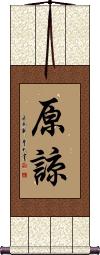
This two-character word means “forgive” in Chinese.
It can also be defined as “to pardon” or “to excuse.” 原諒 is a kind of general forgiveness.
Forgive
Deep heartfelt forgiveness
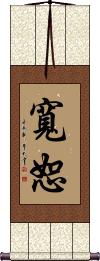
寛恕 is a word of Chinese origin means forgive or forgiveness.
寬恕 is a deep kind of forgiveness from the bottom of your heart.
In a religious context, this is the kind of forgiveness that you beg God for and that God grants you.
In Korean Hanja, this can also be defined as forbearance or leniency.
In Japanese Kanji, beyond forgiveness, this can also mean magnanimity or generosity.
While we don't actively recommend Asian tattoos, this would be the forgiveness title that is best for a tattoo in most cases.
 Note: The first character can also be written in the form shown to the right (especially in Japanese). If you have a preference, please let us know in the "special instructions" when you place your order.
Forgiveness
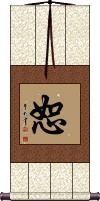
恕 means to forgive, show mercy, absolve, or excuse in Chinese and Korean Hanja (though mostly used in compound words in Korean).
恕 incorporates the pictogram of a heart at the bottom, and a woman and a mouth at the top. The heart portion has the most significance, as it is suggested that it is the heart's nature to forgive.
In Asian culture, as with most other cultures, forgiveness is an act of benevolence and altruism. In forgiving, you put yourself in someone else's shoes and show them the kindness that you would want them to show you. Confucius referred to this quality as “human-heartedness.”
Forgiveness (from the top down)
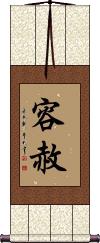
容赦 is the kind of forgiveness that a king might give to his subjects for crimes or wrong-doings.
容赦 is a rather high-level forgiveness. Meaning that it goes from a higher level to a lower (not the reverse).
Alone, the first character can mean “to bear,” “to allow,” and/or “to tolerate,” and the second can mean “to forgive,” “to pardon,” and/or “to excuse.”
When you put both characters together, you get forgiveness, pardon, mercy, leniency, or going easy (on someone).
See Also: Benevolence
Fortitude / Strength of Character
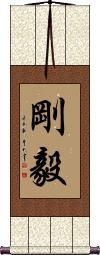
剛毅 is a Japanese and Chinese word that means resolute and firm, fortitude, firmness of character, hardihood, manliness, or macho.
See Also: Perseverance | Strength | Tenacity
Friendliness
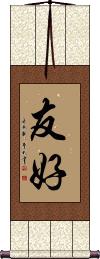
友好 is a Japanese, Chinese, and old Korean word that means friendliness.
This word can also be defined as “amity,” “friendly,” and “outgoing.”
This can be a Japanese given name Yuukou or Yuko. It can also be a Japanese surname that romanizes as Tomoyoshi.
See Also: Friendship
Friendship
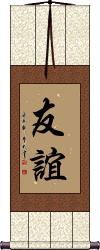
友誼 can be defined as companionship or fellowship.
This word is common in Chinese and Korean Hanja but is seldom used in Japanese anymore.
See Also: Partnership | Friendliness
Friendship
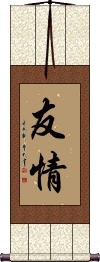
友情 can be translated as “camaraderie” or “fellowship.”
But this character combination is only used commonly in Japanese Kanji and Korean Hanja.
Generosity
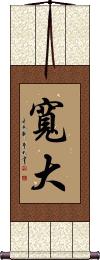
寬大 is a Chinese, Japanese, and Korean word that means Generosity.
Generosity is giving and sharing. You share freely, not with the idea of receiving something in return. You find ways to give others happiness and give just for the joy of giving. Generosity is one of the best ways to show love and friendship.
寬大 can also be translated as charitable, magnanimity, liberality, or in some contexts, broad-mindedness.
Note: There is a tiny deviation in the first character when written in Japanese. If you choose our Japanese master calligrapher, the little dot on the lower right of the first character will be omitted. With or without the dot, this can be read in Chinese, Japanese Kanji, and old Korean Hanja.
See Also: Benevolence | Altruism | Charity
Gentleness
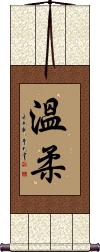
溫柔 or “gentleness” is moving wisely, touching softly, holding carefully, speaking quietly, and thinking kindly.
When you feel mad or hurt, use your self-control. Instead of harming someone, talk things out peacefully. You are making the world a safer, gentler place.
Gentleness
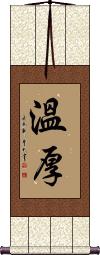
溫厚 is a Chinese, Japanese, and old Korean word for gentle or gentleness.
This can also mean “kindness” (more as an adjective like “kind person”).
 The modern Japanese version of the first character looks like the one to the right. If you want this modern Japanese form, just click on that Kanji instead of the button above.
Good Health
Good Health / Healthy / Vigor
Also suggests being at peace
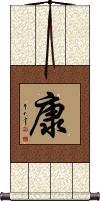
康 is a single character that means good health or vigor in Chinese, Japanese Kanji, and old Korean Hanja.
康 can also mean peaceful, at ease, or abundant in some contexts.
Please note that this is rarely seen alone in Japanese Kanji. In Japanese, it is used both for health-related compound words and to denote the kouhou through koushou eras of Japan.
In Korean, this can also be the family name “Kang” (caution: not the only family name romanized as Kang in Korean).
Happiness
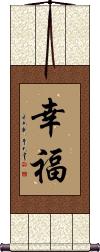
幸福 is a general state of happiness that can also be translated as truly blessed, welfare, well-being, or fortunate.
Happiness / Contentment
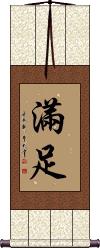
滿足 is the kind of happiness that involves being satisfied and content.
This can also suggest the actions of “to satisfy,” and “to meet the needs of.”
Other single-word definitions include satisfaction, contentment, sufficient, enough, adequate, full, or complete.
 In Japanese, the Kanji for this word is an alternate Chinese form. You can see and select this version at the right (recommended only if your audience is specifically Japanese).
See Also: Satisfaction | Contentment | Pleasure | Well-Being
Happiness / Joyful / Joy
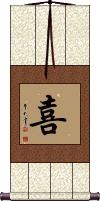
喜 is the Chinese, Japanese Kanji, and Korean Hanja for the kind of happiness known in the west as “joy.”
喜 can also be translated as rejoice, enjoyment, delighted, pleased, or “take pleasure in.” Sometimes it can mean “to be fond of” (in a certain context).
If you write two of these happiness/joy characters side by side, you create another character known in English as “double happiness,” which is a symbol associated with weddings and happy marriages.
There is another version of this character that you will find on our website with an additional radical on the left side (exactly same meaning, just an alternate form). The version of happiness shown here is the commonly written form in China, Japan and South Korea (banned in North Korea).
See Also: Contentment | Happiness | Joy
Happy
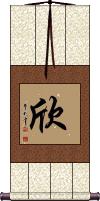
欣 is the type of happiness that you feel on the inside. It is the feeling of being released and delighted as well as being in a state of contentment. 欣 is more the internal happiness that perhaps only shows by the smile on your face. It can also be translated as “to take pleasure in” or “to rejoice.”
Note: 欣 is often used in compound words - especially in Korean Hanja.
As Japanese Kanji, this is so rare, that most Japanese people are not aware of its existence.
See Also: Happiness
Happy / Laughter / Cheerful Bliss
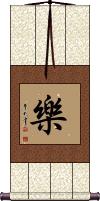
樂 is a single-character form of happiness or bliss that holds the ideas of laughing and having a good time.
This can also be translated as happy, glad, enjoyable, fun, and sometimes, music.
This a really good character if your audience is Chinese.
This is not a word seen alone very often in Korean.
 In Japanese, this character is written like the image shown to the right. If you order this from the Japanese master calligrapher, it will look like this instead of the character shown above.
Note: In Japanese, this has a meaning of comfort, ease, and enjoyment.
See Also: Joyfulness
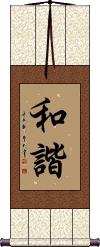
Harmony / Balance
Healthy Living
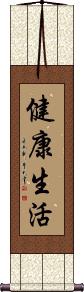
If you are into healthy living, 健康生活 might be an excellent selection for a wall scroll to hang in your home.
The first two characters speak of health, vitality, vigor, and being of sound body. The second two characters mean living or life (daily existence).
Helpfulness
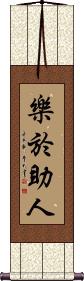
樂於助人 is about helpfulness, being of service to others, and doing thoughtful things that make a difference in their lives.
Offer your help without waiting to be asked. Ask for help when you need it. When we help each other, we get more done. We make our lives easier.
See Also: Caring | Charity | Benevolence
Honesty
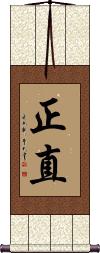
正直 or honesty is being truthful and sincere. It is important because it builds trust. When people are honest, they can be relied on not to lie, cheat or steal. Being honest means that you accept yourself as you are. When you are open and trustworthy, others can believe in you.
正直 is one of the 8 key concepts of Tang Soo Do.
Note: This entry is cross-listed as "integrity" because it also fits that definition.
 Please note that the second Kanji sometimes has an alternate form in Japanese. Let us know if you want the alternate form shown to the right.
Honesty
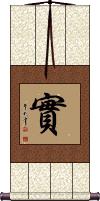
Honesty
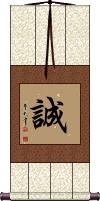
誠 means truth, faith, fidelity, sincerity, trust, and/or confidence.
As a single-character wall scroll, this suggests that you believe “honesty is the best policy,” as your personal philosophy.
This is also a virtue of the Samurai Warrior
See our page with just Code of the Samurai / Bushido here
Honesty / Fidelity
信 is another character that expresses the idea of honesty.
It can also mean truth, faith, belief in, fidelity, sincerity, trust, and/or confidence.
Some have included this in the list for the Bushido, although “makoto” is probably more common/popular.
Note: In some contexts, this character can mean a letter (mail), news, or envoy. However, alone, it will generally be read with the honesty-meaning.
See our page with just Code of the Samurai / Bushido here
See Also: Loyalty Trustworthiness Trustworthy
Honor
(Modern Japanese version)
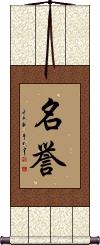
名譽 is a version of honor that is about having or earning the respect of others and about your reputation.
It is the status of being worthy of honor (not to be confused with doing honorable things or specific actions - see our other “honor” listing for that).
 Both modern Japanese and modern mainland Chinese use the same simplified version of the second character of honor. You can make a special request for the traditional second character as shown to the right (just click on that character to the right of you want to order that version). Before WWII, both Japan and China used the traditional form but modern Japanese and Chinese use this simplified form. Koreans still use the traditional form when they are not writing in their modern Hangul glyphs.
This is also a virtue of the Samurai Warrior
See our page with just Code of the Samurai / Bushido here
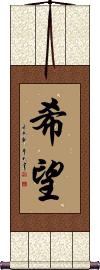
Hope
Humble
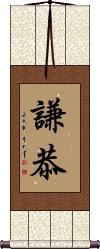
Humble / Modest
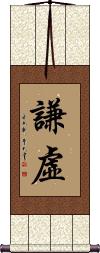
謙虛 can also be translated as humbleness or humility.
In Chinese and Korean, the first character means “modest.” The second means “empty.” Together these characters reinforce the ideas of modesty and being empty of ego.
 In Japan, they tend to use a slightly-simplified version of the second Kanji for this word. It also happens to be an alternate/simplified version used in China too. If you want to order the modern Japanese/simplified version, just click in the Kanji image shown to the right, instead of the button above.
See Also: Moderation
Humble / Modesty / Humility
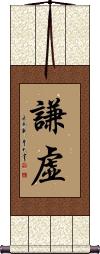
謙虚 is the most common way to say humble or modest in Japanese without a derogatory meaning (some other words suggest weakness, but this version holds a better humble meaning).
In Japanese, the first Kanji means self-effacing, humble oneself, and modesty. The second means void or emptiness.
See Also: Moderation
Humility / Being Humble
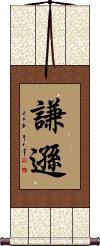
謙遜 can also be translated as being modest, humble, or unpretentious.
Being humble is considering others to be as important as yourself. You are thoughtful of their needs and willing to be of service. You don't expect others or yourself to be perfect. You learn from your mistakes. When you do great things, humility reminds you to be thankful instead of boastful.
This Humility title is also used as one of the 8 key concepts of Tang Soo Do. Often romanized as “Kyum Son.”
Also sometimes used in Japanese to express humility with an essence of modesty.
Imagination
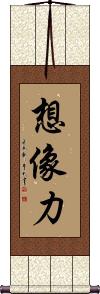
想像力 is probably the best way to express “imagination” in Chinese, Japanese Kanji, and old Korean Hanja.
It literally means “your strength to imagine.” The last character means strength or ability, while the first two mean imagine or conceptualize. My Japanese dictionary defines this as “The power of imagination.” While my Korean dictionary says, “imaginative power.”
Independence
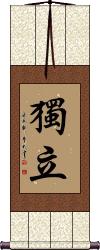
Besides meaning “to be independent,” this can also mean “to stand alone,” self-reliance or self-support.
 Modern Japanese use a simplified version of the first character of independence.
it’s
the same simplified version currently used in mainland China, so understood by most Chinese and all Japanese people. Click on the character to the right if you want the simplified/Japanese version.
Modern Japanese use a simplified version of the first character of independence.
it’s
the same simplified version currently used in mainland China, so understood by most Chinese and all Japanese people. Click on the character to the right if you want the simplified/Japanese version.
Independent Spirit / Independent Heart
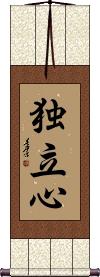
獨立心 means independent spirit or independent heart in Japanese.
The first two characters mean independent or independence. The third character means spirit, heart, or mind.
獨立心 is a Japanese term, although Chinese people could guess the meaning (the characters make sense individually in Chinese but are not often used this way). Also, the first character would be written 獨 in Traditional Chinese versus 独 which is the Simplified Chinese and modern Japanese version.
Indomitable / Persistence / Fortitude
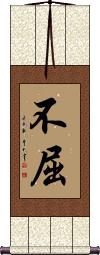
不屈 is the short form of a longer Chinese word and also a word used in Korean and Japanese to express the idea of being indomitable. It literally means “will not bend,” “will not crouch,” “will not yield,” “will not flinch,” or “will not submit.”
Note: Some will translate this as “indomitable spirit”; however, technically, there is no character to suggest the idea of “spirit” in this word.
Indomitable / Unyielding
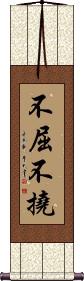
不屈不撓 means “Indomitable” or “Unyielding.”
不屈不撓 is a long word by Chinese standards. At least, it is often translated as a single word into English. It's actually a proverb in Chinese.
If you want to break it down, you can see that the first and third characters are the same. Both mean “not” (they work as a suffix to make a negative or opposite meaning to whatever character follows).
The second character means “bendable.”
The last means “scratched” or “bothered.”
So this really means “Won't be bent, can't be bothered.” I have also seen it written as “Will not crouch, will not submit.” This comes from the fact that the second character can mean “to crouch” and the last can mean “to submit” (as in “to give in” such as “submitting to the rule of someone else”). This may explain better why these four characters mean “indomitable.”
Notes:
Some will translate this as “indomitable spirit”; however, technically, there is no character to suggest the idea of “spirit” in this word.
Other translations include indefatigability, indomitableness, or unremitting tenacity.
The first two characters can be stand-alone words in Chinese.
In Japanese, this is considered two words (with very similar meanings). It's more common to see the word order flipped to 不撓不屈 in Japanese.
The same characters are used in old Korean Hanja. Just like in Japanese, the words are swapped to 不撓不屈 creating a word pronounced “불요불굴” in Korean.
See 不撓不屈
Industrious / Hard Working
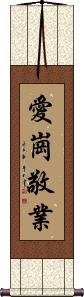
愛崗敬業 is used to refer to someone who puts forth maximum effort and achieves much.
We might call this kind of person a “go-getter” in English.
See Also: Dedication | Tenacious | Devotion
Initiative / Leadership
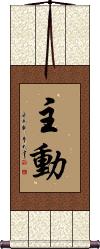
In Chinese, this word means “to take the initiative.”
In Japanese and Korean, the meaning varies slightly to meaning that leans more toward “leadership” (as in one who is leading a group or organization).
Initiative / Proactive / Positive
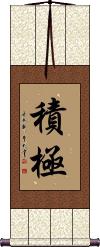
This word closely matches the way initiative is often used in English. This word can also mean active, energetic, vigorous, positive (outlook), or proactive in Chinese.
The meaning also includes positive and progressive in Japanese and Korean.
Inner Peace
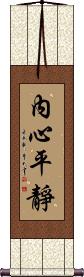
內心平靜 is a Chinese and Japanese phrase that is a direct translation of the western idea of inner peace.
The first two characters contain the idea of “heart,” “innermost being,” or “deep in the/your inner mind.”
The last two characters mean “tranquil” and “serene.”
I have seen this phrase used as “inner peace” for art prints and even on the side of coffee cups. But I think the translation is too literal. It feels like a direct translation from English rather than a nicely composed Chinese or Japanese phrase. See my other entries for “inner peace.”
See Also: Serenity | Simplicity | Peace
Inner Peace / Silence / Serenity
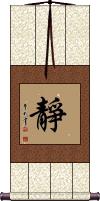
靜 is the simplest way to convey the meaning of inner peace and serenity.
靜 is often translated as “serenity.” It can also be used to express the ideas of still, calm, serene, quiet, silent, stillness, not moving, or tranquility.
In the old days, Chinese, Japanese, or Korean people might hang a wall scroll with this character in their reading room to bring about a sense of peace in the room.
 While they once used the same character form in Japan, they now use a slightly-simplified version in modern Japan (after WWII). This version is shown to the right, and can be selected for your wall scroll by clicking on that Kanji instead of the button above.
See Also: Peace
Inner Strength
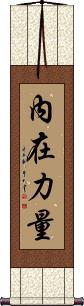
內在力量 is the slightly-verbose way to say inner strength.
The first two characters mean “intrinsic” or “inner.” The second two characters mean “power,” “force” or “strength” (especially physical strength). 內在力量 is more a short phrase rather than just a word in Chinese and Korean. This can sort of be understood in Japanese but it's not normal/proper Japanese.
Inner Strength
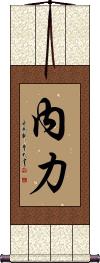
內力 is the shorter version of inner strength (can also be translated as “internal force”). The first character holds the meaning of “inner” or “internal.” The second character means “power,” “force,” or “strength.”
內力 is a Kung Fu way of talking about an inner power or strength from within. This is a way to express “inner chi.” This is something that you might hear in a real Chinese Kung Fu movie.
While understood in Chinese and Japanese, this can have a secondary meaning of “inner stress” in Japanese.
Inspiration
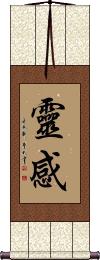
靈感 is the Chinese word closest to hitting the mark for the English word inspiration.
In a more extended context, I have even seen this translated as “brain wave.”
The first character means alert, departed soul, efficacious, quick, effective, or intelligent.
The second character means to feel, to move, to touch, or to affect.
The combined meaning of these two characters changes a bit, but I think it's nice to know the individual meanings to give you a better understanding of where a word comes from.
You could describe this word as “the thought that pops into your head just before you patent the greatest widget ever invented that everyone in the world will want.”
At least, that's the idea.
This term can also mean “intelligent thought” if you translate it directly from each character. If you are looking for inspiration or need to be inspired, this is the word for you.
 When the first character was absorbed into Japanese from Chinese, an alternate form became the standard in Japan. The Kanji shown to the right is the form currently used in Japan. This is still considered an alternate form in China to this day.
it’s
readable by both Chinese and Japanese people but if your audience is Japanese, I recommend the Kanji shown to the right - just click on that Kanji to order that version.
When the first character was absorbed into Japanese from Chinese, an alternate form became the standard in Japan. The Kanji shown to the right is the form currently used in Japan. This is still considered an alternate form in China to this day.
it’s
readable by both Chinese and Japanese people but if your audience is Japanese, I recommend the Kanji shown to the right - just click on that Kanji to order that version.
Integrity
Integrity is living by your highest values. It is being honest and sincere. Integrity helps you to listen to your conscience, do the right thing, and tell the truth. You act with integrity when your words and actions match. Integrity gives you self-respect and a peaceful heart.Please note that the second Kanji sometimes has an alternate form in Japanese. Let us know if you want the alternate form shown to the right.
Note: This entry is cross-listed as “honesty” because it also fits that definition.
Beyond Integrity, this word also means "upright" and "honest" in Chinese. Means "integrity," "honesty" or "frankness" in Japanese.
Integrity: Sincere Honest and Faithful
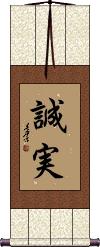
誠実 is the Japanese version of integrity which can also be defined as a combination of “sincere, honest, and faithful.”
Some may also define this as “loyal” or “loyalty.” In some contexts, it can mean “genuine.” Yes, all of this meaning in just one Japanese word!
Intelligence / Intellect
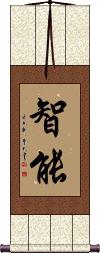
These two characters mean intelligence or intelligent.
The first character means wisdom, intellect, or knowledge.
The second means ability, talent, skill, capacity, capable, able, and can even mean competent.
Together, 知能 can mean “capacity for wisdom,” “useful knowledge,” or even “mental power.” Obviously, this translates more clearly into English as “intelligence.”
Note: This is not the same word used to mean “military intelligence.” See our other entry for that.
 In modern Japan, they tend to use a version of the first character without the bottom radical. If your audience for this artwork is Japanese, please click on the Kanji to the right instead of the button above.