Custom Will-Power Chinese & Japanese Calligraphy Wall Scroll
We have many options to create artwork with Will-Power characters on a wall scroll or portrait.
If you want to create a cool Will-Power wall scroll, this is the place. Below you will find a few Asian symbols that express the idea of Will-Power.
Tags: Willpower in Japanese Kanji and Chinese. Will Power in Chinese and Japanese Kanji
2. Self-Discipline / Will-Power
3. Determination to Achieve / Will-Power
5. Discipline
6. Discipline / Training / Tempering Character
7. Discipline
8. Love Your Children, But Discipline Them Too
10. Self-Control
11. Self-Restraint / Self-Control
12. Well-Disciplined / Orderly
13. Self-Discipline and Martial Virtue
14. Self-Discipline Martial Arts
15. ...And this above all to thine own self be true
16. Better to be Happy than Rich
17. You May Learn from Victory, You Will Learn from Failure
18. Confidence / Faithful Heart
19. Control of Power
21. Determination
22. A Truly Determined Person Will Find a Solution
23. Do not fear the task: Cooperation will lead to success
24. The Spirit of the Dragon Horse and Power of a Tiger
26. Exercise
27. Free Will
29. Good Intentions / Good Will / Good Faith
30. Indomitable / Persistence / Fortitude
33. Inner Strength / Self-Improvement
34. Jiko no Kansei / Self-Completion
35. Juggernaut / Absolute Power
36. One Justice Can Overpower 100 Evils
37. Kensho - Initial Enlightenment
38. Know Thy Enemy, Know Thyself
39. You May Learn from Victory, You Will Learn from Failure
42. Where There is a Will, There is a Way
43. Perseverance
44. Great Power
45. Power of Understanding and Wisdom
46. Pride
47. Prideful Mind / Self-Respecting Heart
48. Psychic Energy
49. Psychic Power
50. Self-Love / Love Yourself / Love Oneself
51. Introspection / Self-Awareness
52. Changing Oneself / Self Reformation
53. Self-Reliance
54. Self Sacrifice
55. Self-Confidence
58. Self-Defense
59. Self-Improvement
60. Self-Respect / Self-Esteem
61. Power of Oneself / Self-Sufficient
63. Self Awareness Becomes a Buddha
64. Speed Control
65. Standing by Oneself / Walking by Oneself
67. Power / Strength
68. Always Striving for Inner Strength
70. Strong Hearted / Strong Willed
72. Temperance
74. Training / Drill
75. To a Willing Heart, All Things Are Possible
76. Where there’s a will there’s a way
77. Where There is a Will, There is a Way
79. Will
80. Will of Fire
Perseverance / Will-Power
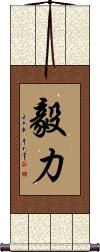
毅力 is a way to express “perseverance” with the idea of “willpower” in Chinese and old Korean Hanja. It can also mean “strong-willed.”
The first character means “strong” and “persistent,” while the second means “strength” and “power.”
Self-Discipline / Will-Power
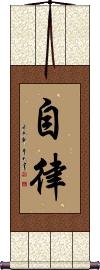
自律 means self-discipline and self-control.
It is doing what you really want to do rather than being tossed around by your feelings like a leaf in the wind. You act instead of reacting. You get things done in an orderly and efficient way. With self-discipline, you take charge of yourself.
Not sure if this one works for a Japanese audience.
See Also: Discipline | Self-Control
Determination to Achieve / Will-Power
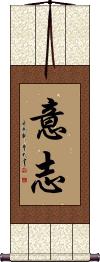
意志 is a Chinese, Korean, and Japanese word that means “determination to achieve.” It can also be translated as: will; willpower; determination; volition; intention; or intent.
In Japanese, this can also be the given name, Ishi.
Will-Power / Self-Control
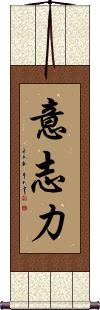
意志力 is a form of willpower or self-control and is about having the determination or tenacity to keep going.
In Japanese, this is the power of will, the strength of will, volition, intention, intent, or determination.
Discipline
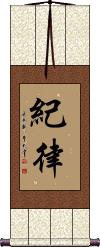
紀律 is a Chinese and Korean word that conveys the idea of extreme self-control and perhaps self-sacrifice, and obedience.
This word matches the kind of “discipline” I was in the Marine Corps. There is also an additional idea of maintaining order or being orderly in your tasks.
This idea would also fit an athlete training for the Olympics who gives up many pleasures to stay focused on their training.
See Also: Self-Control | Will-Power
Discipline
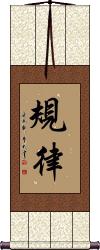
規律 is a Japanese word for discipline that relays the ideas of keeping order, and observance (of rules, laws, regulations).
This is also a word in Chinese and old Korean Hanja where it suggests that you are one who follows a certain law of behavior or has a regular and dependable pattern of behavior, personal regime, or rhythm.
See Also: Self-Control | Will-Power
Discipline / Training / Tempering Character
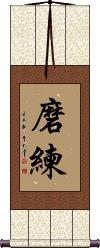
磨鍊 is a form of discipline which suggests training of the mind and character, aimed at producing self-control, obedience, etc.
One of my Chinese-English dictionaries even translates this as “tempering oneself” or turning yourself into hardened steel.
In old Korean Hanja, they use these characters in reverse order but with the same meaning. If you want the Korean version, please click this link instead of the button above: Korean version.
Discipline

鍛練 is the Japanese Kanji and Korean Hanja word used for discipline.
This has a meaning like “forging or creating something from lots of training and practice.” My Japanese dictionary translates this as “tempering, forging, hardening, disciplining, training.”
This is for Japanese and Korean only. In Chinese, these characters might be translated as (physical) “exercise.”


The modern form of the second Japanese Kanji looks like the first image to the right. There’s also an alternate modern form after that, and finally, an alternate traditional form. Because calligraphy is an art, the calligrapher could choose any of these possible forms. Let us know if you have a preference.
See Also: Self-Control | Will-Power
Love Your Children, But Discipline Them Too
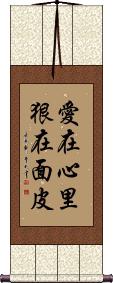
爱在心里狠在面皮 literally translates as “Love [your] children in [your] heart, [but] be stern [with them] in [your] manner.”
This is a little like saying “Love your child but don't spare the switch.”
Military Discipline
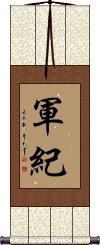
軍紀 means military discipline or military principles.
If maintaining your military discipline is important to you personally or important to your military unit, this is the wall scroll to have up behind your desk. In fact, it's the kind of thing I expect to see behind the desk of a First Sergeant or maybe a hardcore NCO.
Note: In some rare contexts, it could be extended to mean “morale,” but “discipline” is much closer to the commonly-held definition.
Note: This term is not well-known outside the military services in Asia (not used by the common person).
See Also: Self-Discipline
Self-Control
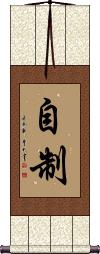
The short and sweet version of self-control.
Note: This can also mean self-restraint.
See Also: Will-Power | Discipline
Self-Control
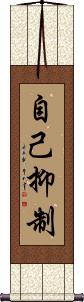
自己抑制 has a meaning like “to restrain oneself” in Chinese, Japanese, and old Korean.
The first two characters mean “regarding oneself,” and the second two mean “to refrain” or “to restrain.”
See Also: Discipline | Will-Power
Self-Restraint / Self-Control
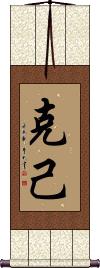
克己 can be translated as “self-denial,” “self-abnegation,” “self-restraint,” “self-discipline,” “self-mastery,” or selflessness.
As a tenet of Korean taekwondo, and other martial arts, this is often used with the title “self-control.”
Well-Disciplined / Orderly
Special Military Term
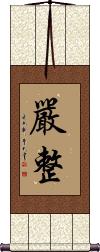
When reading an account of some battles in China, I came across the Chinese word, 嚴整. As it turns out, 嚴整 is only used in military circles to describe neat, orderly, and well-disciplined troops. Perhaps this is actually closer to the meaning I was taught while in the U.S. Marines.
The first character literally means stern, serious, strict, or severe (it can also mean airtight or watertight.
The second character means exact, in good order, whole, complete, and orderly.
Together, these two characters multiply each other into a word that expresses the highest military level of discipline.
See Also: Self-Control | Will-Power
Self-Discipline and Martial Virtue

克己武術 can be translated as “Self-Discipline Martial Arts Techniques,” or “Self-Discipline and Martial Virtue.”
克己 = Self-mastery, or overcome the self.
武術 = Martial techniques/arts, or practical combat methods.
Self-mastery; overcome the self. Martial techniques/arts; practical combat methods.
Self-Discipline Martial Arts

克己武道 can be translated as “Self-Discipline Martial Way,” or “Self-Discipline Martial Arts.”
克己 = Self-mastery, or overcome the self.
武道 = Martial way, suggesting an ethical/lifelong path of training.
Martial way; ethical/lifelong path of training.
...And this above all to thine own self be true
A line from Shakespeare's Hamlet
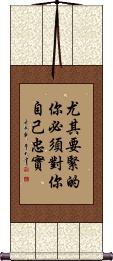
尤其要緊的你必須對你自己忠實 is the classic translation of a line from Shakespeare's Hamlet into Chinese.
Better to be Happy than Rich
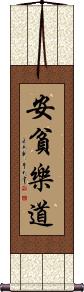
安貧樂道 means “It's better to be happy than rich” in Chinese.
Even if you are poor, you should still feel satisfied in your life...
...Satisfaction, happiness and the meaning of your life come from within yourself and not from money or riches of the world.
In Chinese, there are a lot of four-character proverbs which express some very old philosophies.
Though there are only four characters on this scroll, in Chinese, the meanings often surpass the dictionary definition of each character.
In this case, you should not set your expectations too high for the money or riches you wish to have. One who sets their expectations too high is almost always disappointed. Instead, you should cherish what you have, seek to improve yourself from within, and not measure your worth by the size of your bank account.
You May Learn from Victory, You Will Learn from Failure
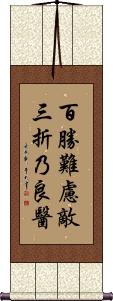
百胜难虑敌三折乃良医 is a Chinese proverb that literally translates as: [Even a general who has won a] hundred victories [may be] hard put to see through the enemy's [strategy], [but one who has] broken [his] arm three [times] [will] be a good doctor.
Figuratively, this means: One cannot always depend on past successes to guarantee future success but one can always learn from lessons drawn from failure.
See Also: Failure - Mother of Success | Experience - Mother of Success | Fall Down 7 Times Get Up 8 | Hard Knocks
Confidence / Faithful Heart
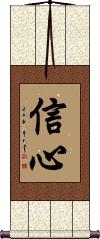
信心 is a Chinese, Japanese, and Korean word that means confidence, faith, or belief in somebody or something.
The first character means faith, and the second can mean heart or soul. Therefore, you could say this means “faithful heart” or “faithful soul.”
In Korean especially, this word has a religious connotation.
In the old Japanese Buddhist context, this was a word for citta-prasāda (clear or pure heart-mind).
In modern Japan (when read by non-Buddhists), this word is usually understood as “faith,” “belief,” or “devotion.”
See Also: Self-Confidence
Control of Power
Him Cho Chung
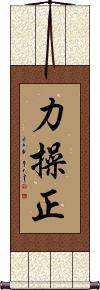
力操正 is a Korean martial arts title meaning “Power Control.”
It's most often cited as one of the 8 key concepts from Tang Soo Do.
This can be pronounced in Chinese but will only be recognized by those familiar with martial arts terms.
I Control My Own Destiny
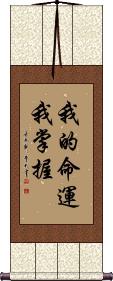
我的命運我掌握 is a way to write “I control my own destiny” in Chinese.
The direct translation is more like, “My destiny, I'm in control.” The meaning is the same, but Chinese grammar and word order vary a bit from English.
There's a few other variations, and if you want any of these, just email me:
我的命运我做主 (wo3 de ming4 yun4 wo3 zuo4 zhu3) "my destiny, I'm in charge"
我的未来我掌握 (wo3 de wei4 lai2 wo3 zhang3 wo4) "my future, I'm in control"
我的未来我做主 (wo3 de wei4 lai2 wo3 zuo4 zhu3) "My future, I'm in charge"
Determination
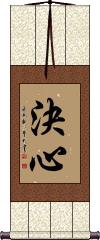
決心 is a Chinese, Japanese, and Korean word that holds the dictionary definition of determination but literally means determined heart.
The first character means to determine or determined.
The second character means heart, mind, or soul, so you can imagine that this form of determination partially means putting your heart into something. It can also be translated as resolve, resolution, or decision (as in a decision made and followed).
See Also: Devotion | Tenacious | Passion | Dedication | Will-Power
A Truly Determined Person Will Find a Solution
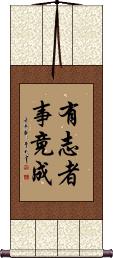
有志者事竟成 is a Chinese proverb that means “A really determined person will find a solution.”
It figuratively means “Where there's a will, there's a way.”
Do not fear the task: Cooperation will lead to success
Do not fear strong winds waves; just be sure to row in unison
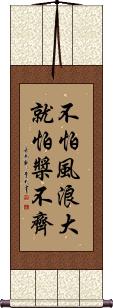
不怕风浪大就怕桨不齐 is a Chinese proverb that literally translates as: Do not fear strong winds [and] high waves; what [one should] worry about whether or not you're rowing in unison.
Figuratively, this means: However difficult the task, the key to success lies in making collective efforts.
I like to translate this as “Don't sweat the details, just get together and get it done.”
The Spirit of the Dragon Horse and Power of a Tiger
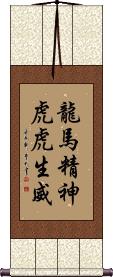
龍馬精神虎虎生威 is an old proverb that is used to wish someone great health and success combined as a great compliment.
The meaning is “The vigor and spirit of the legendary dragon-horse and the power and prestige of the tiger.”
By giving a wall scroll like this to someone, you were either wishing or telling them that they have these qualities. There is also a suggestion of good health - at least anyone with the vigor of a dragon horse would seem to also be in good health.
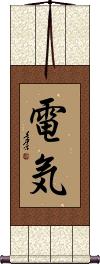
Electricity / Lightning
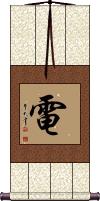
Electricity / Lightning
Exercise
(for body or mind)
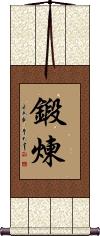
鍛煉/鍛鍊 means to exercise in much the same way we use the word exercise in English.
This can be exercising your body at the gym or exercising your mind in studies. Most of the time, this refers to physical exercise.
This can also be translated as to temper, to toughen, to train, to drill, to forge, or simply discipline.
Free Will
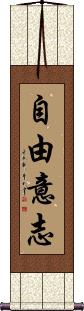
自由意志 is a concept that has existed for thousands of years that humans can understand right and wrong, then make a decision one way or the other (thus affecting their fate).
Sources such as Confucius, Buddhist scriptures, the Qur'an, and the Bible all address this idea.
As for the characters shown here, the first two mean free, freedom, or liberty. The last two mean “will.”
Can be romanized from Japanese as jiyū-ishi, jiyuu-ishi, and sometimes jiyuu-ishii.
It's 자유의지 or jayuu-yiji in Korean and zìyóu yìzhì in Chinese.
See Also: Freedom | Strong Willed | Fate
Girl Power / Woman Power
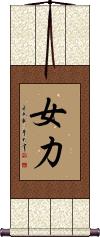
This can be read as “girl power,” “woman power,” “women empowerment” or “female strength.”
女力 is kind of a strange or unofficial title in Chinese and Japanese. At least, it's not common for a wall scroll.
This should be “onna ryoku” in Japanese but I found some who suggest it should be “me riki.”
Good Intentions / Good Will / Good Faith
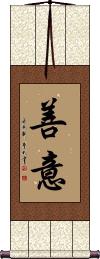
善意 is a word that means good intentions, goodwill, or to things done in good faith in Chinese, Japanese, and old Korean Hanja.
It's the reason you do good deeds or the desire you have inside yourself to do the right thing.
This can also be translated as benevolence, kindness, virtuous mind, positive mindset, or favorable sense.
善意 is also used in the legal context for things done in good faith (regardless of outcome).
In Japanese, this can be the personal name Yoshi or Yoshii.
Indomitable / Persistence / Fortitude
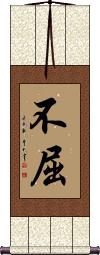
不屈 is the short form of a longer Chinese word and also a word used in Korean and Japanese to express the idea of being indomitable. It literally means “will not bend,” “will not crouch,” “will not yield,” “will not flinch,” or “will not submit.”
Note: Some will translate this as “indomitable spirit”; however, technically, there is no character to suggest the idea of “spirit” in this word.
Indomitable / Unyielding
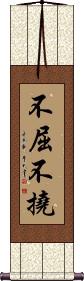
不屈不撓 means “Indomitable” or “Unyielding.”
不屈不撓 is a long word by Chinese standards. At least, it is often translated as a single word into English. It's actually a proverb in Chinese.
If you want to break it down, you can see that the first and third characters are the same. Both mean “not” (they work as a suffix to make a negative or opposite meaning to whatever character follows).
The second character means “bendable.”
The last means “scratched” or “bothered.”
So this really means “Won't be bent, can't be bothered.” I have also seen it written as “Will not crouch, will not submit.” This comes from the fact that the second character can mean “to crouch” and the last can mean “to submit” (as in “to give in” such as “submitting to the rule of someone else”). This may explain better why these four characters mean “indomitable.”
Notes:
Some will translate this as “indomitable spirit”; however, technically, there is no character to suggest the idea of “spirit” in this word.
Other translations include indefatigability, indomitableness, or unremitting tenacity.
The first two characters can be stand-alone words in Chinese.
In Japanese, this is considered two words (with very similar meanings). It's more common to see the word order flipped to 不撓不屈 in Japanese.
The same characters are used in old Korean Hanja. Just like in Japanese, the words are swapped to 不撓不屈 creating a word pronounced “불요불굴” in Korean.
See 不撓不屈
Indomitable Spirit
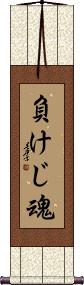
負けじ魂 is a Japanese proverb that means “indomitable spirit” or “unyielding spirit.”
Note: Because this selection contains some special Japanese Hiragana characters, it should be written by a Japanese calligrapher.
Indomitable Spirit
Korean Only
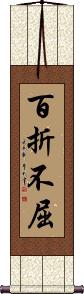
百折不屈 is a Korean proverb that means “indomitable spirit,” at least, that is the way it is commonly translated in martial arts circles (Taekwondo, Hapkido, etc.).
The literal translation is “[one] hundred [times] broken [still] don't succumb.”
Or more naturally translated, “Even if attacked/beaten one hundred times, still be undaunted/indomitable.”
Notes:
Some will say this is one long word rather than a proverb.
This is also a proverb/word in Chinese though rarely used in modern times.
Inner Strength / Self-Improvement
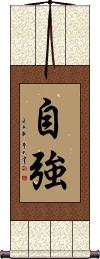
自強 is the kind of inner strength that applies to a person who has will-power and can inspire themselves to do great things.
自強 can also be the creed of a person that always pursues self-improvement.
Other translations: self-strengthening, striving for improvement, self-improvement, striving to become stronger, and self-renewal.
Jiko no Kansei / Self-Completion
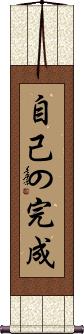
自己の完成 or Jiko no Kansei is a Japanese phrase that means self-completion, self-accomplishment, or self-perfection.
Juggernaut / Absolute Power
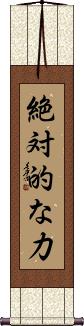
絶対的な力 is a long Japanese word that means “Absolute Power.”
By those terms, this is roughly the Japanese equivalent of “juggernaut.”
One Justice Can Overpower 100 Evils
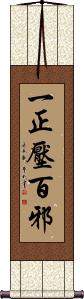
一正压百邪 is an ancient Chinese proverb and idiom that means “One Justice Can Overpower a Hundred Evils.”
While this proverb is famous in China, it has been around so long that its origins have been forgotten.
It could be something that Confucius or one of his disciples said, but no one can say for sure.
Kensho - Initial Enlightenment
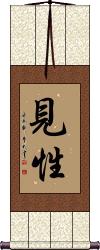
見性 has the same meaning as Satori but refers to the initial state or initial experience of enlightenment.
This can also mean “self-discovery,” “self-awareness,” or “consciousness of one's character.”
In a very religious context, this means to behold the Buddha nature within oneself.
This term is exclusively used by devout Buddhists. It is not a common term, and is remains an unknown concept to most Japanese and Chinese people. Some Japanese people will dispute whether this title is valid in the Japanese language. Only order this if you are sure this title is right for you.
See Also: Buddhism | Enlightenment
Know Thy Enemy, Know Thyself
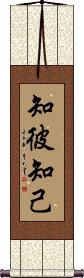
This proverb is from Sun Tzu's (Sunzi's) Art of War.
It means that if you know and understand the enemy, you also know yourself. Four secondary characters come after this in the Art of War (not included here) which suggests you cannot lose a battle when you follow this philosophy.
In a very literal and somewhat-boring way, this can also be translated as “Estimate correctly one's strength as well as that of one's opponent.”
Know Thy Enemy, Know Thyself
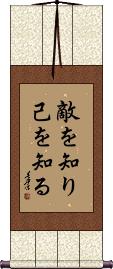
敵を知り己を知る is the Japanese version of “know your enemy, know yourself.”
There is a longer version of this proverb that adds, “...and you can win 100 battles.”
Note: Because this selection contains some special Japanese Hiragana characters, it should be written by a Japanese calligrapher.
You May Learn from Victory, You Will Learn from Failure
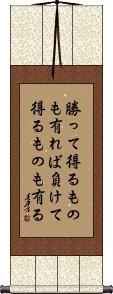
You may learn when everything goes right but the lessons learned when everything goes wrong are more vivid and lead to long-lasting wisdom.
Another way to look at this: One cannot always depend on past successes to guarantee future success but one can always learn from lessons drawn from failure.
Note: Because this selection contains some special Japanese Hiragana characters, it should be written by a Japanese calligrapher.
Love Will Find A Way
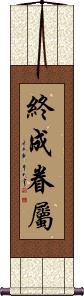
終成眷屬 is a Chinese proverb that translates roughly as “Love will find a way to come together.”
Love Will Find A Way
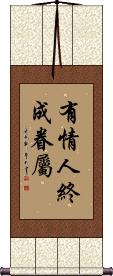
有情人終成眷屬 is the long version of the Chinese proverb that translates as “Where there are lovers, love will find a way (to come together).”
Moderation / Temperance
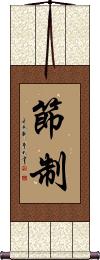
節制 means moderation or temperance in Chinese, Japanese Kanji, and old Korean Hanja.
Moderation is creating a healthy balance in your life between work and play, rest and exercise. You don't overdo or get swept away by the things you like. You use your self-discipline to take charge of your life and your time.
節制 can also be translated as sobriety or self-restraint.
This is often used as part of the Seven Heavenly Virtues to represent sobriety and/or temperance.
Where There is a Will, There is a Way
A determined effort can move a mountain
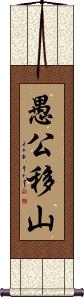
愚公移山 is the Chinese proverb (also somewhat known in Japan and Korea) for “the silly old man moves a mountain.”
Figuratively, this means “where there's a will, there's a way.”
Based on a fable of Lord Yu (愚公). He moved the soil of the mountain in front of his house. After years of effort, he finally moved the entire mountain (some versions of the story have God seeing how determined the man was, and sending two angels to whisk the mountains away).
The moral of the story: Anything can be accomplished if one works at it ceaselessly.
The Japanese version of this is 愚公山を移す (gu kou yama wo utsu su). But better to get the Chinese version, since this is originally a Chinese proverb.
See Also: Nothing is Impossible
Perseverance
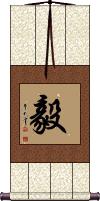
毅 is the simplest way to express perseverance in Chinese and Korean Hanja.
This single-character version leaves a bit of mystery about what kind of perseverance you might want to convey.
In Korean, this is usually associated with “strength of character.”
In Japanese, this character can be pronounced in a dozen different ways (so we have left out the Japanese pronunciation guide that normally appears above). In Japanese, this Kanji would usually be translated as “strong” (perhaps strong-willed).
Great Power
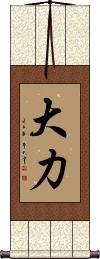
大力 can mean immense physical strength or great power.
This can also act as an adjective for expressing how energetically or vigorously something is.
This can also be a given name, Dairiki, in Japanese.
Power of Understanding and Wisdom
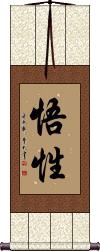
悟性 means the power of understanding and insight in Chinese.
It is often associated with Neo-Confucianism. In that regard, it means to realize, perceive, or have the perception of man's true nature. It can also mean finding your soul, the soul of others, or the soul of the world. Some will translate this simply as the state of being “savvy.”
In Japanese, this is often translated as wisdom and understanding.
Pride
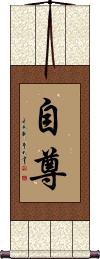
自尊 can mean “pride,” “self-respect,” or “self-esteem.” The first character means “oneself,” and the second can mean revered, valuable, precious, noble, exalted, honorable, or simply “pride.”
I have also seen this two-character word translated as “amour propre,” self-regard, and self-pride.
自尊 is universal between Chinese, Japanese Kanji, and Korean Hanja written languages. It may also be understood in old Vietnamese (they once used Chinese characters as well).
Prideful Mind / Self-Respecting Heart
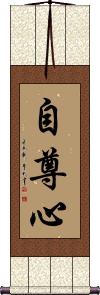
自尊心 is a Japanese and Korean word that means “pride” or “self-respect.”
The first Kanji/Hanja means oneself. The second can mean revered, valuable, precious, noble, or exalted. And the last Kanji/Hanja means heart, mind, and/or spirit.
While these characters make sense and hold the same general meaning in Chinese, this is not a normal Chinese word. This selection should only be used if your audience is Japanese or Korean.
See Also: Respect | Pride | Self-Reliance | Self-Control | Self-Discipline
Psychic Energy
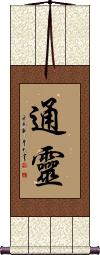
通靈 is used to speak of something with supernatural essence, psychic power, or magical power in Chinese.
Psychic Power
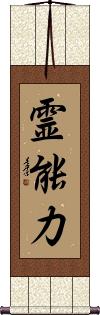
霊能力 is a word that means psychic power or spiritual ability in Japanese.
You may recognize the first character, 霊 (rei), is the same as the first Kanji in the word reiki. It means spirit or spiritual, but in this context can also mean psychic.
能力 can mean ability, capacity, or power.
Self-Love / Love Yourself / Love Oneself
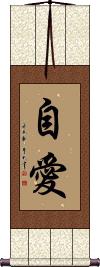
自愛 means self-love, self-regard, regard for oneself, cherishing one's good name, taking care of oneself, or love myself.
In the Buddhist context, this is the cause of all pursuit or seeking, which in turn causes all suffering. All Buddhas discharge themselves from self-love and all pursuits of personal gratification. Such elimination of self-love is a step towards nirvāṇa.
This title can be taken as positive or negative, depending on how you read it. Some will see it as arrogant, and others will read it as a token of self-respect. Because of this ambiguity, I do not recommend this title for a wall scroll.
Introspection / Self-Awareness
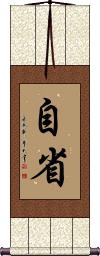
自省 is the Chinese, Japanese Kanji, and old Korean Hanja means: to examine oneself; to reflect on one's shortcomings; introspection; self-awareness; self-criticism; self-examination; reflection.
In Japanese, this can be the given name, Jisei.
Changing Oneself / Self Reformation
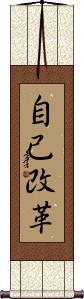
自己改革 is a Japanese title that refers to one who changes themselves or improves themselves by reforming their lives.
Another way to translate it is “A person who changes their attitude or something about themselves.”
Self-Reliance
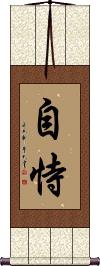
自恃 means self-reliance but is often used to mean self-confidence or the state of being self-assured.
Basically, this means you can rely on yourself (with a slight suggestion that others can rely on you as well).
The first character means “oneself,” while the second means “to rely upon.”
See Also: Confidence | Self-Confidence
Self Sacrifice
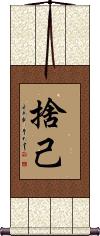
捨己 is a Chinese and Japanese word that means selfless, self-sacrifice (to help others), self-renunciation, or altruism.
Self-Confidence
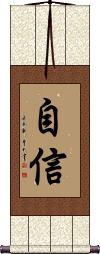
自信 is created by simply putting the character for “faith/believe/confidence” with the character for “oneself” in front of it.
The literal translation holds the same meaning in English, Chinese, and Japanese.
It's like a self-affirmation to say, “you can do it.”
Some may also use this to mean self-esteem or a sense of self-worth. 自信 is also how to say “believe in oneself.”
See Also: Confidence
Self-Confidence
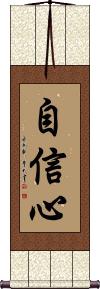
自信心 is the long title for self-confidence.
It differs from the other version, only with the addition of the character for heart or soul at the end. With that addition, you could say this means a self-confident heart.
See Also: Confidence
Consciousness of Self
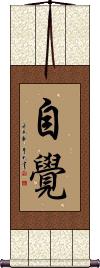
自覺 is the idea of being conscious, self-aware, and sometimes “on one's own initiative.”
 After WWII, they started using a simplified form of the second Kanji for this word in Japan. That version is shown to the right, and you can click on that Kanji if you want the modern Japanese form. Otherwise, the characters shown in the upper left are the correct ones for ancient/old/traditional Chinese, Japanese, and Korean.
Self Consciousness
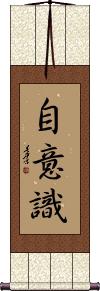
自意識 is the idea of being conscious and self-aware in Japanese Kanji and old Korean Hanja.
This is not a normal word in Chinese.
Self-Defense
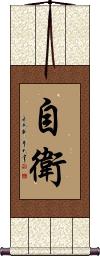
Self-Improvement
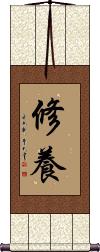
修養 means self-improvement in Chinese, Japanese Kanji, and old Korean Hanja.
Other translations for this word include accomplishment, training, self-cultivation, (mental) training, self-discipline, cultivation, or cultivating moral character.
Self-Respect / Self-Esteem
自尊 means self-respect or self-esteem in Chinese, Korean and Japanese. It can also mean “pride in oneself.”
Note: Japanese sometimes put the character for the heart after these two. However, this two-character word is universal between all three languages (which is often better since more than a third of the world's population can read this version as a native word).
Power of Oneself / Self-Sufficient
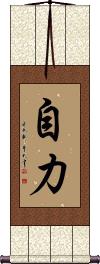
自力 is a word in Chinese, Japanese Kanji, old Korean, and Buddhist term meaning: the power within oneself; self-sufficient; by oneself; self-made; self-power; inner ability.
Self Actualization
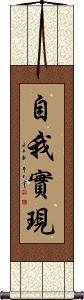
自我實現 is the Chinese and old Korean Hanja title for self-actualization or self-realization.
Self Actualization
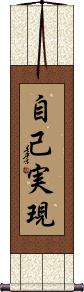
自己実現 is the Japanese title for self-actualization, self-fulfillment, or self-realization.
Self Awareness Becomes a Buddha
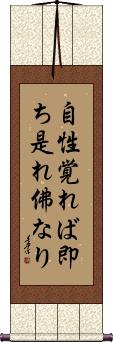
自性覚れば即ち是れ佛なり is a Zen quote that means “If one realizes one's own nature, one becomes a Buddha.”
The inference here is that if you understand who you really are, and become truly aware of yourself and your original nature, you are well on your way to becoming a liberated person (a Buddha).
Note: Because this selection contains some special Japanese Hiragana characters, it should be written by a Japanese calligrapher.
Speed Control
Wan Geub
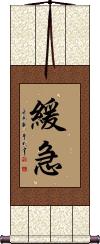
緩急 is often used as a Korean martial arts term, “speed control.” It's also one of the 8 key concepts of Tang Soo Do.
In other contexts, this can mean priority, pace, tempo, or slow and fast.
Standing by Oneself / Walking by Oneself
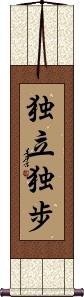
獨立獨步 is a Japanese proverb that, Dokuritsu-Doppo, is an indication of independence, self-reliance, standing on one's own two feet, or making one's way in life.
Strength / Vigor / Energy
Physical Strength
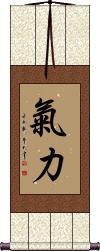
氣力 can mean any of the words in the title above, and in some contexts, can also mean effort, will-power, or talent.
This refers mostly to physical strength (as opposed to mental or spiritual).
 In modern Japan, they use a simplified first character for this word. If you want to order this title with that special Japanese version, click on the character to the right instead of the button above.
Power / Strength
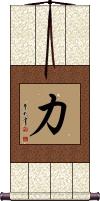
力 is the simplest form of “power” or “strength.”
In Japanese, it is pronounced “chikara” when used alone, and “ryoku” when used in a sentence (there are also a few other possible pronunciations of this Kanji in Japanese).
In some contexts, this can mean ability, force, physical strength, capability, and influence.
Always Striving for Inner Strength
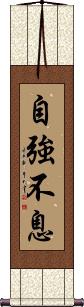
自強不息 is a proverb or idiom that suggests that the pursuit of self-improvement is eternal. It can also be a suggestion to strive unremittingly in life.
The first two characters mean inner strength with the idea of self-improvement. The last two characters mean “never rest” or “striving without giving up.”
Some will translate these four characters as “Exert and strive hard without any let-up.”
Strong / Powerful / Force
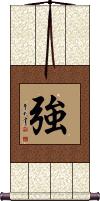
強 is a character that means strong, strength, force, powerful, better, stubborn, and stiff (yes, all of this in one character).
This “strong” has less to do with physical strength and more to do with having a winning attitude, or just having the ability to win at something.
Note that most of the time, this character is pronounced “qiang” but when used with the meaning of stubborn, unyielding, or stiff, it is pronounced “jiang” in Chinese.
Also, sometimes “qiang” is used in modern Chinese to describe people that do crazy things (For example: Bicycling from Beijing to Tibet alone). I sometimes can be found outside my Beijing apartment wearing nothing but shorts and a tee-shirt while eating ice cream during a snow storm, just to hear my neighbors call me “qiang.” Maybe they mean “strong” but perhaps they are using the new meaning of “crazy strong.”
強 can also be a Chinese surname that romanizes as Jiang in the mainland or Chiang if from Taiwan.
強 is a valid Korean Hanja character with the same meaning but is mostly used in compound Korean words.
強 is used in Japanese (though normally in compound words). In Japanese, it has the same meaning but in some contexts can mean “a little more than...” or “a little over [some amount].” Most Japanese would read this as tough, strength, stiff, hard, inflexible, obstinate, or stubborn.
The variant 彊 is sometimes seen in older literature.
Strong Hearted / Strong Willed
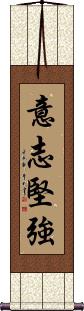
意志堅強 can mean either “strong-hearted,” “strong-willed” or “determination.”
The first two characters can be translated as “will,” “willpower,” “determination,” “volition,” “intention,” or “intent.” But, it should be noted that this first part possesses the element of “heart” in the lower portion of both characters (they also partially carry the meaning “with the whole heart”).
The last two characters mean “strong” or “staunch.”
Chinese word order and grammar are a bit different than English, so in this case, they are in reverse order of English but have the correct meaning in a natural form.
See Also: Strong Willed | Discipline | Will-Power
Supernatural Energy
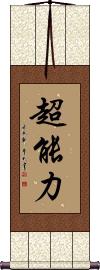
超能力 is a word that is used in both Japanese and Chinese to refer to the ability to comprehend supernatural power.
Some may translate this as psychic ability, psychic power, ESP, or PSI.
Temperance
In short, 節制 or temperance is knowing when to say “when.”
Temperance is the practice of moderation and restraint (in fact, this Asian word is often translated as moderation or restraint).
It was one of the five tenets held to be vital to society in Hellenic culture. It is also one of the Four Cardinal Virtues considered central to Christian behavior by the Catholic Church.
Note: Also considered to be one of the Seven Heavenly Virtues.
To thine own self be true
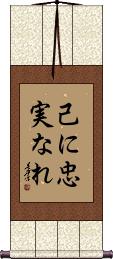
己に忠実なれ is “...to thine own self be true” in Japanese.
This is a small portion of the classic line from Shakespeare's Hamlet.
Note: Because this selection contains some special Japanese Hiragana characters, it should be written by a Japanese calligrapher.
Training / Drill
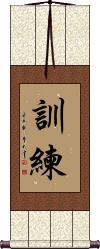
If training or drill is important to you (especially for military drill and training), 訓練 might be just the thing for a drill master to hang behind his/her desk.
This term is universal in Chinese, Japanese Kanji, and old Korean Hanja. It can also mean practice or exercise, depending on context.
To a Willing Heart, All Things Are Possible
Where there is a will, there is a way
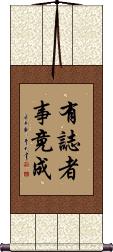
有志者事竟成 is an old Chinese proverb that has been translated many different ways into English. As you read the translations below, keep in mind that in Chinese, heart=mind.
Nothing is impossible to a willing heart.
Nothing is impossible to a willing mind.
Nothing is difficult to a willing heart.
Where there is a will, there is a way.
Nothing in the world is impossible if you set your mind to doing it.
A willful man will have his way.
If you wish it, you will do it.
A determined heart can accomplish anything.
All things are possible with a strong mind.
Where there’s a will there’s a way
persevere and you will succeed
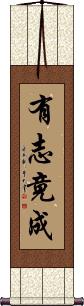
有志竟成 is a Chinese proverb that means “persevere and you will succeed.”
It's very much like the English idiom, “where there's a will, there's a way.”
Where There is a Will, There is a Way
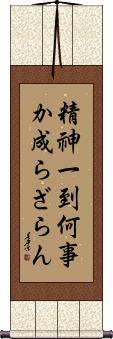
精神一到何事か成らざらん is a Japanese expression that means “Where there is a will, there is a way. There are other Japanese phrases with similar meanings but this one is the most commonly used (according to the number of results on Japanese Google).
This can also be romanized as “seshinittonanigotokanarazaran.”
Note: Because this selection contains some special Japanese Hiragana characters, it should be written by a Japanese calligrapher.
Stay Strong / Iron Will
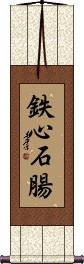
鉄心石腸 is a Japanese proverb that suggests you should have the inner-strength and will as hard and steadfast as iron.
It's the Japanese way of saying, “stay strong.” This is an especially uplifting thing to say to a person in distress or recovering from a disaster. It's kind of the survivor's creed.
If you literally translate this, it means “iron will, stone guts” or “iron heart, rock-hard bowels.”
Will
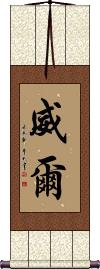
威爾 is the name Will in Chinese (Mandarin).
Will
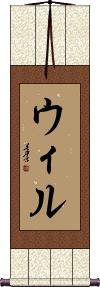
ウィル is the name Will in Japanese.
Note: Because this title is entirely Japanese Katakana, it should be written by a Japanese calligrapher.
Will of Fire
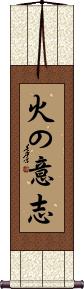
火の意志 or the “Will of Fire” is an element from the Naruto series.
The word order in Japanese makes this more like “Fire's Will.”
火 is fire.
の is a possessive article.
意志 means will, volition, intention, or intent.
A Wise Man Changes His Mind (but a fool never will)
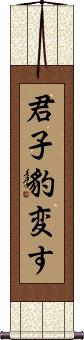
君子豹変す is a Japanese proverb that suggests that a wise man is willing to change his mind, but a fool will stubbornly never change his.
The first word is 君子 (kunshi), a man of virtue, a person of high rank, a wise man.
The second word is 豹変 (hyouhen), sudden change, complete change.
The last part, す (su), modifies the verb to a more humble form.
The “fool” part is merely implied or understood. So if wise and noble people are willing to change their minds, it automatically says that foolish people are unwilling to change.
Unyielding Self-Reliance

不屈自律 can be translated as “Indomitable Self-Discipline,” “Tenacious Self-Control,” or “Unyielding Self-Discipline.”
In martial contexts, this phrase is often used as a motto emphasizing mindset, conduct, or training attitude.
The following table may be helpful for those studying Chinese or Japanese...
| Title | Characters | Romaji (Romanized Japanese) | Various forms of Romanized Chinese | |
| Perseverance Will-Power | 毅力 | yì lì / yi4 li4 / yi li / yili | i li / ili | |
| Self-Discipline Will-Power | 自律 | jiritsu | zì lǜ / zi4 lv4 / zi lv / zilv | tzu lü / tzulü |
| Determination to Achieve Will-Power | 意志 | ishi | yì zhì / yi4 zhi4 / yi zhi / yizhi | i chih / ichih |
| Will-Power Self-Control | 意志力 | ishi ryoku / ishiryoku | yì zhì lì yi4 zhi4 li4 yi zhi li yizhili | i chih li ichihli |
| Discipline | 紀律 纪律 | jì lǜ / ji4 lv4 / ji lv / jilv | chi lü / chilü | |
| Discipline | 規律 规律 | kiritsu | guī / gui1 lu:4 / gui lu: / guilu: | kuei lü / kueilü |
| Discipline Training Tempering Character | 磨練 / 磨鍊 / 磨鍊 磨练 | mó liàn / mo2 lian4 / mo lian / molian | mo lien / molien | |
| Discipline | 鍛練 / 鍛錬 锻练 | tan ren / tanren | duàn liàn duan4 lian4 duan lian duanlian | tuan lien tuanlien |
| Love Your Children, But Discipline Them Too | 愛在心里狠在面皮 / 愛在心里狠在麵皮 爱在心里狠在面皮 | ài zài xīn lǐ hèn zài miàn pì ai4 zai4 xin1 li3 hen4 zai4 mian4 pi4 ai zai xin li hen zai mian pi aizaixinlihenzaimianpi | ai tsai hsin li hen tsai mien p`i ai tsai hsin li hen tsai mien pi |
|
| Military Discipline | 軍紀 军纪 | gun ki / gunki | jūn jì / jun1 ji4 / jun ji / junji | chün chi / chünchi |
| Self-Control | 自制 | jisei | zì zhì / zi4 zhi4 / zi zhi / zizhi | tzu chih / tzuchih |
| Self-Control | 自己抑制 | jikoyokusei | zì jǐ yì zhì zi4 ji3 yi4 zhi4 zi ji yi zhi zijiyizhi | tzu chi i chih tzuchiichih |
| Self-Restraint Self-Control | 克己 / 剋己 克己 | kokki / koki | kè jǐ / ke4 ji3 / ke ji / keji | k`o chi / kochi / ko chi |
| Well-Disciplined Orderly | 嚴整 严整 | yán zhěng yan2 zheng3 yan zheng yanzheng | yen cheng yencheng |
|
| Self-Discipline and Martial Virtue | 克己武術 | kokki bu jutsu kokkibujutsu koki bu jutsu | kè jǐ wǔ shù ke4 ji3 wu3 shu4 ke ji wu shu kejiwushu | k`o chi wu shu kochiwushu ko chi wu shu |
| Self-Discipline Martial Arts | 克己武道 | kokki bu dō kokkibudō koki bu dō | kè jǐ wǔ dào ke4 ji3 wu3 dao4 ke ji wu dao kejiwudao | k`o chi wu tao kochiwutao ko chi wu tao |
| ...And this above all to thine own self be true | 尤其要緊的你必須對你自己忠實 尤其要紧的你必须对你自己忠实 | yóu qí yào jǐn de nǐ bì xū duì nǐ zì jǐ zhōng shí you2 qi2 yao4 jin3 de ni3 bi4 xu1 dui4 ni3 zi4 ji3 zhong1 shi2 you qi yao jin de ni bi xu dui ni zi ji zhong shi | yu ch`i yao chin te ni pi hsü tui ni tzu chi chung shih yu chi yao chin te ni pi hsü tui ni tzu chi chung shih |
|
| Better to be Happy than Rich | 安貧樂道 安贫乐道 | ān pín lè dào an1 pin2 le4 dao4 an pin le dao anpinledao | an p`in le tao anpinletao an pin le tao |
|
| You May Learn from Victory, You Will Learn from Failure | 百勝難慮敵三折乃良醫 百胜难虑敌三折乃良医 | bǎi shèng nán lǜ dí sān zhé nǎi liáng yī bai3 sheng4 nan2 lv4 di2 san1 zhe2 nai3 liang2 yi1 bai sheng nan lv di san zhe nai liang yi | pai sheng nan lü ti san che nai liang i | |
| Confidence Faithful Heart | 信心 | shin jin / shinjin | xìn xīn / xin4 xin1 / xin xin / xinxin | hsin hsin / hsinhsin |
| Control of Power | 力操正 | lì cào zhèng li4 cao4 zheng4 li cao zheng licaozheng | li ts`ao cheng litsaocheng li tsao cheng |
|
| I Control My Own Destiny | 我的命運我掌握 我的命运我掌握 | wǒ de mìng yùn wǒ zhǎng wò wo3 de ming4 yun4 wo3 zhang3 wo4 wo de ming yun wo zhang wo wodemingyunwozhangwo | wo te ming yün wo chang wo wotemingyünwochangwo |
|
| Determination | 決心 决心 | kesshin / keshin | jué xīn / jue2 xin1 / jue xin / juexin | chüeh hsin / chüehhsin |
| A Truly Determined Person Will Find a Solution | 有志者事竟成 | yǒu zhì zhě shì jìng chéng you3 zhi4 zhe3 shi4 jing4 cheng2 you zhi zhe shi jing cheng youzhizheshijingcheng | yu chih che shih ching ch`eng yuchihcheshihchingcheng yu chih che shih ching cheng |
|
| Do not fear the task: Cooperation will lead to success | 不怕風浪大就怕槳不齊 不怕风浪大就怕桨不齐 | bù pà fēng làng dà jiù pà jiǎng bù qí bu4 pa4 feng1 lang4 da4 jiu4 pa4 jiang3 bu4 qi2 bu pa feng lang da jiu pa jiang bu qi | pu p`a feng lang ta chiu p`a chiang pu ch`i pu pa feng lang ta chiu pa chiang pu chi |
|
| The Spirit of the Dragon Horse and Power of a Tiger | 龍馬精神虎虎生威 龙马精神虎虎生威 | lóng mǎ jīng shén hǔ hǔ shēng wēi long2 ma3 jing1 shen2 hu3 hu3 sheng1 wei1 long ma jing shen hu hu sheng wei | lung ma ching shen hu hu sheng wei | |
| Electricity Lightning | 電 电 | den | diàn / dian4 / dian | tien |
| Electricity Lightning | 電氣 電気 | den ki / denki | ||
| Exercise | 鍛煉 / 鍛鍊 锻炼 | duàn liàn duan4 lian4 duan lian duanlian | tuan lien tuanlien |
|
| Free Will | 自由意志 | jiyuu ishi / jiyuuishi / jiyu ishi | zì yóu yì zhì zi4 you2 yi4 zhi4 zi you yi zhi ziyouyizhi | tzu yu i chih tzuyuichih |
| Girl Power Woman Power | 女力 | onna ryoku / onnaryoku | nǚ lì / nv3 li4 / nv li / nvli | nü li / nüli |
| Good Intentions Good Will Good Faith | 善意 | zen i / zeni | shàn yì / shan4 yi4 / shan yi / shanyi | shan i / shani |
| Indomitable Persistence Fortitude | 不屈 | fukutsu | bù qū / bu4 qu1 / bu qu / buqu | pu ch`ü / puchü / pu chü |
| Indomitable Unyielding | 不屈不撓 不屈不挠 | fu kutsu fu tou fukutsufutou fu kutsu fu to | bù qū bù náo bu4 qu1 bu4 nao2 bu qu bu nao buqubunao | pu ch`ü pu nao puchüpunao pu chü pu nao |
| Indomitable Spirit | 負けじ魂 | ma ke ji damashii makejidamashii ma ke ji damashi | ||
| Indomitable Spirit | 百折不屈 | bǎi shé bù qū bai3 she2 bu4 qu1 bai she bu qu baishebuqu | pai she pu ch`ü paishepuchü pai she pu chü |
|
| Inner Strength Self-Improvement | 自強 自强 | zì qiáng / zi4 qiang2 / zi qiang / ziqiang | tzu ch`iang / tzuchiang / tzu chiang | |
| Jiko no Kansei Self-Completion | 自己の完成 | ji ko no kan sei jikonokansei | ||
| Juggernaut Absolute Power | 絶対的な力 | zettai-tekina chikara zettai-tekinachikara | ||
| One Justice Can Overpower 100 Evils | 一正壓百邪 一正压百邪 | yī zhèng yā bǎi xié yi1 zheng4 ya1 bai3 xie2 yi zheng ya bai xie yizhengyabaixie | i cheng ya pai hsieh ichengyapaihsieh |
|
| Kensho - Initial Enlightenment | 見性 见性 | ken shou / kenshou / ken sho | jiàn xìng jian4 xing4 jian xing jianxing | chien hsing chienhsing |
| Know Thy Enemy, Know Thyself | 知彼知己 | zhí bǐ zhí jī zhi2 bi3 zhi2 ji1 zhi bi zhi ji zhibizhiji | chih pi chih chi chihpichihchi |
|
| Know Thy Enemy, Know Thyself | 敵を知り己を知る | te ki o shi ri o no re o shi ru tekioshirionoreoshiru | ||
| You May Learn from Victory, You Will Learn from Failure | 勝って得るものも有れば負けて得るものも有る | katte erumono mo areba makete erumono mo aru | ||
| Love Will Find A Way | 終成眷屬 终成眷属 | zhōng chéng juàn shǔ zhong1 cheng2 juan4 shu3 zhong cheng juan shu zhongchengjuanshu | chung ch`eng chüan shu chungchengchüanshu chung cheng chüan shu |
|
| Love Will Find A Way | 有情人終成眷屬 有情人终成眷属 | yǒu qíng rén zhōng chéng juàn shǔ you3 qing2 ren2 zhong1 cheng2 juan4 shu3 you qing ren zhong cheng juan shu | yu ch`ing jen chung ch`eng chüan shu yu ching jen chung cheng chüan shu |
|
| Moderation Temperance | 節制 节制 | sessei / sesei | jié zhì / jie2 zhi4 / jie zhi / jiezhi | chieh chih / chiehchih |
| Where There is a Will, There is a Way | 愚公移山 | yū gōng yí shān yu1 gong1 yi2 shan1 yu gong yi shan yugongyishan | yü kung i shan yükungishan |
|
| Perseverance | 毅 | see note / seenote / se note | yì / yi4 / yi | i |
| Great Power | 大力 | dai riki / dairiki | dà lì / da4 li4 / da li / dali | ta li / tali |
| Power of Understanding and Wisdom | 悟性 | gosei | wù xìng / wu4 xing4 / wu xing / wuxing | wu hsing / wuhsing |
| Pride | 自尊 | jison | zì zūn / zi4 zun1 / zi zun / zizun | tzu tsun / tzutsun |
| Prideful Mind Self-Respecting Heart | 自尊心 | ji son shin jisonshin | zì zūn xīn zi4 zun1 xin1 zi zun xin zizunxin | tzu tsun hsin tzutsunhsin |
| Psychic Energy | 通靈 通灵 | tōng líng tong1 ling2 tong ling tongling | t`ung ling tungling tung ling |
|
| Psychic Power | 霊能力 | reinouryoku reinoryoku | ||
| Self-Love Love Yourself Love Oneself | 自愛 自爱 | ji ai / jiai | zì ài / zi4 ai4 / zi ai / ziai | tzu ai / tzuai |
| Introspection Self-Awareness | 自省 | jisei | zì xǐng / zi4 xing3 / zi xing / zixing | tzu hsing / tzuhsing |
| Changing Oneself Self Reformation | 自己改革 | ji ko kai kaku jikokaikaku | ||
| Self-Reliance | 自恃 | zì shì / zi4 shi4 / zi shi / zishi | tzu shih / tzushih | |
| Self Sacrifice | 捨己 舍己 | sutemi / suteki | shě jǐ / she3 ji3 / she ji / sheji | she chi / shechi |
| Self-Confidence | 自信 | jishin | zì xìn / zi4 xin4 / zi xin / zixin | tzu hsin / tzuhsin |
| Self-Confidence | 自信心 | zì xìn xīn zi4 xin4 xin1 zi xin xin zixinxin | tzu hsin hsin tzuhsinhsin |
|
| Consciousness of Self | 自覺 自觉 / 自覚 | jikaku | zì jué / zi4 jue2 / zi jue / zijue | tzu chüeh / tzuchüeh |
| Self Consciousness | 自意識 自意识 | jiishiki / jishiki | ||
| Self-Defense | 自衛 自卫 | ji ei / jiei | zì wèi / zi4 wei4 / zi wei / ziwei | tzu wei / tzuwei |
| Self-Improvement | 修養 修养 | shuuyou / shuyo shuyo / shuyo | xiū yǎng / xiu1 yang3 / xiu yang / xiuyang | hsiu yang / hsiuyang |
| Self-Respect Self-Esteem | 自尊 | jison | zì zūn / zi4 zun1 / zi zun / zizun | tzu tsun / tzutsun |
| Power of Oneself Self-Sufficient | 自力 | jiriki | zì lì / zi4 li4 / zi li / zili | tzu li / tzuli |
| Self Actualization | 自我實現 自我实现 | zì wǒ shí xiàn zi4 wo3 shi2 xian4 zi wo shi xian ziwoshixian | tzu wo shih hsien tzuwoshihhsien |
|
| Self Actualization | 自己実現 | jikojitsugen | ||
| Self Awareness Becomes a Buddha | 自性覚れば即ち是れ佛なり | Jishou satore ba sunawachi kore butsu nari Jisho satore ba sunawachi kore butsu nari | ||
| Speed Control | 緩急 缓急 | kankyuu / kankyu | huǎn jí / huan3 ji2 / huan ji / huanji | huan chi / huanchi |
| Standing by Oneself Walking by Oneself | 獨立獨步 独立独步 | do kuritsu do ppo dokuritsudoppo do kuritsu do po | ||
| Strength Vigor Energy | 氣力 气力 / 気力 | kiryoku | qì lì / qi4 li4 / qi li / qili | ch`i li / chili / chi li |
| Power Strength | 力 | chikara / ryoku | lì / li4 / li | |
| Always Striving for Inner Strength | 自強不息 自强不息 | zì qiáng bú xī zi4 qiang2 bu2 xi1 zi qiang bu xi ziqiangbuxi | tzu ch`iang pu hsi tzuchiangpuhsi tzu chiang pu hsi |
|
| Strong Powerful Force | 強 强 | kyou / kyo | qiáng / qiang2 / qiang | ch`iang / chiang |
| Strong Hearted Strong Willed | 意志堅強 意志坚强 | yì zhì jiān qiáng yi4 zhi4 jian1 qiang2 yi zhi jian qiang yizhijianqiang | i chih chien ch`iang ichihchienchiang i chih chien chiang |
|
| Supernatural Energy | 超能力 | chounouryoku chonoryoku | chāo néng lì chao1 neng2 li4 chao neng li chaonengli | ch`ao neng li chaonengli chao neng li |
| Temperance | 節制 节制 | sessei / sesei | jié zhì / jie2 zhi4 / jie zhi / jiezhi | chieh chih / chiehchih |
| To thine own self be true | 己に忠実なれ | onore ni chuujitsu nare onorenichuujitsunare onore ni chujitsu nare | ||
| Training Drill | 訓練 训练 | kunren | xùn liàn / xun4 lian4 / xun lian / xunlian | hsün lien / hsünlien |
| To a Willing Heart, All Things Are Possible | 有志者事竟成 / 有誌者事竟成 有志者事竟成 | yǒu zhì zhě shì jìng chéng you3 zhi4 zhe3 shi4 jing4 cheng2 you zhi zhe shi jing cheng youzhizheshijingcheng | yu chih che shih ching ch`eng yuchihcheshihchingcheng yu chih che shih ching cheng |
|
| Where there’s a will there’s a way | 有志竟成 | yǒu zhì jìng chéng you3 zhi4 jing4 cheng2 you zhi jing cheng youzhijingcheng | yu chih ching ch`eng yuchihchingcheng yu chih ching cheng |
|
| Where There is a Will, There is a Way | 精神一到何事か成らざらん | seishin ittou nanigoto ka nara zaran seishin itto nanigoto ka nara zaran | ||
| Stay Strong Iron Will | 鉄心石腸 | tesshin sekichou tesshinsekichou teshin sekicho | ||
| Will | 威爾 威尔 | wēi ěr / wei1 er3 / wei er / weier | wei erh / weierh | |
| Will | ウィル | wiru | ||
| Will of Fire | 火の意志 | hi no ishi / hinoishi | ||
| A Wise Man Changes His Mind (but a fool never will) | 君子豹変す | kun shi hyou hen su kunshihyouhensu kun shi hyo hen su | ||
| Unyielding Self-Reliance | 不屈自律 | fukutsu-jiritsu | bù qū zì lǜ bu4 qu1 zi4 lv4 bu qu zi lv buquzilv | pu ch`ü tzu lü puchützulü pu chü tzu lü |
| In some entries above you will see that characters have different versions above and below a line. In these cases, the characters above the line are Traditional Chinese, while the ones below are Simplified Chinese. | ||||



