Click on an artwork category below to explore our...
Asian Art Gallery
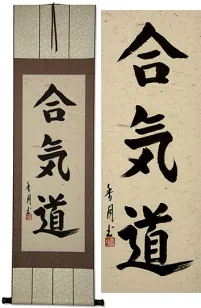
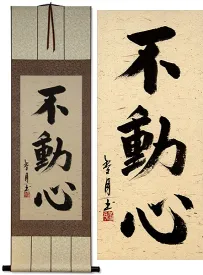
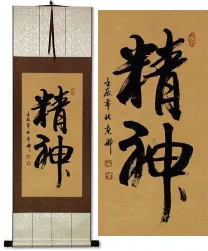
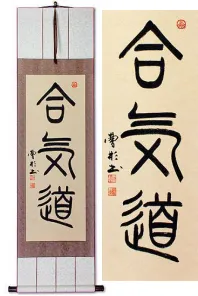
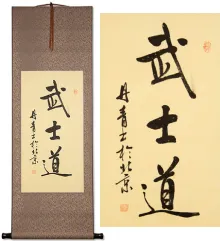
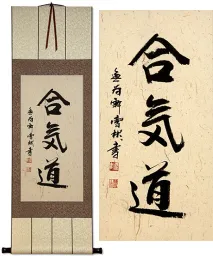
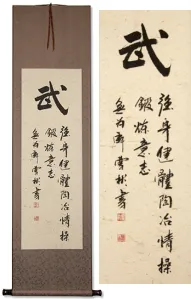
 Chinese and Japanese characters / symbols done by hand to create beautiful Asian calligraphy artwork that you will be proud to hang in your home.
|
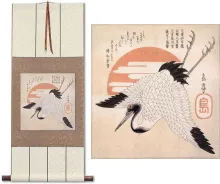
 Beautiful Birds and Flowers Asian Art... Original Paintings and Wall Scrolls from a variety of talented Asian artists.
|
 Japanese, Chinese, and other Asian cultures revere these fish for their beauty.
|
 From the Xiao Meng collection exemplifying a special watercolor technique. Beautiful landscapes depicting the life styles of cranes and other birds in their natural settings.
|
 Many different Asian landscape paintings depicting scenes from the Great Wall of China, to the famous Karst Mountains of the Li River in Southern China.
|
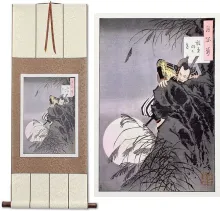
 A unique series of paintings that depict various famous stories and ancient philosophies from China's long history.
|
 The tiger is thought to be the king of all animals, while the dragon has been the symbol of the Emperor and warriors for thousands of years.
|
 Wonderful Chinese bamboo paintings and silk wall scrolls create a traditional and sophisticated look.
|
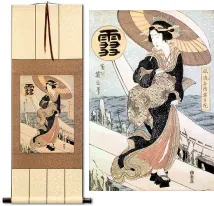
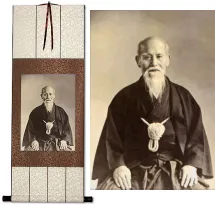
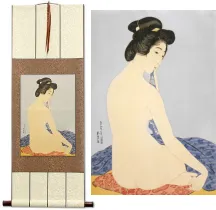
 Portraits and wall scrolls of ancient Chinese warriors, beautiful Asian women and other famous figures in China's history
|
 This collection of folk art depicts the true culture of Southern China from both talented and unique peasant artists.
|
 Mr. Wang spent most of his life as a farmer, hiding his artistic talents during the brutal Cultural Revolution. Now you can freely buy his charcoal artwork / folk art.
|
 Artwork depicting your favorite feline friends. Asian cats and kitten art will delight anyone who loves these furry creatures.
|
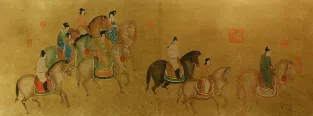
 Horses have played an important part of China's history - especially in the Tang Dynasty. You can see some nice examples of Chinese horse artwork here.
|
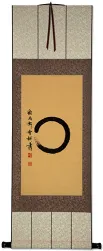
 A style of modern artwork that is uniquely Chinese.
|
|

Gary's random little facts about China:
Is "Oriental" politically correct?
Everyone is going to hate me for this, but here is the truth:
Some people who currently prefer to call themselves "Asian-Americans" woke up one morning and decided that "Oriental" is now a word to be used only for Oriental rugs, Oriental art and lamps, or any other inanimate object from Eastern Asia.
When I was teaching English in China, many of my students would refer to themselves as "Oriental", and I would correct them and say, It's better to say that you are Asian or Chinese rather than Oriental, but I was at a loss as to explain why.
My Chinese students were very smart, and came back at me with the fact that being from Asia was too broad a term, and asked if Persians and Saudi Arabians should also refer to themselves as "Asian".
I then had to make excuses for my geographically-challenged fellow Americans* who had long ago replaced the correct term of "Oriental" (meaning the bio-geographic region including southern Asia and the Malay Archipelago as far as the Philippines, Borneo and Java), and replaced it with "Asian" which in truth encompasses half the world's population - many of whom do not consider themselves to be of the same race as those from the Orient.
(For those Americans reading this and who've slept through their high school geography class: It's true, the whole Middle East, and half of Russia are located in the Asian continent)
But I admit I am not helping the problem. You see, almost half the people that find our website did so while searching for "Asian art" and I have done a lot to promote our business as "Purveyors of Asian art". So you can blame me too.
To truly be an Asian art gallery, we would have to offer artwork from beyond the Orient, from places like India, Persia (Iran), most Arab nations, and Russia.
Notes:
There are a lot of things that present problems in the English language.
Usually these problems are thanks to mistakes of the past.
That's why we have to say, "He's an Indian from India" versus "He's a Native-American Indian" (Thanks to Mr. Columbus).
Things to learn:
Do not refer to a Persian (Iranian) as Arab.
If you refer to an Arab-American as being Asian, they will look at you funny and possibly be offended.
If you refer to a person from India as Asian, you will mildly amuse them.
If you refer to a Russian as being Asian, they will pour borsch on you (my ex-wife is Russian, so I know this to be true from experience).
Using "Asian" to refer to a person from Singapore is okay, but they will later, as if by accident, mention that they are in fact from the most civilized country in Asia.
*We citizens of the USA call ourselves "Americans" which seems a bit arrogant to our neighbors who reside on the continents of North and South America. Keep in mind, Canadians and Mexicans are also from North America, but refer to themselves in more correct geographic terms.
If this is not what you are looking for, here are some useful links to other sources of information about Asian Art...
AsianArt.com
Asian Arts, the on-line journal for the study and exhibition of the arts of Asia.
The Asian Art Museum of San Francisco
The Asian Art Museum of San Francisco is one of the largest museums in the Western world devoted exclusively to Asian art. Its holdings include nearly 15,000 treasures spanning 6,000 years of history, representing cultures throughout Asia. The museum's mission is to lead a diverse global audience in discovering the unique material, aesthetic, and intellectual achievements of Asian art and culture.
Art History Resources: Asian Art
History and timelines of Asian Art through the ages. Information about Asian Art from China, Japan, Korea, and elsewhere in Asia.
Asian Art in London Event
Asian Art in London is a premier event, now in its seventh year, incorporating major London Asian Antique dealers and Auction Houses, together with England's finest Institutions, for a series of exhibitions, auctions, sales and lectures.
A Brief History of Asian Art:
The history of Chinese culture spans some 6000 years. The history of art in Asia is almost as long, though very few examples have survived from much past 3000 years ago. I think the art actually begins with the written language. Chinese characters began thousands of years ago as simple pictures or pictographs. Over time, these little pieces of art evolved into the Chinese and Japanese Kanji characters that we see in use today.
When you have a culture that uses art every day to communicate, you are certainly going to have an artistic society. Asian art was abundant in China until the Cultural Revolution when Chairman Mao's Communist regime banned all art except that which portrayed the ideals (propaganda) of the new socialist system. Luckily, Chairman Mao is long gone, and the artists in China can once again dust off their brushes and begin freely painting their various forms of artwork.
Though Asian art was forced underground and endured many wars, the elements of traditional Chinese painting remain intact. And now, with such an interest in Asian art by Westerners, this ancient art form once again flourishes in China. And Chinese artists can once again put food on their tables as they practice what they love.