Custom Harmony Chinese & Japanese Calligraphy Wall Scroll
We have many options to create artwork with Harmony characters on a wall scroll or portrait.
If you want to create a cool Harmony wall scroll, this is the place. Below you will find a few Asian symbols that express the idea of harmony.
4. Great Peace
7. Inner Bliss and Peace from Meditation
8. Inner Peace
9. Inner Peace / Silence / Serenity
10. Achieve Inner Peace; Find Deep Understanding
11. Live in Peace and Contentment
12. Patience Brings Peace of Mind
13. Patience Yields Peace of Mind
15. Peace and Love
16. Peace of Mind
18. Peace of Mind
19. Peace / Peaceful
20. Peaceful Heart / Peace of Mind / Calm Mind
21. Peaceful Warrior
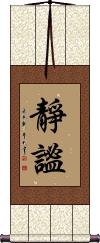
22. Peacefulness / Tranquility / Perfectly Quiet
24. Reach Peace and Calm Through Meditation
25. Spiritual Peace / Enlightened Peace
28. World Peace
29. Worldwide Wish for Peace and Prosperity
31. Worldwide Peace
32. House Of Peace
33. Eternal Peace and Happiness
35. You are always a beauty in your lover’s eyes
36. Beauty is in the eyes of the beholder
38. Happy / Laughter / Cheerful Bliss
39. Inner Beauty / Beauty of Spirit
40. Inner Beauty / Inner Wisdom
42. Inner Light / Intelligence
43. Intuitive Wisdom / Inner Light
44. A Life of Serenity Yields Understanding
45. Inner Strength / Inner Well-Being and Health
46. Inner Strength is Better than Outward Appearance
47. Inner Wisdom
48. Inner Strength
49. Inner Strength / Self-Improvement
50. Inner Freedom
51. Inner Warrior
52. Safety and Well-Being of the Family
53. Non-Violence
54. Patience / Perseverance / To Endure / Tolerant
55. One Who Does Not Do Bad Things, Worries Not of Knocks at His Door
56. Safe and Sound
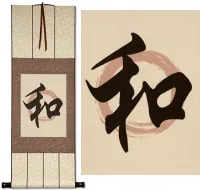
Peace / Harmony
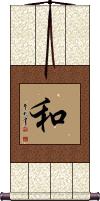
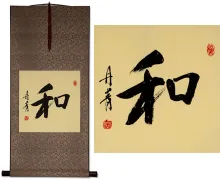
和 is the simplest form of peace and harmony.
和 can also be translated as the peaceful ideas of gentle, mild, kind, and calm. With a more harmonious context, it can be translated as union, together with, on good terms with, or on friendly terms.
Most people would just translate this character as peace and/or harmony. 和 is a very popular character in Asian cultures - you can even call it the “peace symbol” of Asia. In fact, this peace and harmony character was seen repeatedly during the opening ceremony of the 2008 Olympic Games in Beijing (a major theme of the games).
In old Chinese poems and literature, you might see this used as a kind of "and." As in two things summed together. As much as you could say, "the sun and moon," you could say "the sun in harmony with the moon."
See Also: Inner Peace | Patience | Simplicity
Harmony / Balance
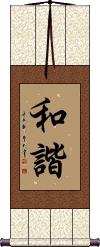
Balance / Peace
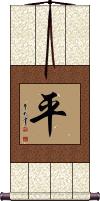
平 is a single character that means balance in Chinese but it's not too direct or too specific about what kind of balance.
Chinese people often like calligraphy art that is a little vague or mysterious. In this way, you can decide what it means to you, and you'll be right.
平 is also part of a word that means peace in Chinese, Japanese, and old Korean.
Some alternate translations of this single character include: balanced, peaceful, calm, equal, even, level, smooth, or flat.
Note that in Japanese, this just means “level” or “flat” by itself (not the best choice for balance if your audience is Japanese).
Great Peace
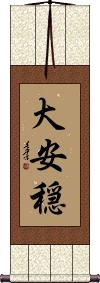
大安穏 means great peace, great repose, nirvanic peace, or great tranquility.
Eternal Peace
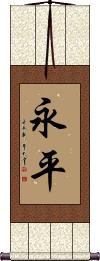
永平 is a way to write “eternal peace” in Chinese and Japanese.
This may also refer to Yongping county in Dali Bai autonomous prefecture. 永平 is also a Japanese surname that romanizes as Nagahira.
Faith Love Peace
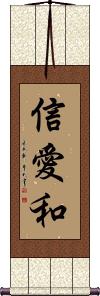
信愛和 is a word list that reads, “Faith Love Peace.”
This is not a natural phrase in Chinese or Japanese, as it lacks a subject, verb, or object. But if this is what you want, here it is.
Inner Bliss and Peace from Meditation
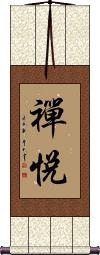
禪悅 is a title that refers to the inner bliss and peace you can achieve from meditation.
This term transcends a few religions, including Taoism and Buddhism. It can also be translated as “joy of the mystic trance” or simply “meditative bliss.”
Amazing that such a complex idea can be expressed in just two Chinese characters. Note that the first character is Chan/Zen (Chinese/Japanese), which means “meditation” in both languages.
Inner Peace
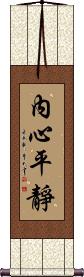
內心平靜 is a Chinese and Japanese phrase that is a direct translation of the western idea of inner peace.
The first two characters contain the idea of “heart,” “innermost being,” or “deep in the/your inner mind.”
The last two characters mean “tranquil” and “serene.”
I have seen this phrase used as “inner peace” for art prints and even on the side of coffee cups. But I think the translation is too literal. It feels like a direct translation from English rather than a nicely composed Chinese or Japanese phrase. See my other entries for “inner peace.”
See Also: Serenity | Simplicity | Peace
Inner Peace / Silence / Serenity
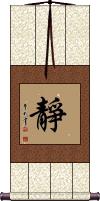
靜 is the simplest way to convey the meaning of inner peace and serenity.
靜 is often translated as “serenity.” It can also be used to express the ideas of still, calm, serene, quiet, silent, stillness, not moving, or tranquility.
In the old days, Chinese, Japanese, or Korean people might hang a wall scroll with this character in their reading room to bring about a sense of peace in the room.
 While they once used the same character form in Japan, they now use a slightly-simplified version in modern Japan (after WWII). This version is shown to the right, and can be selected for your wall scroll by clicking on that Kanji instead of the button above.
See Also: Peace
Achieve Inner Peace; Find Deep Understanding
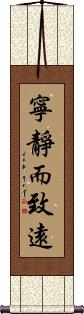
寧靜而致遠 is five characters from a longer ten-character proverb composed by Zhuge Liang about 1800 years ago.
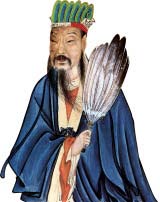
诸葛亮 Zhuge Liang
The proverb means “Your inner peace/tranquility/serenity will help you see or reach far (into the world).”
The last word means “far” but the deeper meaning is that you will surpass what you can currently see or understand. Perhaps even opening up vast knowledge and understanding of complex ideas.
Live in Peace and Contentment
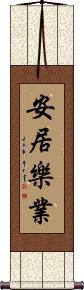
安居樂業 is the Chinese, Japanese Kanji, and old Korean Hanja proverb for “living in peace and working happily,” or “to live in peace and be content with one's occupation.”
Patience Brings Peace of Mind
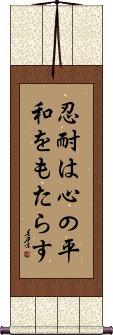
忍耐は心の平和をもたらす means “patience brings peace of mind,” in Japanese.
Note: Because this selection contains some special Japanese Hiragana characters, it should be written by a Japanese calligrapher.
Patience Yields Peace of Mind
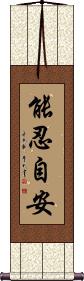
This ancient Chinese proverb can be translated as “Patience brings peace of mind,” “One who has patience finds peace,” and a few other ways.
Peace and Good Health
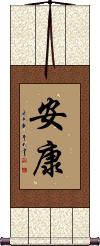
安康 means just what it says. It's a word that expresses both the idea of being at peace and healthy at the same time.
Note: 安康 is a bonafide word in Chinese and Korean, and the characters will at least make sense in Japanese.
Peace and Love
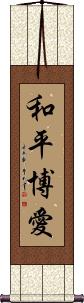
和平博愛 is the Chinese and Japanese way to express “Peace and Love.”
These are two separate words, so the calligrapher will put a slight space between the first two characters, which mean peace, and the last two, which represent universal love. This space is not shown on the sample character images for this phrase.
A special note: Word lists may seem okay in English but feel strange in Chinese and Japanese. We don't offer too many of them but this one is often-requested and feels okay in Chinese and Japanese, though a bit uncommon in Korean.
Peace of Mind
(five-character version)
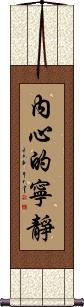
內心的寧靜 is the long way to express the idea of “peace of mind” in Chinese.
The first two characters mean heart or “innermost being.”
The middle character is a connecting modifier.
The last two characters mean peace, tranquility, or serenity.
Some may also translate this as “inner peace,” but I like our other inner-peace options for that idea.
This kind of makes sense in Korean but will have an archaic read - even by those who can understand Korean Hanja.
Peace and Tranquility
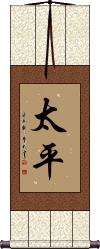
太平 means “peace and tranquility” or “peace and security” in Chinese, Japanese Kanji, and old Korean Hanja.
The literal translation would be “very balanced” or “very peaceful.”
The first character means very, much, too much, or extremely.
The second character means balanced, peaceful, calm, equal, even, level, or smooth.
Peace and Tranquility
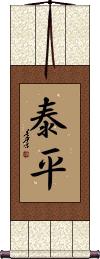
泰平 means peace and/or tranquility in Japanese and Korean (also understood but not as common in Chinese).
Peace of Mind
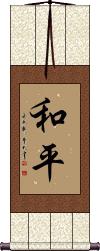
和平 is the Chinese order for these two characters, which means peace but can also be translated as amicability, specifically, or mildness. 和平 is often translated as a simple way to say “peace of mind.” This combination is used in Korean Hanja to mean “peace and harmony.”
Alone, the first character means peace and harmony.
The second character means balance when read by itself.
Note: 和平 are often seen in the opposite order in Japanese with the same meaning (You'll sometimes find them in this order in Japan, so either way is OK).
Peace / Peaceful
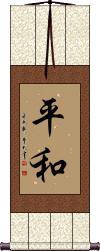
平和 is the Japanese and Korean order of these characters used most often to express the idea of peace, tranquility, and harmony.
It's just the reverse order of the Chinese. In this order in Chinese, it means takes the “mild” definition rather than “peace.” In Korean, the combination keeps the same meaning in either order.
The second character also means balance, so there is an element of harmony and balance along with peace.
Peaceful Heart / Peace of Mind / Calm Mind
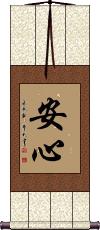
安心 can be defined as relief, peace of mind, feeling at ease, to be relieved, to set one's mind at rest, and easiness.
安心 is a nice word that encompasses great meanings within just two characters. Some of the other meanings include pacifying, settling the mind, and peace of mind. It's also the idea of feeling a sense of security, safety, and confidence in your state of well-being.
This can be used by everyone, but some consider it to be a Buddhist concept (You'll find it in your Zen dictionary).
Note: Can be romanized as Anshin or Anjin in Japanese.
Peaceful Warrior
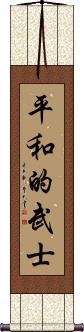
平和的武士 means “Peaceful Warrior” in Chinese. This does in fact sound like an oxymoron in Chinese - but many of you have asked for this special title.
Note this is not the same thing as “warrior for peace.”
See Also: Peace
Peacefulness / Tranquility / Perfectly Quiet
Peace, Love, Happiness
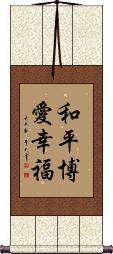
和平博愛幸福 is a word-list that means “peace, love, happiness,” in Chinese.
Word lists like this are not commonly-seen in China. Phrases with subject, verb, and object, or just single words are more natural for calligraphy artwork.
Peace, Love, Happiness
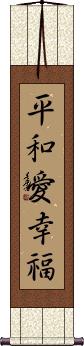
平和, 愛, 幸福 means “peace, love, happiness” in Japanese.
This is a word list, which is not the most natural kind of composition in Japanese (usually there is a subject, object, and verb - or a single word).
Reach Peace and Calm Through Meditation
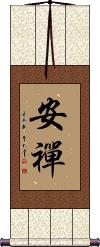
安禪 creates a title that means to reach peace and calm through meditation.
安禪 is an excellent wall scroll for your relaxation or meditation room.
This is also a Buddhist-related term that encompasses the idea of entering into dhyana meditation.
This is also used in Japanese, but in modern times, the second character has changed, so it's 安禅 now. If you want the modern Japanese version, just choose a Japanese calligrapher, and let me know when you place your order.
Spiritual Peace / Enlightened Peace
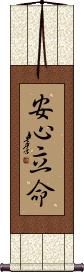
These Japanese Kanji, 安心立命, can be translated as “religious enlightenment” or “spiritual peace gained through faith.”
Other dictionaries define as “spiritual peace and enlightenment” or “keeping an unperturbed mind through faith.”
My Buddhist dictionary defines it as “spiritual peace and realization of enlightenment.”
In the Zen school, this is about settling one's body and life; attaining complete peace, and establishing one's course of life in accord with the ultimate reality.
Stable - Mind at Peace
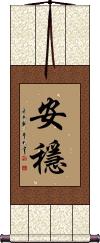
安穩 can mean a steady, stable, sedate, and calm mind.
Other translations include “body and mind at rest,” or “peace and comfort.”
Warrior for Peace
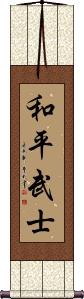
和平武士 means “Warrior for Peace” (a warrior who fights for peace) in Chinese.
Note this is not the same thing as a “peaceful warrior.”
See Also: Peace
World Peace
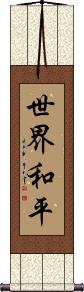
世界和平 is the Chinese title for “world peace.”
World Peace
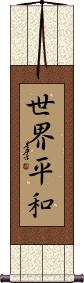
世界平和 is the Japanese title for “world peace” or “peace of the world.”
Worldwide Wish for Peace and Prosperity
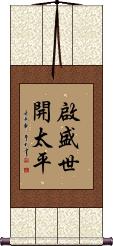
啟盛世開太平 means “To bring flourishing peace and security to the world (our current era).”
It's a wish that a new door leading to peace and prosperity could be opened to mankind.
Character and word breakdown:
啟 to open; to start; to initiate; to enlighten or awaken.
盛世 a flourishing period; period of prosperity; a golden age.
開 to open; to start; to turn on.
太平 peace and security; peace and tranquility; peace; tranquility.
I don't like to do breakdowns like this, as the words altogether create their unique meaning (encompassed in the main title above).
The Whole World at Peace
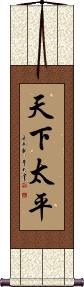
This proverb can be translated as the whole world at peace, peace and prosperity, peaceful and tranquil, peace reigns over the land, times of peace, peace and tranquillity, peaceful world, or from the Greek, times of halcyon.
Sometimes (rarely) written as 天下泰平 (variant 3rd character).
Worldwide Peace
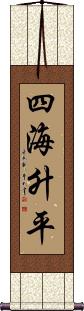
四海升平 literally means “all four oceans at peace,” which is a way to express “world peace.”
House Of Peace

和平之家 is the title “House Of Peace” in Chinese.
Eternal Peace and Happiness

永恆和平與幸福 means “Eternal Peace And Happiness” in Chinese.
Antiwar / Anti-War
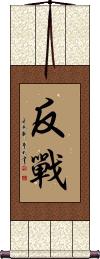
反戰 means antiwar, as in what a pacifist believes in.
China does plenty of saber-rattling but thankfully doesn't go to war very often, and Japan has embraced a pacifist ideology. Therefore, it's rare to need this word. However, this is the kind of word that war protesters would write on their signs.
 There is a modern Japanese version of the second character which has become the standard in Japan after WWII. If you want your calligraphy written in the modern Japanese form, please click on the Kanji shown to the right instead of the button above. Note: Most Japanese and all Chinese people will recognize the form shown in the upper left.
You are always a beauty in your lover’s eyes
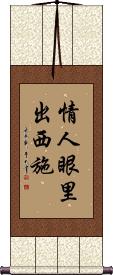
Any woman with affection for Asian art will love a gift of this Chinese proverb calligraphy on a wall scroll.
She will melt in your arms as you tell her the meaning of these characters.
Contained in this phrase is a reference to the most beautiful woman in Chinese history. Her name was Xi Shi, and she was known to have good looks that need not have fine robes or makeup. Her charms were so powerful that she brought down an entire kingdom (in a successful effort to bring honor and pride back to her people).
情人眼里出西施 is a great way to express that the woman in your life is your one love.
Beauty is in the eyes of the beholder
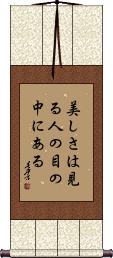
美しさは見る人の目の中にある means “Beauty is in the eyes of the beholder” in Japanese.
Japanese grammar and word order are different than English, but I will partially break this down for you:
美しさ = Beauty
は = is/relates
見る = to look/see
人の = person's
目の = eye's
中にあ = inside
る = !
Note: Because this selection contains some special Japanese Hiragana characters, it should be written by a Japanese calligrapher.
Perseverance / Fortitude
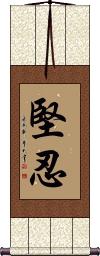
堅忍 means persistent, steadfast, fortitude, and/or perseverance.
The first character means strong, solid, firm, unyielding, or resolute.
The second character means to beat, endure, or tolerate.
Together they speak of the strength from within yourself. Some may also translate this as long-suffering in a more Biblical sense.
堅忍 is a common term in Chinese and Korean Hanja but a little less commonly used in modern Japanese Kanji. For that reason, this selection is best if your audience is Chinese or Korean.

 Note that when writing this as Kanji, Japanese will tend to write the second Kanji a little differently. If you select our Japanese master calligrapher, please expect the form where the little horizontal stroke crosses the vertical stroke. See differences in the images to the right. Technically, they are both the same character, and will be read the same in either language.
Happy / Laughter / Cheerful Bliss
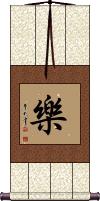
樂 is a single-character form of happiness or bliss that holds the ideas of laughing and having a good time.
This can also be translated as happy, glad, enjoyable, fun, and sometimes, music.
This a really good character if your audience is Chinese.
This is not a word seen alone very often in Korean.
 In Japanese, this character is written like the image shown to the right. If you order this from the Japanese master calligrapher, it will look like this instead of the character shown above.
Note: In Japanese, this has a meaning of comfort, ease, and enjoyment.
See Also: Joyfulness
Inner Beauty / Beauty of Spirit
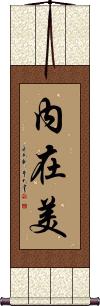
內在美 is a title that speaks of beauty on the inside.
It's not about outward or physical beauty but rather the inner beauty possessed by someone. This can also be translated as “beauty of spirit.”
Inner Beauty / Beauty of Spirit
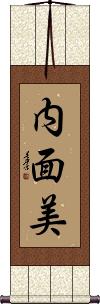
内面美 is a three-character title that speaks of beauty on the inside.
It's not about outward or physical beauty but rather the inner beauty possessed by someone. This can also be translated as “beauty of spirit.”
Inner Beauty / Inner Wisdom
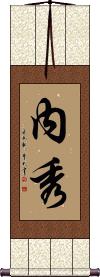
內秀 is an interesting word in Chinese that simultaneously means inner beauty and inner wisdom.
Some will translate it as “intelligent but unassuming.”
It's about having amazing abilities or traits on the inside which are not immediately obvious on the outside.
Inner Heart / Inner Soul
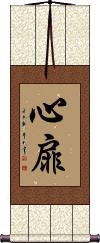
心扉 is a Chinese title meaning inner heart or soul.
Inner Light / Intelligence
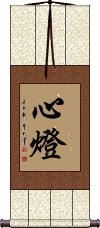
心燈 is the Buddhist concept of “The Lamp of the Mind” or “Inner Light.”
It's kind of the Buddhist way to express intelligence.
Directly translated, this means “heart light” or “heart lamp.”
Note: In ancient China, the ideas of heart and mind are interchangeable.
Intuitive Wisdom / Inner Light
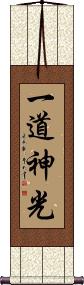
一道神光 is a Buddhist term that means “inner light,” or “intuitive wisdom.”
This actually reads, “[the] one path/way [of] spiritual light.” It implies that your spirit knows the way, and will light the path for you.
A Life of Serenity Yields Understanding
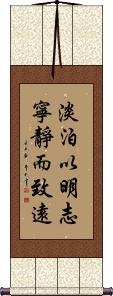
淡泊以明志寧靜而致遠 is a kind of complex ten-character proverb composed by Zhuge Liang about 1800 years ago.
淡泊以明志寧靜而致遠 is a Chinese proverb that means “Leading a simple life will yield a clear mind, and having inner peace will help you see far (into the world).”
What I have translated as “simple life” means NOT being materialistic and NOT competing in the rat race.
The last word means “far” but the deeper meaning is that you will surpass what you can currently see or understand. Perhaps even the idea of opening up vast knowledge and understanding of complex ideas.
The whole phrase has a theme that suggests that if you are NOT an aggressive, cut-throat person who fights their way to the top, no matter how many people they crush along the way, and instead seek inner peace, you will have a happier existence and be more likely to understand the meaning of life.
See Also: Serenity
Inner Strength / Inner Well-Being and Health
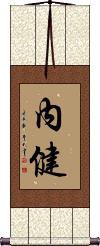
內健 is an old Chinese word meaning inner strength or inner health.
It's the idea of health and well-being starting or residing inside yourself. Also defined as fortitude within the context of good health.
Inner Strength is Better than Outward Appearance
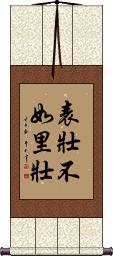
表壯不如里壯 literally translates as: [Better to be] strong inside than [to be] strong outside.
The ancient original meaning was:
[An] able [husband] outside [working to support a family is] not as good as [an] able [wife] inside [working and saving to take care of the family].
The current meaning is:
Inner strength is more important than outward appearance.
Inner Strength is Better than Outward Appearance
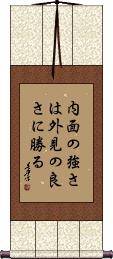
内面の強さは外見の良さに勝る is a Japanese proverb that literally translates as “inner/internal strength/power [versus] outward-appearance [the] merit/virtue/good quality [does] excel/surpass/exceed/outweigh.”
More naturally in English, this would be “Inner Strength Outweighs Outward Appearance.”
Note: Because this selection contains some special Japanese Hiragana characters, it should be written by a Japanese calligrapher.
Inner Wisdom
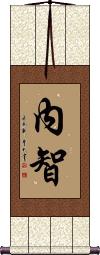
內智 is a Buddhist term that means “inner wisdom.”
Inner Strength
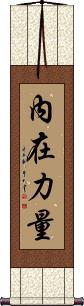
內在力量 is the slightly-verbose way to say inner strength.
The first two characters mean “intrinsic” or “inner.” The second two characters mean “power,” “force” or “strength” (especially physical strength). 內在力量 is more a short phrase rather than just a word in Chinese and Korean. This can sort of be understood in Japanese but it's not normal/proper Japanese.
Inner Strength
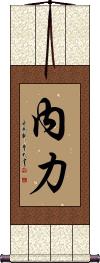
內力 is the shorter version of inner strength (can also be translated as “internal force”). The first character holds the meaning of “inner” or “internal.” The second character means “power,” “force,” or “strength.”
內力 is a Kung Fu way of talking about an inner power or strength from within. This is a way to express “inner chi.” This is something that you might hear in a real Chinese Kung Fu movie.
While understood in Chinese and Japanese, this can have a secondary meaning of “inner stress” in Japanese.
Inner Strength / Self-Improvement
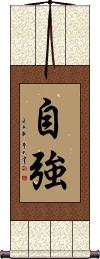
自強 is the kind of inner strength that applies to a person who has will-power and can inspire themselves to do great things.
自強 can also be the creed of a person that always pursues self-improvement.
Other translations: self-strengthening, striving for improvement, self-improvement, striving to become stronger, and self-renewal.
Inner Freedom
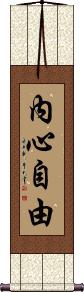
內心自由 means Inner Freedom in Chinese.
The first word, 内心, means innermost being, the mind within, or the heart within.
The second word, 自由, means freedom, free, or liberty.
There is more than one way to say inner freedom in Chinese. This version is the most common.
Inner Freedom
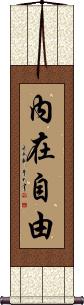
內在自由 means Inner Freedom in Chinese.
The first word, 内在 means inner, internal, intrinsic, or innate.
The second word, 自由, means freedom, free, or liberty.
Inner Warrior
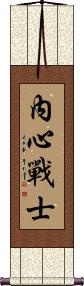
內心戰士 means Inner Warrior in Chinese.
Inner Warrior
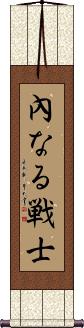
This means inner warrior in Japanese.
內なる means inner or internal.
戦士 means warrior or fighter.
Note: Because this selection contains some special Japanese Hiragana characters, it should be written by a Japanese calligrapher.
Safety and Well-Being of the Family
Kanai Anzen
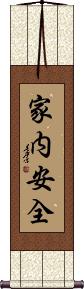
家內安全 is the Japanese way of saying “Family First.”
It's a Japanese proverb about the safety and well-being of your family and/or peace and prosperity in the household.
Some Japanese will hang an amulet in their home with these Kanji. The purpose is to keep your family safe from harm.
According to Shinto followers, hanging this in your home is seen as an invocation to God to always keep family members free from harm.
We were looking for a way to say “family first” in Japanese when this proverb came up in the conversation and research. While it doesn't say “family first,” it shows that the safety and well-being of your family is your first or most important priority. So, this proverb is the most natural way to express the idea that you put your family first.
See Also: Peace and Prosperity
Non-Violence
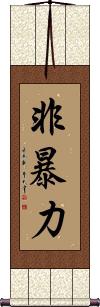
非暴力 is fairly self-explanatory.
The first character means “not,” “non-,” or “un-”
The middle and last character together mean “violence,” “use of force,” or simply “violent.”
Together, these three characters would normally be translated as “nonviolence.” A great gift for your favorite peace-lover.
See Also: Peace
Patience / Perseverance / To Endure / Tolerant
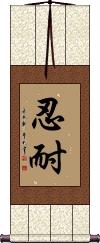
忍耐 is patience, the quiet hope, and trust that things will turn out right.
You wait without complaining. You are tolerant and accepting of difficulties and mistakes. You picture the end in the beginning and persevere to meet your goals.
忍耐 can also mean “to endure,” “restrain oneself,” or “forbearance,” and in some contexts, it can mean “perseverance” or “endurance.”
忍耐 is also used as a tenet of Taekwondo, Tang Soo Do, and other Korean martial arts where it's titled “Endurance” and romanized as “In Neh.”
Note that when writing this as Kanji, Japanese will tend to write the first character in the form shown to the right. If you select our Japanese master calligrapher, please expect this Kanji form (yes,
it’s
just one stroke that is slightly different in location, crossing another stroke in the Japanese Kanji form).
See Also: Peace | Perseverance
One Who Does Not Do Bad Things, Worries Not of Knocks at His Door
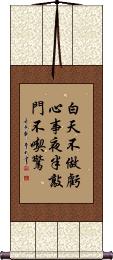
白天不做亏心事夜半敲门不吃惊 literally translates as: [If one does] not do bad things in the daytime, one need not be alarmed at knocks on the door in the middle of the night.
The meaning is something like, “A quiet conscience sleeps in thunder.” Basically, the message is, “don't commit crimes and you won't be jumpy every time the doorbell rings (so don't do anything wrong and your life will have fewer worries and you can sleep at night).”
Safe and Sound
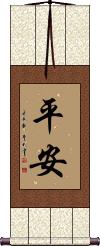
This word means “safe and sound” in Chinese, Japanese, and Korean.
Can also be translated as well-being, peace, tranquility, quietness, and calmness.
Note: There is also a longer four-character version in our calligraphy database.
See Also: Tranquility | Peace
Serenity / Tranquility
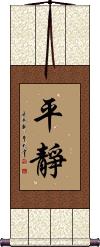
Serenity / Tranquility
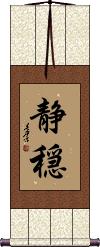
靜穏 is a Japanese-specific way to express “serenity” or “tranquility.”
Notes: The second Kanji is not a Chinese character - it was morphed or developed in Japan after Chinese characters were absorbed into the Japanese language during the 5th century.
The first character is slightly-simplified from the original Chinese form but still recognizable.
See Also: Peace
Sleep / Rest / Repose
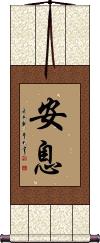
安息 means to rest, to go to sleep, to rest peacefully, or in repose, in Chinese characters, Japanese Kanji, and old Korean Hanja.
Always Striving for Inner Strength
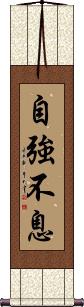
自強不息 is a proverb or idiom that suggests that the pursuit of self-improvement is eternal. It can also be a suggestion to strive unremittingly in life.
The first two characters mean inner strength with the idea of self-improvement. The last two characters mean “never rest” or “striving without giving up.”
Some will translate these four characters as “Exert and strive hard without any let-up.”
Tranquil / Tranquility / Serenity
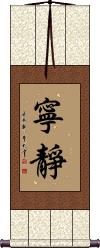
寧靜 expresses the idea of tranquility and serenity in Chinese.
See Also: Peace | Inner Peace | Calm
This in-stock artwork might be what you are looking for, and ships right away...
Gallery Price: $53.00
Your Price: $29.00
Gallery Price: $53.00
Your Price: $29.00
Gallery Price: $90.00
Your Price: $49.88

Gallery Price: $40.00
Your Price: $16.88
Gallery Price: $286.00
Your Price: $158.88

Gallery Price: $90.00
Your Price: $45.00




Gallery Price: $60.00
Your Price: $36.88


Gallery Price: $72.00
Your Price: $39.88
The following table may be helpful for those studying Chinese or Japanese...
| Title | Characters | Romaji (Romanized Japanese) | Various forms of Romanized Chinese | |
| Peace Harmony | 和 | wa | hé / he2 / he | ho |
| Harmony Balance | 和諧 和谐 | hé xié / he2 xie2 / he xie / hexie | ho hsieh / hohsieh | |
| Balance Peace | 平 | hira | píng / ping2 / ping | p`ing / ping |
| Great Peace | 大安穏 | daiannon | ||
| Eternal Peace | 永平 | eihei | yǒng píng yong3 ping2 yong ping yongping | yung p`ing yungping yung ping |
| Faith Love Peace | 信愛和 信爱和 | shin ai wa shinaiwa | xìn ài hé xin4 ai4 he2 xin ai he xinaihe | hsin ai ho hsinaiho |
| Inner Bliss and Peace from Meditation | 禪悅 禅悦 | chán yuè / chan2 yue4 / chan yue / chanyue | ch`an yüeh / chanyüeh / chan yüeh | |
| Inner Peace | 內心平靜 内心平静 | naishin heizyou naishinheizyou naishin heizyo | nèi xīn píng jìng nei4 xin1 ping2 jing4 nei xin ping jing neixinpingjing | nei hsin p`ing ching neihsinpingching nei hsin ping ching |
| Inner Peace Silence Serenity | 靜 静 | shizu / sei | jìng / jing4 / jing | ching |
| Achieve Inner Peace; Find Deep Understanding | 寧靜而致遠 宁静而致远 | níng jìng ér zhì yuǎn ning2 jing4 er2 zhi4 yuan3 ning jing er zhi yuan ningjingerzhiyuan | ning ching erh chih yüan ningchingerhchihyüan |
|
| Live in Peace and Contentment | 安居樂業 安居乐业 | an kyo raku gyou ankyorakugyou an kyo raku gyo | ān jū lè yè an1 ju1 le4 ye4 an ju le ye anjuleye | an chü le yeh anchüleyeh |
| Patience Brings Peace of Mind | 忍耐は心の平和をもたらす | nintai wa kokoro no heiwa o motarasu | ||
| Patience Yields Peace of Mind | 能忍自安 | néng rěn zì ān neng2 ren3 zi4 an1 neng ren zi an nengrenzian | neng jen tzu an nengjentzuan |
|
| Peace and Good Health | 安康 | ān kāng / an1 kang1 / an kang / ankang | an k`ang / ankang / an kang | |
| Peace and Love | 和平博愛 和平博爱 | wahei hakuai waheihakuai | hé píng bó ài he2 ping2 bo2 ai4 he ping bo ai hepingboai | ho p`ing po ai hopingpoai ho ping po ai |
| Peace of Mind | 內心的寧靜 内心的宁静 | nèi xīn de níng jìng nei4 xin1 de ning2 jing4 nei xin de ning jing neixindeningjing | nei hsin te ning ching neihsinteningching |
|
| Peace and Tranquility | 太平 | tai hei / taihei | tài píng / tai4 ping2 / tai ping / taiping | t`ai p`ing / taiping / tai ping |
| Peace and Tranquility | 泰平 | taihei | ||
| Peace of Mind | 和平 | wa hei / wahei | hé píng / he2 ping2 / he ping / heping | ho p`ing / hoping / ho ping |
| Peace Peaceful | 平和 | hei wa / heiwa | píng hé / ping2 he2 / ping he / pinghe | p`ing ho / pingho / ping ho |
| Peaceful Heart Peace of Mind Calm Mind | 安心 | an shin / anshin | ān xīn / an1 xin1 / an xin / anxin | an hsin / anhsin |
| Peaceful Warrior | 平和的武士 | píng hé de wǔ shì ping2 he2 de wu3 shi4 ping he de wu shi pinghedewushi | p`ing ho te wu shih pinghotewushih ping ho te wu shih |
|
| Peacefulness Tranquility Perfectly Quiet | 靜謐 静谧 | seihitsu | jìng mì / jing4 mi4 / jing mi / jingmi | ching mi / chingmi |
| Peace, Love, Happiness | 和平博愛幸福 和平博爱幸福 | hé píng bó ài xìng fú he2 ping2 bo2 ai4 xing4 fu2 he ping bo ai xing fu hepingboaixingfu | ho p`ing po ai hsing fu hopingpoaihsingfu ho ping po ai hsing fu |
|
| Peace, Love, Happiness | 平和, 愛, 幸福 | heiwa ai koufuku heiwaaikoufuku heiwa ai kofuku | ||
| Reach Peace and Calm Through Meditation | 安禪 安禅 | an zen / anzen | ān chán / an1 chan2 / an chan / anchan | an ch`an / anchan / an chan |
| Spiritual Peace Enlightened Peace | 安心立命 | an jin ritsu myou anjinritsumyou an jin ritsu myo | ||
| Stable - Mind at Peace | 安穩 安稳 | an non / annon | ān wěn / an1 wen3 / an wen / anwen | |
| Warrior for Peace | 和平武士 | hé píng wǔ shì he2 ping2 wu3 shi4 he ping wu shi hepingwushi | ho p`ing wu shih hopingwushih ho ping wu shih |
|
| World Peace | 世界和平 | shì jiè hé píng shi4 jie4 he2 ping2 shi jie he ping shijieheping | shih chieh ho p`ing shihchiehhoping shih chieh ho ping |
|
| World Peace | 世界平和 | sekaiheiwa | ||
| Worldwide Wish for Peace and Prosperity | 啟盛世開太平 启盛世开太平 | qǐ shèng shì kāi tài píng qi3 sheng4 shi4 kai1 tai4 ping2 qi sheng shi kai tai ping qishengshikaitaiping | ch`i sheng shih k`ai t`ai p`ing chishengshihkaitaiping chi sheng shih kai tai ping |
|
| The Whole World at Peace | 天下太平 | tenkataihei tenkataihei | tiān xià tài píng tian1 xia4 tai4 ping2 tian xia tai ping tianxiataiping | t`ien hsia t`ai p`ing tienhsiataiping tien hsia tai ping |
| Worldwide Peace | 四海升平 | sì hǎi shēng píng si4 hai3 sheng1 ping2 si hai sheng ping sihaishengping | ssu hai sheng p`ing ssuhaishengping ssu hai sheng ping |
|
| House Of Peace | 和平之家 | hé píng zhī jiā he2 ping2 zhi1 jia1 he ping zhi jia hepingzhijia | ho p`ing chih chia hopingchihchia ho ping chih chia |
|
| Eternal Peace and Happiness | 永恆和平與幸福 永恒和平与幸福 | yǒng héng hé píng yù xìng fú yong3 heng2 he2 ping2 yu4 xing4 fu2 yong heng he ping yu xing fu yonghenghepingyuxingfu | yung heng ho p`ing yü hsing fu yunghenghopingyühsingfu yung heng ho ping yü hsing fu |
|
| Antiwar Anti-War | 反戰 反战 / 反戦 | han sen / hansen | fǎn zhàn / fan3 zhan4 / fan zhan / fanzhan | fan chan / fanchan |
| You are always a beauty in your lover’s eyes | 情人眼里出西施 | qíng rén yǎn lǐ chū xī shī qing2 ren2 yan3 li3 chu1 xi1 shi1 qing ren yan li chu xi shi qingrenyanlichuxishi | ch`ing jen yen li ch`u hsi shih chingjenyenlichuhsishih ching jen yen li chu hsi shih |
|
| Beauty is in the eyes of the beholder | 美しさは見る人の目の中にある | utsukushi-sa wa miru hito no me no naka ni aru | ||
| Perseverance Fortitude | 堅忍 坚忍 | ken nin / kennin | jiǎn rěn / jian3 ren3 / jian ren / jianren | chien jen / chienjen |
| Happy Laughter Cheerful Bliss | 樂 / 楽 乐 | raku | lè / le4 / le | |
| Inner Beauty Beauty of Spirit | 內在美 内在美 | nèi zài měi nei4 zai4 mei3 nei zai mei neizaimei | nei tsai mei neitsaimei |
|
| Inner Beauty Beauty of Spirit | 内面美 | nai men bi / naimenbi | ||
| Inner Beauty Inner Wisdom | 內秀 内秀 | nèi xiù / nei4 xiu4 / nei xiu / neixiu | nei hsiu / neihsiu | |
| Inner Heart Inner Soul | 心扉 | xīn fēi / xin1 fei1 / xin fei / xinfei | hsin fei / hsinfei | |
| Inner Light Intelligence | 心燈 心灯 | shin tou / shintou / shin to | xīn dēng / xin1 deng1 / xin deng / xindeng | hsin teng / hsinteng |
| Intuitive Wisdom Inner Light | 一道神光 | ichidou no shinkou ichidounoshinkou ichido no shinko | yī dào shén guāng yi1 dao4 shen2 guang1 yi dao shen guang yidaoshenguang | i tao shen kuang itaoshenkuang |
| A Life of Serenity Yields Understanding | 淡泊以明志寧靜而致遠 淡泊以明志宁静而致远 | dàn bó yǐ míng zhì, níng jìng ér zhì yuǎn dan4 bo2 yi3 ming2 zhi4, ning2 jing4 er2 zhi4 yuan3 dan bo yi ming zhi, ning jing er zhi yuan | tan po i ming chih, ning ching erh chih yüan | |
| Inner Strength Inner Well-Being and Health | 內健 | nèi jiàn / nei4 jian4 / nei jian / neijian | nei chien / neichien | |
| Inner Strength is Better than Outward Appearance | 表壯不如里壯 表壮不如里壮 | biǎo zhuàng bù rú lǐ zhuàng biao3 zhuang4 bu4 ru2 li3 zhuang4 biao zhuang bu ru li zhuang biaozhuangburulizhuang | piao chuang pu ju li chuang piaochuangpujulichuang |
|
| Inner Strength is Better than Outward Appearance | 内面の強さは外見の良さに勝る | naimen no tsuyosa ha gaiken no yosa ni masaru | ||
| Inner Wisdom | 內智 内智 | nai chi / naichi | nèi zhì / nei4 zhi4 / nei zhi / neizhi | nei chih / neichih |
| Inner Strength | 內在力量 内在力量 | nèi zài lì liàng nei4 zai4 li4 liang4 nei zai li liang neizaililiang | nei tsai li liang neitsaililiang |
|
| Inner Strength | 內力 内力 | nai ryoku / nairyoku | nèi lì / nei4 li4 / nei li / neili | |
| Inner Strength Self-Improvement | 自強 自强 | zì qiáng / zi4 qiang2 / zi qiang / ziqiang | tzu ch`iang / tzuchiang / tzu chiang | |
| Inner Freedom | 內心自由 内心自由 | nèi xīn zì yóu nei4 xin1 zi4 you2 nei xin zi you neixinziyou | nei hsin tzu yu neihsintzuyu |
|
| Inner Freedom | 內在自由 内在自由 | nèi zài zì yóu nei4 zai4 zi4 you2 nei zai zi you neizaiziyou | nei tsai tzu yu neitsaitzuyu |
|
| Inner Warrior | 內心戰士 内心战士 | nèi xīn zhàn shì nei4 xin1 zhan4 shi4 nei xin zhan shi neixinzhanshi | nei hsin chan shih neihsinchanshih |
|
| Inner Warrior | 內なる戦士 内なる戦士 | |||
| Safety and Well-Being of the Family | 家內安全 家内安全 | ka nai an zen kanaianzen | ||
| Non-Violence | 非暴力 | hibouryoku / hiboryoku | fēi bào lì fei1 bao4 li4 fei bao li feibaoli | fei pao li feipaoli |
| Patience Perseverance To Endure Tolerant | 忍耐 | nin tai / nintai | rěn nài / ren3 nai4 / ren nai / rennai | jen nai / jennai |
| One Who Does Not Do Bad Things, Worries Not of Knocks at His Door | 白天不做虧心事夜半敲門不吃驚 白天不做亏心事夜半敲门不吃惊 | bái tiān bú zuò kuī xīn shì yè bàn qiāo mén bù chī jīng bai2 tian1 bu2 zuo4 kui1 xin1 shi4 ye4 ban4 qiao1 men2 bu4 chi1 jing1 bai tian bu zuo kui xin shi ye ban qiao men bu chi jing | pai t`ien pu tso k`uei hsin shih yeh pan ch`iao men pu ch`ih ching pai tien pu tso kuei hsin shih yeh pan chiao men pu chih ching |
|
| Safe and Sound | 平安 | heian | píng ān / ping2 an1 / ping an / pingan | p`ing an / pingan / ping an |
| Serenity Tranquility | 平靜 平静 | heisei | píng jìng ping2 jing4 ping jing pingjing | p`ing ching pingching ping ching |
| Serenity Tranquility | 靜穏 静穏 | seion | ||
| Sleep Rest Repose | 安息 | an soku / ansoku | ān xī / an1 xi1 / an xi / anxi | an hsi / anhsi |
| Always Striving for Inner Strength | 自強不息 自强不息 | zì qiáng bú xī zi4 qiang2 bu2 xi1 zi qiang bu xi ziqiangbuxi | tzu ch`iang pu hsi tzuchiangpuhsi tzu chiang pu hsi |
|
| Tranquil Tranquility Serenity | 寧靜 宁静 | níng jìng ning2 jing4 ning jing ningjing | ning ching ningching |
|
| In some entries above you will see that characters have different versions above and below a line. In these cases, the characters above the line are Traditional Chinese, while the ones below are Simplified Chinese. | ||||



