Warrior Chinese / Japanese Symbol Wall Scroll
Buy high-quality artwork with Warrior characters on a wall scroll here!
See also: Soldier | Fighter | Chinese Military Proverbs
Start your Warrior calligraphy project by clicking the button next to your favorite Warrior title below...
1. Warrior
3. Daredevil Warrior / Soul of a Warrior
10. Holy Warrior
11. Inner Warrior
12. Noble Warrior
13. Peaceful Warrior
14. Quiet Warrior
15. Shadow Warrior
16. Silent Warrior
20. Heart of a Warrior / Samurai Heart
21. Warrior of the Heavenly Realm
22. Warrior Monk / Soldier Priest
23. Warrior / Musha
24. Warrior of God / Soldier of God
25. Warrior Saint / Saint of War
27. Warrior Soul / Heroic Spirit
28. Warrior Soul / Spirit of a Fighter
29. Warrior Within
31. The Warrior’s Word, Dependable as Gold and Steel
33. Warrior Essence / Warrior Spirit / Martial
34. It is better to be a warrior in a garden than a gardener in a war
35. Warrior Scholar
36. Warrior’s Heart
37. Warrior’s Path
38. Wind Warrior
39. Marine / Soldier of the Sea
40. Soldiers
42. Bushido / The Way of the Samurai
43. Knight
44. Marine
45. Marine Corps
46. Ninja
47. Ronin / Masterless Samurai
48. Samurai
Warrior
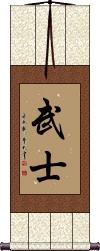
The first character, 武, is the spirit or essence of a warrior. The second character, 士, means soldier, officer, or official. 武士 is also used appropriately enough to describe a piece of a chess game. 武士 can also be translated as a soldier, cavalier, palace guard, or samurai, and sometimes as a knight. I've occasionally seen this translated as strong man or tough man (gender not necessarily implied).
By far, 武士 is the most common way to write warrior in Chinese characters, Japanese Kanji, and old Korean Hanja.
Note: In Japanese, this is Bushi, as in Bushido.
Brave Warrior
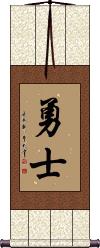
勇士 is the Chinese, Japanese Kanji, and old Korean Hanja for a brave warrior, a brave person, a hero, or a brave man.
In Japanese, this can be a given name, Yuuji.
Daredevil Warrior / Soul of a Warrior
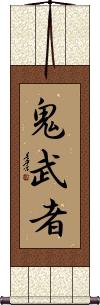
鬼武者 is an unusual title that can be translated two ways, daredevil warrior or demon warrior.
The most common is probably the daredevil warrior. However, the first character means demon, ghost, or soul of the departed. Therefore, it can mean the soul of a warrior or a demon warrior.
This title is Japanese only, and should not be used if your audience is Chinese.
Dragon Warrior
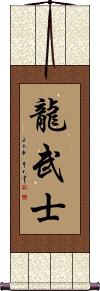
龍武士 is a generic title for “Dragon Warrior.”
Just as in English, it's a bit ambiguous. It can mean one who fights against dragons or the title of a warrior himself (imagine a warrior with a dragon symbol on his chest).
Dragon Warrior
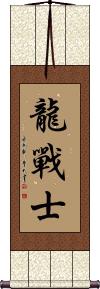
龍戰士 is another version of “Dragon Warrior.”
It's still a bit ambiguous. This one reads more like “Dragon Fighter” than “Dragon Warrior.” Perhaps you can also translate this one as “One who fights like a dragon.”
Dragon Warrior
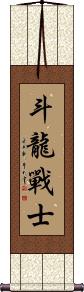
斗龍戰士 or “Dragon Warrior” is specifically one who fights against dragons.
This can also be read as “Dragon Fighter.”
Enlightened Warrior
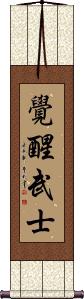
覺醒武士 is not a commonly used title in Chinese but is sometimes used in Martial arts and military contexts to refer to a warrior who seems always to be fully aware, enlightened, knowledgeable, noble, and just.
The first two characters are a word that means: to awaken; to come to realize; awakened to the truth; the truth dawns upon one; scales fall from the eyes; to become aware.
The last two characters mean warrior but can also refer to a samurai, soldier, or fighter.
Ghost Warrior
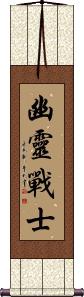
幽靈戰士 means Ghost Warrior or Ghost Soldier in Chinese.
This title is used for at least one movie and a video game (about a sniper).
Guan Gong / Warrior Saint
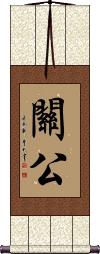
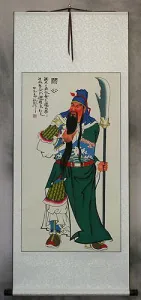
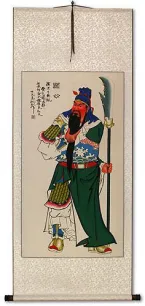
關公 is a Chinese title, Guan Gong, that means Lord Guan (The warrior saint of ancient China).
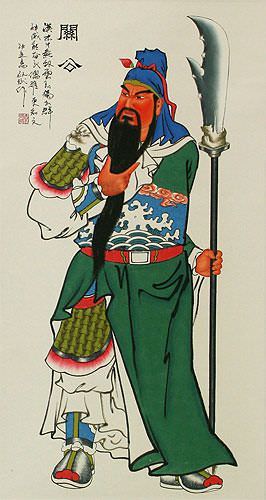 While his real name was Guan Yu / 關羽, he is commonly known by the title of Guan Gong (關公).
Some Chinese soldiers still pray to Guan Gong for protection. They would especially do this before going into battle. Statues of Guan Gong are seen throughout China.
Heart of a Warrior
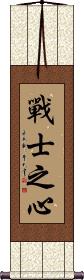
戰士之心 can mean “Heart of a Warrior” or “Heart of a Fighter” in Chinese.
Warrior of Heaven
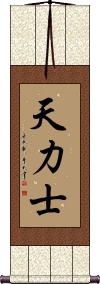
天力士 means “Heavenly Warrior,” or “Hero of Heaven,” in Chinese, old Korean, and Japanese.
Often used in a Buddhist context.
Holy Warrior
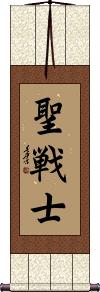
聖戦士 means “Holy Warrior,” in Japanese.
Inner Warrior
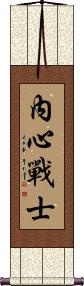
內心戰士 means Inner Warrior in Chinese.
Inner Warrior
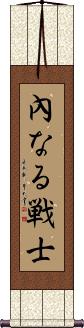
This means inner warrior in Japanese.
內なる means inner or internal.
戦士 means warrior or fighter.
Note: Because this selection contains some special Japanese Hiragana characters, it should be written by a Japanese calligrapher.
Noble Warrior
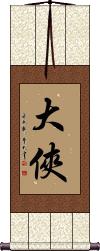
大俠 means knight, swordsman, noble warrior, or chivalrous hero in Chinese.
Peaceful Warrior
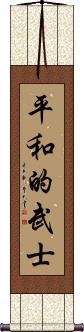
平和的武士 means “Peaceful Warrior” in Chinese. This does in fact sound like an oxymoron in Chinese - but many of you have asked for this special title.
Note this is not the same thing as “warrior for peace.”
See Also: Peace
Peaceful Warrior
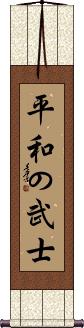
平和の武士 can be read as “Peaceful Warrior” or “Warrior for Peace” in Japanese. This sounds like an oxymoron in Japanese, so it's a weird title. Expect Japanese people to be perplexed when they see it.
Character breakdown:
平和 (heiwa) peace; harmony.
の (no) possessive particle.
武士 (bushi) warrior; samurai; soldier.
Quiet Warrior
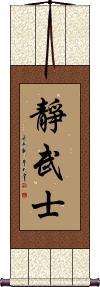
靜武士 is the shortest way to write “Quiet Warrior” or “Tranquil Warrior” in Chinese.
See Also: Peaceful Warrior
Quiet Warrior
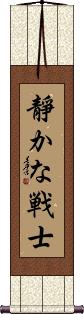
This means “Quiet Warrior” in Japanese.
Note: Because this selection contains some special Japanese Hiragana characters, it should be written by a Japanese calligrapher.
Quiet Warrior
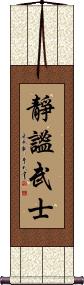
靜謐武士 means “Quiet Warrior” in Chinese.
靜謐 means quiet or tranquil.
武士 means warrior or soldier.
See Also: Peaceful Warrior
Shadow Warrior
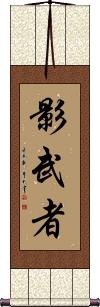
影武者 is the title for Shadow Warrior in Chinese and Japanese.
This may refer to a few video games that share this English title, or a Japanese movie called Kagemusha.
If you are looking for the Japanese TV show, that was originally 影の軍団 (Kage no Gundan), which more literally means “Army of Shadows,” but was re-titled Shadow Warrior when released outside Japan in English.
In Japan, this title can also refer to a body double or decoy of an army general or leader used to avoid assassination. It can also be somebody who does all the work (or fighting) behind the scenes (not getting much, if any, credit).

Silent Warrior
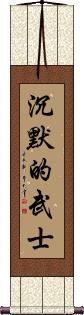
沉默的武士 is a way to write “silent warrior” in Chinese.
The first two characters mean “silent.”
The middle character is a connecting or possessive particle.
The last two characters mean “warrior.”
Silent Warrior
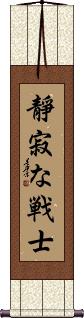
靜寂な戦士 means “silent warrior” or “quiet warrior,” in Japanese.
Spiritual Warrior
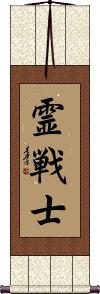
霊戦士 is a Japanese title that means “Spiritual Warrior.”
The first Kanji means spiritual.
The second Kanji means war, warfare, or battle.
The third Kanji means soldier, officer, man or pawn.
Warrior for Peace
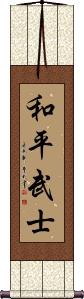
和平武士 means “Warrior for Peace” (a warrior who fights for peace) in Chinese.
Note this is not the same thing as a “peaceful warrior.”
See Also: Peace
Value of Warrior Generals
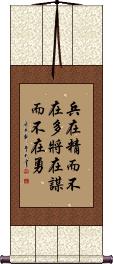
兵在精而不在多將在謀而不在勇 is a proverb that informs how it is better to have warriors of quality, rather than just a large quantity of warriors in your army/force.
This literally means: [Just as] warriors [are valued for their] quality and not [just] for quantity, [so] generals [are valued] for their tactics, not [just] for [their] bravery.
See Also: 兵在精而不在多
Heart of a Warrior / Samurai Heart
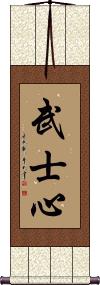
武士心 means “Warrior Heart.”
武士心 is more a Japanese title than Chinese, but it is understood in both languages.
Warrior of the Heavenly Realm
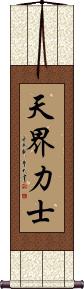
天界力士 means “warrior of the heavenly realm” in Chinese, old Korean Hanja, and Japanese Kanji.
This is also known as Narayana in Buddhism.
Warrior Monk / Soldier Priest
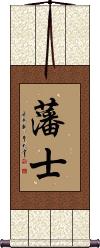
藩士 is a strange title for a wall scroll, but it may suit you if you see yourself as a warrior monk.
This title is not commonly used but will be understood in Chinese and Japanese. It can also be read as “armed monks.”
Warrior / Musha
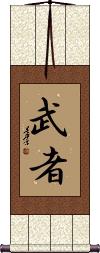
武者 is an alternate title for a warrior or samurai in Japanese. It is often romanized as “Musha.”
The literal meaning of these Kanji is “war person,” “military person,” or “martial person.”
Warrior of God / Soldier of God
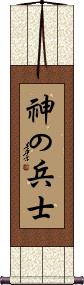
神の兵士 means “Warrior of God” or “Soldier of God” in Japanese.
Warrior Saint / Saint of War
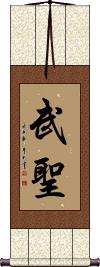
This Chinese title, Wusheng, means Saint of War.
武聖 is usually a reference to Guan Yu (關羽), also known as Guan Gong (關公).
Some Chinese soldiers still pray to Wusheng for protection. They would especially do this before going into battle.
Warrior / Fighter
Senshi
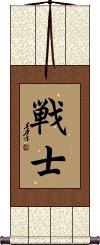
Warrior Soul / Heroic Spirit
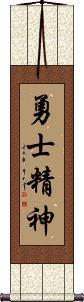
勇士精神 can be translated as the warrior's spirit or warrior's soul. The first two characters can be translated as “warrior” or literally “brave soldier/man,” although some will translate this word as “hero.” Therefore, this is also how to say “heroic spirit.”
The second two characters mean vigor, vitality, drive, spirit, mind, heart, mental essence, and psychological component. Basically “your soul.”
We have two versions of this phrase. The only difference is the first two and last two characters are swapped. The version here suggests that you admire or like the idea of the spirit of a warrior. The other version suggests that you are the warrior or hero.
Warrior Soul / Spirit of a Fighter
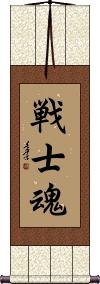
戦士魂 is “warrior soul” or “warrior spirit” in Japanese.
Here's the breakdown of the Kanji:
戦士 (senshi) warrior; soldier; combatant; fighter.
魂 (damashii/tamashii) soul; spirit; can sometimes mean “ghost.”
Warrior Within
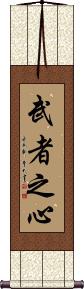
武者之心 means “Warrior Within” from the Chinese video game title, “Prince of Persia: Warrior Within.”
This more literally means “warrior or the heart” or “warrior of the soul/mind.”
The Warrior Within
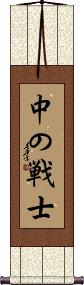
中の戦士 means “The Warrior Within” in Japanese.
The Warrior’s Word, Dependable as Gold and Steel
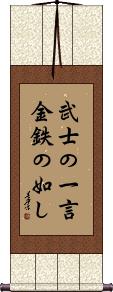
武士の一言金鉄の如し is an old Japanese proverb about the value of the word of a warrior.
Here are a couple of versions of how this can be translated:
A warrior's single word is as unchanging and reliable as gold and steel.
A warrior's promise is as dependable as gold, and his [scabbard contains] untarnished steel (a sword).
Note: Sometimes this phrase is written as 男子の一言、金鉄の如し (danshi no ichigon kintetsu no gotoshi)
Note: Because this selection contains some special Japanese Hiragana characters, it should be written by a Japanese calligrapher.
Soul of a Warrior
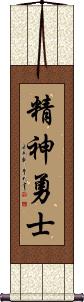
精神勇士 can be translated as the spirit or soul of a warrior. The first two characters can be translated as vigor, vitality, drive, spirit, mind, heart, mental essence, and psychological component. Basically, “your soul.”
The second two characters mean “warrior” or literally “brave soldier/man,” although some will translate this word as “hero.” Therefore, this is also how to say “soul of a hero.”
Note: This title is best for Chinese and old Korean. It does make sense in Japanese but is not a common or natural Kanji combination in Japanese.
We have two versions of this phrase. The only difference is the first two and last two characters are swapped. The version here suggests that you are the warrior or hero. The other version suggests that you admire or like the idea of the spirit of a warrior.
Warrior Essence / Warrior Spirit / Martial
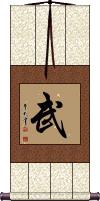
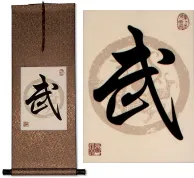
武 is the essence or spirit of a warrior. 武 is part of the word “wu shu” which is sometimes translated as “martial arts” or “kung fu.”
In more modern speech and another context, this can mean military, martial, warlike, fierce, and perhaps violent but usually as a prefix for a longer word or phrase.
It is better to be a warrior in a garden than a gardener in a war
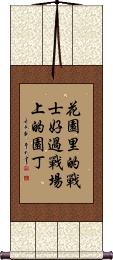
花園里的戰士好過戰場上的園丁 is the Chinese for the phrase, “It is better to be a warrior in a garden than a gardener in a war.”
This proverb is purported to come from the following exchange:
A student approaches his samurai master and says,
“Teacher, you instruct me how to fight, yet you preach to me about peace. How do I reconcile the two?”
The samurai responds,
“Because it is better to be a warrior in a garden than a gardener in a war.”
Warrior Scholar
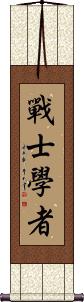
This means Warrior Scholar in Chinese.
Warrior’s Heart
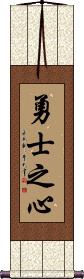
勇士之心 is “Warrior’s Heart” in Chinese.
Warrior’s Path
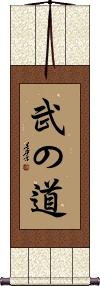
This maeans path of the warrior or warrior’s path in Japanese.
Wind Warrior
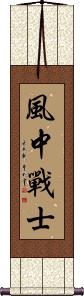
風中戰士 is the title Wind Warrior in Chinese.
Also the name of a 2005 Hong Kong movie.
Marine / Soldier of the Sea
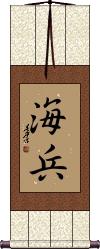
海兵 is a way to express “Marine” as in an individual “Soldier of the Sea” in Japanese Kanji and old Korean Hanja characters (not to be confused with Korean Hangul).
Breaking down each character, this means:
“ocean/sea soldier/army/warrior.”
Please note that this Japanese/Korean version kind of means “sailor” or “navy” in Chinese.
See Also: Military
Soldiers
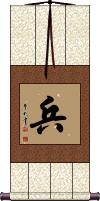
兵 can be used to express soldiers, troops, a force, an army, weapons, arms, military, warfare, tactics, strategy, or warlike.
The final meaning depends on context. It's also part of the Chinese title for the Terracotta soldiers. In fact, this character is usually used in compound words (words of more than one character). Sometimes this single character is the title used for the pawns in a chess game (in a related issue, this is also a nickname for soldiers with the rank of Private).
See Also: Military
Sun Tzu - Art of War
military strategy, tactics, and procedure
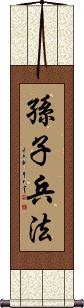
孫子兵法 is the full title of the most famous book of military proverbs about warfare.
The English title is “Sun Tzu's The Art of War.”
The last two characters have come to be known in the west as “The Art of War,” but a better translation would be “military strategy and tactics,” “military skills” or “army procedures.”
Note: Sometimes the author's name is Romanized as “Sun Zi” or “Sunzi.”
It's written the same in Chinese, Japanese Kanji, and Korean Hanja.
See Also: Military
Bushido / The Way of the Samurai
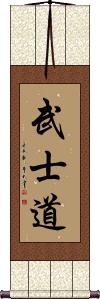
武士道 is the title for “The Code of the Samurai.”
Sometimes called “The Seven Virtues of the Samurai,” “The Bushido Code,” or “The Samurai Code of Chivalry.”
This would be read in Chinese characters, Japanese Kanji, and old Korean Hanja as “The Way of the Warrior,” “The Warrior's Way,” or “The Warrior's Code.”
It's a set of virtues that the Samurai of Japan and ancient warriors of China and Korea had to live and die by. However, while known throughout Asia, this title is mostly used in Japan and thought of as being of Japanese origin.
The seven commonly-accepted tenets or virtues of Bushido are Rectitude 義, Courage 勇, Benevolence 仁, Respect 礼(禮), Honour 名誉, Honesty 誠, and Loyalty 忠実. These tenets were part of oral history for generations, thus, you will see variations in the list of Bushido tenets depending on who you talk to.
See our page with just Code of the Samurai / Bushido here
See Also: Samurai
Knight
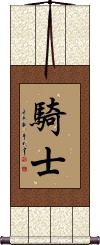
Marine
Amphibious Warrior
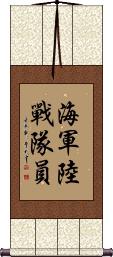
海軍陸戰隊員 is the Chinese way to express “Marine.” (as in a member of the Marine Corps). It is not country-specific, so it could be the Royal Marines, U.S. Marines, Chinese Marines, etc.
In Australian English, they would translate this as “Naval Infantryman.”
Breaking down each character this means:
“ocean/sea military/arms shore/land fighting/war/battle corps/team/group person/member.” Note that the first two characters are presented together but outside of this phrase mean “navy” (sea military).
See Also: Military | Navy | Art of War
Marine Corps
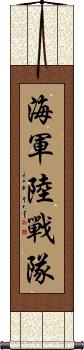
海軍陸戰隊 is the Chinese way to express “Marine Corps.” This could be the Marine Corps of virtually any country that has an amphibious military force.
Let me know if you want a more specific title, such as British Royal Marines or U.S. Marine Corps.
The Chinese title for Marines is very verbose...
Breaking down each character this means:
“ocean/sea military/arms shore/land fighting/war/battle corps/team/group.”
See Also: Military
Marine Corps
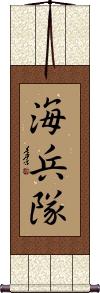
海兵隊 is the Japanese and Korean way to express “Marine Corps” or simply “Marines.” It is not specific, so this can be the Marine Corps of any country, such as the British Royal Marines to the U.S. Marines.
Breaking down each character, this means:
“ocean/sea soldiers/army corps/regiment/group.”
See Also: Military
Ninja
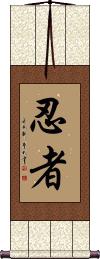
In feudal Japan, ninjas or shinobi (literally, “one who is concealed” or “one that endures”) were sometimes assassins and agents of espionage. The ninja, like samurai, followed their special code of conduct.
The role of the ninja has been romanticized in many American movies (and to a lesser extent in Japanese movies). Because the ninja craze has taken off in the west, Japan has followed the trend, and you'll see plenty of ninja-related imagery in Japan. Note that when writing this as Kanji, Japanese tend to write the first character in the form shown to the right. If you select a Japanese calligrapher, please expect that form. Our Chinese calligraphers can also write it in Japanese form, but only if you request it (in the special instructions about your order during checkout).
Ronin / Masterless Samurai
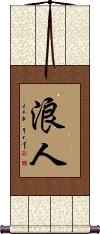
The 浪人 or Ronin have no master - The most famous are the 47 ronin created after their Lord committed suicide. This term was not a positive title for the Samurai of ancient Japan. However, in recent years, movies and video games have glorified the term Ronin.
In Chinese, this term has the original meaning of a hobo, vagabond, or ruffian.
In Korean Hanja, these characters would be read as adventurer, wanderer, someone without a steady job, or someone who is wasting away time.
In modern Japan, this term is used as a nickname for a high school student who has failed a college entry exam (and is trying again).
In Chinese and Korean, the Japanese definition of “Masterless Samurai” is known because of the historical context. Even in Japanese, the literal translation is closer to the Chinese and Korean definitions shown above.
This will make a fine wall scroll if you are a fan of the Ronin or see yourself as a Ronin of sorts. However, please think twice before getting a Ronin tattoo!
Samurai
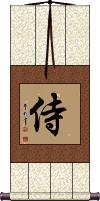
In Japanese, 侍 represents the warriors that attempted to hold peace when there was no Emperor in Japan.
Be cautious though, as it is an old way to express “servant” or “waiter” in Chinese and Korean. Of course, if you are a samurai, you are a servant to your Shogun-ate, Lord, or the people (which is the root meaning).
Shogun / Japanese General
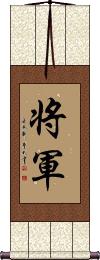
将軍 or Shogun, in the simplest definition, is a General, but you could also use words such as commander, lord, overlord, highest ranking, or commanding officer.
The title “Shogun” has held some slightly ambiguous meanings at times in Japanese history.
In the west, when someone mentions “Shogun,” we may be filled with thoughts of gallant warriors. Some might even think of the TV mini-series with Richard Chamberlain. Often westerners use the words, Samurai and Shogun interchangeably, but that's really not technically correct. In the case of the Samurai, the Shogun was a designated (by the emperor) leader of a gild of Samurai. In this context, the Shogun was a Samurai lord. Or effectively, a commanding officer of a company of Samurai - to put it in modern military terms.
Sometimes a Shogun was a general; other times, he was the leader of a military government in Japan - but not a front-line warrior like a Samurai.
Variants of the same characters are used in China for the rank and title of a General of the People's Liberation Army (and the same term and characters have been used for the last 2200 years since the Qin Dynasty).
Chinese or Korean Army General
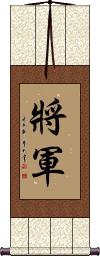
將軍 is the more Chinese and Korean Hanja version or General.
There is a slight variation in the way the first character is written compared to the Japanese Shogun (将軍) title.
So if you want to specifically refer to a Chinese or Korean General, this is the way. Japanese people would still easily identify this as “shogun.”
Note: This term is also used for Admiral in Korean in a certain context (if you need a better title for Admiral, just let me know).
United States Marine Corps
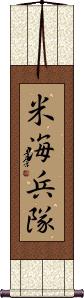
米海兵隊 is the Japanese way to write “United States Marine Corps” or simply “U.S. Marines.”
Breaking down each Kanji, this means:
“rice (American) ocean/sea soldiers/army/military corps/regiment/group.”
This title will only make sense in Japanese, it is not the same in Chinese! Make sure you know your audience before ordering a custom wall scroll.
If you are wondering about rice, America is known as “rice country” or “rice kingdom” when literally translated. The Kanji for rice is often used as an abbreviation in front of words (like a sub-adjective) to make something “American.” Americans say “rice burner” for a Japanese car and “rice rocket” for a Japanese motorcycle. If you did the same in Japanese, it would have the opposite meaning.
Note: I have not verified this but I’ve found this title used for U.S. Marines in Korean articles, so it’s most likely a normal Korean term as well (but only in Korean Hanja).
See Also: Marine Corps | Navy | Army | Art of War | Military
This in-stock artwork might be what you are looking for, and ships right away...

Gallery Price: $72.00
Your Price: $39.88

Gallery Price: $177.00
Your Price: $97.88

Gallery Price: $31.00
Your Price: $16.88
Gallery Price: $108.00
Your Price: $59.88
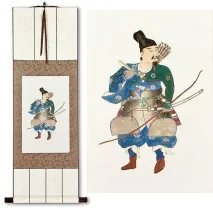
Gallery Price: $47.00
Your Price: $26.00
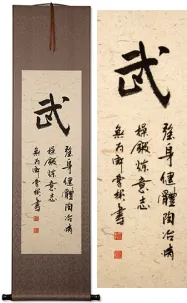
Gallery Price: $158.00
Your Price: $87.77
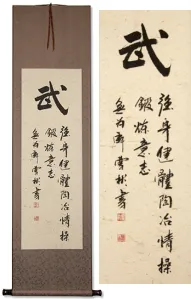
Gallery Price: $158.00
Your Price: $87.77
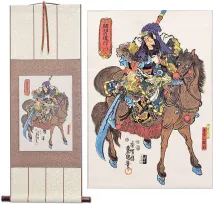
Gallery Price: $108.00
Your Price: $59.88

Gallery Price: $177.00
Your Price: $97.88
Gallery Price: $144.00
Your Price: $79.88
The following table may be helpful for those studying Chinese or Japanese...
| Title | Characters | Romaji (Romanized Japanese) | Various forms of Romanized Chinese | |
| Warrior | 武士 | bu shi / bushi | wǔ shì / wu3 shi4 / wu shi / wushi | wu shih / wushih |
| Brave Warrior | 勇士 | yuu shi / yuushi / yu shi | yǒng shì / yong3 shi4 / yong shi / yongshi | yung shih / yungshih |
| Daredevil Warrior Soul of a Warrior | 鬼武者 | oni mu sha / onimusha | ||
| Dragon Warrior | 龍武士 龙武士 | ryuu bu shi ryuubushi ryu bu shi | lóng wǔ shì long2 wu3 shi4 long wu shi longwushi | lung wu shih lungwushih |
| Dragon Warrior | 龍戰士 龙战士 | lóng zhàn shì long2 zhan4 shi4 long zhan shi longzhanshi | lung chan shih lungchanshih |
|
| Dragon Warrior | 斗龍戰士 斗龙战士 | dòu lóng zhàn shì dou4 long2 zhan4 shi4 dou long zhan shi doulongzhanshi | tou lung chan shih toulungchanshih |
|
| Enlightened Warrior | 覺醒武士 觉醒武士 | jué xǐng wǔ shì jue2 xing3 wu3 shi4 jue xing wu shi juexingwushi | chüeh hsing wu shih chüehhsingwushih |
|
| Ghost Warrior | 幽靈戰士 幽灵战士 | yōu líng zhàn shì you1 ling2 zhan4 shi4 you ling zhan shi youlingzhanshi | yu ling chan shih yulingchanshih |
|
| Guan Gong Warrior Saint | 關公 关公 | guān gōng guan1 gong1 guan gong guangong | kuan kung kuankung |
|
| Heart of a Warrior | 戰士之心 战士之心 | zhàn shì zhī xīn zhan4 shi4 zhi1 xin1 zhan shi zhi xin zhanshizhixin | chan shih chih hsin chanshihchihhsin |
|
| Warrior of Heaven | 天力士 | ten riki shi tenrikishi | tiān lì shì tian1 li4 shi4 tian li shi tianlishi | t`ien li shih tienlishih tien li shih |
| Holy Warrior | 聖戦士 | sei senshi / seisenshi | ||
| Inner Warrior | 內心戰士 内心战士 | nèi xīn zhàn shì nei4 xin1 zhan4 shi4 nei xin zhan shi neixinzhanshi | nei hsin chan shih neihsinchanshih |
|
| Inner Warrior | 內なる戦士 内なる戦士 | |||
| Noble Warrior | 大俠 大侠 | dà xiá / da4 xia2 / da xia / daxia | ta hsia / tahsia | |
| Peaceful Warrior | 平和的武士 | píng hé de wǔ shì ping2 he2 de wu3 shi4 ping he de wu shi pinghedewushi | p`ing ho te wu shih pinghotewushih ping ho te wu shih |
|
| Peaceful Warrior | 平和の武士 | hei wa no bu shi heiwanobushi | ||
| Quiet Warrior | 靜武士 静武士 | jìng wǔ shì jing4 wu3 shi4 jing wu shi jingwushi | ching wu shih chingwushih |
|
| Quiet Warrior | 靜かな戦士 静かな戦士 | shizukana senshi shizukanasenshi | ||
| Quiet Warrior | 靜謐武士 静谧武士 | jìng mì wǔ shì jing4 mi4 wu3 shi4 jing mi wu shi jingmiwushi | ching mi wu shih chingmiwushih |
|
| Shadow Warrior | 影武者 | kagemusha | yīng wǔ zhǔ ying1 wu3 zhu3 ying wu zhu yingwuzhu | ying wu chu yingwuchu |
| Silent Warrior | 沉默的武士 | chén mò de wǔ shì chen2 mo4 de wu3 shi4 chen mo de wu shi chenmodewushi | ch`en mo te wu shih chenmotewushih chen mo te wu shih |
|
| Silent Warrior | 靜寂な戦士 静寂な戦士 | seijakuna senshi seijakunasenshi | ||
| Spiritual Warrior | 霊戦士 | rei sen shi reisenshi | ||
| Warrior for Peace | 和平武士 | hé píng wǔ shì he2 ping2 wu3 shi4 he ping wu shi hepingwushi | ho p`ing wu shih hopingwushih ho ping wu shih |
|
| Value of Warrior Generals | 兵在精而不在多將在謀而不在勇 兵在精而不在多将在谋而不在勇 | bīng zài jīng ér bú zài duō jiàng zài móu ér bú zài yǒng bing1 zai4 jing1 er2 bu2 zai4 duo1 jiang4 zai4 mou2 er2 bu2 zai4 yong3 bing zai jing er bu zai duo jiang zai mou er bu zai yong | ping tsai ching erh pu tsai to chiang tsai mou erh pu tsai yung | |
| Heart of a Warrior Samurai Heart | 武士心 | bu shi kokoro bushikokoro | wǔ shì xīn wu3 shi4 xin1 wu shi xin wushixin | wu shih hsin wushihhsin |
| Warrior of the Heavenly Realm | 天界力士 | ten kai riki shi tenkairikishi | tiān jiè lì shì tian1 jie4 li4 shi4 tian jie li shi tianjielishi | t`ien chieh li shih tienchiehlishih tien chieh li shih |
| Warrior Monk Soldier Priest | 藩士 | sou hei / souhei / so hei | sēng bīng seng1 bing1 seng bing sengbing | seng ping sengping |
| Warrior Musha | 武者 | mu sha / musha | ||
| Warrior of God Soldier of God | 神の兵士 | kami no heishi kaminoheishi | ||
| Warrior Saint Saint of War | 武聖 武圣 | wǔ shèng / wu3 sheng4 / wu sheng / wusheng | ||
| Warrior Fighter | 戦士 | sen shi / senshi | ||
| Warrior Soul Heroic Spirit | 勇士精神 | yǒng shì jīng shén yong3 shi4 jing1 shen2 yong shi jing shen yongshijingshen | yung shih ching shen yungshihchingshen |
|
| Warrior Soul Spirit of a Fighter | 戦士魂 | senshi damashii senshidamashii senshi damashi | ||
| Warrior Within | 武者之心 | wǔ zhě zhī xīn wu3 zhe3 zhi1 xin1 wu zhe zhi xin wuzhezhixin | wu che chih hsin wuchechihhsin |
|
| The Warrior Within | 中の戦士 | chuu no senshi chuunosenshi chu no senshi | ||
| The Warrior’s Word, Dependable as Gold and Steel | 武士の一言、金鉄の如し | bushi no ichigon kintetsu no gotoshi | ||
| Soul of a Warrior | 精神勇士 | jīng shén yǒng shì jing1 shen2 yong3 shi4 jing shen yong shi jingshenyongshi | ching shen yung shih chingshenyungshih |
|
| Warrior Essence Warrior Spirit Martial | 武 | bu | wǔ / wu3 / wu | |
| It is better to be a warrior in a garden than a gardener in a war | 花園里的戰士好過戰場上的園丁 花园里的战士好过战场上的园丁 | huā yuán lǐ de zhàn shì hǎo guò zhàn chǎng shàng de yuán dīng huā yuán lǐ de zhàn shì hǎo guò zhàn chǎng shàng de yuán dīng ài wēng huā yuán lǐ de zhàn shì hǎo guò zhàn chǎng shàng de yuán dīng hua1 yuan2 li3 de zhan4 shi4 hao3 guo4 zhan4 chang3 shang4 de yuan2 ding1 hua1 yuan2 li3 de zhan4 shi4 hao3 guo4 zhan4 chang3 shang4 de yuan2 ding1 ai4 weng1 hua1 yuan2 li3 de zhan4 shi4 hao3 guo4 zhan4 chang3 shang4 de yuan2 ding1 hua yuan li de zhan shi hao guo zhan chang shang de yuan ding hua yuan li de zhan shi hao guo zhan chang shang de yuan ding ai weng hua yuan li de zhan shi hao guo zhan chang shang de yuan ding | hua yüan li te chan shih hao kuo chan ch`ang shang te yüan ting hua yüan li te chan shih hao kuo chan ch`ang shang te yüan ting ai weng hua yüan li te chan shih hao kuo chan ch`ang shang te yüan ting hua yüan li te chan shih hao kuo chan chang shang te yüan ting hua yüan li te chan shih hao kuo chan chang shang te yüan ting ai weng hua yüan li te chan shih hao kuo chan chang shang te yüan ting |
|
| Warrior Scholar | 戰士學者 战士学者 | zhàn shì xué zhě zhan4 shi4 xue2 zhe3 zhan shi xue zhe zhanshixuezhe | chan shih hsüeh che chanshihhsüehche |
|
| Warrior’s Heart | 勇士之心 | yǒng shì zhī xīn / / | ||
| Warrior’s Path | 武の道 | bu no dou / bunodou / bu no do | ||
| Wind Warrior | 風中戰士 风中战士 | fēng zhōng zhàn shì feng1 zhong1 zhan4 shi4 feng zhong zhan shi fengzhongzhanshi | feng chung chan shih fengchungchanshih |
|
| Marine Soldier of the Sea | 海兵 | kai hei / kaihei | ||
| Soldiers | 兵 | hei | bīng / bing1 / bing | ping |
| Sun Tzu - Art of War | 孫子兵法 孙子兵法 | son shi hyou hou sonshihyouhou son shi hyo ho | sūn zǐ bīng fǎ sun1 zi3 bing1 fa3 sun zi bing fa sunzibingfa | sun tzu ping fa suntzupingfa |
| Bushido The Way of the Samurai | 武士道 | bu shi do / bushido | wǔ shì dào wu3 shi4 dao4 wu shi dao wushidao | wu shih tao wushihtao |
| Knight | 騎士 骑士 | ki shi / kishi | qí shì / qi2 shi4 / qi shi / qishi | ch`i shih / chishih / chi shih |
| Marine | 海軍陸戰隊員 海军陆战队员 | hǎi jūn lù zhàn duì yuán hai3 jun1 lu4 zhan4 dui4 yuan2 hai jun lu zhan dui yuan haijunluzhanduiyuan | hai chün lu chan tui yüan haichünluchantuiyüan |
|
| Marine Corps | 海軍陸戰隊 海军陆战队 | hǎi jūn lù zhàn duì hai3 jun1 lu4 zhan4 dui4 hai jun lu zhan dui haijunluzhandui | hai chün lu chan tui haichünluchantui |
|
| Marine Corps | 海兵隊 海兵队 | kaiheitai | ||
| Ninja | 忍者 | ninja | rěn zhě / ren3 zhe3 / ren zhe / renzhe | jen che / jenche |
| Ronin Masterless Samurai | 浪人 | rou nin / rounin / ro nin | làng rén / lang4 ren2 / lang ren / langren | lang jen / langjen |
| Samurai | 侍 | samurai | shì / shi4 / shi | shih |
| Shogun Japanese General | 將軍 将军 | shougun / shogun | jiāng jūn jiang1 jun1 jiang jun jiangjun | chiang chün chiangchün |
| Chinese or Korean Army General | 將軍 将军 | shougun / shogun | jiāng jūn jiang1 jun1 jiang jun jiangjun | chiang chün chiangchün |
| United States Marine Corps | 米海兵隊 | bei kai hei tai beikaiheitai | ||
| In some entries above you will see that characters have different versions above and below a line. In these cases, the characters above the line are Traditional Chinese, while the ones below are Simplified Chinese. | ||||



