Many custom options...


And formats...



Pleasure in Chinese / Japanese...
Buy a Pleasure calligraphy wall scroll here!
Personalize your custom “Pleasure” project by clicking the button next to your favorite “Pleasure” title below...
Pleasure
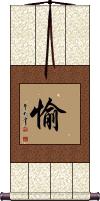
There is no pleasure without pain
No pain, no gain
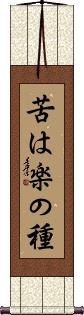
苦は楽の種 is a Japanese proverb that means “One cannot have pleasure without pain.”
It's one of a few Japanese ways to say, “No pain, no gain.”
Note: Because this selection contains some special Japanese Hiragana characters, it should be written by a Japanese calligrapher.
Eat Drink and Be Merry
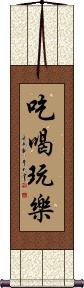
吃喝玩樂 is the short version of, “Eat, drink, and be merry.”
This is a Chinese proverb that suggests abandoning oneself to a life of pleasure.
Eat Drink and Be Merry, For Tomorrow We Die
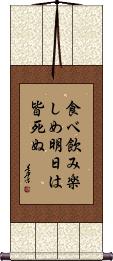
食べ飲み楽しめ明日は皆死ぬ means “eat drink and be merry, for tomorrow we die,” in Japanese.
Note: Because this selection contains some special Japanese Hiragana characters, it should be written by a Japanese calligrapher.
This in-stock artwork might be what you are looking for, and ships right away...
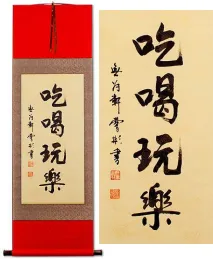
Gallery Price: $176.00
Your Price: $97.77
Not the results for pleasure that you were looking for?
Below are some entries from our dictionary that may match your pleasure search...
| Characters If shown, 2nd row is Simp. Chinese |
Pronunciation Romanization |
Simple Dictionary Definition |
園 园 see styles |
yuán yuan2 yüan sonomi そのみ |
More info & calligraphy: Garden / Orchard / Park(n,n-suf) (1) garden (esp. man-made); orchard; park; plantation; (2) place; location; (female given name) Sonomi vihāra; place for walking about, pleasure-ground, garden, park. |
快 see styles |
kuài kuai4 k`uai kuai yoshi よし |
More info & calligraphy: Fast(1) pleasure; delight; enjoyment; (2) (abbreviation) (See 快速・2,快特) rapid (train); (female given name) Yoshi Glad, joyful; quick, sharp. |
華 华 see styles |
huá hua2 hua ririka りりか |
More info & calligraphy: Flowers / Blooming / Splendid / China(1) flashiness; showiness; brilliance; splendor; (2) bloom; flowers; (3) (abbreviation) (See 中華民国・1) Republic of China; (female given name) Ririka kusuma; puṣpa; padma; a flower, blossom; flowery; especially the lotus; also 花, which also means pleasure, vice; to spend, waste, profligate. 華 also means splendour, glory, ornate; to decorate; China. |
十法 see styles |
shí fǎ shi2 fa3 shih fa jippō |
More info & calligraphy: Ten perfect Mahayana rules |
快感 see styles |
kuài gǎn kuai4 gan3 k`uai kan kuai kan kaikan かいかん |
More info & calligraphy: Pleasant Feelingpleasant feeling; pleasant sensation; pleasure |
欲樂 欲乐 see styles |
yù lè yu4 le4 yü le yokuraku |
More info & calligraphy: Kama - Desire Wish Longing |
花柳界 see styles |
karyuukai / karyukai かりゅうかい |
More info & calligraphy: The Geisha’s World |
吃喝玩樂 吃喝玩乐 see styles |
chī hē wán lè chi1 he1 wan2 le4 ch`ih ho wan le chih ho wan le |
More info & calligraphy: Eat Drink and Be Merry |
苦は楽の種 see styles |
kuharakunotane くはらくのたね |
More info & calligraphy: There is no pleasure without pain |
嬉 see styles |
xī xi1 hsi ureshi うれし |
(literary) to amuse oneself; to play; to have fun (f,s,p) Ureshi Play, pleasure. |
戲 戏 see styles |
xì xi4 hsi ke |
trick; drama; play; show; CL:齣|出[chu1],場|场[chang3],臺|台[tai2] khelā, krīḍā. Play, sport, take one's pleasure; theatricals, which are forbidden to a monk or nun. |
捨 舍 see styles |
shě she3 she sha しゃ |
to give up; to abandon; to give alms {Buddh} equanimity; upeksa; upekkha upekṣā, neglect, indifference, abandoning, M.W. To relinquish, renounce, abandon, reject, give. One of the chief Buddhist virtues, that of renunciation, leading to a state of "indifference without pleasure or pain" (Keith), or independence of both. v. 舍. It is defined as the mind 平等 in equilibrium, i.e. above the distinction of things or persons, of self or others; indifferent, having abandoned the world and all things and having no affections or desires. One of the seven bodhyaṅgas. Translit. sa, śa, s(r). |
歓 see styles |
huān huan1 huan kan かん |
old variant of 歡|欢[huan1] joy; enjoyment; delight; pleasure; (given name) Kan |
興 兴 see styles |
xìng xing4 hsing hajime はじめ |
feeling or desire to do something; interest in something; excitement (1) interest; entertainment; pleasure; (2) (See 六義・1) implicit comparison (style of the Shi Jing); (given name) Hajime abhyudaya. Rise, begin; prosper; elated. |
七情 see styles |
qī qíng qi1 qing2 ch`i ch`ing chi ching shichijou / shichijo しちじょう |
seven emotional states; seven affects of traditional Chinese medical theory and therapy, namely: joy 喜[xi3], anger 怒[nu4], anxiety 憂|忧[you1], thought 思[si1], grief 悲[bei1], fear 恐[kong3], fright 驚|惊[jing1]; seven relations (1) seven emotions (in The Book of Rites: joy, anger, sorrow, fear, love, hate, desire); seven emotions (in Buddhism: joy, anger, sorrow, pleasure, love, hate, desire); (2) seven effects (of a traditional Chinese medicine); (surname) Shichijō The seven emotions : pleasure, anger, sorrow, joy, love, hate, desire. |
三受 see styles |
sān shòu san1 shou4 san shou sanju |
The three states of Vedanā, i. e. sensation, are divided into painful, pleasurable, and freedom from both 苦, 樂, 捨. When things are opposed to desire, pain arises; when accordant, there is pleasure and a desire for their continuance; when neither, one is detached or free. 倶舍論 1. |
二受 see styles |
èr shòu er4 shou4 erh shou niju |
The dual receptivity or karma of pleasure and pain, the physical and the mental, i.e. 身 and 心. |
二因 see styles |
èr yīn er4 yin1 erh yin niin / nin にいん |
{Buddh} two causes Two causes, of which there are various definitions: (1) 生因 The producing cause (of all good things); and 了因 the revealing or illuminating cause i.e. knowledge, or wisdom. (2) 能生因 The 8th 識 q. v.: the cause that is able to produce all sense and perceptions, also all good and evil; and 方便因 the environmental or adaptive cause, which aids the 8th 識, as water or earth does the seed, etc. (3) 習因 or 同類因 Practice or habit as cause e. g. desire causing desire; and 報因 or 果熟因 the rewarding cause, or fruit-ripening cause, e. g. pleasure or pain caused by good or evil deeds. (4) 正因 Correct or direct cause i.e. the Buddha-nature of all beings; and 緣因 the contributory cause, or enlightenment (see 了因 above) which evolves the 正因 or Buddha-nature by good works. (5) 近因 Immediate or direct cause and 遠因 distant or indirect cause or causes. |
二果 see styles |
èr guǒ er4 guo3 erh kuo nika |
Sakṛdāgāmin; v. 裟 and 斯. The second "fruit" of the four kinds of Hīnayāna arhats, who have only once more to return to mortality. Also the two kinds of fruit or karma: (a) 習氣果 The good or evil characteristics resulting from habit or practice in a former existence; (b) 報果the pain or pleasure resulting (in this life) from the practices of a previous life. |
二求 see styles |
èr qiú er4 qiu2 erh ch`iu erh chiu nigu |
The two kinds of seeking: 得求 seeking to get (e.g. pleasure) and 命求 seeking long life. |
五受 see styles |
wǔ shòu wu3 shou4 wu shou goju |
The five vedanas, or sensations; i. e. of sorrow, ofjoy; of pain, of pleasure; of freedom from them all; the first two are limited to mental emotions, the two next are of the senses, and the fifth of both; v. 唯識論 5. |
五果 see styles |
wǔ guǒ wu3 guo3 wu kuo goka ごか |
(1) five fruits (peach, Japanese plum, apricot, jujube, Japanese chestnut); (2) (Buddhist term) five types of effect in cause-and-effect relationships; (3) (Buddhist term) five effects of ignorance and formations on one's current life The five fruits, or effects; there are various groups, e. g. I. (1) 異熟果 fruit ripening divergently, e. g. pleasure and goodness are in different categories; present organs accord in pain or pleasure with their past good or evil deeds; (2) 等流果 fruit of the same order, e. g. goodness reborn from previous goodness; (3) 土用果 present position and function fruit, the rewards of moral merit in previous lives; (4) 增上果 superior fruit, or position arising from previous earnest endeavor and superior capacity: (5) 離繋果 fruit of freedom from all bonds, nirvana fruit. II. Fruit, or rebirth: (1) 識 conception (viewed psychologically); (2) 名色 formation mental and physical; (3) 六處 the six organs of perception complete; (4) 觸 their birth and contact with the world; (5) 受 consciousness. III. Five orders of fruit, with stones, pips, shells (as nuts), chaff-like (as pine seeds), and with pods. |
五海 see styles |
wǔ hǎi wu3 hai3 wu hai goumi / gomi ごうみ |
(surname) Goumi The five 'seas' or infinities seen in a vision by Puxian, v. 舊華嚴經 3, viz., (1) all worlds, (2) all the living, (3) universal karma, (4) the roots of desire and pleasure of all the living, (5) all the Buddhas, past, present, and future. |
五識 五识 see styles |
wǔ shì wu3 shi4 wu shih goshiki |
The five parijñānas, perceptions or cognitions; ordinarily those arising from the five senses, i. e. of form-and-color, sound, smell, taste, and touch. The 起信論 Awakening of Faith has a different set of five steps in the history of cognition; (1) 業識 initial functioning of mind under the influence of the original 無明 unenlightenment or state of ignorance; (2) 轉識 the act of turning towards the apparent object for its observation; (3) 現識 observation of the object as it appears; (4) 知識 the deductions derived from its appearance; (5) 相續識 the consequent feelings of like or dislike, pleasure or pain, from which arise the delusions and incarnations. |
五逆 see styles |
wǔ nì wu3 ni4 wu ni gogyaku ごぎゃく |
(1) {Buddh} five cardinal sins (killing one's father, killing one's mother, killing an arhat, shedding the blood of a Buddha, causing a schism within the sangha); (2) (hist) crime of killing one's master, father, grandfather, mother, or grandmother pañcānantarya; 五無間業 The five rebellious acts or deadly sins, parricide, matricide, killing an arhat, shedding the blood of a Buddha, destroying the harmony of the sangha, or fraternity. The above definition is common both to Hīnayāna and Mahāyāna. The lightest of these sins is the first; the heaviest the last. II. Another group is: (1) sacrilege, such as destroying temples, burning sutras, stealing a Buddha's or a monk's things, inducing others to do so, or taking pleasure therein; (2) slander, or abuse of the teaching of śrāvaka s, pratyekabuddhas, or bodhisattvas; (3) ill-treatment or killing of a monk; (4) any one of the five deadly sins given above; (5) denial of the karma consequences of ill deeds, acting or teaching others accordingly, and unceasing evil life. III. There are also five deadly sins, each of which is equal to each of the first set of five: (1) violation of a mother, or a fully ordained nun; (2) killing a bodhisattva in a sangha; (5) destroying a Buddha's stūpa. IV. The five unpardonable sin of Devadatta who (1) destroyed the harmony of the community; (2) injured Śākyamuni with a stone, shedding his blood; (3) induced the king to let loose a rutting elephant to trample down Śākyamuni; (4) killed a nun; (5) put poison on his finger-nails and saluted Śākyamuni intending to destroy him thereby. |
五食 see styles |
wǔ shí wu3 shi2 wu shih gojiki |
The five kinds of spiritual food by which roots of goodness are nourished: correct thoughts; delight in the Law; pleasure in meditation; firm resolve, or vows of self-control; and deliverance from the karma of illusion. |
享受 see styles |
xiǎng shòu xiang3 shou4 hsiang shou kyouju / kyoju きょうじゅ |
to enjoy; to live it up; pleasure; CL:種|种[zhong3] (noun, transitive verb) enjoyment (of freedom, beauty, etc.); reception (of a right, privilege, rank, etc.); having to receive and make one's own |
享楽 see styles |
kyouraku / kyoraku きょうらく |
(noun, transitive verb) enjoyment; pleasure |
佚楽 see styles |
itsuraku いつらく |
(noun/participle) pleasure |
偷安 see styles |
tōu ān tou1 an1 t`ou an tou an |
to shirk responsibility; thoughtless pleasure-seeking |
Click here for more pleasure results from our dictionary
The following table may be helpful for those studying Chinese or Japanese...
| Title | Characters | Romaji (Romanized Japanese) | Various forms of Romanized Chinese | |
| Pleasure | 愉 | yu | yú / yu2 / yu | yü |
| There is no pleasure without pain | 苦は楽の種 | ku wa raku no tane kuwarakunotane | ||
| Eat Drink and Be Merry | 吃喝玩樂 吃喝玩乐 | chī hē wán lè chi1 he1 wan2 le4 chi he wan le chihewanle | ch`ih ho wan le chihhowanle chih ho wan le |
|
| Eat Drink and Be Merry, For Tomorrow We Die | 食べ飲み楽しめ明日は皆死ぬ | tabe nomi tanoshime ashita wa mina shinu | ||
| In some entries above you will see that characters have different versions above and below a line. In these cases, the characters above the line are Traditional Chinese, while the ones below are Simplified Chinese. | ||||

Successful Chinese Character and Japanese Kanji calligraphy searches within the last few hours...



