Custom Friendliness Chinese & Japanese Calligraphy Wall Scroll
We have many options to create artwork with Friendliness characters on a wall scroll or portrait.
If you want to create a cool Friendliness Asian character tattoo, you can purchase that here:
Asian / Chinese / Japanese Tattoo Image Service
...and we'll give you many tattoo image templates of the ancient Asian symbols that express the idea of friendliness.
1. Friendliness
4. Kindness and Forgiving Nature
6. Kindness
7. Love and Respect / Kindness and Respect
8. Loving-Kindness Conquers All
9. Mercy / Compassion / Buddhist Loving Kindness
10. Caring
11. Eternal Friendship / Friends Forever
13. Eternal Friendship / Friends Forever
15. Friendship
16. Friendship Dojo
18. Polite
20. Beautiful Woman
21. Benevolence
22. Best Friends / Closest Friend
23. Best Friends
24. Brahmavihara - The Four Immeasurables
25. Buddha Heart / Mind of Buddha
26. Commitment
27. Compassion
31. Forgive
33. Forgive
34. Forgiveness
35. Friend
36. Soul Mates
37. Generosity
38. Gentleness
39. Goddess of Mercy and Compassion
41. Good Heart
42. Good Intentions
43. Good Intentions / Good Will / Good Faith
46. Grace
47. Grace from Heaven / Grace from God
48. Helpfulness
49. Jin Shin Jyutsu
50. Justice / Rectitude / Right Decision
51. Kindheartedness / Benevolence / Humanity
53. Love
55. Love and Honor
59. The Middle Way
62. Peace / Harmony
63. Reizan
65. Shit Happens
66. Most Sincere Friend / Honest Friend / Real Friend / Best Friend
67. Unselfish: Perfectly Impartial
68. Yushinkai
Friendliness
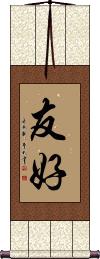
友好 is a Japanese, Chinese, and old Korean word that means friendliness.
This word can also be defined as “amity,” “friendly,” and “outgoing.”
This can be a Japanese given name Yuukou or Yuko. It can also be a Japanese surname that romanizes as Tomoyoshi.
See Also: Friendship
Kindness / Benevolence
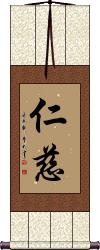
仁慈 word is used in Chinese, Korean, Japanese, and Asian Buddhism to relay the important idea of loving kindness.
仁慈 can also be defined as: benevolent; charitable; kind; merciful; kind-hearted; benevolence; kindness; humanity; mercy.
In Japanese, this can also be the given name Hitoji. This would also be a good Mandarin Chinese given name romanized as Jentzu (in Taiwan) or Renci (which sounds like ren-tsuh).
Compassion / Kindness

思いやり is compassion, kindness, or sympathy in Japanese.
The first part of this word suggests feelings, emotion, sentiment, love, affection, wish, and hope are connected with this idea of compassion and sympathy.
Note: Because this selection contains some special Japanese Hiragana characters, it should be written by a Japanese calligrapher.
Kindness and Forgiving Nature
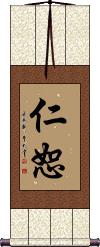
仁恕 is a word in Chinese and Japanese that means something like benevolence with magnanimity or kindness with a forgiving nature.
If this describes you, then you are the type of person that I would like to call my friend.
This may not be the most common word in daily use, but it's old enough that it transcended cultures from China to Japan in the 5th century when Japan lacked a written language and absorbed Chinese characters and words into their language.
Note: 仁恕 is not commonly used in Korean.
Kindness / Caring
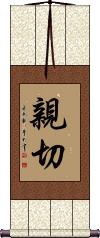
親切 is a Chinese/Japanese/Korean word that can also mean affectionate, cordial, warm, or close (emotionally).
Kindness shows you care and are doing some good to make life better for others. Be thoughtful about people's needs. Show love and compassion to someone who is sad or needs your help. When you are tempted to be cruel, to criticize or tease, decide to be kind instead.
See Also: Love | Caring | Benevolence
Kindness
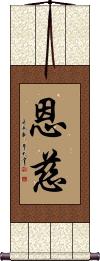
恩慈 means to bestow kindness or favor upon someone. This can also be a Japanese surname that romanizes as Onji.
Love and Respect / Kindness and Respect
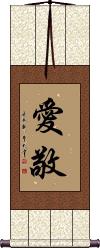
愛敬 is a Chinese, Japanese Kanji, and old Korean Hanja title that can mean “love and respect,” “kindness and respect,” “to love with reverence,” “charm,” “amiability,” “winsomeness,” “courtesy,” or “ingratiating behavior.”
Note: The wide-ranging definitions show that this word is a bit ambiguous without the context of being used in a sentence.
Loving-Kindness Conquers All
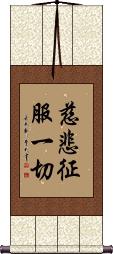
慈悲征服一切 is a way to express the idea that mercy, compassion, and loving-kindness can overcome all things.
This phrase is composed of 3 Chinese words:
慈悲 = loving-kindness; mercy; compassion; benevolence. It's used in Buddhism a lot to express the idea of how one should treat everyone else and all living beings.
征服 = to conquer; to subdue; to vanquish; to overcome.
一切 = all; everything; the whole; lock, stock, and barrel; without exception.
Mercy / Compassion / Buddhist Loving Kindness
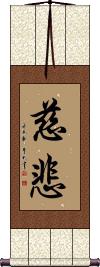
Besides the title above, 慈悲 can also be defined as clemency or lenience and sometimes the act of giving charity.
In the Buddhist context, it can be defined as “benevolence,” “loving-kindness and compassion,” or “mercy and compassion.”
This Buddhist virtue is perhaps the most important to employ in your life. All sentient beings that you encounter should be given your loving kindness. And trust me, however much you can give, it comes back. Make your life and the world a better place!
This Chinese/Japanese Buddhist term is the equivalent of Metta Karuna from Pali or Maitri Karuna from Sanskrit.
慈 can mean loving-kindness by itself.
悲 adds a component of sorrow, empathy, compassion, and sympathy for others.
See Also: Benevolence
Caring
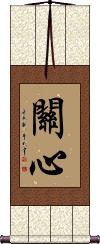
關心 means caring in Chinese.
Caring is giving love and attention to people and things that matter to you and anyone who needs help. When you care about people, you help them. You do a careful job, giving your very best effort. You treat people and things gently and respectfully. Caring makes the world a safer place.
Note: 關心 is also a word in Korean Hanja, but in Korean, it means taking interest or concern. In Korean, it's still a good word, but it doesn't quite have the “caring for a person” meaning that it does in Chinese.
See Also: Benevolence | Altruism
Eternal Friendship / Friends Forever
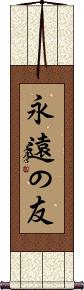
永遠の友 is a Japanese phrase about eternal friendship.
The first two characters mean eternal, eternity, perpetuity, forever, immortality, and permanence.
The third character is a possessive article which sort of makes this selection mean “Love, of the eternal kind.”
The last character is “friend” or “Friendship.”
See Also: Best Friends
Friend / Friendship
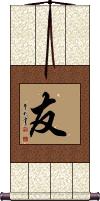
友 is the simplest way to express the idea of friends or friendship in Chinese.
It can mean friend, companion, or pal in Japanese. In Korean, it can mean friend, companion, or associate.
This single character is open to interpretation, so it can mean different things to different people (not necessarily a bad thing, as you can decide what it means to you). If you want a more concisely-defined word, you should probably pick one of our multi-character friendship-related words.
See Also: Best Friends | Friendly | Friendship
Eternal Friendship / Friends Forever
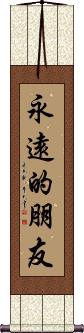
永遠的朋友 means friends that are eternal or a friendship that will last forever - you will remain the best of friends as long as you live.
The first two characters mean forever, eternal, eternity, perpetuity, immortality, and/or permanence.
The middle character links the words (it's a possessive article).
The last two characters represent friendship, or simply “friends.”
Friend / Friendship
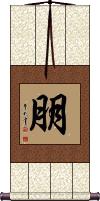
朋 is a simple way to say friend, companion, comrade, or pal in Chinese, Japanese Kanji, or old Korean Hanja.
朋 is a very short form, so a longer two-character word for friendship might be better.
Note: In Japanese, this can also be the female given name, Yukari.
Friendship
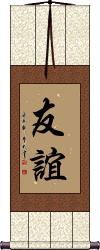
友誼 can be defined as companionship or fellowship.
This word is common in Chinese and Korean Hanja but is seldom used in Japanese anymore.
See Also: Partnership
Friendship
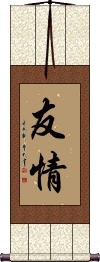
友情 can be translated as “camaraderie” or “fellowship.”
But this character combination is only used commonly in Japanese Kanji and Korean Hanja.
Friendship Dojo

友愛道場 can be translated as “Friendship Dojo.”
友愛 = Friendship or fraternity.
道場 = Training hall.
Courtesy / Politeness
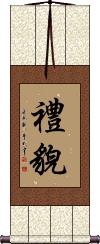
禮貌 is a Chinese and old Korean word that means courtesy or politeness.
Courtesy is being polite and having good manners. When you speak and act courteously, you give others a feeling of being valued and respected. Greet people pleasantly. Bring courtesy home. Your family needs it most of all. Courtesy helps life to go smoothly.
If you put the words "fēi cháng bù" in front of this, it is like adding "very much not." it’s a great insult in China, as nobody wants to be called "extremely discourteous" or "very much impolite."
Polite

ポライト is the name Polite in Japanese Katakana.
Note: Because this title is entirely Japanese Katakana, it should be written by a Japanese calligrapher.
Five Codes of Tang Soo Do
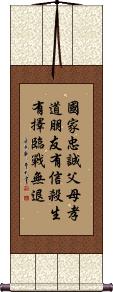
国家忠诚父母孝道朋友有信杀生有择临战无退 are the five codes of Tang Soo Do.
I suggest you have this arranged in five columns when you get to the options page for your custom calligraphy wall scroll.
Here are my translations of each of the five codes:
國家忠誠 Be loyal to your country.
父母孝道 In regards to parents, behave in a filial way.
朋友有信 Be faithful in friendship.
殺生有擇 When fighting for life and death, make noble choices.
臨戰無退 No retreat in battle.
Note: “Tang Soo Do” is a romanization of 唐手道. It's 당수도 in Korean Hangul. It can also be romanized as “Tangsudo” or “Dangsudo.”
Beautiful Woman

美麗的女人 is the best and most polite way to express “beautiful woman” in Chinese.
Note: Some people may like the simple 2-character 美女 way to express this, but there are some bad connotations with that, so better to stay with this longer and more respectful title.
See Also: Beautiful Girl | Beauty
Benevolence
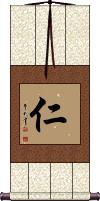
Beyond benevolence, 仁 can also be defined as “charity” or “mercy” depending on context.
The deeper meaning suggests that one should pay alms to the poor, care for those in trouble, and take care of his fellow man (or woman).
仁 is one of the five tenets of Confucius. In fact, it is a subject that Confucius spent a great deal of time explaining to his disciples.
I have also seen this benevolent-related word translated as perfect virtue, selflessness, love for humanity, humaneness, goodness, goodwill, or simply “love” in the non-romantic form.
This is also a virtue of the Samurai Warrior
See our page with just Code of the Samurai / Bushido here
Best Friends / Closest Friend
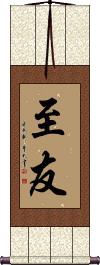
至友 is one way to say best friend in Chinese.
The first character can mean “most,” “extreme,” or “best.”
The second character means “friend” or “friends” (plural forms work differently in China).
Can also be translated as “close friend” or “most intimate friend.”
See Also: Friendship | Soulmates
Best Friends
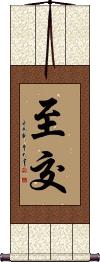
至交 is an alternate way to say best friend in Chinese.
The first character can mean “most,” “extreme” or “best.” The second character means “making friends” or “building friendship.” There's sort of a suggestion with the second character that fate caused you to intersect in life and become friends (that character can mean intersection in some context).
This can also mean “most intimate friend,” “very good friend of long-standing,” or “closest friend.”
See Also: Friendship | Soulmates
Brahmavihara - The Four Immeasurables
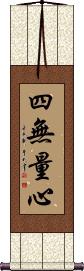
四無量心 is the cattāri brahmavihārā or catvāri apramāṇāni.
The four immeasurables, or infinite Buddha-states of mind. These four dhyānas include:
1. 慈無量心 boundless kindness, maitrī, or bestowing of joy or happiness.
2. 悲無量心 boundless pity, karuṇā, to save from suffering.
3. 喜無量心 boundless joy, muditā, on seeing others rescued from suffering.
4. 捨無量心 limitless indifference, upekṣā, i.e., rising above these emotions or giving up all things.
Buddha Heart / Mind of Buddha
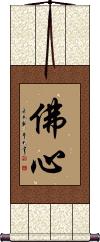
佛心 means the Buddha's mind, Buddha-heart, or the spiritually enlightened heart/mind.
The Buddha Heart is detached from good and evil and other such constructs. The Buddha Heart has mercy, compassion, and loving-kindness for all sentient life, the good, the wicked, and all in between.
The heart and mind (心) are the same concepts in the ancient Orient, so you can use heart and mind interchangeably in this context.
Commitment
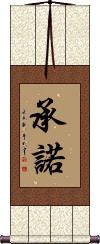
承諾 embodies the idea of commitment but also means to make a big effort or to undertake a great task.
Commitment is caring deeply about something or someone. It is deciding carefully what you want to do and then giving it 100%, holding nothing back. You give your all to a friendship, a task, or something you believe in. You finish what you start. You keep your promises.
In Chinese, this word directly means to undertake something or to make a promise to do something.
Outside of the commitment idea, this particular word can also mean approval, acceptance, consent, assent, acquiescence, or agreement, depending on context (especially in Japanese and Korean). Therefore, this word is probably best if your audience is Chinese.
See Also: Partnership | Hard Work | Dedication
Compassion
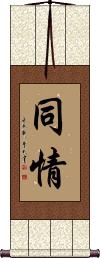
These two characters mean compassion and sympathy in Chinese, Japanese, and Korean, which makes this word universal.
Compassion is caring and understanding someone is hurt or troubled (even if you don't know them). It is wanting to help, even if all you can do is listen and say kind words. You forgive mistakes. You are a friend when someone needs a friend.
Mercy / Compassion / Love
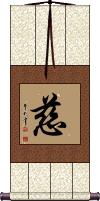
慈 is the simplest way to express the idea of compassion.
This can also mean love for your fellow humans, humanity, or living creatures. Sometimes this is extended to mean charity.
This term is often used in a Buddhist or Christian context. The concept was also spoken of by Laozi (Lao Tzu) in the Dao De Jing (Tao Te Ching).
慈 is considered the direct translation of the Sanskrit word मैत्री (maitrī) Pali word मेत्ता (mettā). In this context, it means benevolence, loving kindness, and goodwill.
This Chinese character is understood in Japanese but is usually used in compound words (not seen alone). Also used in old Korean Hanja, so it's very universal.
See Also: Mercy | Benevolence | Forgiveness | Kindness
Courtesy / Etiquette
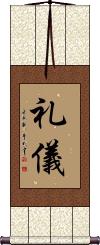
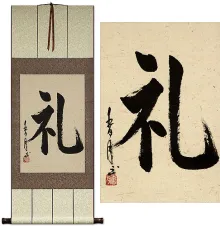
In Japanese, 礼儀 means “manners,” “courtesy,” or “etiquette.”
This also clearly means etiquette in Chinese, though the first Japanese Kanji has been “modernized” and happens to be the same as the modern Simplified Chinese version. Therefore, this word will be understood by both Japanese and Chinese people but best if your audience is mostly Japanese (Chinese people would generally prefer the ancient Traditional Chinese version).
Empathy / Humanity
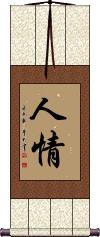
人情 is a title that can apply to a lot of meanings, including humanity, empathy, kindness, sympathy, human nature, human emotions, or human interaction.
Forgive
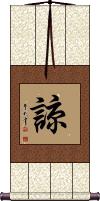
This single character means “forgive” in Chinese.
In Korean, this kind of means forgive but also has slightly different definitions of considering, excuse, faithful or believe.
Forgive
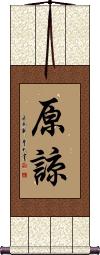
This two-character word means “forgive” in Chinese.
It can also be defined as “to pardon” or “to excuse.” 原諒 is a kind of general forgiveness.
Begging Forgiveness
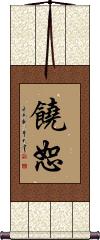
饒恕 is a Chinese word that is a kind of forgiveness that you would beg for like a servant begging a master.
This can also be the forgiveness that a person would beg from the king or God.
This word suggests that this is forgiveness for something really bad (a terrible crime or sin).
Forgive
Deep heartfelt forgiveness
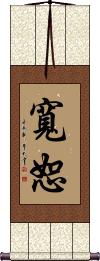
寛恕 is a word of Chinese origin means forgive or forgiveness.
寬恕 is a deep kind of forgiveness from the bottom of your heart.
In a religious context, this is the kind of forgiveness that you beg God for and that God grants you.
In Korean Hanja, this can also be defined as forbearance or leniency.
In Japanese Kanji, beyond forgiveness, this can also mean magnanimity or generosity.
While we don't actively recommend Asian tattoos, this would be the forgiveness title that is best for a tattoo in most cases.
 Note: The first character can also be written in the form shown to the right (especially in Japanese). If you have a preference, please let us know in the "special instructions" when you place your order.
Forgiveness (from the top down)
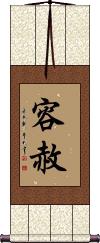
容赦 is the kind of forgiveness that a king might give to his subjects for crimes or wrong-doings.
容赦 is a rather high-level forgiveness. Meaning that it goes from a higher level to a lower (not the reverse).
Alone, the first character can mean “to bear,” “to allow,” and/or “to tolerate,” and the second can mean “to forgive,” “to pardon,” and/or “to excuse.”
When you put both characters together, you get forgiveness, pardon, mercy, leniency, or going easy (on someone).
See Also: Benevolence
Forgiveness
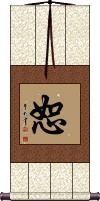
恕 means to forgive, show mercy, absolve, or excuse in Chinese and Korean Hanja (though mostly used in compound words in Korean).
恕 incorporates the pictogram of a heart at the bottom, and a woman and a mouth at the top. The heart portion has the most significance, as it is suggested that it is the heart's nature to forgive.
In Asian culture, as with most other cultures, forgiveness is an act of benevolence and altruism. In forgiving, you put yourself in someone else's shoes and show them the kindness that you would want them to show you. Confucius referred to this quality as “human-heartedness.”
Friend
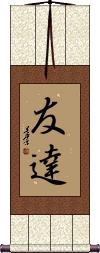
友達 is the most common way to say “friend” in Japanese.
See Also: Best Friends | Friendly | Friendship
Soul Mates
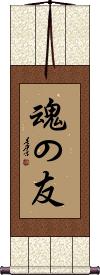
魂の友 is one of a few ways to write “Soul Mates” in Japanese.
The first Kanji means soul, spirit, ghost, immortal soul, the mind, or conscious mind. From Sanskrit, it's Vijñāna.
The middle character is a Japanese Hiragana connecting or possessive article that links the two ideas together.
The last Kanji means friends or friendship.
Generosity
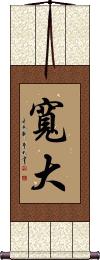
寬大 is a Chinese, Japanese, and Korean word that means Generosity.
Generosity is giving and sharing. You share freely, not with the idea of receiving something in return. You find ways to give others happiness and give just for the joy of giving. Generosity is one of the best ways to show love and friendship.
寬大 can also be translated as charitable, magnanimity, liberality, or in some contexts, broad-mindedness.
Note: There is a tiny deviation in the first character when written in Japanese. If you choose our Japanese master calligrapher, the little dot on the lower right of the first character will be omitted. With or without the dot, this can be read in Chinese, Japanese Kanji, and old Korean Hanja.
See Also: Benevolence | Altruism | Charity
Gentleness
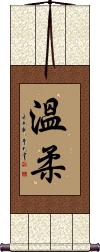
溫柔 or “gentleness” is moving wisely, touching softly, holding carefully, speaking quietly, and thinking kindly.
When you feel mad or hurt, use your self-control. Instead of harming someone, talk things out peacefully. You are making the world a safer, gentler place.
Gentleness
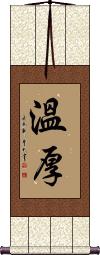
溫厚 is a Chinese, Japanese, and old Korean word for gentle or gentleness.
This can also mean “kindness” (more as an adjective like “kind person”).
 The modern Japanese version of the first character looks like the one to the right. If you want this modern Japanese form, just click on that Kanji instead of the button above.
Goddess of Mercy and Compassion
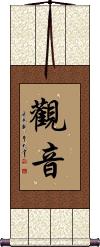
觀音/観音 is the Buddhist deity known as the Goddess of Mercy or Bodhisattva of Compassion.
In Chinese, the proper name of this being is Guan Yin. There is some debate as to whether Guan Yin is female. The argument comes from some scripture that suggests Buddhist deities take on the male form. Others say that Guan Yin has no sex. And still, others are okay with the female representation of Guan Yin.
This bodhisattva is also known or Romanized in the following ways:
Mandarin Chinese: Guan Yin, Kuan Yin, Kwan Yin.
Japanese: Kannon, Kwannon.
Sanskrit: Bodhisattva Avalokitesvara.
Korean: Gwan-eum.
Vietnamese: Quan Âm.
Thai: Kuan Eim.
English: Bodhisattva of Mercy and Salvation, Goddess of Compassion, Buddha of Mercy, et al.
Note: The first character has a slight variation in Japanese. If your audience is specifically Japanese, you may want to select that version.
See Also: Buddhism | Goddess | Namo Amitabha | Bodhisattva
Goddess of Mercy and Compassion
This is the long or more formal version of this title
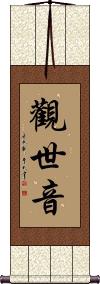
觀世音 is the longer and perhaps more formal title for the Buddhist deity known as the Goddess of Mercy or Bodhisattva of Compassion.
The longer title of this bodhisattva is Romanized in the following ways:
Mandarin Chinese: Guanshi Yin, Kuan-shih Yin.
Japanese: Kanzeon.
Sanskrit: Bodhisattva Avalokitesvara.
Korean: Gwan-se-eum.
Vietnamese: Quan Thế Âm.
Thai: Prah Mae Kuan Eim.
English: Bodhisattva of Mercy and Salvation, Goddess of Compassion, Buddha of Mercy, et al.
Please view our more common and shorter version, “Guan Yin” before you make a decision. Also, note that the first character has a slight variation in Japanese. If your audience is specifically Japanese, you may want to select that version.
Goddess of Compassion
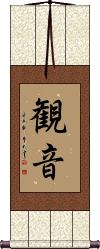
観音 is the specifically Japanese version of Bodhisattva of Compassion or Guan Yin.
In Japanese, this is pronounced Kannon and occasionally spelled Kwannon. The Chinese version is a bit more commonly seen in Asia. However, in Japanese, there is a slight variation with the first character.
Some time ago, a camera company in Japan named their company after this Buddhist deity. That camera company is still known as Canon (they chose a “C” instead of a “K” when they Romanized this name).
Goddess of Compassion
Long or more formal Japanese version of this title
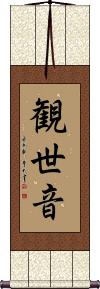
観世音 is the more extended and more formal Japanese version of Bodhisattva of Compassion or Guan Yin.
In Japanese, this is pronounced Kanzeon. The Chinese version is a bit more common in Asia, but in Japanese, they use a slight variation of the first character. Choose this version only if your intended audience is specifically Japanese.
Good Heart
A heart of kindness, benevolence, and virtuous intentions
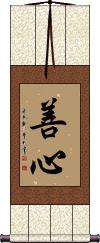
善心 literally reads “Good Heart” but is used to refer to the ideas of kindness, benevolence, philanthropy, virtuous intentions, moral sense, and conscience.
Some will also translate this as the morality of mind (as the character for the heart is often used to mean mind).
In Japanese, this can be the given name Yoshinaka.
Good Intentions
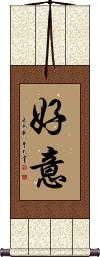
好意 is how to write good intentions in Chinese, Japanese, and old Korean Hanja.
This can also be translated as kindness, goodwill, favor/favour, courtesy, good wishes, friendliness, and/or amity.
Good Intentions / Good Will / Good Faith
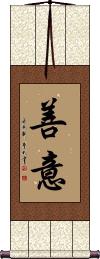
善意 is a word that means good intentions, goodwill, or to things done in good faith in Chinese, Japanese, and old Korean Hanja.
It's the reason you do good deeds or the desire you have inside yourself to do the right thing.
This can also be translated as benevolence, kindness, virtuous mind, positive mindset, or favorable sense.
善意 is also used in the legal context for things done in good faith (regardless of outcome).
In Japanese, this can be the personal name Yoshi or Yoshii.
Goodness / Good Deed
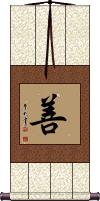
善 means goodness, virtue, good deed, charitable, benevolent, well-disposed, nice, pleasant, kind, or simply, “good.”
善 is the kind of good that applies to someone's good character, or a good person in general.
Referring to someone with this word means that they have a well-aimed moral compass, and are charitable, giving, wise, and honest. Basically, this is a blanket statement for every good trait a human can have or all the things that make someone good.
In another context, it can mean to improve or perfect something or refer to someone who is good at something.
Goodness / Kind-Hearted
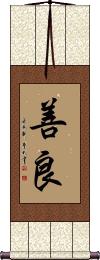
善良 is a word that means good and honest, kind-hearted, goodness, excellence, and/or virtue.
Grace
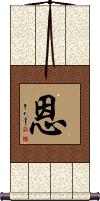
恩 is often translated as “kind act from above,” as in “The Grace of God.”
This doesn't necessarily have to come from God. It could be a favor paid to you, or help that you received (or gave). Of course, you can decide for yourself whether the grace or favor given to you by a friend is actually a gift from God.
Other possible translations of this character:
Favor / favour, acts of kindness, merits, beneficial Influence, kindness, indebtedness, obligation, and benevolent influence.
Grace from Heaven / Grace from God
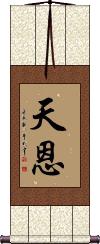
天恩 is the deepest way to say “Heaven's Grace” or “God's Grace” in Chinese.
The first character means Heaven or sky (referring, in this case, to the domain of God).
The second character means grace, blessings, benevolence, favor/favour, acts of kindness, merits, or beneficial influence.
This title can also be defined as:
Blessings of Heaven, Favor of the Emperor, Divination's luckiest day, or blessings of nature. Note: When you see “Emperor” above, remember that the Emperor, like the Pope, is theoretically chosen by God or seen as an emissary or conduit of God in ancient Asian culture. It would only be read that way in a certain context, such as “The Emperor, in his mercy, bestowed upon him Heaven's Grace, and the prisoner was set free.”
Note: Technically, this is a Japanese word too (pronounced "ten-on") but it’s rarely used in Japan anymore. Therefore, this title is best if your audience is Chinese.
Grace from Heaven / Grace from God
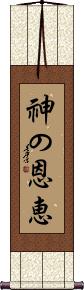
神の恩恵 means God's Grace in Japanese.
The first two characters act to create a word that means “divine,” “God's,” or “The Spirit's.”
The last two Kanji mean grace, favor/favour, blessing, or benefit.
Helpfulness

樂於助人 is about helpfulness, being of service to others, and doing thoughtful things that make a difference in their lives.
Offer your help without waiting to be asked. Ask for help when you need it. When we help each other, we get more done. We make our lives easier.
See Also: Caring | Charity | Benevolence
Jin Shin Jyutsu
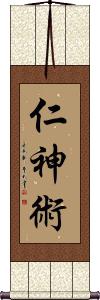
仁神術 is Jin Shin Jyutsu or Jin Shin Jutsu.
This is a practice of calming the mind and clearing the flow of Qi energy in the body. Jin Shin Jyutsu has some commonality with the practice of Reiki.
A good translation of 仁神術 would be “Benevolent Spirit Method.”
We can break that down into all of the possible meanings:
仁 = benevolence (esp. as a virtue of Confucianism), consideration, compassion, humanity, charity, kindness, or virtue.
神 = deity, soul, spirit, mysterious, psyche, god, divinity, spiritual powers, deva, divine, spiritual, or supernatural.
術 = way, method, means, art, trick, or plan. The correct romaji for this 術 Kanji should be “jutsu.” However, in martial arts, this is often written “jitsu” but in this case, “jyutsu” became common.
Justice / Rectitude / Right Decision
Also means: honor loyalty morality righteousness
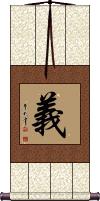
義 is about doing the right thing or making the right decision, not because it's easy but because it's ethically and morally correct.
No matter the outcome or result, one does not lose face if tempering proper justice.
義 can also be defined as righteousness, justice, morality, honor, or “right conduct.” In a more expanded definition, it can mean loyalty to friends, loyalty to the public good, or patriotism. This idea of loyalty and friendship comes from the fact that you will treat those you are loyal to with morality and justice.
義 is also one of the five tenets of Confucius's doctrine.
 There's also an alternate version of this character sometimes seen in Bushido or Korean Taekwondo tenets. It's just the addition of a radical on the left side of the character. If you want this version, click on the image to the right instead of the button above.
This is also a virtue of the Samurai Warrior
See our page with just Code of the Samurai / Bushido here
See Also: Judgment | Impartial | Confucius Tenets
Kindheartedness / Benevolence / Humanity
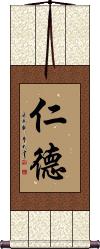
仁德 is a word that can be translated as love, kindheartedness, benevolence, and humanity.
The first character means benevolence by itself.
The second character means virtue or morality.
Japanese note: The second Kanji of this word has been slightly simplified (one tiny horizontal stroke removed). It is still readable for Japanese but if you select our Japanese calligrapher, expect that stroke to be missing on your wall scroll.
Wise Younger Brother
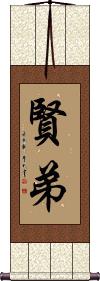
賢弟 is an honorific title for a little brother.
This can be translated as a worthy little brother or wise younger brother. This can also be a polite reference to another person's younger brother, your junior, or your subordinate.
Love
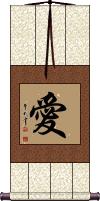
愛 universally means love in Chinese, Japanese Kanji, old Korean Hanja, and old Vietnamese.
愛 is one of the most recognized Asian symbols in the West and is often seen on tee shirts, coffee mugs, tattoos, and more.
愛 can also be defined as affection, to be fond of, to like, or to be keen on. It often refers to romantic love, and is found in phrases like, “I love you.” But in Chinese, one can say, “I love that movie” using this character as well.
This can also be a pet name or part of a pet name in the way we say “dear” or “honey” in English.
This can be a girl’s name “Ai” in both Chinese and Japanese.
More about this character:
This may be hard to imagine as a westerner but the strokes at the top of this love character symbolize family & marriage.
 The symbol in the middle is a little easier to identify. It is the character for "heart" (it can also mean "mind" or "soul"). I guess you can say that no matter if you are from the East or the West, you must put your heart into your love.
 The strokes at the bottom create a modified character that means "friend" or "friendship."
I suppose you could say that the full meaning of this love character is to love your family, spouse, and friends with all of your heart, since all three elements exist in this character.
See Also: I Love You | Caring | Benevolence | Double Happiness Happy Marriage Wall Scroll
Love and Devotion
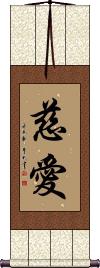
慈愛 refers to the kind of love and devotion you might have to your children or any loved one.
This especially applied to your children but could also be any member of your family - spouse, etc.
This can also be translated as affection, kindness, love, to love affectionately.
慈愛 is also used in a Buddhist context with the same meaning.
In Japanese, this can also be a female given name romanized as Yasue.
Love and Honor
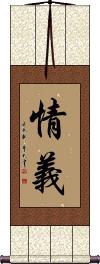
情義 means to love and honor in Chinese. 情義 is more or less the kind of thing you'd find in marriage vows.
The first character suggests emotions, passion, heart, humanity, sympathy, and feelings.
In this context, the second character means to honor your lover's wishes and treat them justly and righteously (fairly). That second character can also be translated as “obligation,” as in the obligation a husband and wife have to love each other even through difficult times.
In the context outside of a couple's relationship, this word can mean “comradeship.”
Japanese may see this more as “humanity and justice” than “love and honor.” It's probably best if your target is Chinese.
This is the short and sweet form, there is also a longer poetic form (you can find it here: Love and Honor if it’s not on the page you are currently viewing).
See Also: Love and Honor
Loving Heart / Compassion
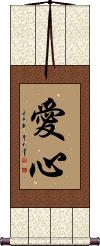
愛心 literally means “loving heart.” It can also be translated as “compassion.”
In Chinese, it carries more of a compassionate meaning.
愛心 is rarely used in Japanese anymore, so best if your audience is Chinese.
See Also: Compassion | Love
Loving Heart / One’s Love

戀心 literally means “loving heart.” It can also be translated as “one's love” or “awakening of love.”
戀心 is used exclusively for love between boyfriends and girlfriends or husband and wife.
Breaking down the meaning of each Kanji, the first means love, affection, or tender passion. The second Kanji means heart, mind, or soul (most will read it as the heart).
See Also: Compassion | Love
Master / Skilled Worker
Secondary version of Sifu
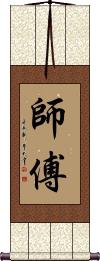
師傅 is “sifu” as in the “master” in the context of martial arts.
But two sifu titles are floating around. This one can simply mean “skilled worker.”
Historically, this term has been used for many things, such as “The tutor of a king or emperor.” But now it's more commonly used to mean master worker or qualified worker.
Currently, within the field of skilled labor, a master (Shifu) is higher than a journeyman and is considered to be one worthy of teaching others.
Note: In the 1970s and 1980s, this term was used as a common form of polite address between people. You might say, “master, do you know where Tian'anmen Square is?” to a person on the street at that time. This usage has almost passed; however, for some reason, people still often refer to taxi cab drivers as “master” in China (though I think/hope this is fading).
In Mandarin Chinese, this is pronounced like “Sure Foo,” and in Cantonese, like “See Foo.”
The second character is the difference between this sifu and the other. In this case, the second character by itself means tutor, instructor, or teacher.
The Middle Way
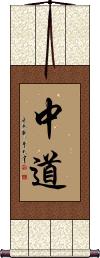
In the most basic translation, 中道 means road through the middle or middle road.
The expanded meaning can be moderation or the golden mean.
But if you are looking for this title, you are probably seeking the Buddhist definition, which is more complex.
中道 is the middle way or middle path of Buddhism. This has various interpretations. In general, it denotes the mean between two extremes and has special reference to the mean between realism and nihilism, or eternal substantial existence and annihilation.
The Buddha teaches that one should not take things to extremes. Don't be extremely evil and engage in debauchery and murder. But do not spend every waking out trying to be a perfect saint. Instead, take the middle path, try to help others, show loving kindness wherever you can, and try not to do harm. If you inadvertently harm another being, make amends if you can, and move on. Realize you are not perfect, but in time, a path of moderation lead toward proper living and enlightenment.
Moral and Virtuous
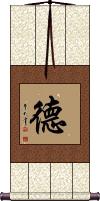
德 is the simple way to express the ideas of having virtue, morals, kindness, benevolence, goodness, etc.
德 also happens to be the first character of the Chinese word for Germany.
 There is a slight deviation in the Japanese Kanji form. If you want the modern Japanese version, please click on the special Kanji shown to the right instead of the button above. Note that the traditional Chinese form is still readable and understood by Japanese people.
See Also: Ethics | Chastity | Prudence | Benevolence | Morality
Partnership: Marriage
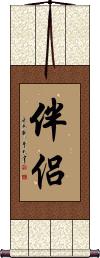
伴侶 is a Chinese, Japanese, and old Korean word that expresses the kind of partnership in which a good marriage is founded.
伴侶 could also be translated as mates or companionship or as a noun to refer to a partner or companion.
This does not have to include marriage but at least refers to a partnership with a deep relationship or bond.
Note that this is not the same as a business partner. Different words are used for various types business partnerships.
See Also: Friendship
Peace / Harmony
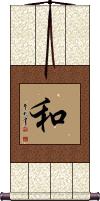
和 is the simplest form of peace and harmony.
和 can also be translated as the peaceful ideas of gentle, mild, kind, and calm. With a more harmonious context, it can be translated as union, together with, on good terms with, or on friendly terms.
Most people would just translate this character as peace and/or harmony. 和 is a very popular character in Asian cultures - you can even call it the “peace symbol” of Asia. In fact, this peace and harmony character was seen repeatedly during the opening ceremony of the 2008 Olympic Games in Beijing (a major theme of the games).
In old Chinese poems and literature, you might see this used as a kind of "and." As in two things summed together. As much as you could say, "the sun and moon," you could say "the sun in harmony with the moon."
See Also: Inner Peace | Patience | Simplicity
Reizan

This is a Japanese name that can romanize as Reizan, Reisan, Rezan, Resan, or Reiyama.
It means “polite mountain” or “respectful mountain.”
Shiken Haramitsu Daikomyo
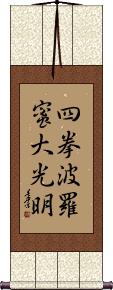
四拳波羅蜜大光明 is “shiken haramitsu daikōmyō,” a famous Japanese Buddhist mantra.
四拳 = shi-ken = four fists (many translate this as “four hearts”).
波羅蜜 = ha-ra-mitsu = A loanword representing pāramitā, or entrance into Nirvana. Awkwardly, it also means jackfruit.
大光明 = dai-kou-myo = big/great light bright (great bright light).
Shiken represents four hearts:
1. The Merciful Heart - Love and caring for all living things.
2. The Sincere Heart - Pursues righteousness, or the right path - sincerely trying to do what is right.
3. The Attuned Heart - Knows that nature and fate have their ways, and thus stay in tune with the universe.
4. The Dedicated Heart - Steadfast on the chosen path to the end.
Shit Happens
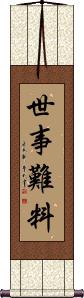
世事難料 is a polite Chinese version of “shit happens.” This phrase suggests that things happen (for no reason, and for which we have no control).
The first two characters mean the affairs of life, things of the world, worldly affairs, or ways of the world.
The third character means disaster, distress, problem, difficulty, difficult, hardships, troubles, or defect.
The last character in this context means: to expect, to anticipate, or to guess.
If you put this back together, you have something like, “In life, troubles [should be] expected.”
Most Sincere Friend / Honest Friend / Real Friend / Best Friend
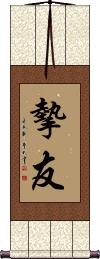
摯友 is one way to say best friend in Chinese.
The first character can mean “honest” or “most sincere.” The second character means “friend” or “friends” (plural forms work differently in Chinese).
See Also: Friendship | Soulmates
Unselfish: Perfectly Impartial
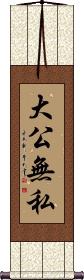
大公無私 is a Chinese proverb that comes from an old story from some time before 476 BC. About a man named Qi Huangyang, who was commissioned by the king to select the best person for a certain job in the Imperial Court.
Qi Huangyang selected his enemy for the job. The king was very confused by the selection, but Qi Huangyang explained that he was asked to find the best person for the job, not necessarily someone that he liked or had a friendship with.
Later, Confucius commented on how unselfish and impartial Qi Huangyang was by saying, “Da Gong Wu Si” which, if you look it up in a Chinese dictionary, is generally translated as “Unselfish” or “Just and Fair.”
If you translate each character, you'd have something like
“Big/Deep Justice Without Self.”
Direct translations like this leave out a lot of what the Chinese characters really say. Use your imagination, and suddenly you realize that “without self” means “without thinking about yourself in the decision” - together, these two words mean “unselfish.” The first two characters serve to drive the point home that we are talking about a concept that is similar to “blind justice.”
One of my Chinese-English dictionaries translates this simply as “just and fair.” So that is the short and simple version.
Note: This can be pronounced in Korean, but it's not a commonly used term.
See Also: Selflessness | Work Unselfishly for the Common Good | Altruism
Yushinkai

友心会 is the martial arts title Yushinkai in Japanese Kanji.
This can translate as “Friendship Club” or “Friends Heart Club.”
Other possible titles that are romanized as Yushinkai are 有心会 and 結心会. These have a meaning that is more like Heartfelt Club or Heart-to-Heart Club. Be sure to check carefully to see what your school title is before you order. Let me know if you need one of these alternate versions.
This in-stock artwork might be what you are looking for, and ships right away...

Gallery Price: $61.00
Your Price: $33.88

Gallery Price: $61.00
Your Price: $33.88

Gallery Price: $61.00
Your Price: $33.88

Gallery Price: $61.00
Your Price: $33.88
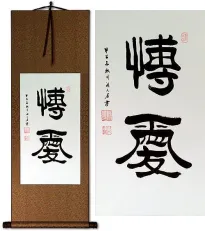
Gallery Price: $200.00
Your Price: $69.88
Gallery Price: $304.00
Your Price: $168.88
The following table may be helpful for those studying Chinese or Japanese...
| Title | Characters | Romaji (Romanized Japanese) | Various forms of Romanized Chinese | |
| Friendliness | 友好 | yuukou / yuko | yǒu hǎo / you3 hao3 / you hao / youhao | yu hao / yuhao |
| Kindness Benevolence | 仁慈 | jin ji / jinji | rén cí / ren2 ci2 / ren ci / renci | jen tz`u / jentzu / jen tzu |
| Compassion Kindness | 思いやり | omoi yari / omoiyari | ||
| Kindness and Forgiving Nature | 仁恕 | jinjo | rén shù / ren2 shu4 / ren shu / renshu | jen shu / jenshu |
| Kindness Caring | 親切 亲切 | shin setsu / shinsetsu | qīn qiè / qin1 qie4 / qin qie / qinqie | ch`in ch`ieh / chinchieh / chin chieh |
| Kindness | 恩慈 | onji | ēn cí / en1 ci2 / en ci / enci | en tz`u / entzu / en tzu |
| Love and Respect Kindness and Respect | 愛敬 爱敬 | aikei / aikyou aikei / aikyo | ài jìng / ai4 jing4 / ai jing / aijing | ai ching / aiching |
| Loving-Kindness Conquers All | 慈悲征服一切 | cí bēi zhēng fú yī qiè ci2 bei1 zheng1 fu2 yi1 qie4 ci bei zheng fu yi qie cibeizhengfuyiqie | tz`u pei cheng fu i ch`ieh tzupeichengfuichieh tzu pei cheng fu i chieh |
|
| Mercy Compassion Buddhist Loving Kindness | 慈悲 | ji hi / jihi | cí bēi / ci2 bei1 / ci bei / cibei | tz`u pei / tzupei / tzu pei |
| Caring | 關心 关心 | guān xīn / guan1 xin1 / guan xin / guanxin | kuan hsin / kuanhsin | |
| Eternal Friendship Friends Forever | 永遠の友 | ei en no yuu eiennoyuu ei en no yu | ||
| Friend Friendship | 友 | tomo | yǒu / you3 / you | yu |
| Eternal Friendship Friends Forever | 永遠的朋友 永远的朋友 | yǒng yuǎn de péng yǒu yong3 yuan3 de peng2 you3 yong yuan de peng you yongyuandepengyou | yung yüan te p`eng yu yungyüantepengyu yung yüan te peng yu |
|
| Friend Friendship | 朋 | tomo | péng / peng2 / peng | p`eng / peng |
| Friendship | 友誼 友谊 | yuugi / yugi | yǒu yì / you3 yi4 / you yi / youyi | yu i / yui |
| Friendship | 友情 | yuujou / yujo | yǒu qíng / you3 qing2 / you qing / youqing | yu ch`ing / yuching / yu ching |
| Friendship Dojo | 友愛道場 | yū ai dō jō yūaidōjō | yǒu ài dào chǎng you3 ai4 dao4 chang3 you ai dao chang youaidaochang | yu ai tao ch`ang yuaitaochang yu ai tao chang |
| Courtesy Politeness | 禮貌 礼貌 | lǐ mào / li3 mao4 / li mao / limao | ||
| Polite | ポライト | poraito | ||
| Five Codes of Tang Soo Do | 國家忠誠父母孝道朋友有信殺生有擇臨戰無退 国家忠诚父母孝道朋友有信杀生有择临战无退 | guó jiā zhōng chéng fù mǔ xiào dào péng yǒu yǒu xìn shā shēng yǒu zé lín zhàn wú tuì guo2 jia1 zhong1 cheng2 fu4 mu3 xiao4 dao4 peng2 you3 you3 xin4 sha1 sheng1 you3 ze2 lin2 zhan4 wu2 tui4 guo jia zhong cheng fu mu xiao dao peng you you xin sha sheng you ze lin zhan wu tui | kuo chia chung ch`eng fu mu hsiao tao p`eng yu yu hsin sha sheng yu tse lin chan wu t`ui kuo chia chung cheng fu mu hsiao tao peng yu yu hsin sha sheng yu tse lin chan wu tui |
|
| Beautiful Woman | 美麗的女人 美丽的女人 | měi lì de nǚ rén mei3 li4 de nv3 ren2 mei li de nv ren meilidenvren | mei li te nü jen meilitenüjen |
|
| Benevolence | 仁 | jin | rén / ren2 / ren | jen |
| Best Friends Closest Friend | 至友 | zhì yǒu / zhi4 you3 / zhi you / zhiyou | chih yu / chihyu | |
| Best Friends | 至交 | zhì jiāo / zhi4 jiao1 / zhi jiao / zhijiao | chih chiao / chihchiao | |
| Brahmavihara - The Four Immeasurables | 四無量心 四无量心 | shi mur you shin shimuryoushin shi mur yo shin | sì wú liàng xīn si4 wu2 liang4 xin1 si wu liang xin siwuliangxin | ssu wu liang hsin ssuwulianghsin |
| Buddha Heart Mind of Buddha | 佛心 | busshin / bushin | fó xīn / fo2 xin1 / fo xin / foxin | fo hsin / fohsin |
| Commitment | 承諾 承诺 | shoudaku / shodaku | chéng nuò cheng2 nuo4 cheng nuo chengnuo | ch`eng no chengno cheng no |
| Compassion | 同情 | dou jou / doujou / do jo | tóng qíng tong2 qing2 tong qing tongqing | t`ung ch`ing tungching tung ching |
| Mercy Compassion Love | 慈 | ji | cí / ci2 / ci | tz`u / tzu |
| Courtesy Etiquette | 礼儀 / 禮儀 礼仪 | rei gi / reigi | lǐ yì / li3 yi4 / li yi / liyi | li i / lii |
| Empathy Humanity | 人情 | ninjou / ninjo | rén qíng / ren2 qing2 / ren qing / renqing | jen ch`ing / jenching / jen ching |
| Forgive | 諒 谅 | liàng / liang4 / liang | ||
| Forgive | 原諒 原谅 | yuán liàng yuan2 liang4 yuan liang yuanliang | yüan liang yüanliang |
|
| Begging Forgiveness | 饒恕 饶恕 | ráo shù / rao2 shu4 / rao shu / raoshu | jao shu / jaoshu | |
| Forgive | 寬恕 / 寛恕 宽恕 | kan jo / kanjo | kuān shù / kuan1 shu4 / kuan shu / kuanshu | k`uan shu / kuanshu / kuan shu |
| Forgiveness (from the top down) | 容赦 | you sha / yousha / yo sha | róng shè / rong2 she4 / rong she / rongshe | jung she / jungshe |
| Forgiveness | 恕 | shù / shu4 / shu | ||
| Friend | 友達 友达 | tomo dachi / tomodachi | ||
| Soul Mates | 魂の友 | tamashii no tomo tamashiinotomo tamashi no tomo | ||
| Generosity | 寬大 宽大 | kandai | kuān dà / kuan1 da4 / kuan da / kuanda | k`uan ta / kuanta / kuan ta |
| Gentleness | 溫柔 温柔 | wēn róu / wen1 rou2 / wen rou / wenrou | wen jou / wenjou | |
| Gentleness | 溫厚 温厚 | on kou / onkou / on ko | wēn hòu / wen1 hou4 / wen hou / wenhou | |
| Goddess of Mercy and Compassion | 觀音 / 観音 观音 | kan non / kannon | guān yīn / guan1 yin1 / guan yin / guanyin | kuan yin / kuanyin |
| Goddess of Mercy and Compassion | 觀世音 观世音 | guān shì yīn guan1 shi4 yin1 guan shi yin guanshiyin | kuan shih yin kuanshihyin |
|
| Goddess of Compassion | 観音 | kan non / kannon | guān yīn / guan1 yin1 / guan yin / guanyin | kuan yin / kuanyin |
| Goddess of Compassion | 観世音 | kan ze on / kanzeon | guān shì yīn guan1 shi4 yin1 guan shi yin guanshiyin | kuan shih yin kuanshihyin |
| Good Heart | 善心 | yoshinaka | shàn xīn / shan4 xin1 / shan xin / shanxin | shan hsin / shanhsin |
| Good Intentions | 好意 | kou i / koui / ko i | hǎo yì / hao3 yi4 / hao yi / haoyi | hao i / haoi |
| Good Intentions Good Will Good Faith | 善意 | zen i / zeni | shàn yì / shan4 yi4 / shan yi / shanyi | shan i / shani |
| Goodness Good Deed | 善 | zen | shàn / shan4 / shan | |
| Goodness Kind-Hearted | 善良 | zen ryou / zenryou / zen ryo | shàn liáng shan4 liang2 shan liang shanliang | |
| Grace | 恩 | on | ēn / en1 / en | |
| Grace from Heaven Grace from God | 天恩 | tiān ēn / tian1 en1 / tian en / tianen | t`ien en / tienen / tien en | |
| Grace from Heaven Grace from God | 神の恩恵 | kami no on kei kaminoonkei | ||
| Helpfulness | 樂於助人 乐于助人 | lè yú zhù rén le4 yu2 zhu4 ren2 le yu zhu ren leyuzhuren | le yü chu jen leyüchujen |
|
| Jin Shin Jyutsu | 仁神術 | jin shin jutsu jinshinjutsu | rén shén shù ren2 shen2 shu4 ren shen shu renshenshu | jen shen shu jenshenshu |
| Justice Rectitude Right Decision | 義 义 | gi | yì / yi4 / yi | i |
| Kindheartedness Benevolence Humanity | 仁德 | jintoku | rén dé / ren2 de2 / ren de / rende | jen te / jente |
| Wise Younger Brother | 賢弟 贤弟 | ken tei / kentei | xián dì / xian2 di4 / xian di / xiandi | hsien ti / hsienti |
| Love | 愛 爱 | ai | ài / ai4 / ai | |
| Love and Devotion | 慈愛 慈爱 | jiai | cí ài / ci2 ai4 / ci ai / ciai | tz`u ai / tzuai / tzu ai |
| Love and Honor | 情義 情义 | qíng yì / qing2 yi4 / qing yi / qingyi | ch`ing i / chingi / ching i | |
| Loving Heart Compassion | 愛心 爱心 | ài xīn / ai4 xin1 / ai xin / aixin | ai hsin / aihsin | |
| Loving Heart One’s Love | 戀心 恋心 | koi gokoro / koigokoro | ||
| Master Skilled Worker | 師傅 师傅 | shī fu / shi1 fu / shi fu / shifu | shih fu / shihfu | |
| The Middle Way | 中道 | chuu dou / chuudou / chu do | zhōng dào zhong1 dao4 zhong dao zhongdao | chung tao chungtao |
| Moral and Virtuous | 德 徳 | toku | dé / de2 / de | te |
| Partnership: Marriage | 伴侶 伴侣 | hanryo | bàn lǚ / ban4 lv3 / ban lv / banlv | pan lü / panlü |
| Peace Harmony | 和 | wa | hé / he2 / he | ho |
| Reizan | 礼山 | rei zan / rei san reizan / reisan | ||
| Shiken Haramitsu Daikomyo | 四拳波羅蜜大光明 | shi ken ha ra mitsu dai kou myou shi ken ha ra mitsu dai ko myo | ||
| Shit Happens | 世事難料 世事难料 | shì shì nán liào shi4 shi4 nan2 liao4 shi shi nan liao shishinanliao | shih shih nan liao shihshihnanliao |
|
| Most Sincere Friend Honest Friend Real Friend Best Friend | 摯友 挚友 | zhì yǒu / zhi4 you3 / zhi you / zhiyou | chih yu / chihyu | |
| Unselfish: Perfectly Impartial | 大公無私 大公无私 | dà gōng wú sī da4 gong1 wu2 si1 da gong wu si dagongwusi | ta kung wu ssu takungwussu |
|
| Yushinkai | 友心會 友心会 | yuu shin kai yuushinkai yu shin kai | ||
| In some entries above you will see that characters have different versions above and below a line. In these cases, the characters above the line are Traditional Chinese, while the ones below are Simplified Chinese. | ||||



