Custom Health Chinese & Japanese Calligraphy Wall Scroll
We have many options to create artwork with Health characters on a wall scroll or portrait.
See also: Strength and Fortitude
Switched to secondary search mode due to lack of results using primary.
These secondary results may not be very accurate. Try a different but similar meaning word or phrase for better results. Or...
Look up in my Japanese Kanji & Chinese Character Dictionary(My dictionary is a different system then the calligraphy search you just tried)
If you want a special phrase, word, title, name, or proverb, feel free to contact me, and I will translate your custom calligraphy idea for you.
1. Massage
2. Birth / Life
5. Choose Life
6. The Spirit of the Dragon Horse
7. The Spirit of the Dragon Horse and Power of a Tiger
8. The Spirit of Dragon and Tiger
9. Dynamic Energy / Enthusiasm
11. Forest Bathing
12. Good Health
13. Good Health / Healthy / Vigor
14. Gung Ho
15. Healthy Living
17. Inner Strength / Inner Well-Being and Health
18. Three Treasures of Chinese Medicine
19. Khang
20. Life Force
22. Life Energy / Spiritual Energy
25. Peaceful / Tranquil / Calm / Free From Worry
26. Reiki
27. Restoration to Good Health
28. Robust / Sturdy
29. Running
31. Seiryoku Zenyo
32. Seishin Budo
34. Shaolin Chan
35. Spirit
36. Stamina / Vigor
38. Power / Strength
40. Strong / Healthy
42. Strong / Healthy
44. Strong and brave
45. Taido
47. Tsuyoi
48. Vitality
50. Warrior Soul / Heroic Spirit
52. Wellness
Massage
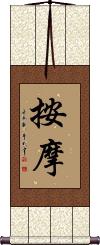
按摩 is a very common word for massage in China, Japan, and Korea.
In many cases, and perhaps traditionally, this is a massage performed by a blind person. However, in modern times, this is a very generic term for any kind of massage. This can range from a massage for health from a blind masseur or masseuse, a proper deep tissue massage by a professional masseuse, or an illicit massage with a “happy ending.”
Birth / Life
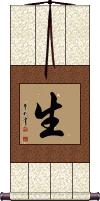
生 is a Chinese word that means “to be born” and “to give birth.”
Also, it's often used to refer to life itself, and sometimes “to grow.”
生 is used in a lot of compound words such as “yi sheng,” which means “doctor” (literally “healer of life”), “sheng ri” which means “birthday” (literally “birth-day”), and “xue sheng” which means student (literally “studying life” or “learner [about] life”). Few Chinese people will think of the literal meaning when this uses words like doctor and student - but it is interesting to note.
生 has the same root meaning in Korean Hanja and Japanese. However, in Japanese, there are many possible pronunciations, and this can be used to mean “raw” or “unprocessed” (as in draft beer). Therefore, not be the best if your audience is Japanese.
See Also: Vitality
Blessings on this Home
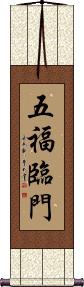
五福臨門 means “five good fortunes arrive [at the] door.”
It is understood to mean “may the five blessings descend upon this home.”
These blessings are known in ancient China to be: longevity, wealth, health, virtue, and natural death (living to old age). This is one of several auspicious sayings you might hear during the Chinese New Year.
Body and Earth in Unity
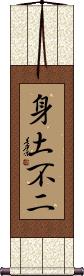
身土不二 (Shindofuni) is originally a Buddhist concept or proverb referring to the inseparability of body-mind and geographical circumstances.
This reads, “Body [and] earth [are] not two.”
Other translations or matching ideas include:
Body and land are one.
Body and earth can not be separated.
Body earth sensory curation.
You are what you eat.
Indivisibility of the body and the land (because the body is made from food and food is made from the land).
Going further, this speaks of our human bodies and the land from which we get our food being closely connected. This phrase is often used when talking about natural and organic vegetables coming directly from the farm to provide the healthiest foods in Japan.
Character notes: 身(shin) in this context does not just mean your physical body but a concept including both body and mind.
土 (do) refers to the soil, earth, clay, land, or in some cases, locality. It's not the proper name of Earth, the planet. However, it can refer to the land or realm we live in.
Japanese note: This has been used in Japan, on and off, since 1907 as a slogan for a governmental healthy eating campaign (usually pronounced as shindofuji instead of the original shindofuni in this context). It may have been hijacked from Buddhism for this propaganda purpose, but at least this is “healthy propaganda.”
Korean note: The phrase 身土不二 was in use by 1610 A.D. in Korea, where it can be found in an early medical journal.
In modern South Korea, it's written in Hangul as 신토불이. Korea used Chinese characters (same source as Japanese Kanji) as their only written standard form of the language until about a hundred years ago. Therefore, many Koreans will recognize this as a native phrase and concept.
See Also: Strength and Love in Unity
Choose Life
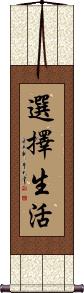
選擇生活 can mean to choose life instead of death (or suicide) or to choose to live life to the fullest.
I think of it as the key phrase used by Renton (Ewan McGregor) in the movie Trainspotting. While Chinese people will not think of Trainspotting when they see this phrase, for me, it will always be what comes near the end of this colorful rant:
Choose life. Choose a job. Choose a career. Choose a family. Choose a fucking big television. Choose washing machines, cars, compact disc players, and electrical tin can openers. Choose good health, low cholesterol, and dental insurance. Choose fixed-interest mortgage repayments. Choose a starter home. Choose your friends. Choose leisure wear and matching luggage. Choose a three-piece suite on-hire purchase in a range of fucking fabrics. Choose DIY and wondering who the fuck you are on a Sunday morning. Choose sitting on that couch watching mind-numbing, spirit-crushing game shows, stuffing fucking junk food into your mouth. Choose rotting away at the end of it all, pissing your last in a miserable home, nothing more than an embarrassment to the selfish, fucked-up brats you have spawned to replace yourself. Choose your future. Choose life.
The Spirit of the Dragon Horse
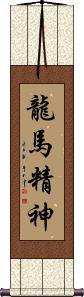
龍馬精神 is an old proverb that is used to wish someone good health and success combined as a great compliment.
The meaning is “The vigor and spirit of the legendary dragon-horse.” These four characters are often accompanied by four more which mean “...and the power and prestige of the tiger.” Here we are just offering the first part which is considered the short version.
By giving a wall scroll like this to someone, you were either wishing or telling them that they have an amazing quality. There is also a suggestion of good health - at least anyone with the vigor of a dragon horse would seem to also be in good health.
Note: In Japanese, this would be read as the spirit of 坂本龍馬 (Sakamoto_Ryōma), a beloved rebel who help abolish the old Japanese feudal system. This can be confusing, so I am declaring this proverb to be Chinese only.
The Spirit of the Dragon Horse and Power of a Tiger
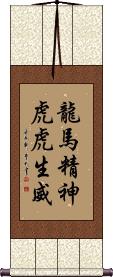
龍馬精神虎虎生威 is an old proverb that is used to wish someone great health and success combined as a great compliment.
The meaning is “The vigor and spirit of the legendary dragon-horse and the power and prestige of the tiger.”
By giving a wall scroll like this to someone, you were either wishing or telling them that they have these qualities. There is also a suggestion of good health - at least anyone with the vigor of a dragon horse would seem to also be in good health.
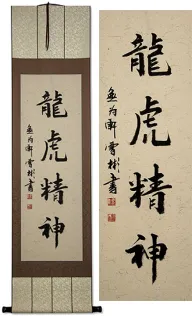
The Spirit of Dragon and Tiger
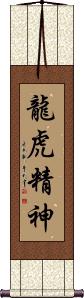
龍虎精神 means the spirit of the dragon and tiger.
It speaks to the vitality and vigor that is the nature of these two creatures.
Beyond “spirit,” the last two characters can also mean mind, soul, or heart. Therefore, you can also say this means “Heart of the Dragon and Tiger,” etc.
龍虎精神 is often titled “Ryukoseishin” in many Japanese martial arts.
Dynamic Energy / Enthusiasm
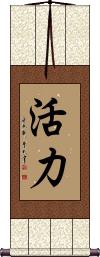
活力 is a Chinese, Japanese, and Korean word that can be defined as energy, vitality, vigor, vital force, enthusiasm, energetic, or dynamism.
Dynamic Energy / Enthusiasm
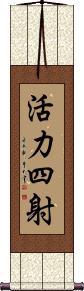
活力四射 is a Chinese word that can be defined as dynamic; enthusiastic; energetic; vitality.
This is the more robust 4-character version of this word. The short version consists of the first two characters: 活力. This 4-character version is commonly used only in Chinese.
The Five Fortunes

This is the title of “The Five Fortunes” in Chinese.
The implied five fortunes are as follows:
Longevity (壽)
Wealth (富)
Health & Composure (康寧)
Love of Virtue (攸好德)
A Peaceful Death (考終命)
Forest Bathing
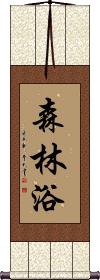
森林浴 is the title for forest bathing or Shinrinyoku in Japanese and Senlinyu in Chinese.
This is simply the practice of spending time in a forest, often including walking or deep breathing as a form of therapy.
Also defined as forest therapy or a peaceful walk through the woods for health benefits.
Good Health
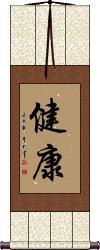
Good Health / Healthy / Vigor
Also suggests being at peace
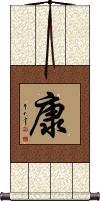
康 is a single character that means good health or vigor in Chinese, Japanese Kanji, and old Korean Hanja.
康 can also mean peaceful, at ease, or abundant in some contexts.
Please note that this is rarely seen alone in Japanese Kanji. In Japanese, it is used both for health-related compound words and to denote the kouhou through koushou eras of Japan.
In Korean, this can also be the family name “Kang” (caution: not the only family name romanized as Kang in Korean).
Gung Ho
Working Together
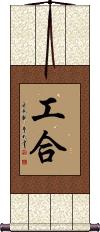
工合 is one of those Asian words that is used more in English than in the original Chinese.
Gung Ho was originally used to speak of Carlson's Raiders, a group of “Gung Ho” U.S. Marines who went on an island-hopping campaign of death during WWII.
A movie called Gung Ho came out in the mid-1940s and was later re-released in the 1950s depicting the 2nd Marine Raider Battalion, and brought this word to the mainstream.
It is still sometimes used today within the U.S. Marine Corps brotherhood to refer to a unit or group that works well together or is otherwise efficient and motivated (has good morals).
In 1986, there was a movie called Gung Ho about a Japanese company taking over an American automotive factory. They completely ignored the fact that this was a Chinese title.
It should be noted that this title actually means a condition, state, manner, or the health of something in Japanese.
Language and pronunciation notes:
Like many Asian words absorbed into common use in English, this one is drastically mispronounced. The official Romanization is “gong he” but that doesn't tell you enough. The vowel sound on the first character is like the English word “own,” now just add the g-sounds to the beginning and end. The second character is misleading, as you might think it is like the English word “he.” In reality, the vowel sound is more like the “u” in “up.”
It should also be noted that the current generation in China no longer uses or recognizes this as a common word or slogan.
Note: This can be pronounced and is a word in Japanese, though seldom used. Japanese will use a variation of "具合" instead. But still, not common.
Healthy Living
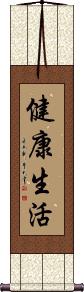
If you are into healthy living, 健康生活 might be an excellent selection for a wall scroll to hang in your home.
The first two characters speak of health, vitality, vigor, and being of sound body. The second two characters mean living or life (daily existence).
Independent Spirit
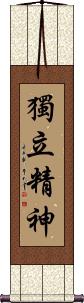
獨立精神 means independent spirit in Chinese.
The first two characters mean independent, independence, or to stand alone.
The last two characters mean spirit, spiritual, vigor, vitality, drive, mind, consciousness, thought, essence, heart, or soul.
With this information, you can make your translation combination such as “independent heart,” “stand-alone spirit,” or more creatively, “the drive to stand alone” in English. There are a lot of ways to interpret 獨立精神.
Inner Strength / Inner Well-Being and Health
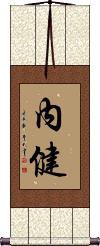
內健 is an old Chinese word meaning inner strength or inner health.
It's the idea of health and well-being starting or residing inside yourself. Also defined as fortitude within the context of good health.
Three Treasures of Chinese Medicine
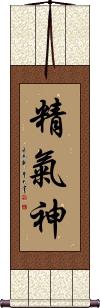
精, 氣, 神 are the characters jing, qi, and shen.
As a set, these three characters are known in English as the treasures of traditional Chinese medicine, the treasures of Qi Gong, or the three treasures of Taoism / Daoism.
Sometimes this set is titled 三寶 (sānbǎo) or “three treasures,” but here, we're writing each treasure out.
Here's how these characters are perceived in this context...
Jing: nutritive essence; refined; perfected; pure
Qi: vitality; energy; force; breath; vigor
Shen: spirit; soul; mind; being
To keep it simple, you can use “essence, vitality, and spirit” to define these.
Khang
康 is the Hmong name Khang in Chinese; meaning healthy, peacefule, or abundant.
This name is common in Vietnam, Laos, Malaysia, and Singapore.
Other characters can also be romanized as Khang such as 關 (mountain pass, close, or concern), 江 (river - especially in Malaysia), or 甘 (sweet).
Life Force
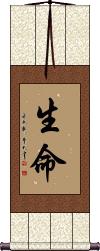
This Chinese, Korean and Japanese word means “life force” or simply “life.”
The first character means “life” or “birth.” The second means “life” or “fate.” Together they create the meaning of “life force,” though some will translate this as “existence” and sometimes “vitality.”
Living / Live Life
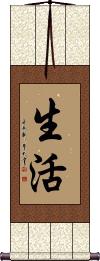
生活 means life, living, to live, or the state of being alive. It can also refer to your daily existence or livelihood. It can also be a suggestion to just “Live life.”
生活 is also the term used in other titles such as “healthy living” or Lance Armstrong's “Livestrong” campaign (Chinese title for Livestrong only).
If you need a reminder that you are alive and to take a breath, this might be the perfect wall scroll for you.
Life Energy / Spiritual Energy
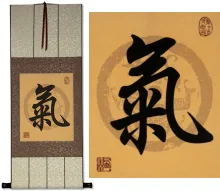
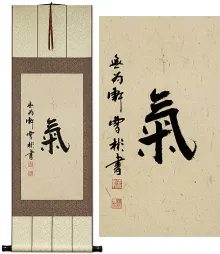
Chi Energy: Essence of Life / Energy Flow
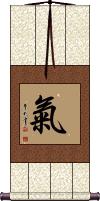
This 氣 energy flow is a fundamental concept of traditional Asian culture.
氣 is romanized as “Qi” or “Chi” in Chinese, “Gi” in Korean, and “Ki” in Japanese.
Chi is believed to be part of everything that exists, as in “life force” or “spiritual energy.” It is most often translated as “energy flow” or literally as “air” or “breath.” Some people will simply translate this as “spirit,” but you must consider the kind of spirit we're talking about. I think this is weighted more toward energy than spirit.
The character itself is a representation of steam (or breath) rising from rice. To clarify, the character for rice looks like this: 
Steam was apparently seen as visual evidence of the release of “life energy” when this concept was first developed. The Qi / Chi / Ki character is still used in compound words to mean steam or vapor.
The etymology of this character is a bit complicated. It's suggested that the first form of this character from bronze script (about 2500 years ago) looked like these samples: 

However, it was easy to confuse this with the character for the number three. So the rice radical was added by 221 B.C. (the exact time of this change is debated). This first version with the rice radical looks like this: 
The idea of Qi / Chi / Ki is really a philosophical concept. It's often used to refer to the “flow” of metaphysical energy that sustains living beings. Yet there is much debate that has continued for thousands of years as to whether Qi / Chi / Ki is pure energy or consists partially or fully of matter.
You can also see the character for Qi / Chi / Ki in common compound words such as Tai Chi / Tai Qi, Aikido, Reiki, and Qi Gong / Chi Kung.
In the modern Japanese Kanji, the rice radical has been changed into two strokes that form an X.
 The original and traditional Chinese form is still understood in Japanese, but we can also offer that modern Kanji form in our custom calligraphy. If you want this Japanese Kanji, please click on the character to the right instead of the “Select and Customize” button above.
More language notes: This is pronounced like “chee” in Mandarin Chinese, and like “key” in Japanese.
This is also the same way to write this in Korean Hanja where it is Romanized as “gi” and pronounced like “gee” but with a real G-sound, not a J-sound.
Though Vietnamese no longer use Chinese characters in their daily language, this character is still widely known in Vietnam.
See Also: Energy | Life Force | Vitality | Life | Birth | Soul
Moderation / Temperance
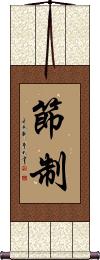
節制 means moderation or temperance in Chinese, Japanese Kanji, and old Korean Hanja.
Moderation is creating a healthy balance in your life between work and play, rest and exercise. You don't overdo or get swept away by the things you like. You use your self-discipline to take charge of your life and your time.
節制 can also be translated as sobriety or self-restraint.
This is often used as part of the Seven Heavenly Virtues to represent sobriety and/or temperance.
Peace and Good Health
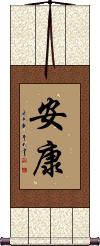
安康 means just what it says. It's a word that expresses both the idea of being at peace and healthy at the same time.
Note: 安康 is a bonafide word in Chinese and Korean, and the characters will at least make sense in Japanese.
Peaceful / Tranquil / Calm / Free From Worry
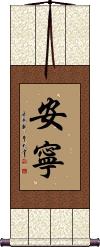
This is a nice word that means peaceful, tranquil, calm, composed, “free from worry,” “public peace,” tranquility, good health, well-being, or welfare in Chinese and Korean.
Note: The definition in Japanese is not so broad but still means peaceful or “public peace.”
Reiki
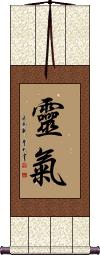
靈氣 is the title of a healing practice now found globally but with origins in Japan.
Special note: Outside of the context of the healing practice of Reiki, this means “aura” or “spiritual essence that surrounds all living things.” A Japanese person unfamiliar with the practice will take the “aura” meaning.
Reiki is a technique for stress reduction and relaxation that also heals. It can be compared to massage but is based on the idea that an unseen “life force energy” flows through us and is what causes us to be alive. If your life force energy is low, you'll be more likely to get sick or feel stressed. If your life force energy is abundant and flowing well, you become more capable of being happy and healthy.
There is a lot of information available if you want to Google this term - my job is to offer the calligraphy while you can decide if it is right for you.

Note: We are showing the ancient (traditional) form of the Reiki Kanji. I have seen Reiki written with the slightly simplified version and this more classic form. If you want the form of Reiki with the two strokes in the shape of an X on the second character and the modern first character, simply click on the Kanji characters to the right.
Note: 靈氣 is also a Chinese word, but in Chinese, these characters create a word that refers to a smart person or someone with high aspirations. It is not read as a healing method in Chinese.
In Korean Hanja, this can be read as a “mysterious atmosphere” by a Korean who is not familiar with the practice of Reiki (still has a cool meaning in Korean).
Restoration to Good Health
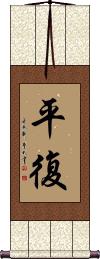
平復 is a Chinese and Japanese expression that means “to be cured,” “to be healed,” “restoration to health,” or “recovery from illness.”
In some contexts, it can mean “to pacify” or “to calm down.”
Robust / Sturdy
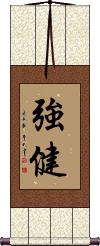
強健 means robustness or sturdiness in regards to being healthy and fit.
This can also be used to say “persistently good health.”
Running
...a race, a marathon, in competition
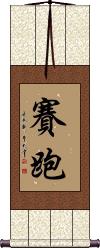
賽跑 is the sport of running in Chinese.
This title suggests that this is running in a competition (not strictly for health).
Seiryoku Saizen Katsuyo
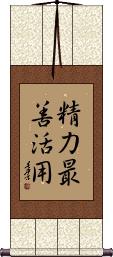
This is Seiryoku Saizen Katsuyō in Japanese.
The meaning is roughly “Optimal Use of Energy” although it can be translated in several other ways.
精力 = Energy/Vigor/Vitality
最善 = Optimal/Best/Utmost
活用 = Use/Employ/Engage
Seiryoku Zenyo
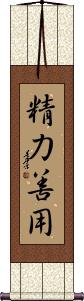
精力善用 means “maximum efficiency” and is often associated with Judo.
It is often matched with “Jita Kyoei” (mutual benefit) to complete the philosophy of Kodokan Judo.
精力 = sei ryoku = energy, vigor, and/or vitality.
善用 = zen yo = to be good at using (something), or to put (something) to good use.
Seishin Budo
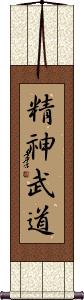
精神武道 is the Japanese martial arts title, Seishin Budo.
The first two characters, 精神, can mean vigor, vitality, drive, spiritual, mind, spirit, soul, heart, ethos, attitude, mentality, will, intention, essence, and fundamental significance.
The last two characters, 武道, are the Japanese word for martial arts (literally the Martial Way).
This title can also be romanized as Seshin Budou or Seishin Budō.
Seishin-Kai / Seishinkai
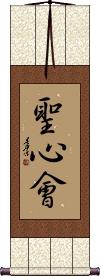
聖心会 is the Japanese martial arts title “Seishinkai” or “Seishin-Kai.”
It literally means “Sacred Heart Association” or “Pure-Heart Club.”
聖 can mean holy, sacred, saint, sage, virtuous, expert, wise and good, upright, or correct.
心 can mean heart, mind, center, core, spirit, soul, or vitality.
聖心 creates a word meaning sacred heart, or the holy mind (that of Buddha).
会 in Japanese means association, club, meeting, assembly, party, gathering, conference, athletic meet, or society.
Shaolin Chan
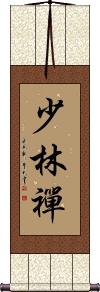
少林禪 translates as “Little Forest Meditation.”
少林禪 is part of a movement to provide spiritual and mental health by integrating the practices of martial arts and meditation.
More information at Shaolin Chan Foundation.
Spirit
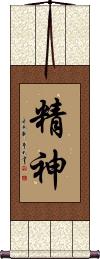
精神 is the kind of spirit you have if you perform well in sports or competitions. It is the idea of having a good attitude and putting your all into something - so much so that others can see or feel your spirit. It is the essence of your being that can only be subjectively described because there are no words that can fully explain what “spirit” really is.
For your information:
My Japanese dictionary further tries to explain this word by comparing it to mind, soul, heart, or intention.
My Chinese dictionary compares these characters to meanings like vigor, vitality, drive, and mentality.
My Korean dictionary defines this as mind, spirit, and soul.
Stamina / Vigor
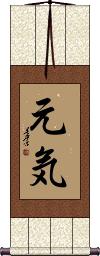
This Japanese word has a broad range of meanings. It can mean healthy, robust, vigor, vitality, stamina, spirit, or pep.
元気 is also used in part of a Japanese greeting, similar to “How are you doing?” but more like “How's your health?.”
Physical Strength
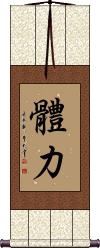
Power / Strength
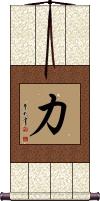
力 is the simplest form of “power” or “strength.”
In Japanese, it is pronounced “chikara” when used alone, and “ryoku” when used in a sentence (there are also a few other possible pronunciations of this Kanji in Japanese).
In some contexts, this can mean ability, force, physical strength, capability, and influence.
Strong / Powerful
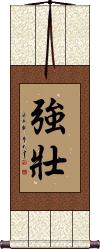
強壯 is an adjective that means powerful or strong.
It can also be translated as able-bodied, robust, or sturdy.
This version of strength also suggests muscularity.
 Note that the second character was simplified in Japan after WWII (also simplified in mainland China but not for calligraphy). If you want the modern Japanese/simplified version, please click on the Kanji shown to the right.
Strong / Healthy
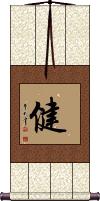
This “strong” character is the more “healthy” version of strong. 健 is the “strong” that is appropriate for an athlete.
Beyond “healthy,” it can also mean strength, persistence, vigorous, or invigorated/invigoration.
Strong and Beautiful
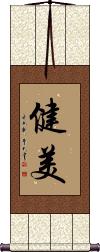
We don't really have a word like 健美 in English, but these two characters create a word that means “strong and beautiful.” It could also be translated as “healthy and beautiful.”
Note: 健美 is a word in Chinese and Korean, but it's also the family name Takemi in Japanese. The characters hold the same meaning in Japanese; however, it's like having the English name Stillwell when few people would perceive the meanings of still and well.
Strong / Healthy
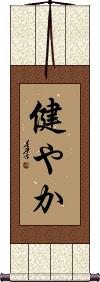
健やか is a verbose way to say strong and healthy in Japanese. 健やか is the “strong” that is appropriate for an athlete.
Beyond “healthy,” it can also mean strength, persistence, vigorous, or invigoration.
Japanese also use the first Kanji to mean the same thing. This version adds two hiragana which serve to emphasize or amplify the word and clarify the meaning.
Note: Because this selection contains some special Japanese Hiragana characters, it should be written by a Japanese calligrapher.
Strong Body, Strong Mind
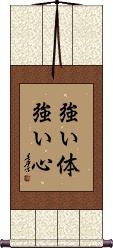
強い体強い心 is a way to write “strong mind, strong body” in Japanese.
Each of the two lines starts with 強い (tsuyoi) which means: strong; powerful; mighty; potent; resistant; resilient; durable; tough; stiff; hard; inflexible.
The body is represented with 体 (the ancient version is 體, romanized as karada), which means: body; build; physique; posture; torso; trunk; health.
Mind is represented with 心 (kokoro), which can mean heart, mind, or soul, depending on context.
強い體強い心 is not a common phrase in Japanese, so it's not the most natural title for calligraphy. In English, you might want to write it, “strong mind, strong body” but, “strong mind, strong body,” is more natural in Japanese.
Note: Because this selection contains some special Japanese Hiragana characters, it should be written by a Japanese calligrapher.
Strong and brave

剛健勇猛 can be translated as “Strong and brave.”
剛健 = Strong and healthy, or robust spirit/body.
勇猛 = Valor, fierce, and/or courage.
Taido
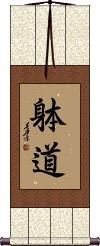
Taidō (The Way of the Body) is a style of Karate practiced in Japan and popular worldwide.
Taidō or 躰道 traces a lineage from Genseiryū (玄制流), which came from Shuri-te (首里手), one of the original martial arts schools of ancient Okinawa.
The first character 躰 is a variant of the original Chinese character 體. In modern Japan, they tend to use 体, a more simple character form. 体 is also the modern Simplified Chinese form of 體.
The 躰 character is correct for this 躰道 martial arts title. But it can be confusing with so many variants out there, not to mention other homophonic Japanese words that also romanize as Taidō or Taidou.
To have a bit more fun with this 躰 character, it has a 身 radical on the left, which sets it apart. The meaning doubles up on the “body” as 身 (shin) is a character that also means body in Japanese and Chinese. On the right is 本, which often means root, stem, origin, source, or fundamental (but can also mean “book” in some contexts). This has deviated from the original 體 which was 骨 (bone) + 豊 (vessel). Hence, the body was your “bone vessel” in ancient Asia.
The meaning of 躰, as well as 體 and 体, is usually translated as the body. When related to the physical body, it can also refer to the torso, trunk, build, physique, or the constitution of a person. As an extension of this, it can also refer to someone's health (good body = good health).
However, depending on the context, it can encompass other meanings such as form, style, system, experience, aspect, corpus, corporeal, substance, or essentials.
The second character, 道, is recognized and well-known as the “Way” and is the same “do” as in Karate-do or Aikido.
Therapeutic Massage
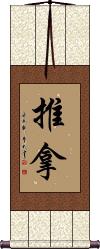
推拿 is “Tui Na,” a Chinese version of therapeutic massage.
The title suggests a pushing and pulling motion.
In reality, this is the most legitimate form of massage in China. Seeing this on a sign in front of a building tells you it's a place for health improvement via massage. No mistaking this for any illicit version of massage.
Tsuyoi
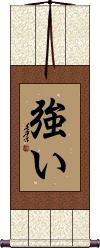
強い means strong, potent, competent, domineering, tough, brawny, powerful, healthy, rugged, skilled, resilient, solid, or fierce.
This word is ambiguous without context, so it can mean any or all of these things if you wish.
Vitality
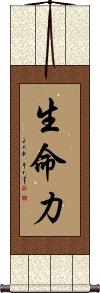
生命力 can mean “vitality” or “libido.”
The first two characters mean “life” or “life force.” The last character is a common word that means “strength.” So together, you get the meaning of “life strength” which is the essence of vitality.
Some will also translate this word as “good health.”
See Also: Life Force
Vitality / Virility
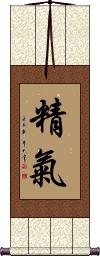
精氣 is a Chinese, Japanese, and Korean word that means vitality or virility.
Depending on the context, this can also mean “mind and spirit,” “life energy,” or “essence.”
This term is often used in Buddhism with the same meaning.
Note: In modern Japanese, they have simplified the last Kanji to look like the version shown to the right. If you want this modern version, please click on this Kanji. Otherwise, if you click the button above, you’ll get the ancient or traditional version (which is also universal between Chinese, old Korean, and old Japanese).
Warrior Soul / Heroic Spirit
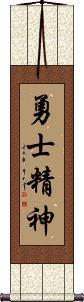
勇士精神 can be translated as the warrior's spirit or warrior's soul. The first two characters can be translated as “warrior” or literally “brave soldier/man,” although some will translate this word as “hero.” Therefore, this is also how to say “heroic spirit.”
The second two characters mean vigor, vitality, drive, spirit, mind, heart, mental essence, and psychological component. Basically “your soul.”
We have two versions of this phrase. The only difference is the first two and last two characters are swapped. The version here suggests that you admire or like the idea of the spirit of a warrior. The other version suggests that you are the warrior or hero.
Soul of a Warrior
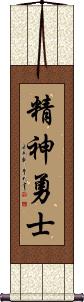
精神勇士 can be translated as the spirit or soul of a warrior. The first two characters can be translated as vigor, vitality, drive, spirit, mind, heart, mental essence, and psychological component. Basically, “your soul.”
The second two characters mean “warrior” or literally “brave soldier/man,” although some will translate this word as “hero.” Therefore, this is also how to say “soul of a hero.”
Note: This title is best for Chinese and old Korean. It does make sense in Japanese but is not a common or natural Kanji combination in Japanese.
We have two versions of this phrase. The only difference is the first two and last two characters are swapped. The version here suggests that you are the warrior or hero. The other version suggests that you admire or like the idea of the spirit of a warrior.
Wellness
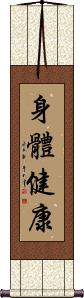
身體健康 is how to express “wellness” in Chinese. The meaning is not much different than the idea of “good health.” The first two characters alone are often translated as “health.” Some will also translate this title as “physical health.”
If you want to fill your room with a feeling of wellness, this is the wall scroll for you.
This is also the ancient way to express wellness in Japanese Kanji and old Korean Hanja. The modern Japanese form is 身体健康 (the only difference is the second Kanji). Let me know if you need your calligraphy written in modern Japanese.
See Also: Vitality
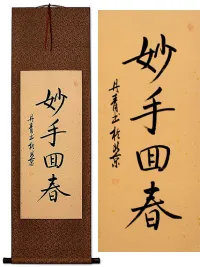
This in-stock artwork might be what you are looking for, and ships right away...
Gallery Price: $200.00
Your Price: $99.88
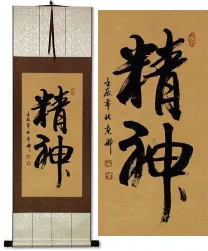
Gallery Price: $168.00
Your Price: $92.88
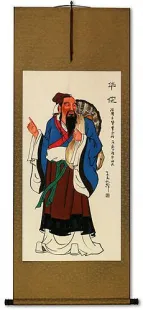
Gallery Price: $200.00
Your Price: $79.88
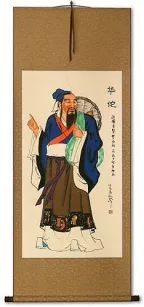
Gallery Price: $200.00
Your Price: $79.88
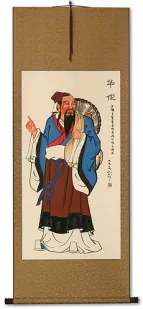
Gallery Price: $200.00
Your Price: $79.88
Gallery Price: $400.00
Your Price: $188.88
Gallery Price: $200.00
Your Price: $69.88
Gallery Price: $240.00
Your Price: $138.88

Gallery Price: $72.00
Your Price: $39.88
Gallery Price: $90.00
Your Price: $49.88
Gallery Price: $106.00
Your Price: $58.77
Gallery Price: $200.00
Your Price: $79.88
The following table may be helpful for those studying Chinese or Japanese...
| Title | Characters | Romaji (Romanized Japanese) | Various forms of Romanized Chinese | |
| Massage | 按摩 | an ma / anma | àn mó / an4 mo2 / an mo / anmo | |
| Birth Life | 生 | shou / iku / sho / iku | shēng / sheng1 / sheng | |
| Blessings on this Home | 五福臨門 五福临门 | wǔ fú lín mén wu3 fu2 lin2 men2 wu fu lin men wufulinmen | ||
| Body and Earth in Unity | 身土不二 | shindofuni / shindofuji | ||
| Choose Life | 選擇生活 选择生活 | xuǎn zé shēng huó xuan3 ze2 sheng1 huo2 xuan ze sheng huo xuanzeshenghuo | hsüan tse sheng huo hsüantseshenghuo |
|
| The Spirit of the Dragon Horse | 龍馬精神 龙马精神 | lóng mǎ jīng shén long2 ma3 jing1 shen2 long ma jing shen longmajingshen | lung ma ching shen lungmachingshen |
|
| The Spirit of the Dragon Horse and Power of a Tiger | 龍馬精神虎虎生威 龙马精神虎虎生威 | lóng mǎ jīng shén hǔ hǔ shēng wēi long2 ma3 jing1 shen2 hu3 hu3 sheng1 wei1 long ma jing shen hu hu sheng wei | lung ma ching shen hu hu sheng wei | |
| The Spirit of Dragon and Tiger | 龍虎精神 龙虎精神 | ryu ko sei shin ryukoseishin | lóng hǔ jīng shén long2 hu3 jing1 shen2 long hu jing shen longhujingshen | lung hu ching shen lunghuchingshen |
| Dynamic Energy Enthusiasm | 活力 | katsuryoku | huó lì / huo2 li4 / huo li / huoli | |
| Dynamic Energy Enthusiasm | 活力四射 | huó lì sì shè huo2 li4 si4 she4 huo li si she huolisishe | huo li ssu she huolissushe |
|
| The Five Fortunes | 五福 | wǔ fú / wu3 fu2 / wu fu / wufu | ||
| Forest Bathing | 森林浴 | shin rin yoku shinrinyoku | sēn lín yù sen1 lin2 yu4 sen lin yu senlinyu | sen lin yü senlinyü |
| Good Health | 健康 | kenkou / kenko | jiàn kāng jian4 kang1 jian kang jiankang | chien k`ang chienkang chien kang |
| Good Health Healthy Vigor | 康 | kou / ko | kāng / kang1 / kang | k`ang / kang |
| Gung Ho | 工合 | guai | gōng hé / gong1 he2 / gong he / gonghe | kung ho / kungho |
| Healthy Living | 健康生活 | kenkou seikatsu kenkouseikatsu kenko seikatsu | jiàn kāng shēng huó jian4 kang1 sheng1 huo2 jian kang sheng huo jiankangshenghuo | chien k`ang sheng huo chienkangshenghuo chien kang sheng huo |
| Independent Spirit | 獨立精神 独立精神 | dú lì jīng shén du2 li4 jing1 shen2 du li jing shen dulijingshen | tu li ching shen tulichingshen |
|
| Inner Strength Inner Well-Being and Health | 內健 | nèi jiàn / nei4 jian4 / nei jian / neijian | nei chien / neichien | |
| Three Treasures of Chinese Medicine | 精氣神 精气神 | jīng qì shén jing1 qi4 shen2 jing qi shen jingqishen | ching ch`i shen chingchishen ching chi shen |
|
| Khang | 康 | kāng / kang1 / kang | k`ang / kang | |
| Life Force | 生命 | seimei / inochi | shēng mìng sheng1 ming4 sheng ming shengming | |
| Living Live Life | 生活 | sei katsu / seikatsu | shēng huó sheng1 huo2 sheng huo shenghuo | |
| Life Energy Spiritual Energy | 氣 气 / 気 | ki | qì / qi4 / qi | ch`i / chi |
| Moderation Temperance | 節制 节制 | sessei / sesei | jié zhì / jie2 zhi4 / jie zhi / jiezhi | chieh chih / chiehchih |
| Peace and Good Health | 安康 | ān kāng / an1 kang1 / an kang / ankang | an k`ang / ankang / an kang | |
| Peaceful Tranquil Calm Free From Worry | 安寧 安宁 | an nei / annei | ān níng / an1 ning2 / an ning / anning | |
| Reiki | 靈氣 灵气 霊気 | reiki | líng qì / ling2 qi4 / ling qi / lingqi | ling ch`i / lingchi / ling chi |
| Restoration to Good Health | 平復 平复 | byou fuku / byoufuku / byo fuku | píng fù / ping2 fu4 / ping fu / pingfu | p`ing fu / pingfu / ping fu |
| Robust Sturdy | 強健 强健 | kyouken / kyoken | qiáng jiàn qiang2 jian4 qiang jian qiangjian | ch`iang chien chiangchien chiang chien |
| Running | 賽跑 赛跑 | sài pǎo / sai4 pao3 / sai pao / saipao | sai p`ao / saipao / sai pao | |
| Seiryoku Saizen Katsuyo | 精力最善活用 | Seiryoku saizen katsuyou Seiryokusaizenkatsuyou Seiryoku saizen katsuyo | ||
| Seiryoku Zenyo | 精力善用 | sei ryoku zen yo seiryokuzenyo | ||
| Seishin Budo | 精神武道 | seishin budou seishinbudou seishin budo | ||
| Seishin-Kai Seishinkai | 聖心会 / 聖心會 聖心会 | sei shin kai seishinkai | ||
| Shaolin Chan | 少林禪 少林禅 | sho rin zen shorinzen | shǎo lín chán shao3 lin2 chan2 shao lin chan shaolinchan | shao lin ch`an shaolinchan shao lin chan |
| Spirit | 精神 | sei shin / seishin | jīng shén jing1 shen2 jing shen jingshen | ching shen chingshen |
| Stamina Vigor | 元気 | genki | ||
| Physical Strength | 體力 体力 | tai ryoku / tairyoku | tǐ lì / ti3 li4 / ti li / tili | t`i li / tili / ti li |
| Power Strength | 力 | chikara / ryoku | lì / li4 / li | |
| Strong Powerful | 強壯 强壮 | kyousou / kyoso | qiáng zhuàng qiang2 zhuang4 qiang zhuang qiangzhuang | ch`iang chuang chiangchuang chiang chuang |
| Strong Healthy | 健 | ken | jiàn / jian4 / jian | chien |
| Strong and Beautiful | 健美 | takemi | jiàn měi / jian4 mei3 / jian mei / jianmei | chien mei / chienmei |
| Strong Healthy | 健やか | sukoyaka | ||
| Strong Body, Strong Mind | 強い體強い心 強い体強い心 | tsuyo i karada tsuyo i kokoro tsuyoikaradatsuyoikokoro | ||
| Strong and brave | 剛健勇猛 | gō ken yū mō gōkenyūmō | gāng jiàn yǒng měng gang1 jian4 yong3 meng3 gang jian yong meng gangjianyongmeng | kang chien yung meng kangchienyungmeng |
| Taido | 躰道 | tai dou / taidou / tai do | ||
| Therapeutic Massage | 推拿 | tuī ná / tui1 na2 / tui na / tuina | t`ui na / tuina / tui na | |
| Tsuyoi | 強い | tsuyoi | ||
| Vitality | 生命力 | seimeiryoku | shēng mìng lì sheng1 ming4 li4 sheng ming li shengmingli | |
| Vitality Virility | 精氣 精气 | seiki | jīng qì / jing1 qi4 / jing qi / jingqi | ching ch`i / chingchi / ching chi |
| Warrior Soul Heroic Spirit | 勇士精神 | yǒng shì jīng shén yong3 shi4 jing1 shen2 yong shi jing shen yongshijingshen | yung shih ching shen yungshihchingshen |
|
| Soul of a Warrior | 精神勇士 | jīng shén yǒng shì jing1 shen2 yong3 shi4 jing shen yong shi jingshenyongshi | ching shen yung shih chingshenyungshih |
|
| Wellness | 身體健康 身体健康 | shin tai ken kou shintaikenkou shin tai ken ko | shēn tǐ jiàn kāng shen1 ti3 jian4 kang1 shen ti jian kang shentijiankang | shen t`i chien k`ang shentichienkang shen ti chien kang |
| In some entries above you will see that characters have different versions above and below a line. In these cases, the characters above the line are Traditional Chinese, while the ones below are Simplified Chinese. | ||||



