Didn't find what you want?
Try these methods:
1. Make your search more specific.
2. Use other similar-meaning words.
3. Use less words or just one word.
4. Post your request on our forum so that we can translate/create what you want.
We'll build you a handmade custom "Caring" calligraphy wall scroll if you wish!
Quick links to words on this page...
Check out all the Custom Calligraphy Options
Click on a![]()
to select your calligraphy and start customizing your artwork project...


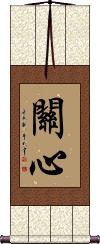
Caring is giving love and attention to people and things that matter to you and anyone who is in need of help. When you care about people, you help them. You do a careful job, giving your very best effort. You treat people and things gently and respectfully. Caring makes the world a safer place.
This means caring in Chinese, and is also a word in Korean Hanja, but with more of a flavor or "taking an interest" and "concern".
Note, this is also a word in Korean Hanja, but in Korean, it means taking interest or concern. In Korean it's still a good word, but it doesn't quite have the "caring for a person" meaning that it does in Chinese.
See Also... Love | Benevolence | Altruism
Score: 100/100


This word is often used to describe the devotion someone has to their profession - However, it can just mean career, depending on context. We don't highly-recommend this selection for a wall scroll.
In more simple terms, this word also means undertake / to deal with / to handle / to do. It does not have to refer to a career issue, as it could be used to encourage someone that is beginning their university studies etc.
This kind of makes sense in Japanese, however, there is a slight deviation in the way they write the first Kanji in Japanese.
Score: 66/100


This is the transliteration to Mandarin Chinese for the Latin / Spanish name Macarena
Score: 65/100


This is the transliteration to Mandarin Chinese for the name Caressa
Score: 54/100


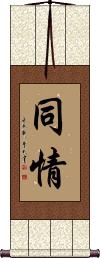
Compassion is caring and understanding someone is hurt or troubled (even if you don't know them). It is wanting to help, even if all you can do is listen and say kind words. You forgive mistakes. You are a friend when someone needs a friend.
These same two characters contain this meaning of compassion and sympathy in Chinese, Japanese, and Korean, which makes this word universal.
Score: 38/100


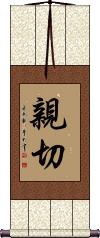
Kindness is showing you care, doing some good to make life better for others. Be thoughtful about people's needs. Show love and compassion to someone who is sad or needs your help. When you are tempted to be cruel, to criticize or tease, decide to be kind instead.
This Chinese / Japanese / Korean word can also mean affectionate, cordial, warmly, or close (emotionally).
See Also... Love | Benevolence
Score: 36/100


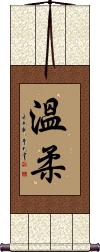
Gentleness is moving wisely, touching softly, holding carefully, speaking quietly and thinking kindly. When you feel mad or hurt, use your self-control. Instead of harming someone, talk things out peacefully. You are making the world a safer, gentler place.
See Also... Kindness
Score: 36/100


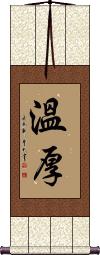
This is a Chinese, Japanese and old Korean word for "gentle" or "gentleness". This can also mean "kindness" (more as an adjective like "kind person").
The modern Japanese version of the first character looks like the one to the right. If you want this modern Japanese form, just click on that Kanji instead of the button above.
See Also... Kindness
Score: 35/100


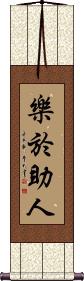
Helpfulness is being of service to others, doing thoughtful things that make a difference in their lives. Offer your help without waiting to be asked. Ask for help when you need it. When we help each other, we get more done. We make our lives easier.
See Also... Charity | Benevolence
Score: 35/100

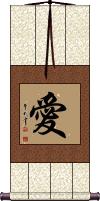
This is a very universal character. It means love in Chinese, Japanese Kanji, old Korean Hanja, and old Vietnamese.
This is one of the most recognized Asian symbols in the west, and is often seen on tee-shirts, coffee mugs, tattoos, and more.
This character can also be defined as affection, to be fond of, to like, or to be keen on. It often refers to romantic love, and is found in phrases like, "I love you". But in Chinese, one can say, "I love that movie" using this character as well.
It's very common for couples to say "I love you" in Chinese. However, in Japanese, "love" is not a term used very often. In fact, a person is more likely to say "I like you" rather than "I love you" in Japanese. So this word is well-known, but seldom spoken.
More about this character:
This may be hard to imagine as a westerner, but the strokes at the top of this love character symbolize family & marriage.
The symbol in the middle is a little easier to identify. It is the character for "heart" (it can also mean "mind" or "soul"). I guess you can say that no matter if you are from the East or the West, you must put your heart into your love.
The strokes at the bottom create a modified character that means "friend" or "friendship".
I suppose you could say that the full meaning of this love character is to love your family, spouse, and friends with all of your heart, since all three elements exist in this character.
See Also... I Love You | Benevolence | Friendliness | Double Happiness Happy Marriage Wall Scroll
Score: 35/100


Can also mean "cautious" or "careful".
Note: The Chinese and Japanese form is shown here. In Korean Hanja, the first character has a variant in one of the strokes - just let me know when you place your order if you want that Korean version (A Korean who can read Hanja, will know the meaning anyway).
Note: If you order this selection from our Japanese calligrapher, the first Kanji will vary slightly. It is technically the same character, but Japanese tend to leave a space between the upper and lower portions of this particular Kanji (see image to the right).
Note: Also considered to be one of the Seven Heavenly Virtues.
See Also... Moderation | Modesty | Chastity
Score: 29/100


This is just what you think it means. It suggests that you are on a trouble-free voyage through life, or literally on a sailing ship or sail boat. It is often used in China as a wish for good luck on a voyage or as you set out on a new quest or career in your life. Some may use this in lieu of "bon voyage".
The literal meaning is roughly, "Once you raise your sail, you will get the wind you need, and it will take you where you want to go". Another way to translate it is "Your sail and the wind follow your will".
This is a great gift for a mariner, sailor, adventurer, or someone starting a new career.
Note: Can be understood in Korean Hanja, but rarely used.
See Also... Bon Voyage | Adventure | Travel
Score: 15/100


This title suggests that you have, or want to get your life in balance.
The first two characters regard the idea of balance, harmony, and peace.
The second two characters mean "life". More specifically this refers to your livelihood, career, and the daily activities that comprise your life or living. Some would translate those two characters as "one's daily existence".
Note: We have a couple of titles for this idea. This version is more of a noun, thus "The Balanced Life" verses a verb form like "Balancing [Your] Life".
Score: 14/100


This is how to write "kill" or "massacre".
This is an absolutely shocking word to have on a wall scroll. It will bewilder, scare, and perhaps offend any Chinese, Korean or Japanese person who sees it. I do not in any way recommend this for a piece of calligraphy artwork. This entry is only here because our calligraphy search engine received so many requests for "kill" and "massacre".
You are all a bunch of sick puppies!
Score: 14/100

This is how to write "to kill" or "killing".
This is an absolutely shocking word to have on a wall scroll. It will bewilder, scare, and perhaps offend any Chinese, Korean, or Japanese person who sees it. I do not in any way recommend this for a piece of calligraphy artwork. This entry is only here because our calligraphy search engine received so many requests for "kill".
Note: In Korean Hanja, this character is not often used alone - see the other two-character entry for "kill".
Score: 14/100

This is the simplest way to express the idea of Karma. This is the Buddhist idea of actions committed in a former life affecting the present and future.
Out of the context of Buddhism, this character means one's profession in life, trade, occupation, business, study, or career.
The karma definition applies to both Chinese and Japanese for this character. This also works as Korean Hanja; although the meaning can vary depending on context (my Korean dictionary gives the definition of profession/occupation).
See Also... Buddhism
Score: 14/100


This can be translated as "healing hands".
The first two characters are used to describe a doctor or medical professional who has admirable skill in curing disease. Literally: Wonderful or skilled hands.
The last two characters mean "Springing back to life".
Altogether, it suggests that these skilled hands can cure whatever ails you and bring you back to life. This is a great honor to bestow on your doctor or other healthcare professional that has helped you.
Score: 14/100


Diligence is working hard and doing your absolute best. You take special care by doing things step by step. Diligence helps you to get things done with excellence and enthusiasm. Diligence leads to success.
These characters can also be translated as industry, industrious, assiduity, assiduous, diligent, or sedulity.
See Also... Hard Work | Tenacity | Commitment | Passion For A Cause
Score: 14/100


Excellence is doing your best, giving careful attention to every task and every relationship.
This word can also be defined as "excellence", "remarkable" or "surpassing". Sometimes it can mean "superiority".
If you need a word that means "outstanding", "prominence", and "to shine", just let me know - there is another word for excellence that has this meaning.
See Also... Pride
Score: 14/100


Characters shown
above are read
vertically, starting
from the right
This literally translates as:
[Better to be] strong inside than [to be] strong outside.
The ancient original meaning was:
[An] able [husband] outside [working to support a family is] not as good as [an] able [wife] inside [working and saving to take care of the family].
The current meaning is:
Inner strength is more important than outward appearance.
Score: 14/100

This is the Japanese Kanji for "sword". This refers to the style of sword carried by warriors, samurai, and shogun of ancient Japan.
With the pacification of Japan, such swords are now only used for ceremony and decoration. The true art of sword-smithing is all but lost in Japan with new sword production dedicated to making inexpensive replicas for the tourist and foreign market.
For those of you that want to ask whether I can get you a real antique sword. Let me tell you that most real Asian swords were melted down after WWII in Japan, and during the Great Leap Forward in China. Any remaining swords are family heirlooms that nobody will part with.
Please carefully note that the Japanese kanji character shown above is only for a Japanese audience. In China, this character means "knife". See our other entry for "sword" in Chinese.
Note: This can mean knife, sword, or blade in Korean, depending on context.
See Also... Sword
Score: 14/100


Commitment is caring deeply about something or someone. It is deciding carefully what you want to do, and then giving it 100%, holding nothing back. You give your all to a friendship, a task, or something you believe in. You finish what you start. You keep your promises.
In Chinese, this word directly means to undertake something or to make a promise to do something.
Within the idea of commitment, this word also means to make a big effort, or undertaking a great task. Outside of the commitment idea, this particular word can also mean approval, acceptance, consent, assent, acquiescence, or agreement depending on context (especially in Japanese and Korean). Therefore this word is probably best if your audience is Chinese.
See Also... Partnership | Hard Work | Dedication
Score: 10/100


This is the Japanese Kanji title for "Martial Arts Master". It suggests that you have reached at least the level of black belt, and are probably to the level where you are ready to become an instructor.
Please consider carefully where you stand before ordering this phrase on a wall scroll. If you are not a master, this will make you look a bit foolish.
If you want to get this as a gift for your master at the dojo. Try to discreetly make sure this term is used in your school. Different schools and styles of Japanese martial arts use different terms. You may notice in the Romaji and the characters, this has the same characters as "geisha" which means "person skilled in arts" (what a geisha girl really is). The title here has the character for "martial", "warrior", and/or "military" in front of it. Therefore the literal translation is "martial art person".
These Kanji are valid Chinese characters and Korean Hanja, but this title does not really make sense in Chinese and not often used in Korean, though a Chinese or Korean would be able to guess the meaning by looking at the first and last characters.
Score: 14/100

Beyond "benevolence" word can be also be defined as "charity" or "mercy" depending on context.
The meaning suggests that one should pay alms to the poor, care for those in trouble, and take care of his fellow man (or woman).
This is one of the five tenets of Confucius. In fact, it is a subject in which Confucius spent a great deal of time explaining to his disciples.
I have also seen this benevolent-related word translated as perfect virtue, selflessness, love for humanity, humaneness, goodness, good will, or simply "love" in the non-romantic form.
This word is so important to me that I named my second daughter with this character. Her name is "Renni" which means "Benevolent Girl".
-Gary.
This is also a virtue of the Samurai Warrior
See our page with just Code of the Samurai / Bushido here
See Also... Love | Altruism | Kindness | Charity | Brotherhood | Confucius
Score: 4/100


This is the love between siblings. When you love, protect, care for, and have a deep bond that only brothers or sisters can.
The actual translation is "Hand and Foot" but it is said the relationship between brothers or sisters is like that of hands and feet. They belong together, and complete the body. Even though this says "hand and foot", it will always be read with the brotherly and sisterly love meaning in Chinese.
Note: During the past 20 years, the "One child policy" in China is slowly making this term obsolete.
Score: 3/100


This is probably the best way to express the idea of "Body, Mind and Spirit" in Chinese and old Korean Hanja. We are actually using the word for "heart" here because for thousands of years, the heart was thought to be the place where your thoughts, feelings and emotions came from. We do something similar in the west when we say "warm-hearted" or "I love you with all of my heart". In this context, heart = mind in Asian language and culture.
The very literal translation of these three characters is "body, heart & spirit" which could also be interpreted as "body mind & soul".
We have arranged these characters in this order because it simply "feels" like the proper order in the Chinese language. Word lists like this are not so common for calligraphy artwork, so we have to be careful to put them in the most natural order. It should be noted that this is not a common title in Asia, nor is it considered an actual phrase (as it lacks a clear subject, verb, and object).
In Japanese Kanji, they use an alternate form of the character for soul or spirit. If you want this using the Japanese alternate, please click on the Kanji shown to the right instead of the button above.
Japanese disclaimer: This title has been checked by our Chinese and Korean translators, but has not been reviewed by a Japanese translator. If you are the first to order this in Japanese, it will be reviewed and adjusted if necessary by the Japanese master calligrapher.
Score: 14/100


My Australian friends always say "No worries mate". It's caught on with me, though I drop the "mate" part since it confuses my fellow Americans.
If you would like to express the idea of "no worries" this is the best and most natural way to say it in Chinese.
The characters you see to the left can be translated as "put your mind at rest" or "to be at ease". You could literally translate "no worries" but it doesn't "flow" like this simple Chinese version.
For your info, the first character means to release, to free, to let go, to relax, or to rest. The second character means your heart or your mind.
Note that in Japanese and Korean, this holds the similar meaning of "peace of mind", but can also mean absentmindedness or carelessness depending on context.
Score: 14/100
Samyag Ajiva / Samma Ajiva
Mandarin: zhèng mìng
Japanese: sei myou
Korean: 정명


This is one of the Noble Eightfold Paths of Buddhism. Right Living, along with Right Speech and Right Action constitute the path to Virtue.
Right Living means that a Buddhist should only take a job or pursue a career in a field that does no harm. Buddhists should not work in the arms trade, as pimps or in the field of prostitution, as a butcher or in a shop that kills or sells meat, in a laboratory that does animal research, or any other business that involves scheming or unethical behavior.
Another definition: Avoidance of professions that are harmful to sentient beings, such as slaugterer, hunter, dealer in weaponry or narcotics, etc.
This term is exclusively used by devout Buddhists. It is not a common term, and is remains an unknown concept to most Japanese and Chinese people.
See Also... Buddhism | Enlightenment
Score: 14/100


This is the last line of a famous poem. It is perceived as a tribute or ode to your parent's or mother from a child or children that have left home.
The poem was written by Meng Jiao during the Tang Dynasty (about 1200 years ago). The Chinese title is "You Zi Yin" which means "The Traveler's Recite".
The last line as shown here speaks of the generous and warm spring sun light which gives the grass far beyond what the little grass can could ever give back (except perhaps by showing its lovely green leaves and flourishing). The metaphor is that the sun is your mother or parents, and you are the grass. Your parents raise you and give you all the love and care you need to prepare you for the world. A debt which you can never repay, nor is repayment expected.
The first part of the poem (not written in the characters to the left) suggests that the thread in a loving mother's hands is the shirt of her traveling offspring. Vigorously sewing while wishing them to come back sooner than they left.
...This part is really hard to translate into English that makes any sense, but maybe you get the idea. We are talking about a poem that is so old that many Chinese people would have trouble reading it (as if it was the King James Version of Chinese).
Score: 14/100
Persistence to overcome all challenges
Mandarin:
bǎi zhé bù náo
Japanese:
hyaku setsu su tou
Korean: 백절불요


This phrase means "Be undaunted in the face of repeated setbacks".
It comes from a long, and occasionally tragic story of a man that lived sometime around 25-220 AD. His name was Qiao Xuan and he never stooped to flattery, but remained an upright person at all times. He fought to expose corruption of higher-level government officials at great risk to himself.
Then when he was at a higher level in the Imperial Court, bandits were regularly capturing hostages and demanding ransoms. But when his own son was captured, he was so focused on his duty to the Emperor and common good that he sent a platoon of soldiers to raid the bandits' hideout, and stop them once and for all even at the risk of his own son's life. While all of the bandits were arrested in the raid, they killed Qiao Xuan's son at first sight of the raiding soldiers.
Near the end of his career a new Emperor came to power, and Qiao Xuan reported to him that one of his ministers was bullying the people and extorting money from them. The new Emperor refused to listen to Qiao Xuan and even promoted the corrupt Minister. Qiao Xuan was so disgusted that in protest he resigned his post as minister (something almost never done) and left for his home village.
His tombstone reads "Bai Zhe Bu Nao" which is now a phrase used in Chinese culture to describe a person of strong will who puts up stubborn resistance against great odds.
My Chinese-English dictionary defines these 4 characters as, "keep on fighting in spite of all setbacks", "be undaunted by repeated setbacks" and "be indomitable".
Our translator says it can mean, "never give up" in modern Chinese.
Although the first two characters are translated correctly as "repeated setbacks", the literal meaning is "100 setbacks" or "a rope that breaks 100 times". The last two characters can mean "do not yield" or "do not give up".
Most Chinese, Japanese, and Korean people will not take this absolutely literal meaning, but will instead understand it as the title suggests above.
See Also... Tenacity | Fortitude | Strength | Perseverance
Score: 14/100


This is the transliteration to Mandarin Chinese for the name Phoenix.
It sounds like Phoenix, but does not mean Phoenix.
You may want to carefully consider choosing a scroll that means Phoenix instead, if this is your given name.
Score: 14/100


This four-character idiom is used in Chinese to mean "realize your ambitions" or "exhibit your ambition and success". It's used to talk about someone with great career ambitions. Almost literally, it expresses the idea of someone unfolding a great career like a map or a set of blueprint plans.
Very literally translated, these four characters mean, "Great unfolding of a huge map" or "Great exhibition of an colossal plan".
Score: 15/100


When you take this word apart, you find the sum is a little different than the parts. The first character means blood and the second means heart. It is important to note that for thousands of years, it was believed that your heart was both your soul and your mind in Asian culture. When you add blood to the heart, it is your whole being - it is pure and clean dedication with your whole soul.
Most Chinese dictionaries define this as sincerity of heart or a MEDICAL TERM!!!
Please think carefully before ordering this selection - it was only added as others have used this for coffee cups and other novelties (though perhaps naively).
Score: 14/100


This Chinese and Japanese word for "success" is often used to refer to "career success", but is also used for other successes in life.
It matches the western dictionary definition of "The achievement of something desired, planned, or attempted". And it's also used it this old Chinese proverb:
which means Failure is the Mother of Success.
Sometimes this word is translated as prosperity, but success, succeed, or successfully are more correct definitions.
See Also... Prosperity
Score: 14/100

This is the character for bull, cow, ox, or bovine creature in Chinese, old Korean, and Japanese.
If you were born in the year of the ox / bull / cow, you . . .
Are dedicated to your work.
Are discrete, careful and conscientious.
Value work and family.
Note that in this Chinese character, there is no distinction between bull and cow. All bovine creatures fit into the definition of this character. To distinguish between male and female, another sex-designating character is added in front of this character. Therefore, in China, the energy drink "Red Bull" (Hong Niu) is often translated in the minds of Chinese people as "Red Cow" or even "Red Ox".
See also our Chinese Zodiac page.
Score: 14/100
Wall scroll artwork shown on this page is priced as follows:
1 character $29.88 each
2-3 characters $39.88 each
4 characters $49.88 each
5-10 characters $59.88 each
After you select your calligraphy, our website will take you through the process of customizing your artwork.
Options for other mounting such as portraits are available for $13 less.
We also offer the services of a famous master calligrapher for a $40 fee on any scroll if you are looking for investment-quality calligraphy.
If you chose our famous master-calligrapher, you also get more choices for silk and paper colors and the option for larger artwork.
All of our calligraphy is completely done by hand in the ancient way.
When the calligrapher finishes creating your artwork, it is taken to our art mounting workshop in Beijing where a wall scroll is made by hand from a combination of silk, rice paper, and wood.
After we create your wall scroll, it takes at least two weeks for air mail delivery from Beijing to you.
Therefore, allow at least 3 weeks for delivery from the time you place your order.
When you select your calligraphy, you'll be taken to another page where you can choose various custom options.
The scroll that I am holding in this picture is a "regular size"
4-character wall scroll.
As you can see, it is a great size to hang on your wall.
(We also offer custom wall scrolls in larger sizes)
Professional calligraphers are getting to be hard to find these days.
Instead of drawing characters by hand, the new generation in China merely type roman letters into their computer keyboards and pick the character that they want from a list that pops up.
There is some fear that true Chinese calligraphy may become a lost art in the coming years. Many art institutes in China are now promoting calligraphy programs in hopes of keeping this unique form
of art alive.
Even with the teachings of a top-ranked calligrapher in China, my calligraphy will never be good enough to sell. I will leave that to the experts.
The same calligrapher who gave me those lessons also attracted a crowd of thousands and a TV crew as he created characters over 6-feet high. He happens to be ranked as one of the top 100 calligraphers in all of China. He is also one of very few that would actually attempt such a feat.
Successful Chinese and Japanese calligraphy searches within the last few hours...If your search is not successful, just post your request on our forum, and we'll be happy to do research or translation for any reasonable request. | ||||||
|
army brother brotherhood christina danny dharma family five elements | friends gassho gen george georgi god daughter good luck grandmother | happy helena ivana jin justin liao lindi love | mandi meditation mom naruto ninjutsu peace powerful of soul sister | son sophia soul tiger toni wang warrior warrior spirit | wind | |
| With so many searches, we had to upgrade to our own Linux server. Of course, only one in 500 searches results in a purchase - Hey buy a wall scroll!!! | ||||||
The following table is only helpful for those studying Chinese (or Japanese), and perhaps helps search engines to find this page when someone enters Romanized Chinese or Japanese
| Title | Characters Simplified Traditional |
Japanese Romaji (Romanized Japanese) | Various forms of Hanyu-Pinyin (Romanized Chinese) | |||
| Caring | 关心 關心 | n/a | guān xīn guan xin | guan1 xin1 guanxin | ||
| Devotion to your Profession / Career | 从事 從事 | n/a | cóng shì cong shi | cong2 shi4 congshi | ||
| Macarena | 马卡乐娜 馬卡樂娜 | n/a | mǎ kǎ lè nuó ma ka le nuo | ma3 ka3 le4 nuo2 makalenuo | ||
| Caressa | 卡瑞萨 卡瑞薩 | n/a | kǎ ruì sà ka rui sa | ka3 rui4 sa4 karuisa | ||
| Compassion | 同情 同情 | doujou dojo | tóng qíng tong qing | tong2 qing2 tongqing | ||
| Kindness | 亲切 親切 | shin setsu shinsetsu | qīn qiè qin qie | qin1 qie4 qinqie | ||
| Gentleness | 温柔 溫柔 | n/a | wēn róu wen rou | wen1 rou2 wenrou | ||
| Gentleness | 温厚 溫厚 | on kou onkou on ko | wēn hòu wen hou | wen1 hou4 wenhou | ||
| Helpfulness | 乐于助人 樂於助人 | n/a | lè yú zhù rén le yu zhu ren | le4 yu2 zhu4 ren2 leyuzhuren | ||
| Love | 爱 愛 | ai | ài ai | ai4 ai | ||
| Prudence | 慎重 慎重 | shinchou shincho | shèn zhòng shen zhong | shen4 zhong4 shenzhong | ||
| Smooth Sailing | 一帆风顺 一帆風順 | n/a | yī fán fēng shùn yi fan feng shun | yi1 fan2 feng1 shun4 yifanfengshun | ||
| Life in Harmony / The Balanced Life | 和谐生活 和諧生活 | n/a | hé xié shēng huó he xie sheng huo | he2 xie2 sheng1 huo2 hexieshenghuo | ||
| Kill / Massacre / Mass Killing | 杀戮 殺戮 | satsuriku | shā lù sha lu | sha1 lu4 shalu | ||
| Kill / Slaughter / Murder / Butcher | 杀 殺 | satsu | shā sha | sha1 sha | ||
| Karma | 业 業 | gou go | yè ye | ye4 ye | ||
| Healing Hands | 妙手回春 妙手回春 | n/a | miào shǒu huí chūn miao shou hui chun | miao4 shou3 hui2 chun1 miaoshouhuichun | ||
| Diligence | 勤勉 勤勉 | kinben | qín miǎn qin mian | qin2 mian3 qinmian | ||
| Excellence | 卓越 卓越 | taku etsu takuetsu | zhuó yuè zhuo yue | zhuo2 yue4 zhuoyue | ||
| Inner Strength is Better than Outward Appearance | 表壮不如里壮 表壯不如裡壯 | n/a | biǎo zhuàng bù rú lǐ zhuàng biao zhuang bu ru li zhuang | biao3 zhuang4 bu4 ru2 li3 zhuang4 biaozhuangburulizhuang | ||
| Katana | 刀 刀 | katana | dāo dao | dao1 dao | ||
| Commitment | 承诺 承諾 | shoudaku shodaku | chéng nuò cheng nuo | cheng2 nuo4 chengnuo | ||
| Martial Arts Master (Japanese Only) | 武芸者 武芸者 | bugeisha | wǔ yún zhě wu yun zhe | wu3 yun2 zhe3 wuyunzhe | ||
| Benevolence | 仁 仁 | jin | rén ren | ren2 ren | ||
| Brotherly and Sisterly Love | 手足情 手足情 | n/a | shǒu zú qíng shou zu qing | shou3 zu2 qing2 shouzuqing | ||
| Mind, Body and Spirit | 身心灵 身心靈 / 身心霊 | mi shin rei mishinrei | shēn xīn líng shen xin ling | shen1 xin1 ling2 shenxinling | ||
| No Worries | 放心 放心 | houshin hoshin | fàng xīn fang xin | fang4 xin1 fangxin | ||
| 5. Right Living / Right Livelihood / Perfect Livelihood | 正命 正命 | sei myou seimyou sei myo | zhèng mìng zheng ming | zheng4 ming4 zhengming | ||
| Appreciation & Love for Your Parents | 谁言寸草心报得三春晖 誰言寸草心報得三春暉 | n/a | shuí yán cùn cǎo xīn bào dé sān chūn huī shui yan cun cao xin bao de san chun hui | shui2 yan2 cun4 cao3 xin1 bao4 de2 san1 chun1 hui1 | ||
| Undaunted After Repeated Setbacks | 百折不挠 百折不撓 | hyaku setsu su tou hyakusetsusutou hyaku setsu su to | bǎi zhé bù náo bai zhe bu nao | bai3 zhe2 bu4 nao2 baizhebunao | ||
| Phoenix | 菲尼克斯 菲尼克斯 | n/a | fēi ní kè sī fei ni ke si | fei1 ni2 ke4 si1 feinikesi | ||
| Realize Your Ambitions / Ride on the Crest of Success | 大展宏图 大展宏圖 | n/a | dà jiǎn hóng tú da jian hong tu | da4 jian3 hong2 tu2 dajianhongtu | ||
| Sincere Heart | 血心 血心 | n/a | xuě xīn xue xin | xue3 xin1 xuexin | ||
| Success | 成功 成功 | seikou seiko | chéng gōng cheng gong | cheng2 gong1 chenggong | ||
| Ox / Bull / Cow | 牛 牛 | ushi | niú niu | niu2 niu | ||
| If you have not set up your computer to display Chinese, the characters in this table probably look like empty boxes or random text garbage.
This is why we spent hundreds of hours making images so that you could view the characters in the "caring" listings above. If you want your Windows computer to be able to display Chinese characters you can either head to your Regional and Language options in your Win XP control panel, select the [Languages] tab and click on [Install files for East Asian Languages]. This task will ask for your Win XP CD to complete in most cases. If you don't have your Windows XP CD, or are running Windows 98, you can also download/run the simplified Chinese font package installer from Microsoft which works independently with Win 98, ME, 2000, and XP. It's a 2.5MB download, so if you are on dial up, start the download and go make a sandwich. | ||||||
Some people may refer to this entry as Caring Kanji, Caring Characters, Caring in Chinese Writing, Caring in Japanese Writing, Caring in Asian Writing, Caring Ideograms, Chinese Caring symbols, Caring Hieroglyphics, Caring Glyphs, Caring in Chinese Letters, Caring Hanzi, Caring in Japanese Kanji, Caring Pictograms, Caring in the Chinese Written-Language, or Caring in the Japanese Written-Language.
All custom calligraphy items are made-to-order in our little Beijing artwork-mounting workshop.
Please note: Rush service can be as fast as two weeks, but regular service is over a month for delivery.
Copyright Oriental Outpost 2002-2009 - All Rights Reserved
Image Use Policy | Privacy Policy
This page of caring Chinese calligraphy dictionary search results was generated in 0.692313909531seconds.