Many custom options...


And formats...



Lives in Chinese / Japanese...
Buy a Lives calligraphy wall scroll here!
Personalize your custom “Lives” project by clicking the button next to your favorite “Lives” title below...
1. Karma
2. Helpfulness
4. Salvation
5. Changing Oneself / Self Reformation
8. Ikigai
9. Strong bones come from hard knocks
10. Police / Public Security Bureau
12. The one who retreats 50 paces mocks the one to retreats 100
Karma (of your past lives)
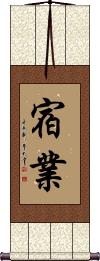
宿業 is the Buddhist concept of Past Karma. Simply put, it's the sum of all the good and bad from all previous lives (perhaps earlier in your current life). This term is not commonly used outside of the Buddhist faith (you'll have a tough time finding a non-Buddhist Asian person that knows this word).
Other ways to translate this are “The karma of previous existence,” “The karma remaining from prior existences,” or simply “Former karma.”
See Also: Buddhism
Helpfulness
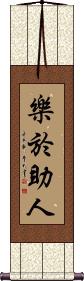
樂於助人 is about helpfulness, being of service to others, and doing thoughtful things that make a difference in their lives.
Offer your help without waiting to be asked. Ask for help when you need it. When we help each other, we get more done. We make our lives easier.
See Also: Caring | Charity | Benevolence
Safe / Secure
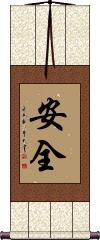
安全 is the word that represents the idea of safety and security in Chinese, Japanese Kanji, and old Korean Hanja.
Everyone wants to have some form of safety in their lives. This conveys how important the feeling of safety and security is to you.
Salvation
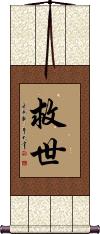
救世 is salvation in Chinese characters and Japanese Kanji.
This can refer to the saving, rescue, or salvation of one's life, the life or lives of others, a generation, an era, or even the whole world. As you can see, this is a rather generic and broad way to say salvation.
Changing Oneself / Self Reformation
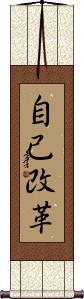
自己改革 is a Japanese title that refers to one who changes themselves or improves themselves by reforming their lives.
Another way to translate it is “A person who changes their attitude or something about themselves.”
Spiritual Soul Mates
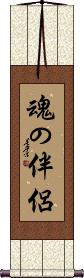
魂の伴侶 is a Japanese-only title for soulmates.
魂 means soul, spirit, immortal soul (the part of you that lives beyond your physical body), or the conscious mind. In the Buddhist context, this is vijñāna or viññāṇa (consciousness, life force, or mind).
の is a possessive article that connects everything here.
伴侶 means mates, companions, partners, and spouses.
Learning is Eternal
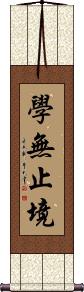
This Chinese philosophy tells of how we continue to learn throughout our lives.
This proverb can be translated in a few ways such as “Study has no end,” “Knowledge is infinite,” “No end to learning,” “There's always something new to study,” or “You live and learn.”
The deeper meaning: Even when we finish school we are still students of the world gaining more knowledge from our surroundings with each passing day.
See Also: An Open Book Benefits Your Mind | Wisdom | Learn From Wisdom
Ikigai

生き甲斐 is a Japanese word that means something one lives for, a reason for being, a purpose in life, or French, raison d'etre.
Everyone has an ikigai. Finding it requires a deep and often lengthy search for self. Finding your Ikigai is the way to also find satisfaction and meaning in life.
Your Ikigai could be almost anything. For some, it is running for president. For others, satisfaction is found in raising children.
Ikigai is why you get up in the morning; bringing meaning to your life and pursuing your Ikigai makes life worthwhile.
Strong bones come from hard knocks
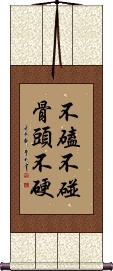
不磕不碰骨頭不硬 is a Chinese proverb that literally translates as: Without being knocked around a bit, [one's] bones won't become hard.
Figuratively, this means: One can't become strong without first being tempered by “hard knocks.”
While true for everyone, this sounds like the “Iron Body” form of Kung Fu, where practitioners' bodies are beaten (and often bone fractured) in order to become stronger.
For the rest of us, this is just about how we can be tempered and build character through the hardships in our lives.
This is not a common title for a wall scroll in China.
Police / Public Security Bureau
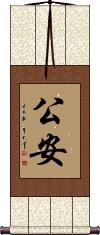
公安 is the Chinese, Japanese Kanji, and old Korean Hanja title for (The Ministry of) Public Security. 公安 can also generally mean public safety, public security, or public welfare. It is a positive term in Japan, where some even name their daughters “Kouan” (this title).
In China, this is the kinder name for the PSB or Public Security Bureau. It's really the national police of China - occasionally brutal and seldom properly-trained or educated. Once in a while, you find a PSB officer who lives up to the title of 公安. Before the 1989 massacre, it was the PSB officers who refused to stop nor kill any of the protesting college students (so they're not all bad). The Chinese government had to call in soldiers from Inner Mongolia to kill thousands of protesters.
Flying Tigers AVG
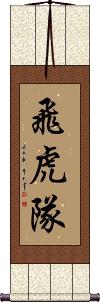
飛虎隊 is the full Chinese title of the “Flying Tigers Group.”
These were the American pilots that volunteered to go to China and fight the Japanese before the entry of the USA into World War Two. These fighter pilots were so esteemed in China that fallen American pilots could always find refuge in villages and safe passage and escape to areas of China that were not occupied by Japan at that time. Chinese villagers helped such fallen pilots with full knowledge that when the Japanese occupation forces found out, all the men, women, and children in the village would be massacred by Japanese troops (there are more than a few known cases of such massacres).
The Flying Tigers successfully kept supply lines to the Chinese resistance open and divided Japanese forces at a crucial time while America prepared to join WWII officially.
A wall scroll like this honors the men who risked or gave their lives as noble volunteers and is a reminder of the best moment in the history of Sino-American relations.
These three characters literally mean “flying tiger(s) group/team/squad.”
Note: Hanging these characters on your wall will not make you any friends with Japanese people who are aware or this history (most Japanese have no idea, as Japan’s involvement in WWII has all but been erased from school textbooks in Japan).
The one who retreats 50 paces mocks the one to retreats 100
The pot calls the kettle black
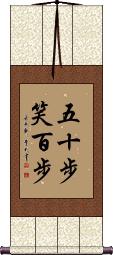
五十步笑百步 is a Chinese proverb that means the one who retreats 50 paces mocks the one who retreats 100 paces.
During the Warring States Period of what is now China (475 - 221 B.C.), the King of Wei was in love with war. He often fought with other kingdoms just for spite or fun.
One day, the King of Wei asked the philosopher Mencius, “I love my people, and all say I do the best for them. I move the people from famine-stricken areas to places of plenty and transport grains from rich areas to the poor. Nobody goes hungry in my kingdom, and I treat my people far better than other kings. But why does the population of my kingdom not increase, and why does the population of other kingdoms not decrease?”
Mencius answered, “Since you love war, I will make this example: When going to war, and the drums beat to start the attack, some soldiers flee for their lives in fear. Some run 100 paces in retreat, and others run 50 steps. Then the ones who retreated 50 paces laugh and taunt those who retreated 100 paces, calling them cowards mortally afraid of death. Do you think this is reasonable?
The King of Wei answered, “Of course not! Those who run 50 paces are just as timid as those who run 100 paces.”
Mencius then said, “You are a king who treats his subjects better than other kings treat their people, but you are so fond of war that your people suffer from great losses in battle. Therefore, your population does not grow. While other kings allow their people to starve to death, you send your people to die in war. Is there any difference?”
This famous conversation led to the six-character proverb shown here. It serves as a warning to avoid hypocrisy. It goes hand-in-hand with the western phrase, “The pot calls the kettle black,” or the Biblical phrase, “Before trying to remove a splinter from your neighbor's eye, first remove the plank from your own eye.”
This in-stock artwork might be what you are looking for, and ships right away...

Gallery Price: $61.00
Your Price: $33.88
The following table may be helpful for those studying Chinese or Japanese...
| Title | Characters | Romaji (Romanized Japanese) | Various forms of Romanized Chinese | |
| Karma (of your past lives) | 宿業 宿业 | shukugou / shukugo | sù yè / su4 ye4 / su ye / suye | su yeh / suyeh |
| Helpfulness | 樂於助人 乐于助人 | lè yú zhù rén le4 yu2 zhu4 ren2 le yu zhu ren leyuzhuren | le yü chu jen leyüchujen |
|
| Safe Secure | 安全 | an zen / anzen | ān quán / an1 quan2 / an quan / anquan | an ch`üan / anchüan / an chüan |
| Salvation | 救世 | guze | jiù shì / jiu4 shi4 / jiu shi / jiushi | chiu shih / chiushih |
| Changing Oneself Self Reformation | 自己改革 | ji ko kai kaku jikokaikaku | ||
| Spiritual Soul Mates | 魂の伴侶 | tamashii no han ryo tamashiinohanryo tamashi no han ryo | ||
| Learning is Eternal | 學無止境 学无止境 | xué wú zhǐ jìng xue2 wu2 zhi3 jing4 xue wu zhi jing xuewuzhijing | hsüeh wu chih ching hsüehwuchihching |
|
| Ikigai | 生き甲斐 | ikigai | ||
| Strong bones come from hard knocks | 不磕不碰骨頭不硬 不磕不碰骨头不硬 | bù kē bù pèng gǔ tóu bù yìng bu4 ke1 bu4 peng4 gu3 tou2 bu4 ying4 bu ke bu peng gu tou bu ying bukebupenggutoubuying | pu k`o pu p`eng ku t`ou pu ying pukopupengkutoupuying pu ko pu peng ku tou pu ying |
|
| Police Public Security Bureau | 公安 | kou an / kouan / ko an | gōng ān / gong1 an1 / gong an / gongan | kung an / kungan |
| Flying Tigers AVG | 飛虎隊 飞虎队 | fēi hǔ duì fei1 hu3 dui4 fei hu dui feihudui | fei hu tui feihutui |
|
| The one who retreats 50 paces mocks the one to retreats 100 | 五十步笑百步 | wù shí bù xiào bǎi bù wu4 shi2 bu4 xiao4 bai3 bu4 wu shi bu xiao bai bu wushibuxiaobaibu | wu shih pu hsiao pai pu wushihpuhsiaopaipu |
|
| In some entries above you will see that characters have different versions above and below a line. In these cases, the characters above the line are Traditional Chinese, while the ones below are Simplified Chinese. | ||||

Successful Chinese Character and Japanese Kanji calligraphy searches within the last few hours...



