Custom Profound Chinese & Japanese Calligraphy Wall Scroll
We have many options to create artwork with Profound characters on a wall scroll or portrait.
If you want to create a cool Profound wall scroll, this is the place. Below you will find a few Asian symbols that express the idea of profound.
1. Brevity: Fewer Words are Best
2. Clever / Superb / Wonderful
3. Compassionate Heart / Benevolent Heart
4. Flower in the Mirror, Moon on Water
5. Words Have Enormous Weight: One Word Worth Nine Caldrons
6. I am Enough
7. Intense / Serious / Deep / Profound
9. Sangha
11. Silence
12. Tea Fate
13. Tranquility Yields Transcendence
14. Better to Travel 10,000 Miles than Read 10,000 Books
15. Mysterious
Brevity: Fewer Words are Best
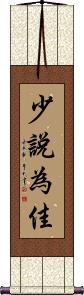
Getting to the point quickly with the fewest words possible is the suggestion of this 少說為佳 Chinese proverb.
But taking it more profound, there is a warning that using too many words may act to “tip your hat” or “show your hand” (to use two American idioms).
It can also be said that using many words does not make the message have more value.
This is really about the art of brevity.
My only hope is that I did not use too many words to explain this proverb.
Clever / Superb / Wonderful
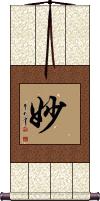
The meanings for 妙 include: clever; wonderful; strange; unusual; superb; excellent; beautiful; mystic; supernatural; profound; mysterious; good; surpassing; fine, lovely, charming; special; outstanding; incomparable.
As you can see, this single character can mean a lot of things (a bit ambiguous).
Compassionate Heart / Benevolent Heart
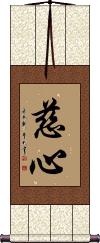
慈心 means “Compassionate Heart” or “Benevolent Heart.”
It's used in day-to-day speech to refer to someone who has the traits of benevolence, mercy, and compassion for their fellow humans.
This title is also used in Buddhism with the same profound meaning.
Flower in the Mirror, Moon on Water
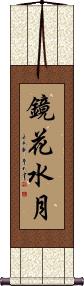
鏡花水月 is an old Asian proverb that means “flowers in a mirror and the moon reflected in the lake” or “flowers reflected on a mirror and the moon reflected on the water's surface.”
Literally, 鏡花水月 reads “Mirror Flower, Water Moon.”
Figuratively this can be used to represent a lot of different ideas. It can be used to express an unrealistic rosy view or viewing things through rose-tinted spectacles. So you can use it to relay an idea about something that is visible but has no substance,
something that can be seen but not touched, or something beautiful but unattainable such as dreams or a mirage.
This expression is used to describe things like the subtle and profound beauty of poems that cannot be described in words.
鏡 = Mirror (or lens)
花 = Flower(s)
水 = Water
月 = Moon
Can also be written 水月鏡花 (just a slight change in word/character order).
Words Have Enormous Weight: One Word Worth Nine Caldrons
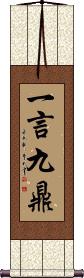
一言九鼎 is an ancient Chinese proverb used in modern times to talk of profound or powerful words.
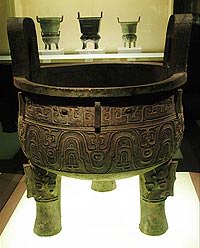 The literal meaning is “one word [worth] nine [sacred] tripods.” The tripod is a highly-prized three-legged (sometimes four-legged) metal pot or kettle of ancient China. They are often made of bronze, and the Emperor would have large ones gilded in gold. See the image to the right for an example.
I am Enough
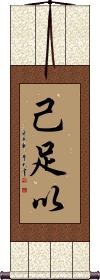
己足以 is a profound and philosophical way to say “I am enough” in Chinese.
The first character means self or oneself.
The last two characters are a word that means sufficient or enough.
Intense / Serious / Deep / Profound
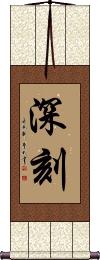
深刻 is a Chinese word that is the form of intense that describes a person who is deep, serious, and a true thinker.
If you find yourself contemplating the world and coming up with profound ideas, this might be the word for you. In some contexts (especially Korean), it can mean seriousness, gravity, or acuteness.
In Japanese, this can mean “serious problem” or can be a rare given name, Misa. You should not use this if your audience is Japanese.
Profound / Powerful Words
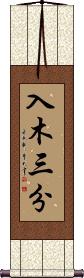
入木三分 is a four-character Chinese proverb that translates in English to a strong form of “profound” or “written with a forceful hand.”
But there is much more to the story...
The deep meaning behind this proverb comes from a man named Wan Xizhi, who lived in the third century.
He was a great writer and calligrapher whose writing style influenced generations of other writers and calligraphers.
He once wrote words on a piece of wood to be taken to an engraver.
When the engraver began to carve the characters into the wood, he found that Wang Xizhi's writing had penetrated the wood about 3/8 of an inch.
Thus people believed that his words were so powerful and profound that they caused the ink from his brush to penetrate the wood deeply.
The proverb literally means “penetrated wood three fen” (A fen is an ancient Chinese measurement of a little over 1/8 of an inch or almost 4mm).
Sangha
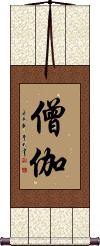
In Buddhism, 僧伽 refers to a community of monks and/or nuns (one of the “Three Jewels”). In general terms, it can simply mean “all followers of the Buddha.”
Notes: Though there are not vast numbers of Chinese Hindus, in the Hindu faith, this term means “community together.”
The original Sanskrit word is also Romanized as samgha.
The first character means “monk.” The second character means Buddha or Shakyamuni.
僧伽 is a transliteration of the original Sanskrit, but it uses two very profound Chinese characters related to Buddhism.
Some may pronounce this as “seng qie” or “seng jia” in Mandarin (two possible pronunciations for the second character). Note that “qie” sounds like “chee-ah” using typical English pronunciation. Chinese Romanization is not actually designed to match English sounds.

 Note that when writing this as Kanji, Japanese will tend to write the first character in the form shown to the right. If you select our Japanese master calligrapher, please expect this special Kanji form. However, it should also be noted that this is not a common term in Japanese (except by certain sects of Buddhism or perhaps devout Buddhists in Japan).
Intense / Serious
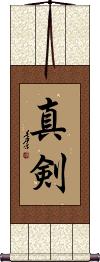
真剣 is a Japanese word that means intense, serious, or earnest. It describes a person who is deep, serious, and a true thinker or dreamer.
Literally, this means “true sword,” as compared to a sharpened wooden practice sword blank. It's real, true, and serious.
Silence
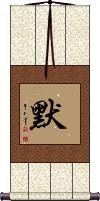
默 / 黙 means silent or silence and is often used in a Buddhist context.
Other meanings include dark, secret, or profound.
The original form is 默, but you will sometimes see it written in the 黙 Japanese variant form. If you want it in the Japanese form, please choose a Japanese calligrapher and use this to start your order instead of the button above: 黙
Tea Fate
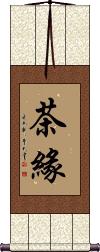
茶緣 is a special title for the tea lover. This kind of means “tea fate,” but it's more spiritual and hard to define. Perhaps the tea brought you in to drink it. Perhaps the tea will bring you and another tea-lover together. Perhaps you were already there, and the tea came to you. Perhaps it's the ah-ha moment you will have when drinking the tea.
I've been told not to explain this further, as it will either dilute or confuse the purposefully-ambiguous idea embedded in this enigma.
I happen to be the owner of a piece of calligraphy written by either the son or nephew of the last emperor of China, which is the title he wrote. It was given to me at a Beijing tea house in 2001. 茶緣 is where I learned to love tea after literally spending weeks tasting and studying everything I could about Chinese tea. I did not understand the significance of the authorship or the meaning of the title at all. Some 10 years later, I realized the gift was so profound and had such providence. Only now do I realize the value of a gift that it is too late to give proper thanks for. It was also years later that I ended up in this business and could have the artwork properly mounted as a wall scroll. It has been borrowed for many exhibitions and shows and always amazes native Chinese and Taiwanese who read the signature. This piece of calligraphy I once thought was just a bit of ink on a thin and wrinkled piece of paper, is now one of my most valued possessions. And fate has taught me to be more thankful for seemingly simple gifts.
Tranquility Yields Transcendence
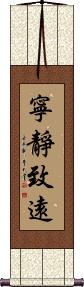
寧靜致遠 is an ancient Chinese idiom that means “tranquility yields transcendence.”
This suggests pursuing a quiet life of profound study.
The first two characters mean tranquility. The last two characters mean “go far,” which suggests achieving much in your life or expanding beyond normal limits. The direct translation would read something like, “[With] tranquility [in your life, you'll] go far.”
Compare this to the English idiom: Still waters run deep.
Better to Travel 10,000 Miles than Read 10,000 Books
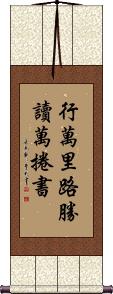
行万里路胜读万卷书 translates a few ways:
To travel ten thousand miles beats reading ten-thousand books.
Better to travel ten thousand li than to read ten thousand books. (a “li” is an ancient Chinese mile)
Traveling thousands of miles is better than reading thousands of books.
No matter how you slice it, this Chinese proverb is claiming that experience is more profound and meaningful than what you can get from a book. Go do it! Don't just read about it.
Mysterious
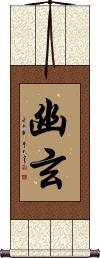
幽玄 is the Chinese, Japanese Kanji, and old Korean Hanja word meaning dim, deep, mysterious, subtle grace, hidden beauty, mysterious profundity, elegant simplicity, or subtle and profound.
This can also be the Japanese personal name Yuugen or Yugen.
Daodejing / Tao Te Ching - Chapter 27
The Mastery of Effortless Skill

Chapter 27 of the Daodejing reveals a profound truth about mastery: the highest skill leaves no trace, requires no force, and appears almost invisible.
善行無轍跡,
善言無瑕謫,
善數不用籌策,
善閉無關鍵而不可開,
善結無繩約而不可解。
是以聖人常善救人,
故無棄人;
常善救物,
故無棄物。
是謂襲明。
故善人者,不善人之師;
不善人者,善人之資。
不貴其師,不愛其資,
雖智大迷,
是謂要妙。
The sage moves through life with such natural harmony that nothing seems imposed; doors need no locks, knots require no rope, and actions leave no mark behind.
This is the essence of wúwéi (effortless action), where true ability arises from deep alignment with the Tao rather than deliberate effort.
At its heart, this chapter teaches compassion without exception. The sage “abandons no one and nothing,” recognizing value in all people and all things. Even those who seem flawed or unrefined are not rejected, but understood as part of a greater whole with each person both a student and a teacher in the unfolding of life.
Laozi reminds us that wisdom is not about perfection or control, but about subtle awareness. The truly skilled individual does not rely on tools, rules, or rigid structures; instead, they embody an intuitive understanding that makes their actions naturally complete.
In this way, excellence becomes quiet, effortless, and beyond imitation.
This teaching also reflects a deeper philosophical insight: Opposites are interdependent. The “good” person learns from the “not good,” and the “not good” provides the material for growth. To reject either is to misunderstand the balance of existence itself.
As calligraphy, Daodejing Chapter 27 serves as a reminder to cultivate inner mastery rather than outward display. It is a meditation on refinement, humility, and the quiet power of skill perfected through harmony with the natural order.
Note: The Chinese text used here is based on the early Mawangdui silk manuscript tradition (2nd century BCE). The Guodian manuscripts do NOT preserve Chapter 27 in full form.
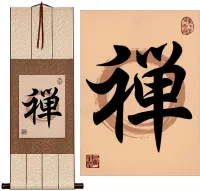
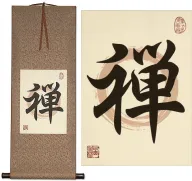
This in-stock artwork might be what you are looking for, and ships right away...
Gallery Price: $90.00
Your Price: $49.88

Gallery Price: $108.00
Your Price: $59.88
The following table may be helpful for those studying Chinese or Japanese...
| Title | Characters | Romaji (Romanized Japanese) | Various forms of Romanized Chinese | |
| Brevity: Fewer Words are Best | 少說為佳 少说为佳 | shǎo shuō wéi jiā shao3 shuo1 wei2 jia1 shao shuo wei jia shaoshuoweijia | shao shuo wei chia shaoshuoweichia |
|
| Clever Superb Wonderful | 妙 | myou / myo | miào / miao4 / miao | |
| Compassionate Heart Benevolent Heart | 慈心 | jishin | cí xīn / ci2 xin1 / ci xin / cixin | tz`u hsin / tzuhsin / tzu hsin |
| Flower in the Mirror, Moon on Water | 鏡花水月 镜花水月 | kyou ka sui getsu kyoukasuigetsu kyo ka sui getsu | jìng huā shuǐ yuè jing4 hua1 shui3 yue4 jing hua shui yue jinghuashuiyue | ching hua shui yüeh chinghuashuiyüeh |
| Words Have Enormous Weight: One Word Worth Nine Caldrons | 一言九鼎 | yī yán jiǔ dǐng yi1 yan2 jiu3 ding3 yi yan jiu ding yiyanjiuding | i yen chiu ting iyenchiuting |
|
| I am Enough | 己足以 | jǐ zú yǐ ji3 zu2 yi3 ji zu yi jizuyi | chi tsu i chitsui |
|
| Intense Serious Deep Profound | 深刻 | shinkoku / misa | shēn kè / shen1 ke4 / shen ke / shenke | shen k`o / shenko / shen ko |
| Profound Powerful Words | 入木三分 | rù mù sān fēn ru4 mu4 san1 fen1 ru mu san fen rumusanfen | ju mu san fen jumusanfen |
|
| Sangha | 僧伽 | sougya / sogya | sēng qié / seng1 qie2 / seng qie / sengqie | seng ch`ieh / sengchieh / seng chieh |
| Intense Serious | 真剣 | shin ken / shinken | ||
| Silence | 默 / 黙 默 | moku | mò / mo4 / mo | |
| Tea Fate | 茶緣 茶缘 | chá yuán / cha2 yuan2 / cha yuan / chayuan | ch`a yüan / chayüan / cha yüan | |
| Tranquility Yields Transcendence | 寧靜致遠 宁静致远 | níng jìng zhì yuǎn ning2 jing4 zhi4 yuan3 ning jing zhi yuan ningjingzhiyuan | ning ching chih yüan ningchingchihyüan |
|
| Better to Travel 10,000 Miles than Read 10,000 Books | 行萬里路勝讀萬捲書 行万里路胜读万卷书 | xíng wàn lǐ lù shèng dú wàn juǎn shū xing2 wan4 li3 lu4 sheng4 du2 wan4 juan3 shu1 xing wan li lu sheng du wan juan shu | hsing wan li lu sheng tu wan chüan shu | |
| Mysterious | 幽玄 | yū gen / yūgen | yōu xuán / you1 xuan2 / you xuan / youxuan | yu hsüan / yuhsüan |
| Daodejing Tao Te Ching - Chapter 27 | 善行無轍跡善言無瑕謫善數不用籌策善閉無關鍵而不可開善結無繩約而不可解是以聖人常善救人故無棄人常善救物故無棄物是謂襲明故善人者不善人之師不善人者善人之資不貴其師不愛其資雖智大迷是謂要妙 善行无辙迹善言无瑕谪善数不用筹策善闭无关键而不可开善结无绳约而不可解是以圣人常善救人故无弃人常善救物故无弃物是谓袭明故善人者不善人之师不善人者善人之资不贵其师不爱其资虽智大迷是谓要妙 | shàn xíng wú zhé jì shàn yán wú xiá zhé shàn shù bù yòng chóu cè shàn bì wú guān jiàn ér bù kě kāi shàn jié wú shéng yuē ér bù kě jiě shì yǐ shèng rén cháng shàn jiù rén gù wú qì rén cháng shàn jiù wù gù wú qì wù shì wèi xí míng gù shàn rén zhě bù shàn rén zhī shī bù shàn rén zhě shàn rén zhī zī bù guì qí shī bù ài qí zī suī zhì dà mí shì wèi yào miào shan4 xing2 wu2 zhe2 ji4 shan4 yan2 wu2 xia2 zhe2 shan4 shu4 bu4 yong4 chou2 ce4 shan4 bi4 wu2 guan1 jian4 er2 bu4 ke3 kai1 shan4 jie2 wu2 sheng2 yue1 er2 bu4 ke3 jie3 shi4 yi3 sheng4 ren2 chang2 shan4 jiu4 ren2 gu4 wu2 qi4 ren2 chang2 shan4 jiu4 wu4 gu4 wu2 qi4 wu4 shi4 wei4 xi2 ming2 gu4 shan4 ren2 zhe3 bu4 shan4 ren2 zhi1 shi1 bu4 shan4 ren2 zhe3 shan4 ren2 zhi1 zi1 bu4 gui4 qi2 shi1 bu4 ai4 qi2 zi1 sui1 zhi4 da4 mi2 shi4 wei4 yao4 miao4 shan xing wu zhe ji shan yan wu xia zhe shan shu bu yong chou ce shan bi wu guan jian er bu ke kai shan jie wu sheng yue er bu ke jie shi yi sheng ren chang shan jiu ren gu wu qi ren chang shan jiu wu gu wu qi wu shi wei xi ming gu shan ren zhe bu shan ren zhi shi bu shan ren zhe shan ren zhi zi bu gui qi shi bu ai qi zi sui zhi da mi shi wei yao miao | shan hsing wu che chi shan yen wu hsia che shan shu pu yung ch`ou ts`e shan pi wu kuan chien erh pu k`o k`ai shan chieh wu sheng yüeh erh pu k`o chieh shih i sheng jen ch`ang shan chiu jen ku wu ch`i jen ch`ang shan chiu wu ku wu ch`i wu shih wei hsi ming ku shan jen che pu shan jen chih shih pu shan jen che shan jen chih tzu pu kuei ch`i shih pu ai ch`i tzu sui chih ta mi shih wei yao miao shan hsing wu che chi shan yen wu hsia che shan shu pu yung chou tse shan pi wu kuan chien erh pu ko kai shan chieh wu sheng yüeh erh pu ko chieh shih i sheng jen chang shan chiu jen ku wu chi jen chang shan chiu wu ku wu chi wu shih wei hsi ming ku shan jen che pu shan jen chih shih pu shan jen che shan jen chih tzu pu kuei chi shih pu ai chi tzu sui chih ta mi shih wei yao miao |
|
| In some entries above you will see that characters have different versions above and below a line. In these cases, the characters above the line are Traditional Chinese, while the ones below are Simplified Chinese. | ||||



