Many custom options...


And formats...



3rd Degree Black Belt in Chinese / Japanese...
Buy a 3rd Degree Black Belt calligraphy wall scroll here!
Personalize your custom “3rd Degree Black Belt” project by clicking the button next to your favorite “3rd Degree Black Belt” title below...
Switched to secondary search mode due to lack of results using primary.
These secondary results may not be very accurate. Try a different but similar meaning word or phrase for better results. Or...
Look up 3rd Degree Black Belt in my Japanese Kanji & Chinese Character Dictionary(My dictionary is a different system then the calligraphy search you just tried)
If you want a special phrase, word, title, name, or proverb, feel free to contact me, and I will translate your custom calligraphy idea for you.
3. Black Belt
4. Betelgeuse
5. Black
6. Black Belt
7. Rank Holder
8. Black Dragon
9. Black Flag Gate / Hek Ki Boen
10. Black Raven
11. Black or white cat matters not as long as it can catch mice
13. Black Tiger Fist
14. Black Wolf
16. Dark Angel
17. Darkness
18. Demon / Raksha
19. Ebony
20. Equality
22. The one who retreats 50 paces mocks the one to retreats 100
23. Soccer / Football / Futbol
24. Galatians 5:25
25. Giant Panda
26. Go-Dan / 5th Degree Black Belt
27. Goldfish
28. Gray Color
29. Greatest Love
31. Even The 100-Foot Bamboo Can Grow One More Foot
33. Ku-Dan
34. Just as Liquor Turns a Face Red, Gold Turns a Heart Black
35. Lo
36. Loo
37. Magic
39. Mindfulness
40. Mountain Travels Poem by Dumu
41. Nana-Dan / 7th Degree Black Belt
42. Ni-Dan
43. Nidan
44. Orion’s Belt
45. Panda Bear
46. Roku-Dan / 6th Degree Black Belt
47. San-Dan
49. Shichi-Kyu
50. Shihan
51. Sho-Dan
Eight Black Horses
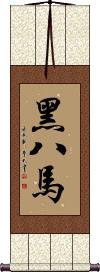
黑八馬 means “eight black horses” in Chinese.
This is an unusual title for calligraphy, but several people have searched for it, so we added it.
Eight horses are a sign of success in business in Chinese culture.
Always Try to do Better
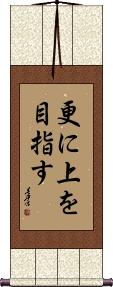
This Japanese proverb literally translates as: [After having achieved a fair degree of success,] one should still try to do better.
Others may translate this as “Always try to improve,” or “Always try to be better.”
Note: Because this selection contains some special Japanese Hiragana characters, it should be written by a Japanese calligrapher.
See Also: Never Give Up
Black Belt
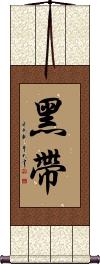
黑帶 is “black belt” in Chinese.
Many will argue whether rank systems that include a “black belt” are used in pure Chinese martial arts systems. The argument goes that it's more a Japanese idea merged into the western versions of Chinese martial arts. However, in Wushu (often referred to as Kung Fu), it's said that all students started with white belts. Over the years of training, the white belt would get dirty until finally appearing black with filth. Thus, more advanced students had darker belts.
If you want this title in Chinese, this would be the form.
 Often, the second character is written like the image to the right. If you like this version, click on this character instead of the button above.
Betelgeuse
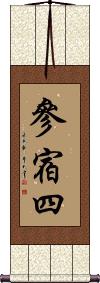
參宿四 is the title for Betelgeuse (star in the constellation Orion) in Chinese.
Also known as “α Orionis” (Alpha Orionis), Alpha Ori, or in Japan the Heike-boshi or Heike-star.
Note: 参宿 (Shēn Xiù) is the name given by ancient Chinese astronomers for a constellation of three stars (the three naked-eye visible belt stars of Orion). Therefore, 參宿四 means the Fourth Star of the constellation of Three Stars (which sounds like a joke). As telescopes got better, it should be noted that there are actually 10 stars in the constellation.
Black
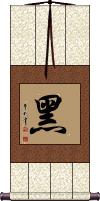
黑 is the color black in Chinese, Japanese, and old Korean Hanja.
In some contexts, this can mean “dark” or “evil.”
 There is an alternate form of this character which is commonly used in modern Japan (shown to the right). If you want this alternate/Japanese form, just click on the character to the right, instead of the button above.
Black Belt
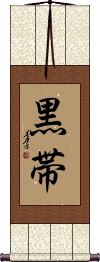
These are the Kanji for “Black Belt” in Japanese.
This would be the gift to buy someone who is about to achieve the rank of black belt, or perhaps for yourself, like a certificate on the wall to subtly show your accomplishment.
It should be mentioned that the title “black belt” is not a typical selection for a calligraphy wall scroll.
Note: with a tiny stroke difference on the second character, this also means black belt in Korean Hanja. Let me know if you need the exact Korean version (though any Korean who can read Hanja will know this is black belt).
Rank Holder
The one who has achieved rank in martial arts
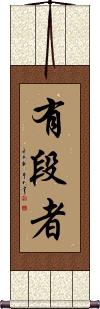
有段者 is a Japanese term for someone who holds rank in karate, judo, etc.
This term theoretically applies to anyone with rank (above a white belt). However, some schools or dojos may reserve this title for a holder of a black belt.
I'd suggest that you only order this phrase if you have honestly reached this level.
This title does kind of make sense in Chinese but only to those Chinese who practice “kong shou dao” (karate) or when used in the context of martial arts.
Black Dragon
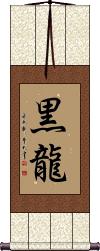
黒龍 is a generic title for “Black Dragon.”
The first character is black color.
The second means dragon.
Sometimes written as 黑龍 (just a minor variation in the first character).
Black Dragon
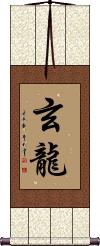
玄龍 is a sophisticated or scholarly way to say “Black Dragon.”
玄龍 is the title you'd expect in ancient Chinese literature.
The first character means black or mysterious.
The second character means dragon.
This black dragon represents a king dwelling in the depths of the mystic waters.
Black Dragon
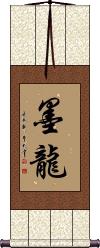
墨龍 is a cool way to say “Black Dragon.”
墨龍 is literally “Ink Dragon.” The ink part is black Chinese ink, the deepest, darkest ink available for thousands of years.
Black Flag Gate / Hek Ki Boen
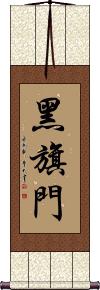
黑旗門 is often romanized as “Hek Ki Boen” in Cantonese, this is the title for a certain branch school of Wing Chun or Eng Chun martial arts.
Black Raven
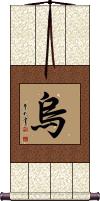
烏 can mean raven or crow but is also used as an alternate way to write the color black.
Therefore, this is a symbol of the black raven (with emphasis on black). This can also mean rook or dark.
Notes: This can be the Japanese surname Karasu, or Chinese surname Wu.
Black or white cat matters not as long as it can catch mice
Ability is more important than looks
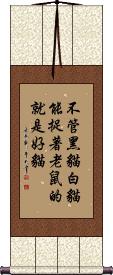
不管黑猫白猫能捉着老鼠的就是好猫 literally translates as: It doesn't matter [if a] cat [is] black [or] white, [as long as it] can catch mice, it's a good cat.
This proverb was either composed or made famous by Deng XiaoPing in 1961 when he exclaimed, “I don't care if it's a white cat or a black cat. It's a good cat so long as it catches mice” when his critics pointed out that his ideas were Capitalistic (free market). The response was meant to say, “It does not matter if it's Communist or Capitalist, as long as it works.”
This is a Chinese proverb that can be used to suggest one should disregard looks or a person's race, as long as they can do the job. It can also be used as a metaphor for many other situations.
Deng XiaoPing probably saved China from collapse (as the Soviet Union experienced). He changed China’s economy from pure Communism to a hybrid where the free market (Capitalism) is encouraged. More about Deng XiaoPing
Black Dragon Ninjitsu

This is the Japanese martial arts title Black Dragon Ninjitsu or Black Dragon Ninjutsu in Kanji.
Black Tiger Fist
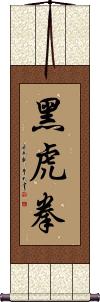
黑虎拳 is Hei Hu Quan or “Black Tiger Fist” - a school of Chinese Martial Arts.
Black Wolf
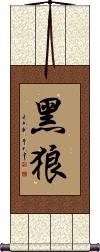
黑狼 is how the title Black Wolf is written in Chinese.
黑狼 is not a common term in Chinese but will be understood.
Black Eagle / Condor
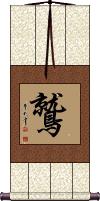
鷲 is the way to write black eagle or condor in Chinese.
It means eagle (sometimes vulture) in Japanese Kanji. 鷲 hasn't been in common use in Korean for hundreds of years, so it's hard to say what bird it represented in old Korean Hanja.
There are other multi-character words that express different specific species of birds of prey (bald eagle, osprey, golden eagle, etc).
If you need a more specific title, just contact me.
Dark Angel
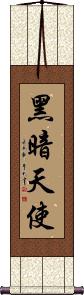
黑暗天使 means “Dark Angel” in Chinese.
The first character means black, but the second means dark by itself, so this can also be written with the first character dropped.
The last two characters mean angel.
Darkness
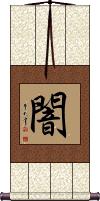
闇 is the shortest and universal way (in Chinese, Japanese Kanji, and old Korean Hanja) to write “darkness.”
In Chinese, this can mean dark, gloomy, hidden, secret, to shut the door, or unilluminated.
In Japanese, this can mean darkness, the dark, black-marketeering, dark, shady, or illegal.
In old Korean Hanja, this can mean dark, obscure, hidden, or secret.
 Note that there is an alternate form of this character. It is used as an alternate in all three languages (that rarely happens). You can see this alternate version to the right. If you want to order that version, please click on that character, instead of the button above.
Darkness
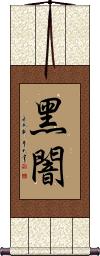
黑闇 is the two-character Chinese word for darkness.
The first character alone means black or dark.
The second character has several possible meanings, depending on context; They include: to shut the door, unilluminated, dark, gloomy, hidden, or secret.
Together, these two characters will, in most cases, be translated as dark or darkness.
Darkness
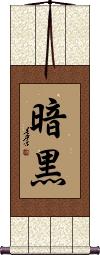
暗黒 is the two-character Japanese word for darkness.
The first Kanji can mean unilluminated, dark, gloomy, hidden, or secret.
The second character means black or dark.
Together, these two Kanji will be understood as dark or darkness.
Demon / Raksha
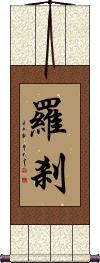
羅剎 is the Chinese version of demon that comes from the ancient Sanskrit word raksha, raksasa (rākṣasa), raksas (rakṣas), or raksasi (rākṣasī).
This title regards malignant spirits and demons. These demons are described in ancient texts as terrifying, with black bodies, red hair, and green eyes, and as devourers of men. FYI: Sometimes the second character is written in the form shown to the right.
Ebony
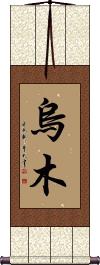
This means ebony (the dark - virtually black tropical wood) in Chinese and Japanese.
When pronounced as Karasugi instead of Uboku is the name of a town and sometimes a surname in Japan.
Equality
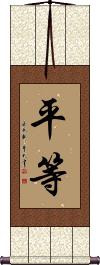
In Chinese, 平等 is the word that describes equality among all humans.
Yes, this is equality that means equality no matter of religion, whether you are rich or poor, gay or straight, black white or yellow.
In Japanese and Korean, this can be defined as equality, impartiality, and evenness (basically the same as the Chinese meaning).
Extreme / Intense
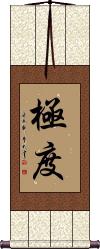
極度 means extreme, intense, and sometimes maximum or zenith depending on context.
The first character means extremely or utmost.
The second character means degree or capacity.
The one who retreats 50 paces mocks the one to retreats 100
The pot calls the kettle black
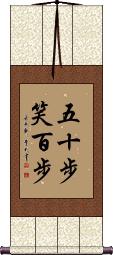
五十步笑百步 is a Chinese proverb that means the one who retreats 50 paces mocks the one who retreats 100 paces.
During the Warring States Period of what is now China (475 - 221 B.C.), the King of Wei was in love with war. He often fought with other kingdoms just for spite or fun.
One day, the King of Wei asked the philosopher Mencius, “I love my people, and all say I do the best for them. I move the people from famine-stricken areas to places of plenty and transport grains from rich areas to the poor. Nobody goes hungry in my kingdom, and I treat my people far better than other kings. But why does the population of my kingdom not increase, and why does the population of other kingdoms not decrease?”
Mencius answered, “Since you love war, I will make this example: When going to war, and the drums beat to start the attack, some soldiers flee for their lives in fear. Some run 100 paces in retreat, and others run 50 steps. Then the ones who retreated 50 paces laugh and taunt those who retreated 100 paces, calling them cowards mortally afraid of death. Do you think this is reasonable?
The King of Wei answered, “Of course not! Those who run 50 paces are just as timid as those who run 100 paces.”
Mencius then said, “You are a king who treats his subjects better than other kings treat their people, but you are so fond of war that your people suffer from great losses in battle. Therefore, your population does not grow. While other kings allow their people to starve to death, you send your people to die in war. Is there any difference?”
This famous conversation led to the six-character proverb shown here. It serves as a warning to avoid hypocrisy. It goes hand-in-hand with the western phrase, “The pot calls the kettle black,” or the Biblical phrase, “Before trying to remove a splinter from your neighbor's eye, first remove the plank from your own eye.”
Soccer / Football / Futbol
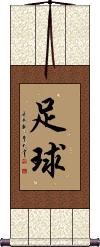
足球 is the word for football or soccer in Chinese.
As with most of the world, football is very popular in China. During the World Cup, the whole country seems to shut down to watch (regardless of whether Team China is playing or not).
Soccer is probably the 3rd most popular participation sport in China (after ping pong and badminton).
As you might expect, the first character means “foot” and the second character means “ball.”
FYI: This game would never be confused with American Football in Chinese. As with the rest of the world, there is a vague awareness of what American Football is (often described as "that game kind of like rugby").
For those familiar with American Football, there is some disgust regarding the fact that winners of the Superbowl call themselves "world champions" of a game that is only played in the USA. This is one of the reasons that jokes abound about how Americans are unaware that there is a world outside of their borders.
Galatians 5:25
If we live in the Spirit, let us also walk in the Spirit
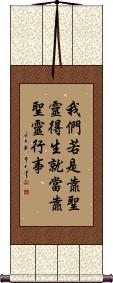
我們若是靠聖靈得生就當靠聖靈行事 is the translation of Galatians 5:25 into Mandarin Chinese via the Chinese Union Bible.
KJV: If we live in the Spirit, let us also walk in the Spirit.
NIV: Since we live by the Spirit, let us keep in step with the Spirit.
The annotation of this Chinese translation:
1.我们 wǒ men - we / us / ourselves
2.若是 ruò shì - if
3.靠 kào - depend upon / lean on / near / by / against / to support
4.圣灵 shèng líng - Holy Ghost
5.得 děi - to have to / must / ought to / degree or possibility
6.生就 shēng jiù - born one way or another (nervous, suspicious, etc.)
7.当 dàng - suitable / adequate / fitting / proper
8.靠 kào - depend upon / lean on / near / by / against / to support
9.圣灵 shèng líng - Holy Ghost
10.行事 xíng shì - how one does things / how one runs things (in this case, it suggests, “to walk in step with”)
Giant Panda
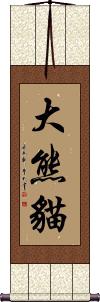
大熊貓 is how to write “giant panda” in Chinese.
大熊貓 is specific to the “giant panda,” which has black and white fur. Not to be confused with other types of smaller pandas in China.
The literal meaning of these characters is “great/big bear cat.” Chinese do think of pandas as “cat-like bears.”
Note: In Japanese, they only express Giant Panda in Katakana, which is ジャイアント パンダ” (Jaianto Panda). So we have not included that for wall scroll orders.
Go-Dan / 5th Degree Black Belt
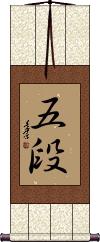
五段 represents the 5th Rank or 5th Degree (5th Degree of black belt) in Japanese martial arts.
This can also be the 5th rank in other fields such as chess play (Japanese “Go”) etc.
Goldfish
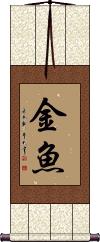
金魚 is the title for goldfish in Chinese and Japanese.
There was a time in ancient China when only the Emperor could possess the actual yellow-gold colored fish. This is why alternate coloration such as orange, black, red, and white was bred. Many believe this is why colors other than yellow-gold are more common for “goldfish” in pet shops today.
Gray Color
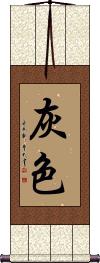
灰色 is the Chinese, Japanese Kanji, and old Korean Hanja for the color gray.
This can also mean ash gray, grizzly, pessimistic, gloomy, dispirited, ambiguous (not black and white), and the alternate spelling grey.
Greatest Love
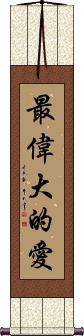
最偉大的愛 means “the greatest love” in Chinese.
Keeping in mind that Chinese is different than English, the first character is like “-est” or adding “the most” as a modifier to the next word.
The 2nd and 3rd characters mean great, mighty, and/or large.
The 4th is a possessive article.
The last is the character for love.
When you put it all together, you get a phrase that means the greatest love, enormous love, or the mightiest love.
Home of the Black Dragon
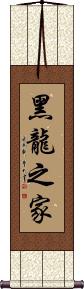
黑龍之家 was added by special request of a customer. This phase is natural in Chinese, but it is not a common or ancient title.
The first character is black.
The second is dragon.
The third is a possessive modifier (like making “dragon” into “dragon's”).
The fourth character means home (but in some context can mean “family” - however, here it would generally be understood as “home”).
Even The 100-Foot Bamboo Can Grow One More Foot
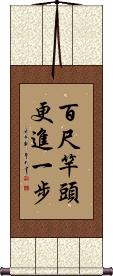
百尺竿头更进一步 is a proverb that literally translates as: [Even a] one-hundred foot [tall] bamboo [can] progress even one [more] step.
Figuratively, this means: After having achieved a fair degree of success, one should try to do still better.
Ichi-Dan / First Degree
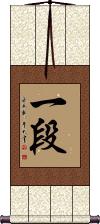
In Japanese martial arts, this usually represents the first-degree black belt rank.
It can also be like a linguistic stair step of “more, much more, still more, all the more.” It can also be a step, rung, level, or rank.
Also sometimes used in the context of Buddhism to mean “first step” or “first stage.” This might presume the first step towards enlightenment etc.
Ku-Dan

九段 is a Japanese Kanji word that means “ninth degree” (in martial arts, go, shogi, etc.).
九段 is the ninth black belt rank in Japanese martial arts.
The first Kanji means nine or ninth in Japanese.
The second Kanji means step, grade, rank, or level.
Just as Liquor Turns a Face Red, Gold Turns a Heart Black
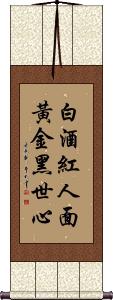
白酒紅人面黃金黑世心 literally says: [Just as] white liquor makes people's faces turn red, [So] yellow gold makes people's hearts turn black.
This is a warning about the nature of greed. The suggestion is that one who lusts for gold and riches will eventually have a black heart (or become a heartless greedy bastard). As a wall scroll, this is a reminder and warning to keep yourself from following the greedy path.
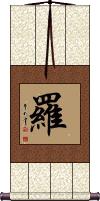
羅 is a Cantonese surname that romanizes as Lo, meaning gauze, to gather, or to catch; with a connection to fishing or trade.
Other characters also romanize as Lo:
盧 (black or rice vessel).
駱 (white horse with a black mane).
路 (road or journey).
魯 (From the ancient State of Lu).
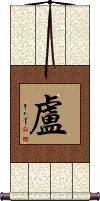
盧 is the Cantonese surname Loo, which can mean rice vessel or black.
These surname characters can also romanize as Loo:
羅 (gauze, or to gather).
劉 (kill or destroy).
陸 (land or shore).
呂 (pitchpipe or semitone).
Magic
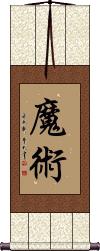
魔術 means magic in Chinese, Japanese Kanji, and old Korean Hanja.
This title can also refer to black magic, black arts, sorcery, magic tricks, and in some contexts, juggling.
This is a strange selection for a wall scroll. Probably only appropriate if you are a magician (or an inspiring magician).
Martial Arts Master
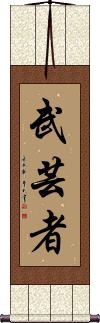
武芸者 is the Japanese Kanji title for “Martial Arts Master.” It suggests that you have reached at least the level of black belt and are probably to the level where you are ready to become an instructor.
Please consider carefully where you stand before ordering this phrase on a wall scroll. If you are not a master, this will make you look a bit foolish.
If you want to get this as a gift for your master at the dojo. Try to discreetly make sure this term is used in your school. Different schools and styles of Japanese martial arts use different terms. You may notice in the Romaji that the last two characters romanize as “geisha” which means “person skilled in arts” (what a geisha girl really is). The title here has the character for “martial,” “warrior,” and/or “military” in front of it. Therefore the literal translation is “martial art person.”
These Kanji are valid Chinese characters and Korean Hanja, but this title does not really make sense in Chinese and is not often used in Korean, though a Chinese or Korean would be able to guess the meaning by looking at the first and last characters.
Mindfulness
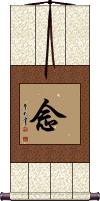
念 is the simplest way to write “mindfulness” in Chinese, Japanese Kanji, and old Korean Hanja.
念 can be defined these ways: To read; to study (a degree course); to read aloud; to miss somebody (keeping them in your mind); idea; remembrance; sense; thought; feeling; desire; concern; attention; recollection; memory; to think on/about; reflect; repeat, intone; a moment.
Obviously, the context in which the character is used determines which definition or meaning is perceived. As a single character, it's open and perhaps ambiguous. Thus, it can be read with any or all of these meanings.
念 is used in a Buddhist context (often written as 正念 or “right mindfulness”) with similar meanings of thought and contemplation.
In Japanese, this character is sometimes used as the name “Nen.”
See Also: Buddhism | Enlightenment
Mountain Travels Poem by Dumu

This poem was written almost 1200 years ago during the Tang dynasty.
It depicts traveling up a place known as Cold Mountain, where some hearty people have built their homes. The traveler is overwhelmed by the beauty of the turning leaves of the maple forest that surrounds him just as night overtakes the day, and darkness prevails. His heart implores him to stop, and take in all of the beauty around him.
First, before you get to the full translation, I must tell you that Chinese poetry is a lot different than what we have in the west. Chinese words simply don't rhyme in the same way that English or other western languages do. Chinese poetry depends on rhythm and a certain beat of repeated numbers of characters.
I have done my best to translate this poem keeping a certain feel of the original poet. But some of the original beauty of the poem in its original Chinese will be lost in translation.
Far away on Cold Mountain, a stone path leads upwards.
Among white clouds, people's homes reside.
Stopping my carriage I must, as to admire the maple forest at nights fall.
In awe of autumn leaves showing more red than even flowers of early spring.
Hopefully, this poem will remind you to stop, and “take it all in” as you travel through life.
The poet's name is “Du Mu” in Chinese that is: 
 .
.
The title of the poem, “Mountain Travels” is: 

You can have the title, poet's name, and even “Tang Dynasty” written as an inscription on your custom wall scroll if you like.
More about the poet:
Dumu lived from 803-852 AD and was a leading Chinese poet during the later part of the Tang dynasty.
He was born in Chang'an, a city in central China and the former capital of the ancient Chinese empire in 221-206 BC. In present-day China, his birthplace is currently known as Xi'an, the home of the Terracotta Soldiers.
He was awarded his Jinshi degree (an exam administered by the emperor's court which leads to becoming an official of the court) at the age of 25 and went on to hold many official positions over the years. However, he never achieved a high rank, apparently because of some disputes between various factions, and his family's criticism of the government. His last post in the court was his appointment to the office of Secretariat Drafter.
During his life, he wrote scores of narrative poems, as well as a commentary on the Art of War and many letters of advice to high officials.
His poems were often very realistic and often depicted everyday life. He wrote poems about everything, from drinking beer in a tavern to weepy poems about lost love.
The thing that strikes you most is the fact even after 1200 years, not much has changed about the beauty of nature, toils, and troubles of love and beer drinking.
Nana-Dan / 7th Degree Black Belt
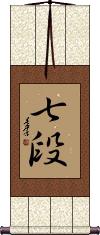
七段 represents the 7th Rank or 7th Degree (7th Degree of black belt) in Japanese martial arts.
This can also be the 7th rank in other fields such as chess play (Japanese “Go”) etc.
Ni-Dan
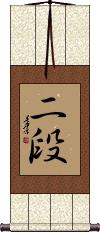
二段 is a Japanese Kanji word that literally means “second degree.”
二段 is the second black belt rank in Japanese martial arts.
The first Kanji means two or second in Japanese.
The second Kanji means step, grade, rank, or level.
二段 can also be written as 弐段. This version just uses a more complicated Kanji for the number two.
Nidan
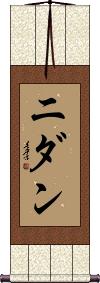
ニダン is the name Nidan in Japanese.
This is not the same as 二段 (nidan), which is the second degree (black belt) in Japanese.
Note: Because this title is entirely Japanese Katakana, it should be written by a Japanese calligrapher.
Orion’s Belt
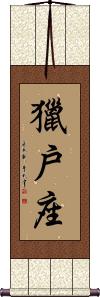
獵戶座 means Orion's Belt, or more literally Orion's Constellation or the “Constellation of the Hunter.”
This title refers not just to the three stars that make up the belt but to the whole constellation known as Orion (or the Hunter).
Orion’s Belt
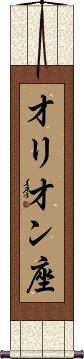
オリオン座 is the Japanese title for Orion's Belt (constellation).
Note: Because this selection contains some special Japanese Katakana characters, it should be written by a Japanese calligrapher.
Panda Bear
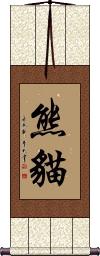
熊貓 is how to write “panda” in Chinese.
熊貓 is kind of a generic term that is applied to all pandas. When most people think of panda bears, they are really thinking of the “giant panda,” which has black and white fur.
The literal meaning of these characters is “bear cat.” Chinese do think of pandas as “cat-like bears.”
Roku-Dan / 6th Degree Black Belt
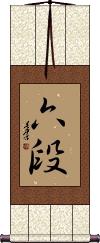
六段 is the Japanese title for the 6th Degree or 6th Level.
This applies mostly to martial arts and earning the title of a 6th-degree black belt.
The first character is simply the number 6.
The second character is “dan” which is often translated as “degree” in the context of Japanese martial arts. 六段 means grade, rank, level. When a number is in front like this, it refers to a senior rank in martial arts or games of strategy such as go, shogi, chess, etc.
San-Dan
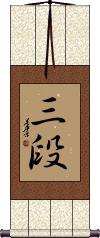
三段 is a Japanese Kanji word that literally means “third degree.”
三段 is the third black belt rank in Japanese martial arts.
The first Kanji means three or third in Japanese.
The second Kanji means step, grade, rank, or level.
Scops Owl / Black Kite
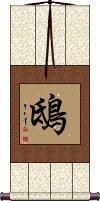
In Chinese, 鴟 is the Scops Owl. In Japanese, this is the black kite (Milvus migrans).
Colloquially in Japanese, this can refer to a construction worker who walks on or erects scaffolding. It can also be a firefighter up high on a ladder or building.
Shichi-Kyu

七級 or Shichi-Kyu/Shichikyu is the 7th Kyu or 7th Rank before black belt in many Japanese martial arts ranking schemes.
In some cases this is a yellow belt with two stripes, other schools designate this with a blue belt.
In Chinese, this can mean seven floors - like a seven-floor pagoda.
Shihan
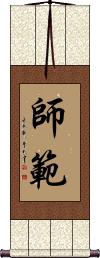
師範 or Shihan is a Japanese term, often used in Japanese martial arts.
In typical Japanese language, it can refer to a teacher or instructor. However, in martial arts, it's often an honorific title for an expert or master instructor.
Example: In Aikido the title can refer to someone with the rank of 7th dan. But other schools use it to mean a master who has earned the right to award black belts.
This term is also used in Chinese, where it refers to teacher-training or the art of teaching by example. It's used within the proper name of certain types of universities in China.
Sho-Dan
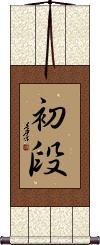
初段 is a Japanese Kanji word that literally means “beginning degree.”
初段 is the lowest black belt rank in Japanese martial arts and the game of Go.
The first Kanji means first, new, or beginning in Japanese.
Other ways to translate this title include “lowest grade” or “first grade.”
In Wine there is Truth
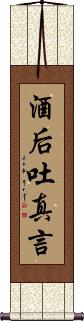
酒后吐真言 / 酒後吐真言 is a nice Asian proverb if you know a vintner or wine seller - or wine lover - although the actual meaning might not be exactly what you think or hope.
The literal meaning is that someone drinking wine is more likely to let the truth slip out. It can also be translated as “People speak their true feelings after drinking alcohol.”
It's long believed in many parts of Asia that one can not consciously hold up a facade of lies when getting drunk, and therefore the truth will come out with a few drinks.
I've had the experience where a Korean man would not trust me until I got drunk with him (I was trying to gain access to the black market in North Korea which is tough to do as an untrusted outsider) - so I think this idea is still well-practiced in many Asian countries.
 VS
VS 
Please note that there are two common ways to write the second character of this phrase. The way it's written will be left up to the mood of the calligrapher, unless you let us know that you have a certain preference.
Xuan Wu / Genbu / Black Tortoise God
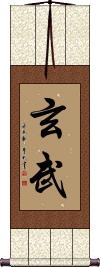
玄武 can refer to the Black Tortoise (an ancient Chinese constellation of stars- part of the seven mansions of the north sky).
In Daoism, this is the God of the North sky.
This also refers to a Black Tortoise god, said to rule over the northern heavens in Japanese. Can also be pronounced/romanized as genmu or when used as a personal name, Hirotake in Japanese.
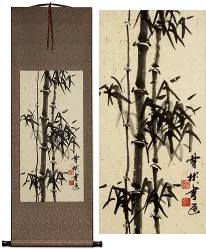
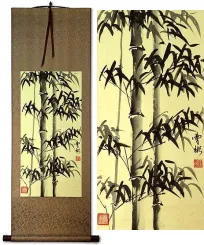
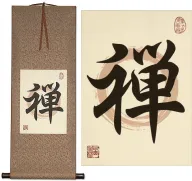
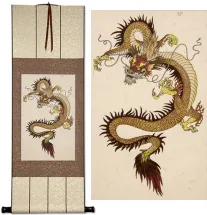
This in-stock artwork might be what you are looking for, and ships right away...

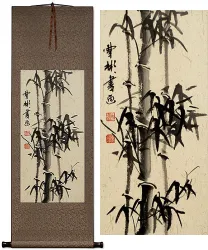
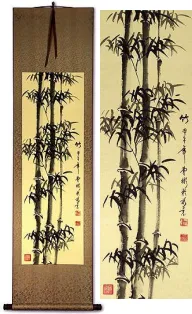
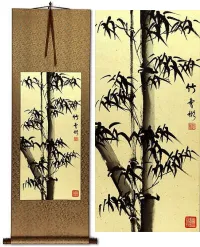
Gallery Price: $130.00
Your Price: $84.88
Gallery Price: $130.00
Your Price: $69.88


The following table may be helpful for those studying Chinese or Japanese...
| Title | Characters | Romaji (Romanized Japanese) | Various forms of Romanized Chinese | |
| Eight Black Horses | 黑八馬 黑八马 | hēi bā mǎ hei1 ba1 ma3 hei ba ma heibama | hei pa ma heipama |
|
| Always Try to do Better | 更に上を目指す | sara ni ue o me za su saraniueomezasu | ||
| Black Belt | 黑帶 黑带 | hēi dài / hei1 dai4 / hei dai / heidai | hei tai / heitai | |
| Betelgeuse | 參宿四 | sān sù sì san1 su4 si4 san su si sansusi | san su ssu sansussu |
|
| Black | 黑 黑 / 黒 | kuro | hēi / hei1 / hei | |
| Black Belt | 黒帯 黑帯 | kuroobi / kurobi | ||
| Rank Holder | 有段者 | yuu dan sha yuudansha yu dan sha | yǒu duàn zhě you3 duan4 zhe3 you duan zhe youduanzhe | yu tuan che yutuanche |
| Black Dragon | 黒龍 黒龙 | koku ryuu / kokuryuu / koku ryu | hēi lóng / hei1 long2 / hei long / heilong | hei lung / heilung |
| Black Dragon | 玄龍 玄龙 | xuān lóng xuan1 long2 xuan long xuanlong | hsüan lung hsüanlung |
|
| Black Dragon | 墨龍 墨龙 | mò lóng / mo4 long2 / mo long / molong | mo lung / molung | |
| Black Flag Gate Hek Ki Boen | 黑旗門 黑旗门 | hēi qí mén hei1 qi2 men2 hei qi men heiqimen | hei ch`i men heichimen hei chi men |
|
| Black Raven | 烏 乌 | karasu | wū / wu1 / wu | |
| Black or white cat matters not as long as it can catch mice | 不管黑貓白貓能捉著老鼠的就是好貓 不管黑猫白猫能捉着老鼠的就是好猫 | bù guǎn hēi māo bái māo néng zhuō zhe lǎo shǔ de jiù shì hǎo mǎo bu4 guan3 hei1 mao1 bai2 mao1 neng2 zhuo1 zhe lao3 shu3 de jiu4 shi4 hao3 mao3 bu guan hei mao bai mao neng zhuo zhe lao shu de jiu shi hao mao | pu kuan hei mao pai mao neng cho che lao shu te chiu shih hao mao | |
| Black Dragon Ninjitsu | 黒龍忍術 | koku ryuu nin jutsu kokuryuuninjutsu koku ryu nin jutsu | ||
| Black Tiger Fist | 黑虎拳 | hēi hǔ quán hei1 hu3 quan2 hei hu quan heihuquan | hei hu ch`üan heihuchüan hei hu chüan |
|
| Black Wolf | 黑狼 | hēi láng / hei1 lang2 / hei lang / heilang | ||
| Black Eagle Condor | 鷲 鹫 | washi | jiù / jiu4 / jiu | chiu |
| Dark Angel | 黑暗天使 | hēi àn tiān shǐ hei1 an4 tian1 shi3 hei an tian shi heiantianshi | hei an t`ien shih heiantienshih hei an tien shih |
|
| Darkness | 闇 暗 | yami | àn / an4 / an | |
| Darkness | 黑闇 黑暗 | hēi àn / hei1 an4 / hei an / heian | ||
| Darkness | 暗黒 | an koku / ankoku | ||
| Demon Raksha | 羅剎 / 羅刹 罗刹 | luó chà / luo2 cha4 / luo cha / luocha | lo ch`a / locha / lo cha | |
| Ebony | 烏木 乌木 | uboku | wū mù / wu1 mu4 / wu mu / wumu | |
| Equality | 平等 | byou dou / byoudou / byo do | píng děng ping2 deng3 ping deng pingdeng | p`ing teng pingteng ping teng |
| Extreme Intense | 極度 极度 | kyokudo | jí dù / ji2 du4 / ji du / jidu | chi tu / chitu |
| The one who retreats 50 paces mocks the one to retreats 100 | 五十步笑百步 | wù shí bù xiào bǎi bù wu4 shi2 bu4 xiao4 bai3 bu4 wu shi bu xiao bai bu wushibuxiaobaibu | wu shih pu hsiao pai pu wushihpuhsiaopaipu |
|
| Soccer Football Futbol | 足球 | zú qiú / zu2 qiu2 / zu qiu / zuqiu | tsu ch`iu / tsuchiu / tsu chiu | |
| Galatians 5:25 | 我們若是靠聖靈得生就當靠聖靈行事 我们若是靠圣灵得生就当靠圣灵行事 | wǒ men ruò shì kào shèng líng shēn jiù dāng kào shèng líng xíng shì wo3 men ruo4 shi4 kao4 sheng4 ling2 dei3 shen1 jiu4 dang1 kao4 sheng4 ling2 xing2 shi4 wo men ruo shi kao sheng ling dei shen jiu dang kao sheng ling xing shi | wo men jo shih k`ao sheng ling tei shen chiu tang k`ao sheng ling hsing shih wo men jo shih kao sheng ling tei shen chiu tang kao sheng ling hsing shih |
|
| Giant Panda | 大熊貓 大熊猫 | dà xióng māo da4 xiong2 mao1 da xiong mao daxiongmao | ta hsiung mao tahsiungmao |
|
| Go-Dan 5th Degree Black Belt | 五段 | go dan / godan | ||
| Goldfish | 金魚 金鱼 | kin gyo / kingyo | jīn yú / jin1 yu2 / jin yu / jinyu | chin yü / chinyü |
| Gray Color | 灰色 | haiiro / hairo | huī sè / hui1 se4 / hui se / huise | |
| Greatest Love | 最偉大的愛 最伟大的爱 | zuì wěi dà de ài zui4 wei3 da4 de ai4 zui wei da de ai zuiweidadeai | tsui wei ta te ai tsuiweitateai |
|
| Home of the Black Dragon | 黑龍之家 黑龙之家 | hēi lóng zhī jiā hei1 long2 zhi1 jia1 hei long zhi jia heilongzhijia | hei lung chih chia heilungchihchia |
|
| Even The 100-Foot Bamboo Can Grow One More Foot | 百尺竿頭更進一步 百尺竿头更进一步 | bǎi chǐ gān tóu gèng jìng yī bù bai3 chi3 gan1 tou2 geng4 jing4 yi1 bu4 bai chi gan tou geng jing yi bu baichigantougengjingyibu | pai ch`ih kan t`ou keng ching i pu pai chih kan tou keng ching i pu |
|
| Ichi-Dan First Degree | 一段 | ichi dan / ichidan | yī duàn / yi1 duan4 / yi duan / yiduan | i tuan / ituan |
| Ku-Dan | 九段 | ku dan / kudan | ||
| Just as Liquor Turns a Face Red, Gold Turns a Heart Black | 白酒紅人面黃金黑世心 白酒红人面黄金黑世心 | bái jiǔ hóng rén miàn huáng jīn hēi shì xīn bai2 jiu3 hong2 ren2 mian4 huang2 jin1 hei1 shi4 xin1 bai jiu hong ren mian huang jin hei shi xin | pai chiu hung jen mien huang chin hei shih hsin | |
| Lo | 羅 罗 | luó / luo2 / luo | lo | |
| Loo | 盧 卢 | lú / lu2 / lu | ||
| Magic | 魔術 魔术 | ma jutsu / majutsu | mó shù / mo2 shu4 / mo shu / moshu | |
| Martial Arts Master | 武芸者 | bugeisha | wǔ yún zhě wu3 yun2 zhe3 wu yun zhe wuyunzhe | wu yün che wuyünche |
| Mindfulness | 念 | nen | niàn / nian4 / nian | nien |
| Mountain Travels Poem by Dumu | 遠上寒山石徑斜白雲生處有人家停車坐愛楓林晚霜葉紅於二月花 远上寒山石径斜白云生处有人家停车坐爱枫林晚霜叶红于二月花 | yuǎn shàng hán shān shí jìng xiá bái yún shēng chù yǒu rén jiā tíng chē zuò ài fēng lín wǎn shuàng yè hóng yú èr yuè huā yuan3 shang4 han2 shan1 shi2 jing4 xia2 bai2 yun2 sheng1 chu4 you3 ren2 jia1 ting2 che1 zuo4 ai4 feng1 lin2 wan3 shuang4 ye4 hong2 yu2 er4 yue4 hua1 yuan shang han shan shi jing xia bai yun sheng chu you ren jia ting che zuo ai feng lin wan shuang ye hong yu er yue hua | yüan shang han shan shih ching hsia pai yün sheng ch`u yu jen chia t`ing ch`e tso ai feng lin wan shuang yeh hung yü erh yüeh hua yüan shang han shan shih ching hsia pai yün sheng chu yu jen chia ting che tso ai feng lin wan shuang yeh hung yü erh yüeh hua |
|
| Nana-Dan 7th Degree Black Belt | 七段 | nana dan / nanadan | ||
| Ni-Dan | 二段 | ni dan / nidan | ||
| Nidan | ニダン | nidan | ||
| Orion’s Belt | 獵戶座 猎户座 | liè hù zuò lie4 hu4 zuo4 lie hu zuo liehuzuo | lieh hu tso liehhutso |
|
| Orion’s Belt | オリオン座 | orionza | ||
| Panda Bear | 熊貓 熊猫 | xióng māo xiong2 mao1 xiong mao xiongmao | hsiung mao hsiungmao |
|
| Roku-Dan 6th Degree Black Belt | 六段 | roku dan / rokudan | ||
| San-Dan | 三段 | san dan / sandan | ||
| Scops Owl Black Kite | 鴟 鸱 | tonbi / tobi | chī / chi1 / chi | ch`ih / chih |
| Shichi-Kyu | 七級 七级 | shichi kyu / shichikyu | qī jí / qi1 ji2 / qi ji / qiji | ch`i chi / chichi / chi chi |
| Shihan | 師範 师范 | shi han / shihan | shī fàn / shi1 fan4 / shi fan / shifan | shih fan / shihfan |
| Sho-Dan | 初段 | sho dan / shodan | ||
| In Wine there is Truth | 酒后吐真言 / 酒後吐真言 酒后吐真言 | jiǔ hòu tǔ zhēn yán jiu3 hou4 tu3 zhen1 yan2 jiu hou tu zhen yan jiuhoutuzhenyan | chiu hou t`u chen yen chiuhoutuchenyen chiu hou tu chen yen |
|
| Xuan Wu Genbu Black Tortoise God | 玄武 | genbu | xuán wǔ / xuan2 wu3 / xuan wu / xuanwu | hsüan wu / hsüanwu |
| In some entries above you will see that characters have different versions above and below a line. In these cases, the characters above the line are Traditional Chinese, while the ones below are Simplified Chinese. | ||||

Successful Chinese Character and Japanese Kanji calligraphy searches within the last few hours...



